

19th Century Cream Jug
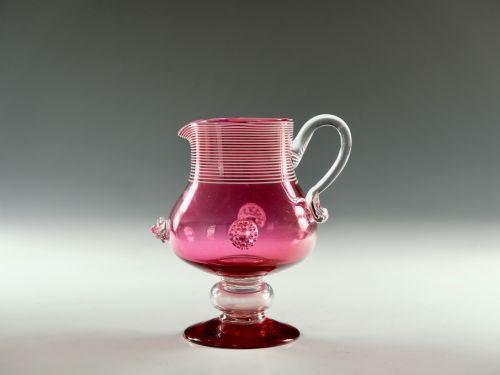
A 19th century cream jug brings small-scale table service from the Georgian and Victorian eras into daily domestic use.
19th Century Cream Jug
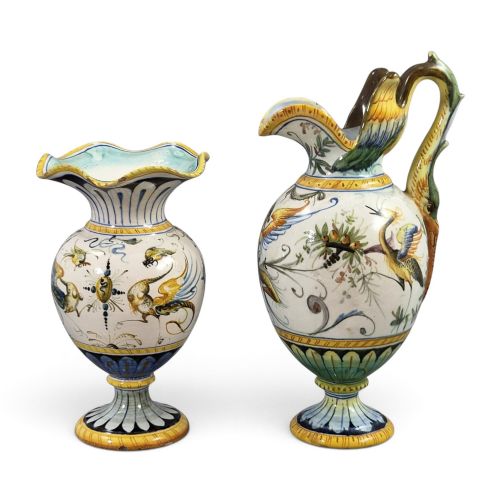
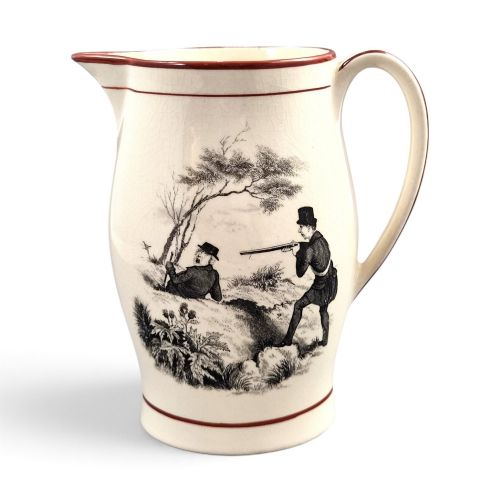
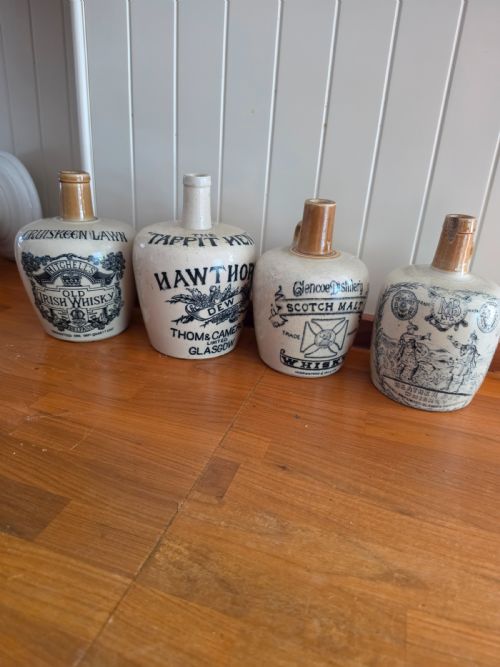
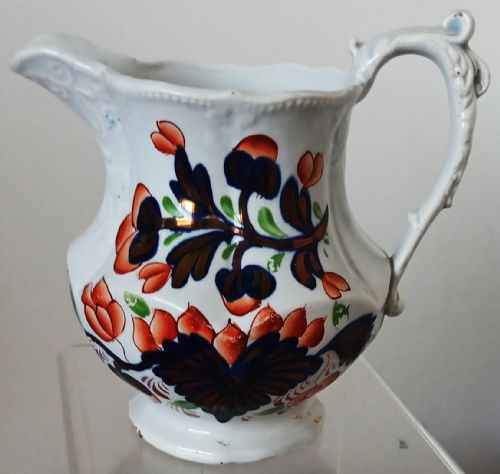
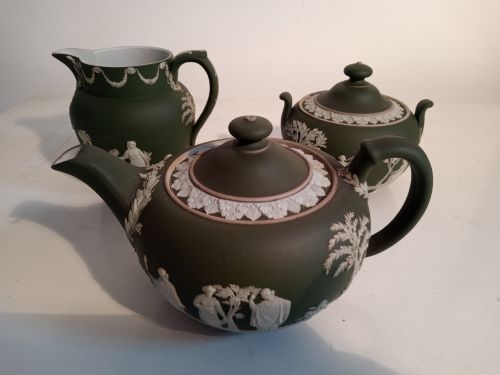
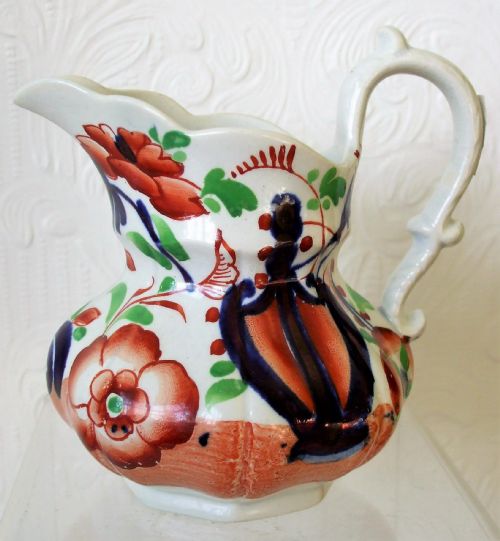
The 19th century cream jug appears across ceramic, stoneware, earthenware, porcelain, and silver forms designed for milk or cream service at the tea table. Buyers searching this phrase encounter diverse regional productions, from Staffordshire creamware and Gaudy Welsh pottery to London sterling silver and Scottish stoneware.
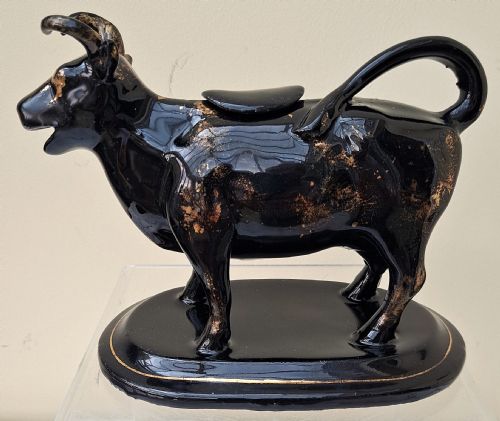
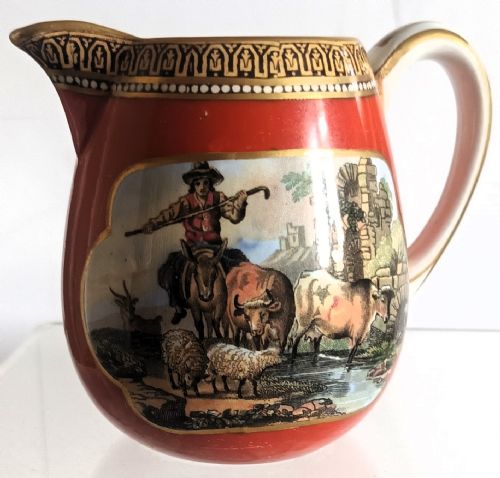
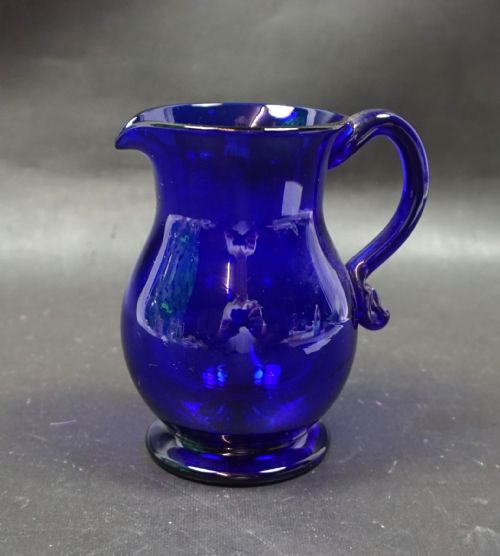
Vessels span smaller domestic milk jugs, cow creamers, and larger pitchers associated with commemorative pottery or tea sets. Examples range from early Georgian transfer-printed creamware to late Victorian earthenware and porcelain.
Moulded stoneware, slip-decorated pieces, and silver pedestal vessels represent the typical domestic range surviving from the period. These utilitarian objects reflect the changing tastes of Georgian, Regency, and Victorian households.
Craft and decoration
Quality rests upon the crispness of relief moulding, the precision of transfer-printed details, and the fineness of hand-painted enamels. Finer ceramic examples show even glaze application without firing warping, while silver pieces display sharp chasing and solid gauge metal.
The sophistication of the design, whether a specialised hound handle on yellow ware or handpainted birds on Meissen porcelain, separates standard domestic output from exhibition-grade pieces.
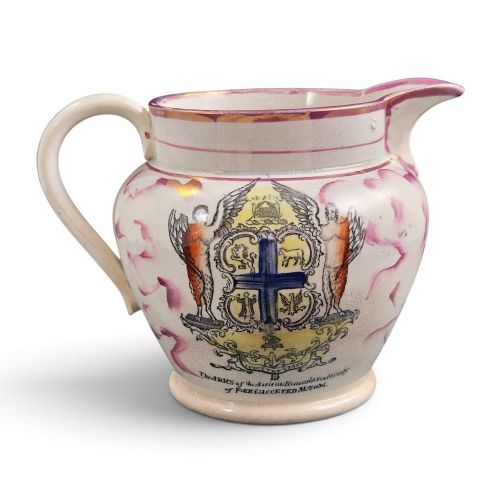
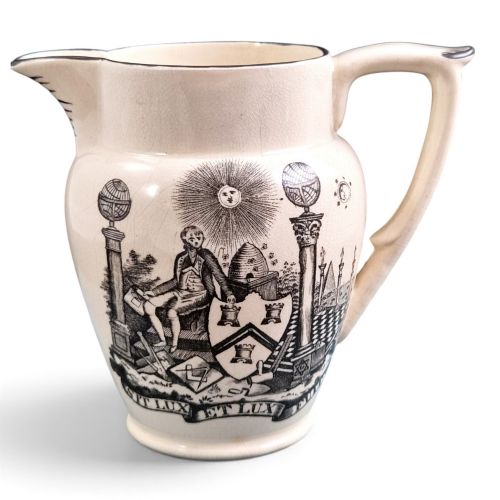
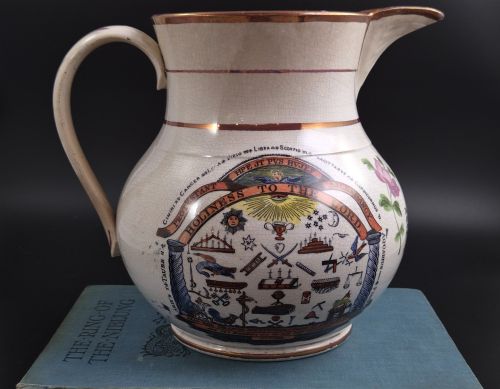
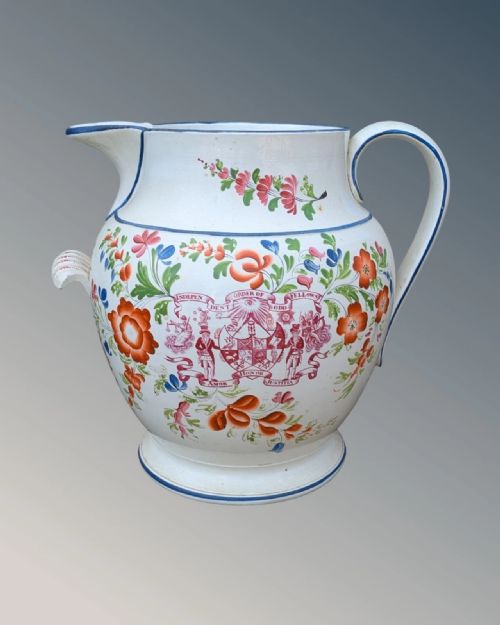
The selection includes utilitarian dairy jugs, commemorative Masonic vessels, cow creamers, and complete tea services.
Cantagalli Florence·Wedgwood·Doulton Burslem·Meissen·Joseph Craddock·Benjamin Smith·Robert Hennell·Jones And Walley·Port Dundass·W Hackwood
The 19th Century Cream Jug Glossary
- Creamware
- A fine light-coloured earthenware perfected in Staffordshire during the eighteenth century and continued into the nineteenth century with a pale yellow glaze.
- Transfer printing
- A decoration technique where an engraved metal plate transfers a design onto paper and then onto the ceramic surface before firing.
- Cow creamer
- A hollow ceramic vessel in the shape of a cow, filled through an opening on the back and poured via the mouth.
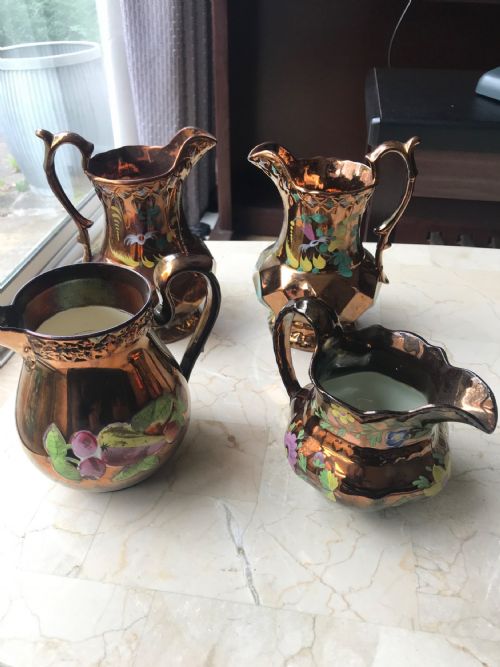
- Copper lustre
- A metallic glaze application that produces a reflective, coppery sheen across earthenware surfaces.
- Stoneware
- A heavy, dense ceramic fired at high temperatures until vitrified, rendering the body impermeable to liquids.
19th Century Cream Jug: Frequently Asked Questions
How do I date a 19th century cream jug?
Dating relies on combining stylistic markers, ceramic bodies, and any stamped registry marks or silver hallmarks present on the base. Comparing the form to documented Georgian, Regency, or Victorian manufacturing periods narrows the timeframe.
Changes in glaze chemistry, transfer print technology, and handle construction also assist in establishing the approximate decade of production.
Were these jugs used daily?
Most ceramic and silver examples served functional roles in daily tea and breakfast service throughout the Georgian and Victorian eras. Their survival in varied states of wear reflects practical domestic employment alongside occasional display.
Specialised pieces like cow creamers and commemorative Masonic jugs bridged the gap between functional tableware and decorative mantel ornaments.
How should I clean antique silver cream jugs?
Silver cream jugs require gentle washing with warm water and mild soap, followed by thorough drying with a soft cloth. Abrasive polishes should be avoided to preserve the original surface and hallmarks.
Ceramic jugs demand similar care, avoiding harsh immersion if historic enamel decoration is present on the glaze.