
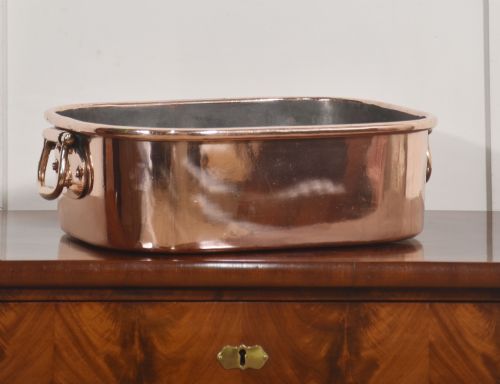


19th Century Copper Pan
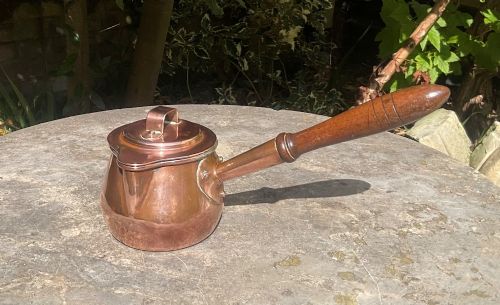
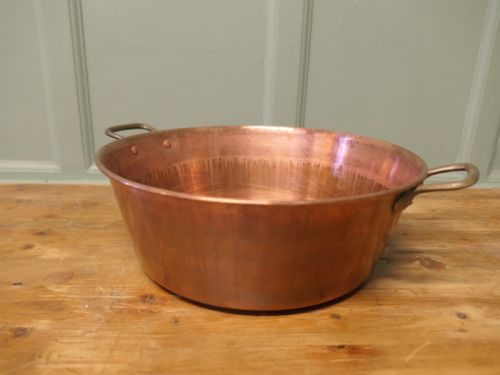
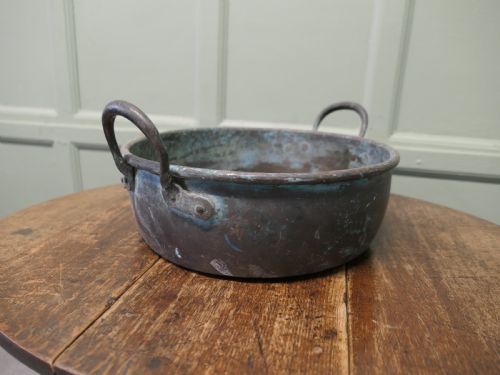
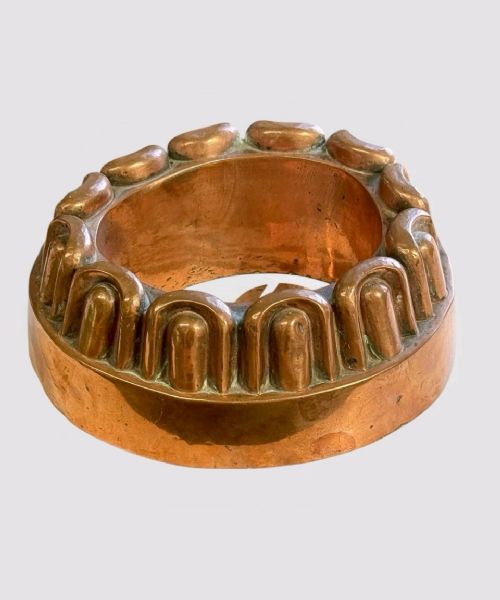
These heavy, useful vessels are a 19th century copper pan, built for utilitarian kitchen work and surviving as striking decorative objects.
What a 19th century copper pan is
A 19th century copper pan covers a range of hardworking kitchenalia, from large jam and preserve vessels to fish kettles, roasting tins, and saucepans. The domestic and farm kitchen relied on these heavy pieces for heat conduction during long hours of food preparation.
Preserving pans with double handles and deep cooking pots appear frequently on this page, alongside specialised forms like oblong baking pans, creamer pans, and fish kettles. Victorian and rustic farmhouse styles dominate the selection.
Origins stretch across English and French workshops, encompassing everyday utility wares alongside large institutional or London-made vessels. Their scale ranges from small jelly pans to massive boiling and venison roasting pans.
What varies in quality
Quality rests in the weight of the metal and the integrity of the construction, such as neatly dovetailed seams and substantial brass handles. Heavy gauge metal ensures the pan maintained structural rigidity under heavy daily loads on a stove or hearth.
The distinction between standard kitchen utility pieces and top-tier workshop output lies in the crispness of the forming and the survival of original patination. Maker-marked pieces from established London suppliers represent the upper tier of surviving domestic metalwork.
Some heavy culinary pans shared shelf space in archives with Dutch tavern oil paintings and bedwarmers.
Jones Brothers of Down Street
The 19th Century Copper Pan Glossary
- Preserve pan
- A wide, open vessel designed for boiling fruit and sugar, typically featuring two opposing handles for lifting.
- Fish kettle
- An elongated, oblong pan equipped with a fitted interior rack for poaching whole fish evenly.
- Dovetailed joint
- A method of interlocking fingers of metal at the seam, hammered flush and sealed before finishing.
- Patina
- The surface sheen and darkening accumulated through decades of handling, cleaning, and exposure to heat.
- Kitchenalia
- Domestic utensils and culinary equipment collected for their functional design and historic character.
Frequently Asked Questions
Can I still cook with a 19th century copper pan?
Many of these pieces were lined with tin for food preparation, but modern use depends entirely on the condition of that interior surface. Most buyers today treat them as display items or decorative kitchen storage.
If you plan to use an antique pan for cooking, verify that the tin lining remains thick and intact to prevent direct contact between food and the copper beneath.
How do I clean an antique copper pan?
Gentle washing with warm soapy water preserves the aged surface and the natural patina built up over generations. Avoid harsh abrasive compounds that strip away the historic character.
Many collectors prefer to leave the dark oxidation undisturbed, valuing the authentic signs of age over a bright, polished finish.
Why do some pans have iron handles instead of brass?
Handle materials often reflect the specific utility and period of the piece, with iron frequently chosen for heavy vessels destined for direct hearth contact. Brass and turned wood appear on other forms where handling comfort or decorative appearance was prioritised.
Examining the rivets and metal composition helps connect the pan to its regional workshop origins.