


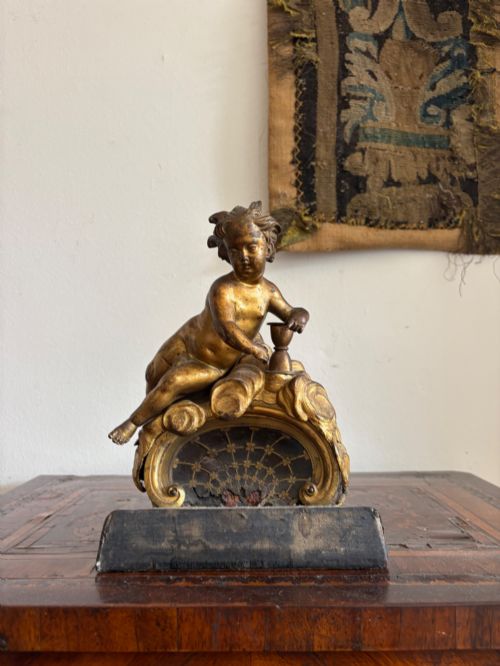
19th Century Classical Bronze
19th century classical bronze works bring the heroic scale of antiquity into domestic interiors through figures, lamps, and architectural ornaments.
19th Century Classical Bronze
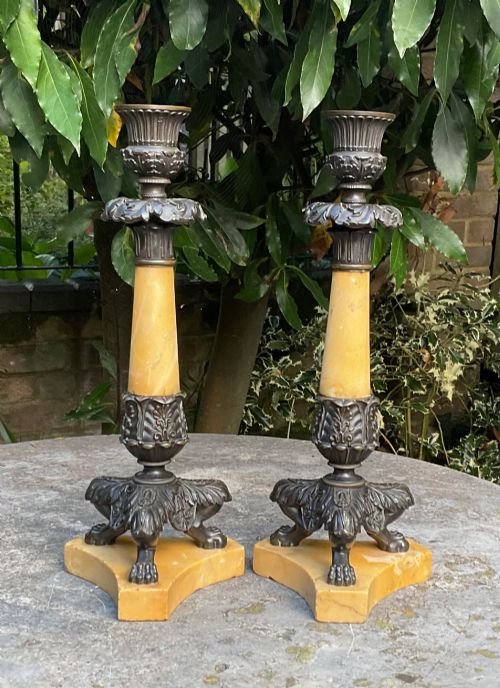
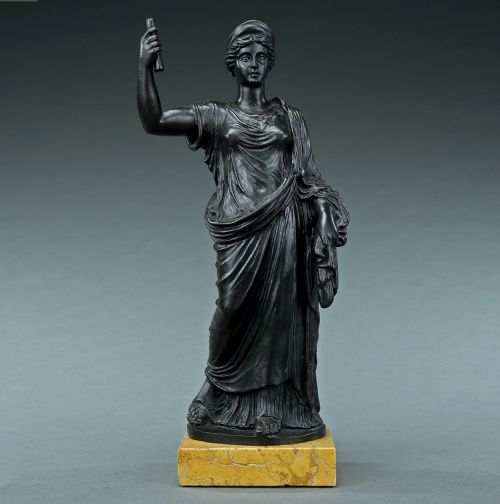
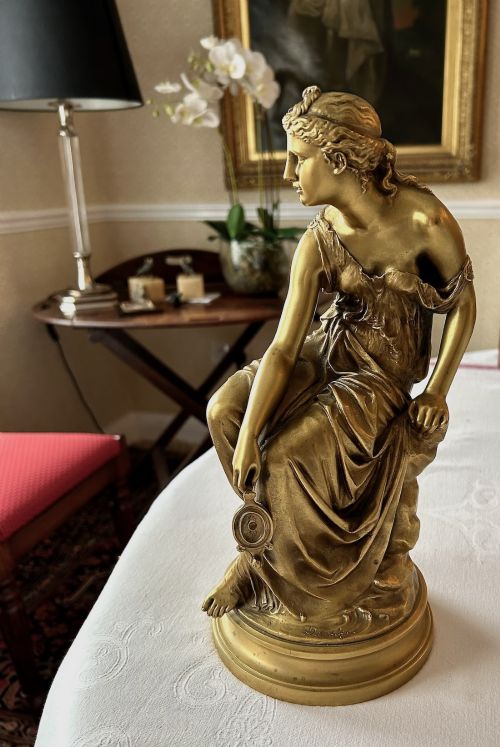
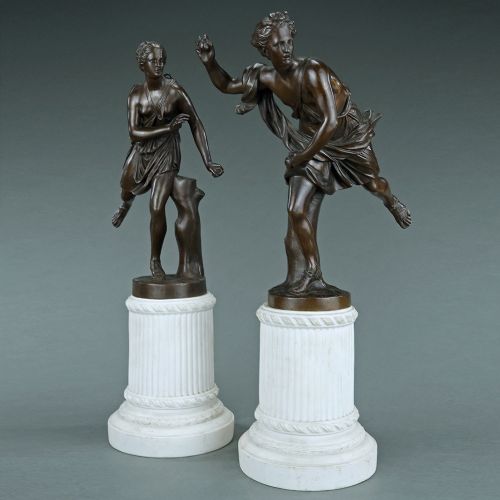
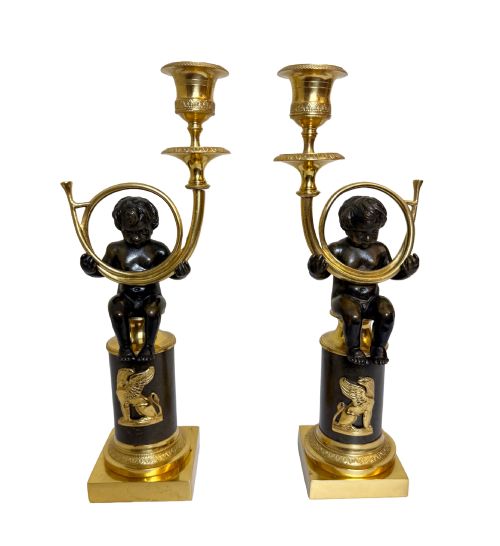
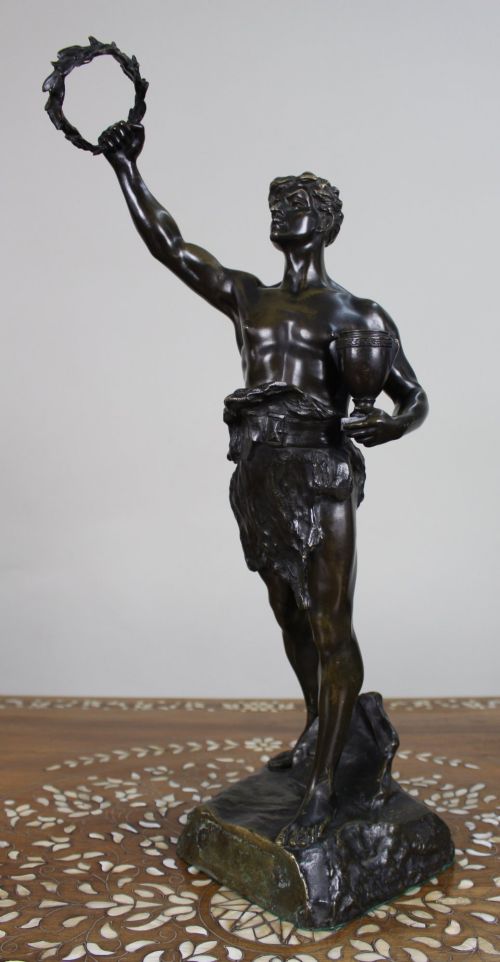
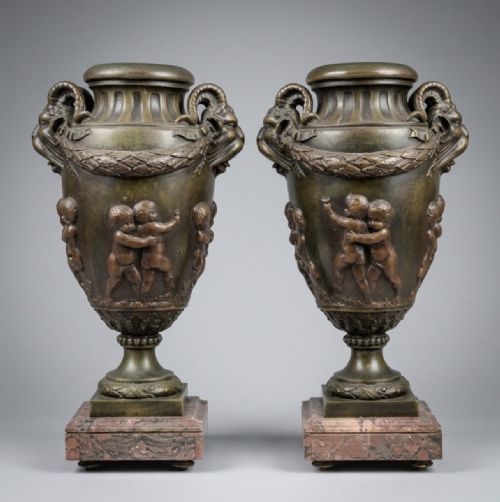
19th century classical bronze pieces encompass sculptural figures, decorative urns, candlesticks, and lighting mounted on stone bases. These works draw heavily on Greek and Roman mythology, reproducing famous antiquities for European and British collectors.
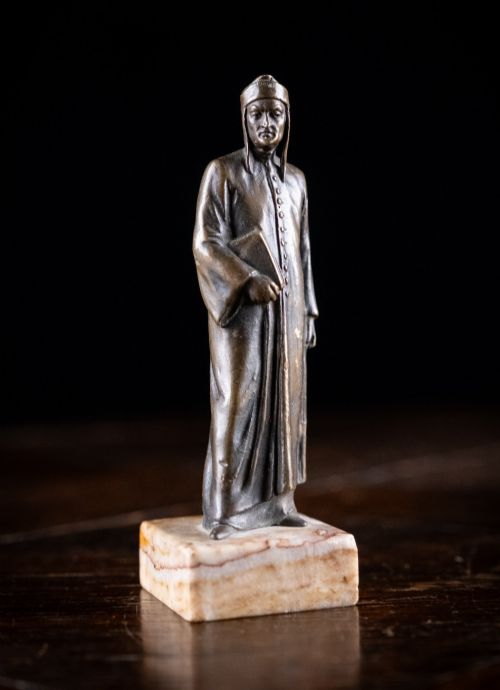
Grand Tour souvenirs form a significant portion of these objects, ranging from small busts of philosophers to reductions of major statuary like the Venus de Milo and Borghese Gladiator. Pairs of candelabra and figural mantel clocks also appear frequently alongside architectural mounts.
French workshops dominated production during this era, though English makers also contributed substantial Regency designs. The forms serve both decorative and functional roles, adapting ancient motifs to nineteenth-century domestic interiors.
Casting and Finishing Techniques
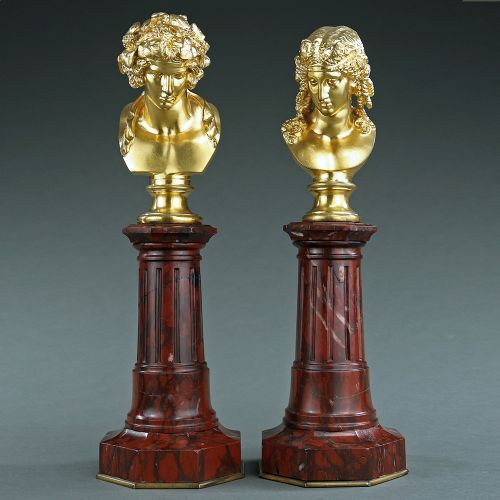
Patination involved applying chemical treatments to the surface of the bronze to produce varied dark brown or greenish tones. Guilders also applied gold leaf or mercury gilt, known as ormolu, to highlight specific decorative elements against the patinated areas.
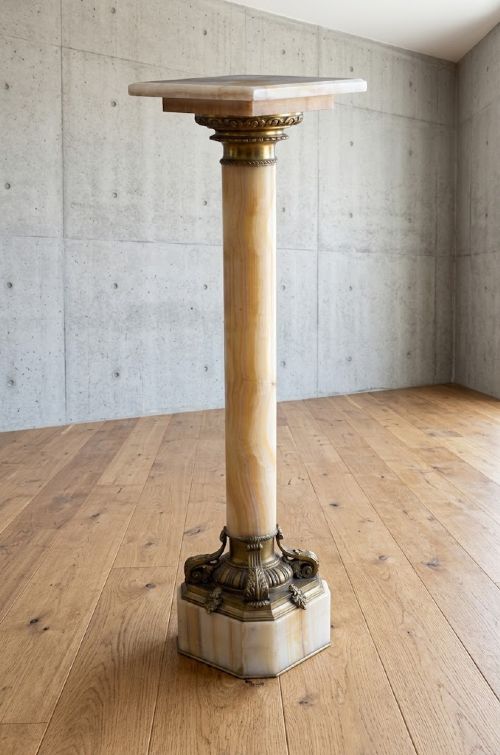
Many sculptures and candelabra incorporate carved marble, onyx, or slate bases, secured with threaded bolts through the centre. These stone plinths provide visual contrast and physical stability to the heavy metal compositions.
Listings combine patinated bronze, gilt bronze, and brass with marble, onyx, and rouge marble supports.
Assessing Craftsmanship and Detail
The precision of the chasing work separates standard foundry output from master-cast examples. High-quality bronzes retain crisp facial expressions, clean hair strands, and well-defined drapery folds without softening from worn moulds.
Signatures from established foundries or named sculptors elevate the standing of a piece significantly. Unsigned items rely entirely on the weight of the metal, the depth of the patination, and the sharpness of the casting.
The integration of the bronze elements with their marble or ormolu mounts indicates overall production standards. Finer objects feature tightly fitted joints, hand-chased secondary mounts, and substantial base materials rather than lighter substitute metals.
Etienne-Henri Dumaige·Ferdinand Barbedienne·E Rousseau·Moreau Family·Edouard Drouot
The 19th Century Classical Bronze Glossary
- Grand Tour
- A traditional trip through Italy undertaken by European elites to collect cultural artefacts and souvenirs. These small bronzes replicated classical statues found in public and private Italian collections.
- Ormolu
- Gilt bronze produced by applying a mercury and gold amalgam to the metal surface and heating it to drive off the mercury. This technique creates a durable, warm golden finish characteristic of French decorative arts.
- Patination
- The natural or chemically induced surface coloration of bronze over time. Different chemical mixtures yield tones ranging from deep chocolate brown to antique green.
- Lost-wax casting
- A method where a wax model is encased in clay, melted out, and replaced with molten bronze. This technique allows for complex, undercut forms and precise surface detail.
- Spelter
- A zinc-based alloy used as a less expensive alternative to bronze during the nineteenth century. It is often finished with a bronze-coloured coating to mimic the heavier metal.
19th Century Classical Bronze: Frequently Asked Questions
What is a Grand Tour bronze?
A Grand Tour bronze is a nineteenth-century miniature copy of a famous classical sculpture, purchased by travellers visiting Italy.
These pieces served as portable testaments to a classical education and refined taste.
How do I spot spelter instead of bronze?
Spelter is noticeably lighter than bronze and often reveals a greyish-white metal underneath worn areas of surface paint.
Bronze maintains a consistent metallic colour beneath its patination and feels significantly heavier.
Why are marble bases used?
Marble bases provide essential structural weight to balance top-heavy figures and tall candelabra.
They also offer a neoclassical aesthetic contrast to the dark patinated bronze above.
Are signed bronzes more valuable?
Signed pieces by known foundries or sculptors carry stronger documentation of their origin and artistic standard.
Unsigned works can still exhibit exceptional quality through their chasing and patination.