
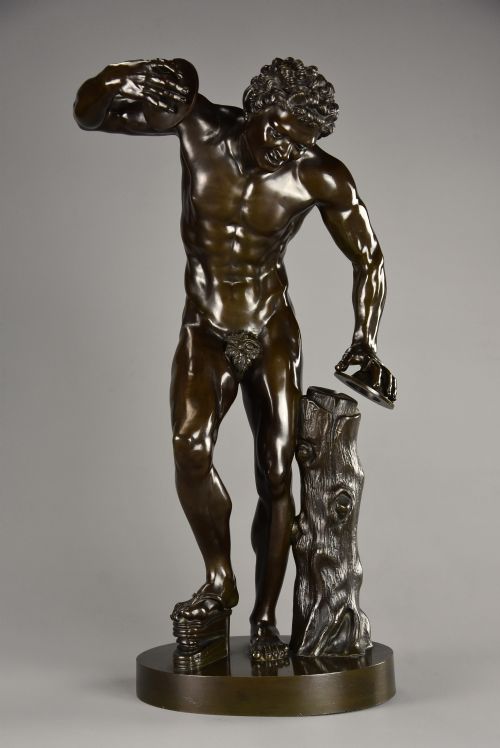


Classical Revival Bronze Statue
A classical revival bronze statue brings the marble antiquities of Rome and Greece into nineteenth-century studies through cast metal.
Classical Revival Bronze Statue
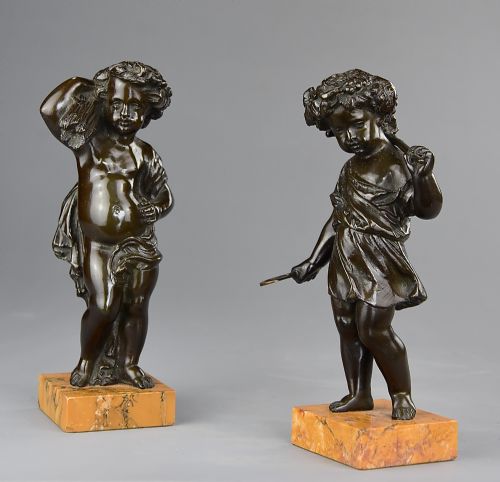
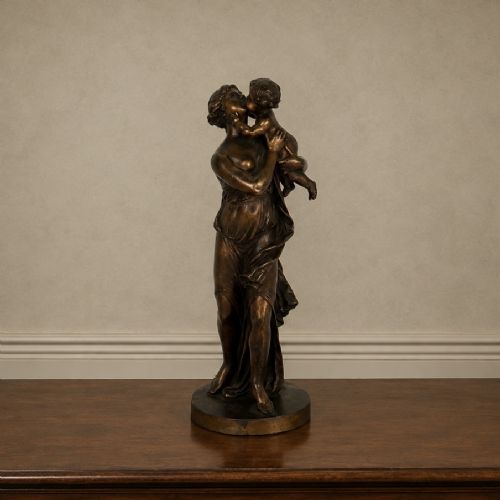
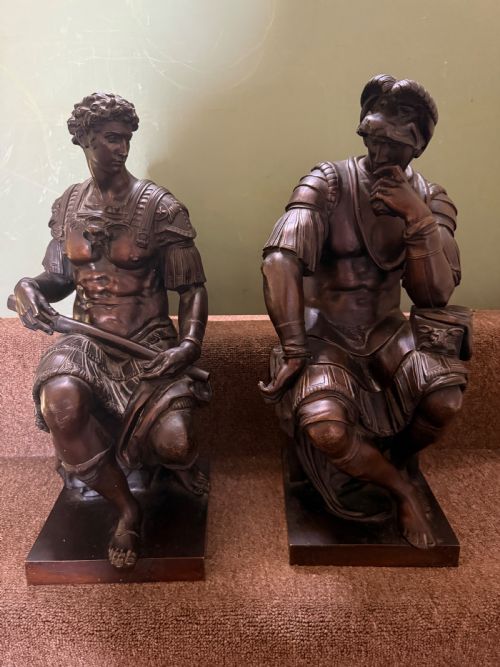
A classical revival bronze statue draws upon mythological figures, imperial rulers, and ancient sculptures encountered by travellers on the Grand Tour. These pieces take the form of patinated bronzes, figurines, and portrait busts mounted upon marble bases.
The most common examples on this page date from the nineteenth century, ranging from Italian souvenir reductions of classical antiquities to French foundry productions and English period interpretations.
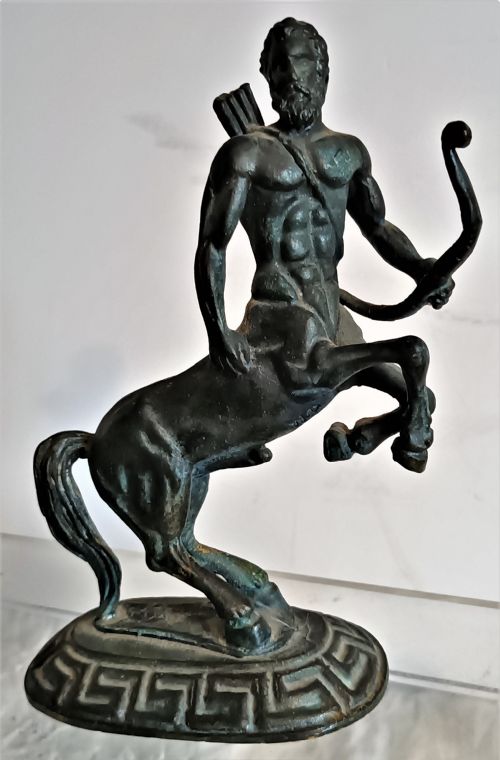
Representations include mythological subjects such as Bacchus, fauns, and centuars alongside historical figures like Lorenzo de Medici and Cleopatra.
Materials and casting methods
Foundries utilised traditional metalcasting techniques to produce these figures, employing bronze, gilded bronze, and patinated bronze, alongside alternative alloy compositions like spelter and zinc. Many figures are paired with integral or fitted marble plinths, including rosso levanto marble.
The surface finishes depend upon chemical patination applied to the cast metal, creating dark brown, green, or bright metallic tones that imitate buried antiquities or polished Renaissance works.
Listings feature nineteenth-century materials including patinated bronze, gilded bronze, spelter, zinc alloy, and rosso levanto marble.
Distinctions in craftsmanship
Quality rests upon the crispness of the metal chasing and the fidelity of the reduction from the original antique sculpture. Finer castings preserve facial expressions, muscle definition, and garment folds without softening the underlying detail during the clean-up process.
Foundry marks, artist signatures, and the weight and density of the bronze alloy differentiate mass-produced commercial souvenirs from numbered or stamped studio editions.
Eugene Barillot·Eden Antony Paul Noel·Barbedienne·Duchemin
The Classical Revival Bronze Statue Glossary
- Grand Tour
- A traditional educational journey through Europe undertaken by nineteenth-century elites, acquiring souvenir art along the way. These bronze reductions commemorate the classical antiquities seen in Italian galleries and excavations.
- Patinated bronze
- A bronze sculpture treated with chemical solutions to produce a specific surface colour and tone. This process protects the metal and simulates age.
- Spelter
- A zinc alloy used as a cheaper alternative to bronze in nineteenth-century figure casting. It is lighter in weight and softer than true bronze.
- Reduction
- A small-scale copy of a large monumental sculpture, produced accurately using a reducing machine. These allowed collectors to own miniature versions of famous museum pieces.
Classical Revival Bronze Statue: Frequently Asked Questions
What is a Grand Tour bronze?
A Grand Tour bronze is a nineteenth-century souvenir cast in Italy or France, reproducing famous classical sculptures for travellers returning home.
These pieces served as desk ornaments, cabinet displays, or library decorations for collectors demonstrating their classical education.
How do I clean a bronze statue?
Bronze statues require only gentle dusting with a soft, dry brush to prevent dirt accumulation in the crevices of the cast.
Polishing compounds or water should be avoided, as moisture and abrasives damage the historic chemical patination on the surface.
Are these figures solid bronze?
Many nineteenth-century statues are hollow cast to reduce weight and metal usage, utilising a core material left inside during the casting process.
Heavier examples or smaller statuettes may feel solid, but hollow construction was standard foundry practice for larger figures.
How do I distinguish bronze from spelter?
Bronze feels heavier, sounds more resonant when tapped gently, and accepts a deep, durable chemical patina that does not flake.
Spelter is a softer zinc alloy that often shows bright grey metal beneath worn paint or plating where the surface has rubbed away.