
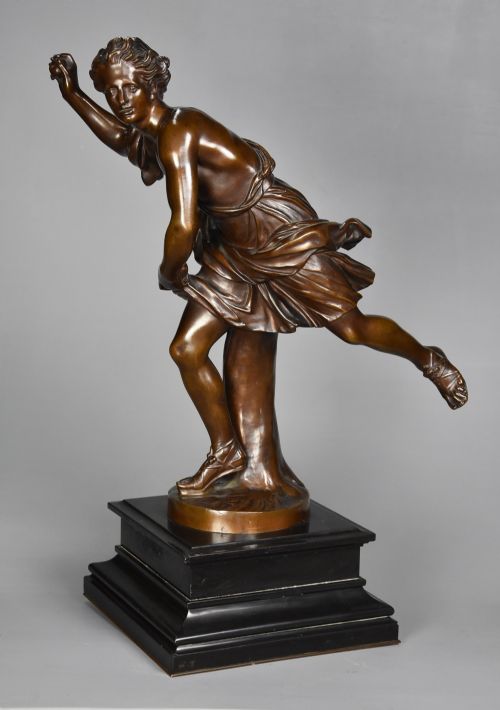



Greek Mythology Bronze Statue
A greek mythology bronze statue brings classical antiquity directly into a room through cast metal figures of ancient gods and heroes.
Greek Mythology Bronze Statue
A greek mythology bronze statue represents classical figures such as Oedipus, Ajax the Great, Athena, Zeus, Apollo, Hypnos, Hebe, Perseus, and Pan. These sculptures span the nineteenth century, including specific years from eighteen sixty to nineteen twenty, alongside broader nineteenth century designations.
The objects take the form of freestanding sculptures, figures, busts, and pairs originating from European workshops, including Italian Grand Tour souvenirs. Collectors encounter subjects derived from classical antiquity, often cast after celebrated ancient or early modern originals.
Neoclassical and classical revival styles dominate these works, capturing heroic and mythological narratives in solid metal. Pieces range from intimate busts to large figures, frequently mounted on bases of marble, ebonised wood, or accented with ormolu.
Materials and construction
Foundries utilised traditional metal casting techniques to produce bronze figures, sometimes applying verdigris patination or gilt bronze finishes. Sculptures frequently incorporate contrasting materials, pairing cast bronze with carved marble bases or ebonised wood plinths.
Decorative mounts utilise ormolu to highlight specific details on busts and figures, while signatures, foundry marks, or artist inscriptions are occasionally cast or engraved directly into the metal.
Pan continues to play his pipes to an unbothered bronze fawn across the centuries.
Assessing quality and execution
The quality of the secondary materials, such as heavy turned marble bases or rich ormolu mounts, elevates the overall presence of the object. Signed foundry editions or casts associated with named sculptors and classical precedents command distinct attention for their provenance and sculptural depth.
Barbedienne·Messina Roma·Franz Iffland
The Greek Mythology Bronze Statue Glossary
- Grand Tour
- A nineteenth century travel tradition where wealthy collectors acquired classical bronzes as cultural souvenirs in Italy. These portable sculptures reproduced famous antique statues found in European museums and archaeological sites.
- Ormolu
- Gilt bronze decorative mounts or secondary elements applied to sculptures and bases. The technique involves treating copper or bronze with a gold amalgam to produce a bright metallic sheen.
- Verdigris
- A green patina naturally or artificially formed on the surface of aged bronze. This atmospheric coloration develops through oxidation over long periods.
- Neoclassical
- An artistic movement reviving the forms, proportions, and subject matter of ancient Greek and Roman art. The style emphasises heroic restraint, classical drapery, and mythological narratives.
Greek Mythology Bronze Statue: Frequently Asked Questions
What subjects do these statues depict?
These sculptures portray figures from ancient classical lore, including major deities, mythical heroes, and allegorical subjects like sleep or youth. Common representations feature gods such as Zeus, Apollo, and Athena, alongside legendary figures like Perseus, Ajax, and Oedipus.
Many of these works derive their compositions from known classical antiquities or Renaissance and later interpretations. The narratives reflect enduring themes from literature and history valued by nineteenth century collectors.
How were Grand Tour bronzes used?
Grand Tour bronzes served as sophisticated display pieces in nineteenth century libraries, studies, and drawing rooms. Travellers collected them in Italy to signal classical education, refinement, and an appreciation for antiquity.
These smaller figures and busts were designed to sit on desks, mantelpieces, or dedicated pedestals. They brought tangible pieces of Mediterranean art history into private European homes.
What materials support these bronze figures?
Bronze sculptures frequently incorporate integrated or separate bases made from white or coloured marble and ebonised wood. Some pieces feature gilt bronze or ormolu mounts that accent the main metal casting.
The combination of dark cast metal with pale marble plinths creates a stable foundation and a striking visual contrast. These secondary materials are typical of nineteenth century display standards.
How do I identify the period of a bronze?
Dating relies on stylistic markers, casting methods, material composition, and any associated signatures or foundry stamps. Nineteenth century pieces often display specific patination techniques, hand-chased surface details, and mounting styles characteristic of the period.
Inscribed names of makers, foundries, or Roman locations provide direct historical anchors. Comparing the cast to documented nineteenth century editions clarifies its production era.