


19th Century Chinoiserie Cupboard
A 19th century chinoiserie cupboard brings painted narrative scenes and rich lacquer into a room, offering both storage and striking Orientalist decoration.
19th Century Chinoiserie Cupboard
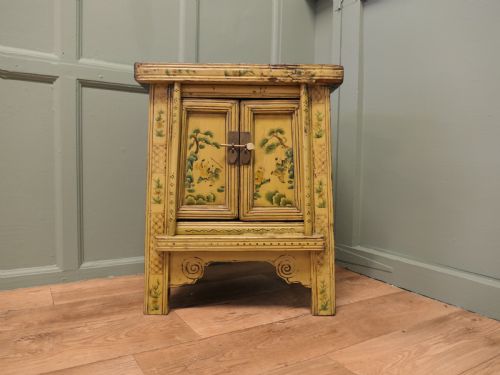
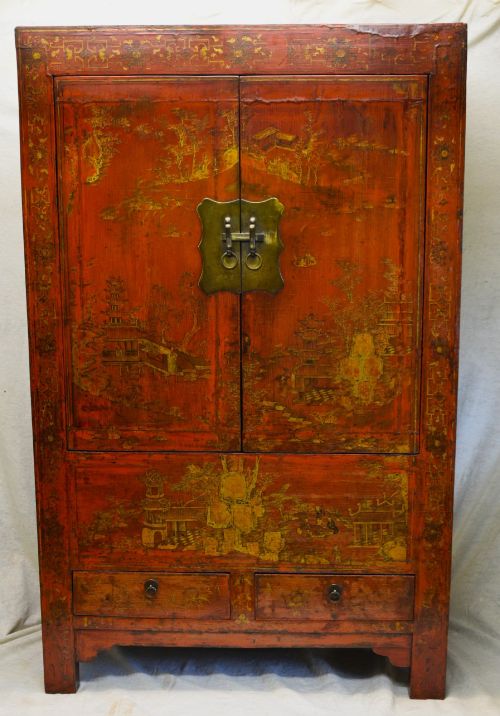
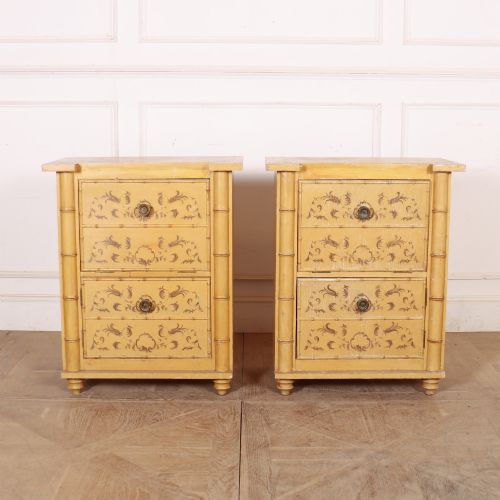
When you search for a 19th century chinoiserie cupboard, you encounter a diverse group of storage pieces decorated with European interpretations of East Asian motifs, alongside genuine Chinese exports from the same era. Cabinets, corner cupboards, and side cabinets dominate the selection, often taking compact forms such as table cabinets, bedside tables, and pieces raised on stands.
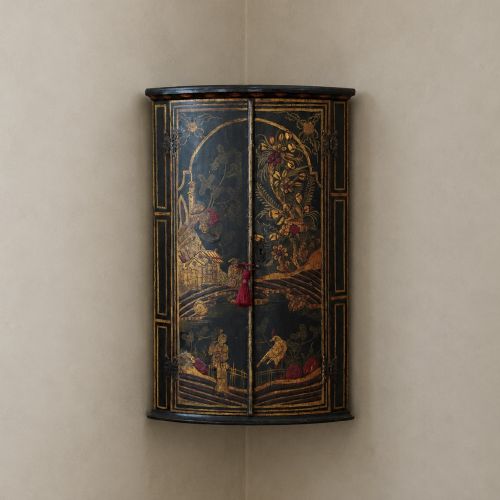
The most common versions on this page are corner cupboards and freestanding cabinets executed in lacquer or japanned wood. These pieces range from Regency period designs to late Victorian reinterpretations, incorporating styles from the Aesthetic Movement and Chinese Qing Dynasty aesthetics.
Materials and construction
Makers utilised wood as the primary carcass material, frequently employing mahogany or padouk beneath decorative surfaces. Lacquered wood and japanned finishes provide the characteristic glossy dark ground for painted or gilded details.
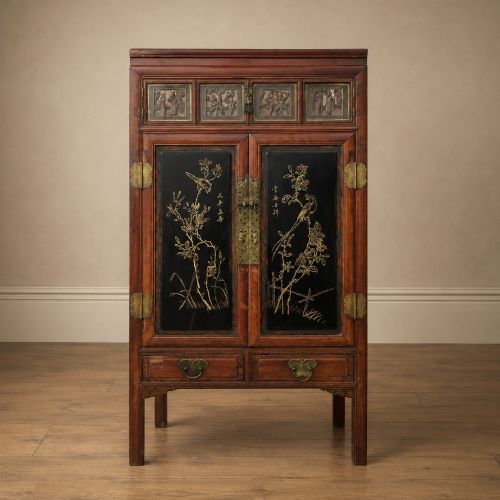
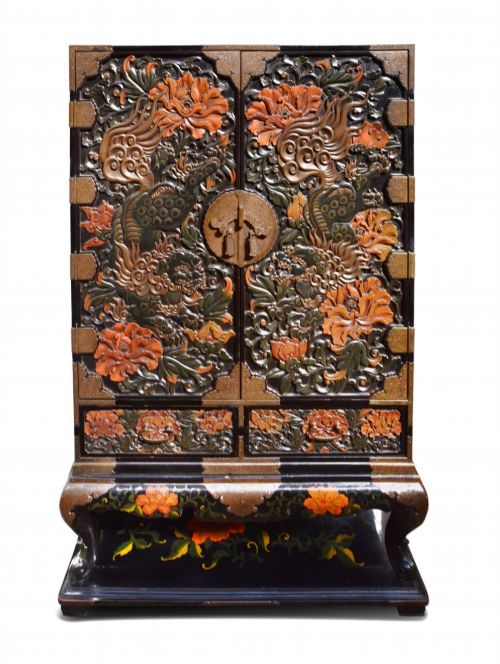
Gold leaf and gilded decoration highlight figurative scenes, landscapes, and architectural motifs against red or black lacquer. Brass hardware, penwork, and glass panes appear on display variants to secure and showcase the interior.
Materials recorded across the inventory include brass, glass, mahogany, and padouk, alongside lacquer and gold leaf.
Evaluating quality and execution
The sophistication of the painted or lacquered decoration dictates the standing of an individual piece within the field. Finely rendered gilt details and complex narrative scenes show a higher level of artisan skill than repetitive stencilling.
Cabinetwork structural integrity and the depth of the lacquer layers further separate standard domestic furniture from exceptional exhibition pieces. The integration of period stands and authentic brass mounts contributes to the overall coherence of the design.
Edwards and Roberts·Gabriel Frederic Viardot
The 19th Century Chinoiserie Cupboard Glossary
- Chinoiserie
- European artistic style reflecting Chinese motifs. It gained popularity across various periods through imaginative depictions of figures, pagodas, and landscapes.
- Japanned
- European imitation of Japanese lacquerwork. This technique involves layering resin finishes on wood and curing them to create a hard, glossy surface.
- Lacquer
- Natural resin coating applied in multiple layers to wood objects. It provides a durable, high-sheen protective shell that accepts gold leaf and pigment decoration.
- Penwork
- Decorative technique using fine ink lines on wood or ivory. This method creates intricate monochrome patterns resembling fine engravings.
- Qing Dynasty
- The final imperial dynasty of China, spanning from the seventeenth to the early twentieth century. Pieces from this era often feature traditional lacquer techniques and export designs.
19th Century Chinoiserie Cupboard: Frequently Asked Questions
How do I date a chinoiserie cupboard?
Dating relies on examining the underlying carcass construction, timber species, and finishing techniques alongside stylistic indicators. Regency and Victorian periods show distinct proportions and hardware conventions that help establish age.
Paint layering and lacquer formulation also shift across the nineteenth century, moving from early Regency penwork and japanning towards later Aesthetic Movement and export interpretations.
Where should I place a corner cupboard?
Corner cupboards work well in dining rooms, studies, or hallways where wall space is limited. Their angled backs allow them to fit snugly into unused room junctions while displaying decorative objects or storing tableware.
Positioning them away from direct sunlight protects the lacquer and gold leaf from fading over time, preserving the rich contrast of the red and black grounds.
What is the difference between japanning and lacquer?
Japanning is a European technique developed to imitate genuine Asian lacquer using resin varnishes and heat curing. True lacquer utilises the sap of the toxicodendron vernicifluum tree, applied in numerous traditional layers.
Both finishes yield a polished surface suitable for gilded chinoiserie motifs, though authentic Asian export pieces generally display greater depth in the lacquer body.
How do I care for antique lacquer furniture?
Care involves dusting gently with a soft, dry cloth and avoiding harsh chemical cleaning products or abrasive materials. Maintaining stable indoor humidity prevents the wooden substrate from expanding and cracking the lacquer surface.
Keeping these cabinets away from heat sources and direct sun exposure ensures the colours and metallic leaf remain stable for decades.