
Painted Lacquer Cabinet
A painted lacquer cabinet brings intense colour and narrative surface into a room, joining Eastern ornament with Western cabinet-making traditions.
Painted Lacquer Cabinet
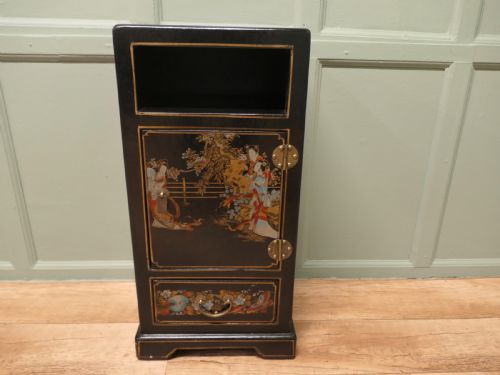
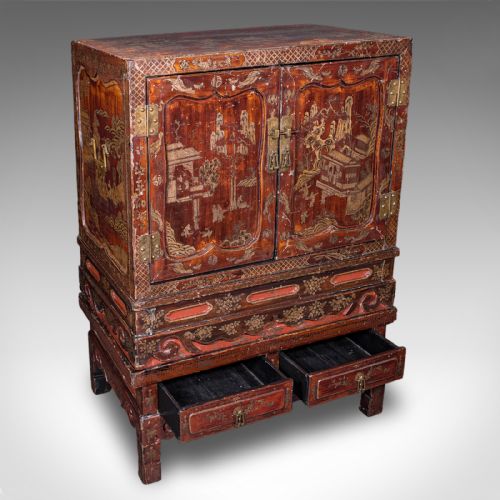
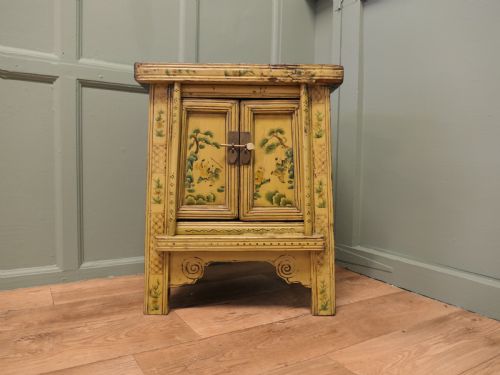
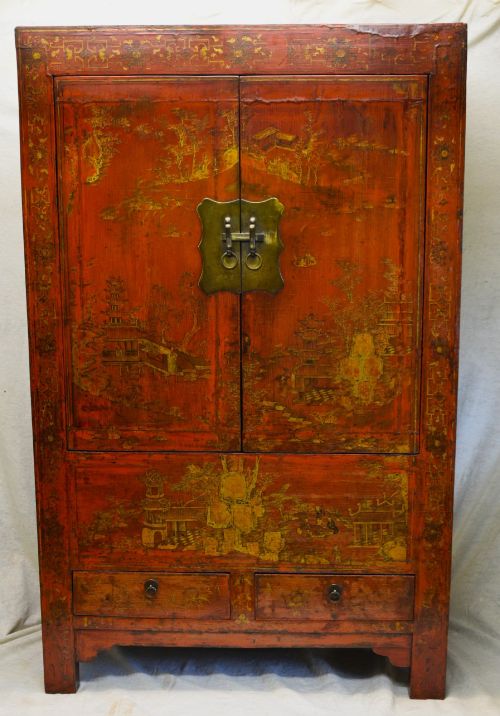
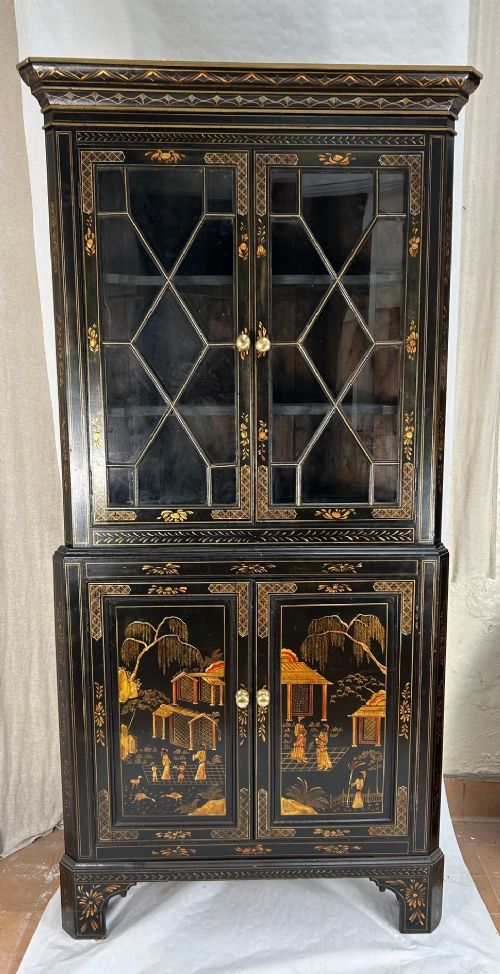
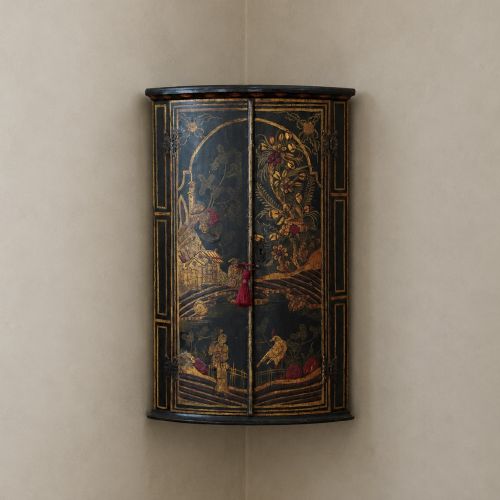
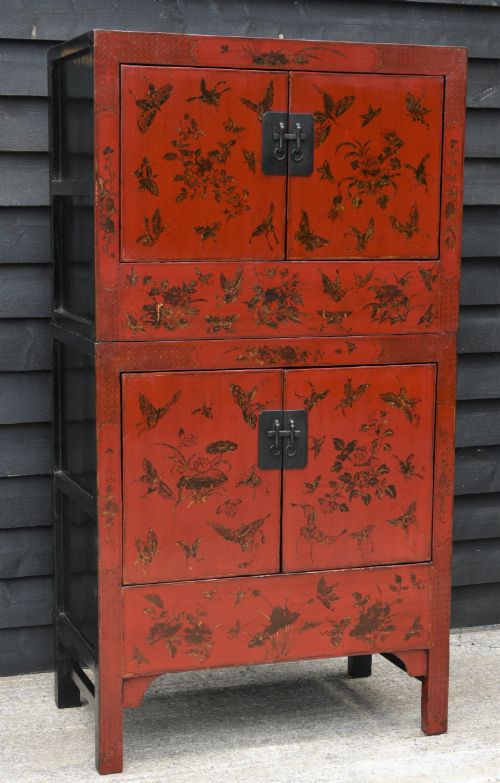
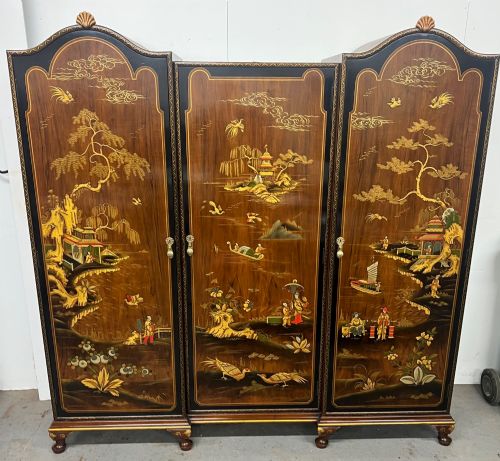
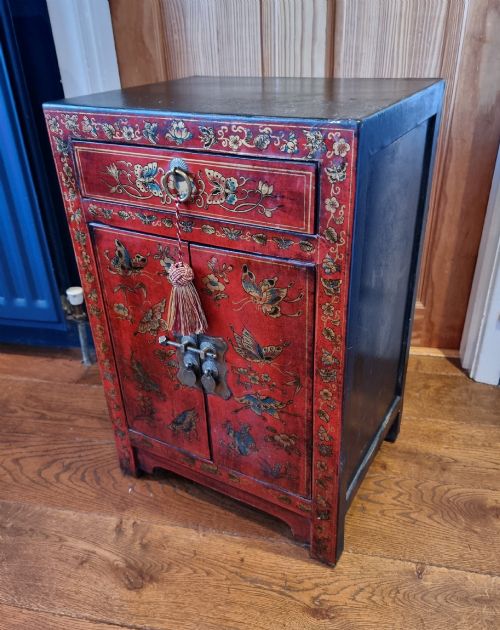
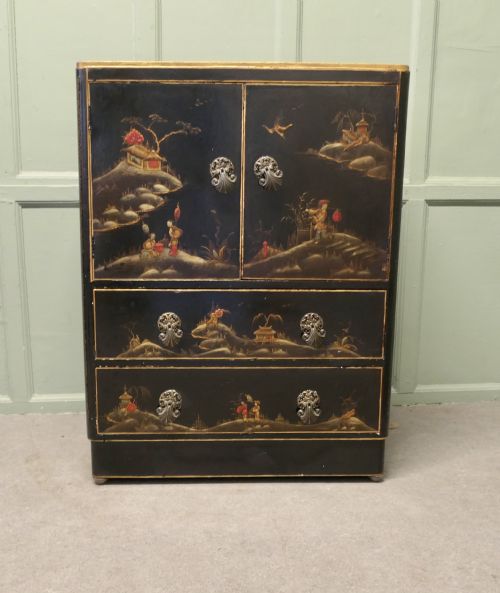
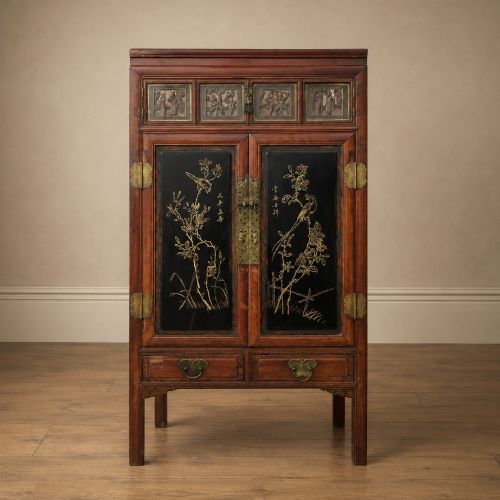
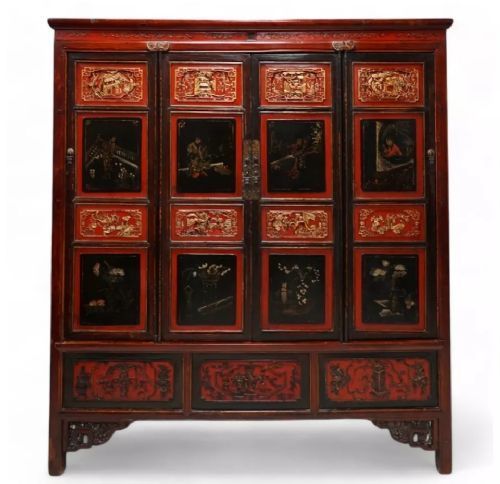
A painted lacquer cabinet covers a wide geographic and temporal span, appearing as towering wedding armoires, compact corner cupboards, and drinks cabinets on stands. You will most frequently encounter nineteenth-century Chinese marriage pieces in red and black, alongside Edwardian and Art Deco English and French interpretations rendered in the Chinoiserie taste.
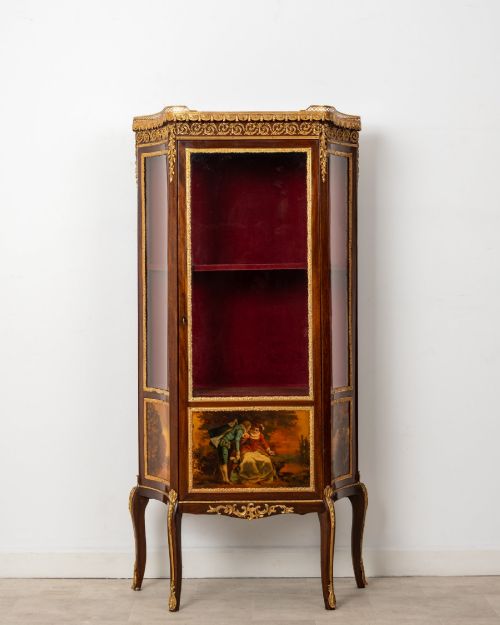
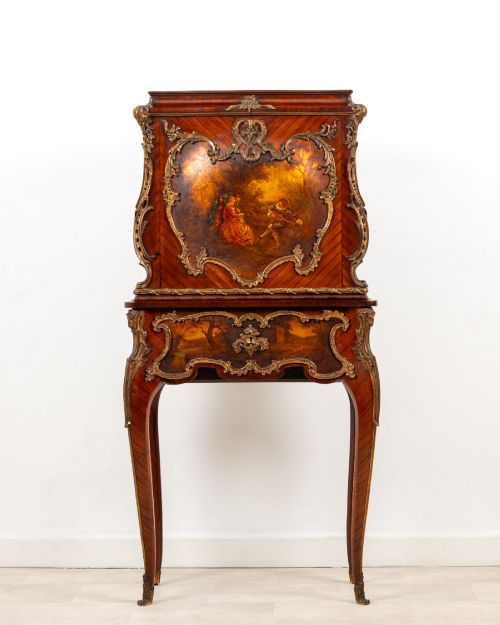
The architectural formats range from bow-front corner cupboards and two-door storage chests to vitrines andsecrétaires. Many pieces integrate stands, creating elevated proportions that suit modern interiors while remaining faithful to their original domestic functions.
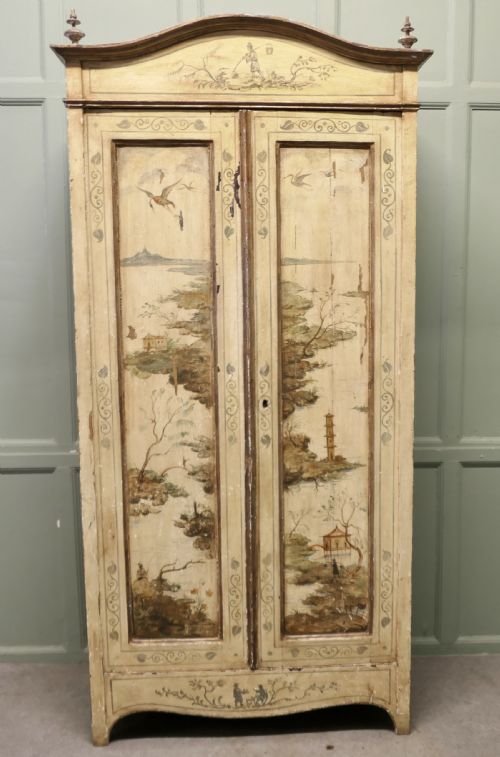
Stylistic influences divide broadly between traditional Asian motifs and European revivals such as French Rococo. Pieces span from eighteenth-century English japanned work through to twentieth-century cocktail cabinets, showing how decorators adapted oriental lacquer techniques across generations.
Materials and Construction
Makers built these pieces using timber frames of elm, mahogany, kingwood, or general lacquered wood, upon which they applied layered lacquer and paint. Surface decoration frequently incorporates gilt, brass handles, or ormolu mounts to frame the pictorial scenes.
The ornamental surface relies on painted outdoor scenes, floral arrangements, and birds, sometimes enhanced with glass panels for display variants. French pieces often employ Vernis Martin panels, replicating East Asian lacquer through specialised European varnishing techniques.
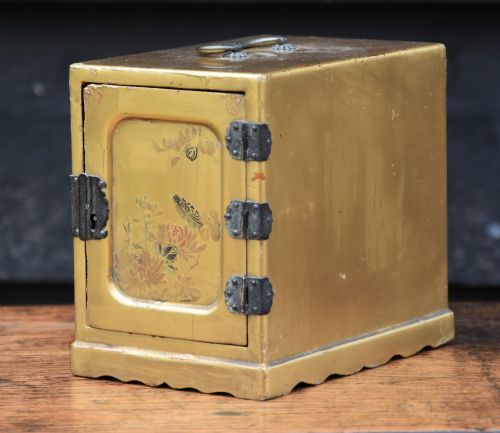
One diminutive Japanese jewellery box joins the large armoires, proving that grand lacquer techniques could be scaled down to the palm of a hand.
Evaluating the Pieces
Quality reveals itself in the depth of the lacquer surface and the crispness of the painted decoration, particularly where figures and foliage are rendered with fine brushwork. The integration of mounts, such as cast brass or ormolu, indicates whether a piece received high-grade hardware.
Structural integrity of the timber beneath the lacquer matters significantly, as movement in the wood causes surface cracking. The harmony between the cabinet body and any accompanying stand also determines the overall visual balance.
Maples & Co.·Harrods
The Painted Lacquer Cabinet Glossary
- Chinoiserie
- European interpretation and imitation of Chinese and East Asian artistic traditions, popular in furniture decoration. This style employs whimsical landscapes and figures.
- Japanned
- European imitation of Japanese and Chinese lacquerwork, created by building up layers of varnish and paint. The technique was widely practiced in England during the eighteenth and early twentieth centuries.
- Vernis Martin
- Eighteenth-century French imitation lacquer named after the Martin brothers, used extensively on vitrines and writing cabinets. It provides a glossy, translucent finish over painted pastoral or oriental scenes.
- Ormolu
- Gilt-bronze mounts applied to furniture edges and corners, frequently seen on French revival cabinets. These decorative metal elements highlight the architectural lines of the piece.
- Kodansu
- A small traditional Japanese cabinet fitted with multiple internal drawers or compartments. These portable storage pieces often feature intricate lacquer and metallic decoration.
Painted Lacquer Cabinet: Frequently Asked Questions
What rooms suit a painted lacquer cabinet?
These cabinets work well as focal points in living rooms, dining spaces, or hallways where their decorative surfaces can catch the light. Their varied heights and formats allow them to function as drinks bars, storage units, or display surfaces.
Because they introduce strong pigments like red, green, black, or cream, they pair effectively with neutral walls. Positioning them away from direct sunlight helps preserve the painted lacquer and gilt details over time.
How do I date a painted lacquer cabinet?
Dating relies on examining the underlying construction timber, hardware style, and the specific characteristics of the lacquer work. Eighteenth-century pieces often display fine japanning on pine or oak carcases, while nineteenth-century examples frequently feature Chinese elm or European mahogany.
Twentieth-century pieces, including Art Deco cocktail cabinets and Edwardian items, introduce modern internal fittings like glass shelves and mirrored backs. Comparing the decorative motifs against known revival periods helps narrow down the decade of manufacture.
How were marriage cabinets used originally?
Traditional Chinese marriage cabinets served as practical storage for a bride's dowry textiles, clothing, and valuables. Their substantial internal space accommodated folded garments and personal possessions.
Built to last, these heavy storage pieces often stood in the main bedroom of a household. Today, their generous proportions make them ideal for modern clothing storage or media equipment.
What is the difference between Chinese and European lacquer?
Traditional Chinese lacquer utilises sap harvested from specific trees, applied in numerous thin layers that cure into a durable, moisture-resistant shell. European makers instead used resin-based varnishes and paints over wood to simulate this glossy finish, a process known as japanning.
European Vernis Martin developed its own distinct chemical composition and colour palette, favouring pale grounds and gilt highlights. Both traditions created complex pictorial surfaces, but their underlying material science differs significantly.