
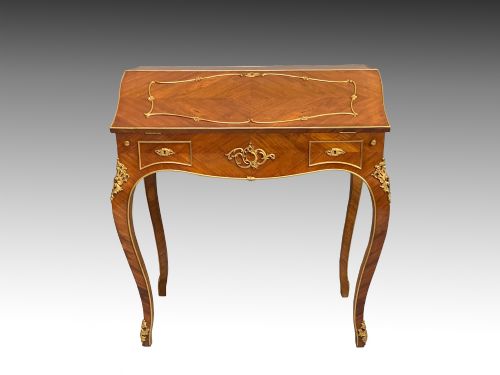


Napoleon III Writing Table
A Napoleon III writing table brings French Second Empire opulence into a room with rich marquetry and gleaming ormolu mounts.
Napoleon III Writing Table
A Napoleon III writing table is a refined piece of nineteenth-century French furniture designed for correspondence and display. These tables embody the eclectic revivals of the period, drawing heavily on Louis XV and Louis XVI styles.
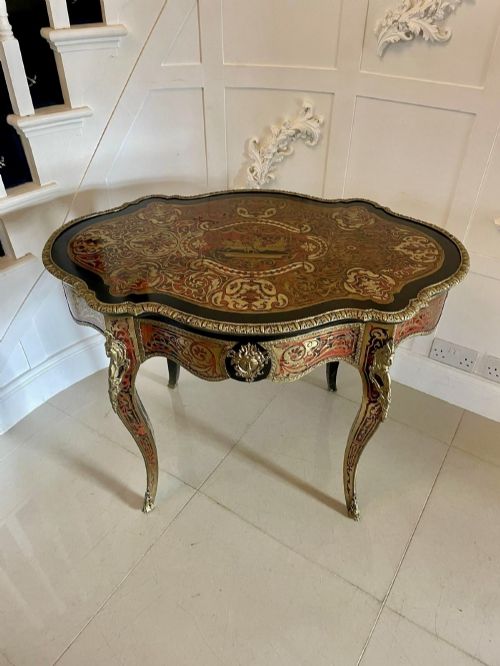
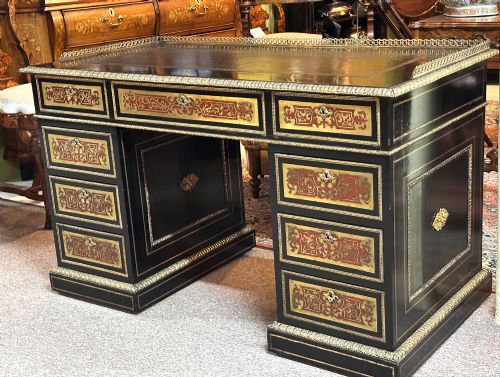
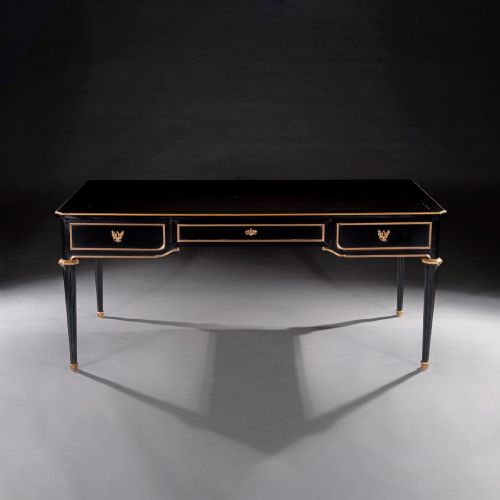
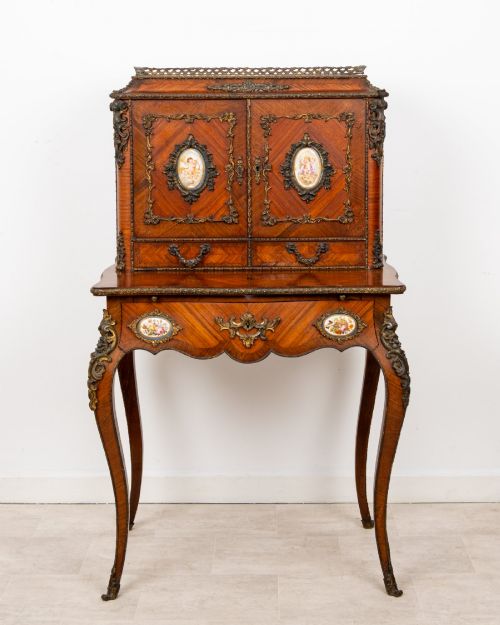
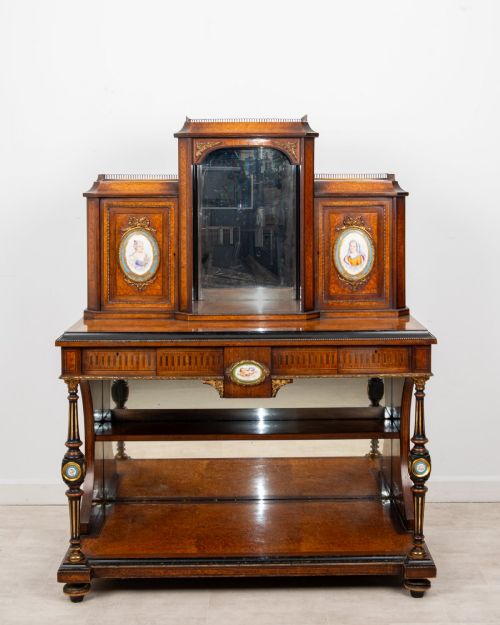
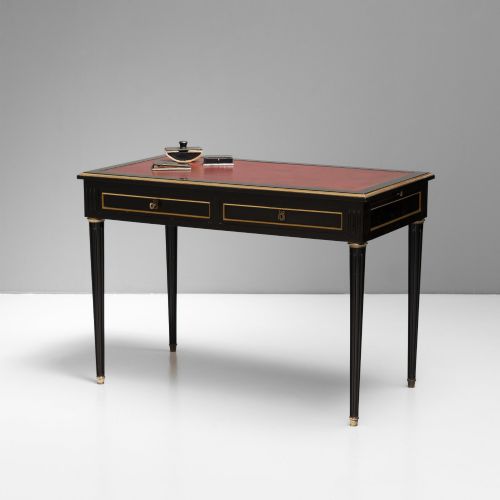
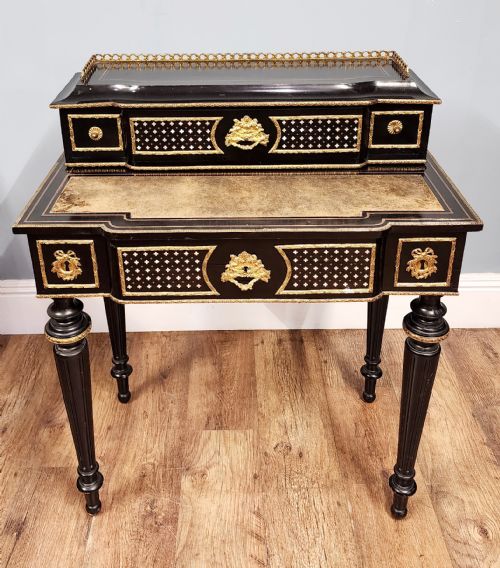
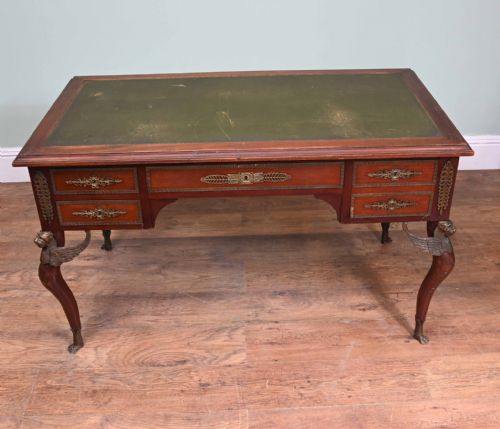
The pieces on this page appear primarily as freestanding centre tables, bureau plat desks, and compact bonheur du jour writing desks. Walnut, ebonised wood, and exotic veneers form the structural bodies of these tables.
Makers integrated gilt bronze, porcelain plaques, and brass inlay to create highly decorative surfaces intended to catch the light in a formal parlour or study.
Materials and Construction
Carpenters built these tables using robust carcases of walnut or mahogany, then overlaid them with decorative veneers including kingwood, tulipwood, amboyna, and ebonised wood. Marquetry and parquetry patterns set geometric or floral designs directly into the timber surfaces.
Gilt bronze and ormolu mounts frame the edges, corners, and cabriole legs, cast and chased to accentuate the curves. Brass and tortoiseshell inlay, known as Boulle work, decorates the top panels and friezes of the most elaborate examples.
Listings feature ebonised wood, walnut, and kingwood as the primary timber choices for these nineteenth-century writing tables.
Craftsmanship and Detail
The refinement of the cast ormolu mounts separates standard output from superior pieces, with finer tables displaying crisp chasing and deep gilding rather than flat, machine-cast metal. The precision of the wood veneers and the tightness of the marquetry joints indicate the skill of the cabinet-maker.
The presence of hand-painted porcelain plaques, Sevres panels, or intricate Boulle marquetry elevates a piece significantly. Tables finished with detailed veneers on all sides, allowing them to stand in the middle of a room, demonstrate higher workshop standards.
Maison Millet·A. Beurdeley·Paul Sormani
The Napoleon III Writing Table Glossary
- Boulle work
- A style of marquetry using tortoiseshell and brass inlay developed in France and revived during the nineteenth century. The contrasting metals and dark shell create a shimmering surface pattern.
- Ormolu
- Gilt bronze mounts applied to the edges and legs of furniture to protect vulnerable areas and provide decorative contrast. The technique involves applying a gold amalgam to cast bronze.
- Bonheur du jour
- A small ladies writing desk featuring a raised cabinet or tier of drawers and pigeonholes above the main writing surface. These desks became popular in the nineteenth century for private correspondence.
- Bureau plat
- A freestanding writing table with a flat top, typically lined with leather, and one or more drawers set into the frieze. These tables are finished on all sides to sit in the centre of a room.
- Marquetry
- The art of applying pieces of veneer to a structural structure to form decorative patterns or pictorial scenes. Cabinet-makers used varied coloured woods to achieve tonal depth.
Napoleon III Writing Table: Frequently Asked Questions
How do I identify Boulle work?
Boulle work consists of intricate patterns formed from brass and tortoiseshell inlaid into wood. The brass shines brightly against the dark, translucent background of the shell.
This technique requires precise cutting of stacked sheets of metal and shell. It appears frequently on nineteenth-century French tables and cabinets.
What is a bonheur du jour?
A bonheur du jour is a small, light writing desk featuring a superstructure of small drawers and pigeonholes above the writing surface. Ladies used them for writing letters and storing personal papers.
These desks often incorporate porcelain plaques and ormolu mounts. Their compact proportions made them suitable for private boudoirs and drawing rooms.
Where should I place a centre table?
A centre table is designed to be viewed from all sides, making it ideal for the middle of a reception room or large hallway. Placing it away from walls highlights its decorative marquetry and ormolu mounts.
These tables function well as display surfaces for decorative objects or books. Their finished backs ensure they look correct from any angle in the space.