


Oriental Small Side Table
These oriental small side table pieces offer compact surfaces finished in lacquer, hardwood, and brass.
Oriental Small Side Table
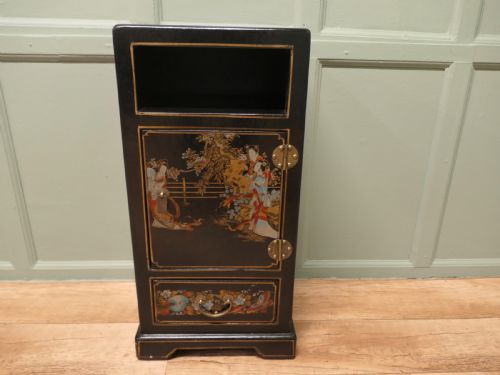
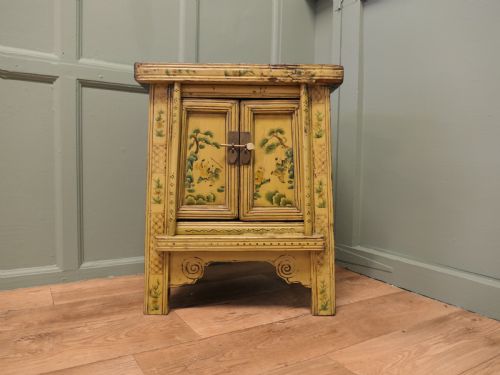
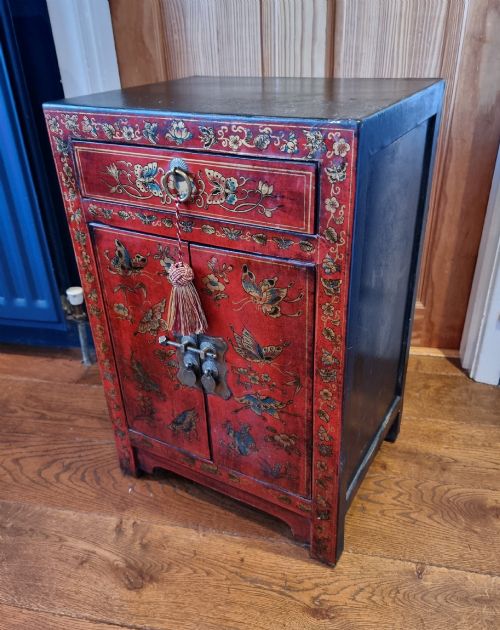
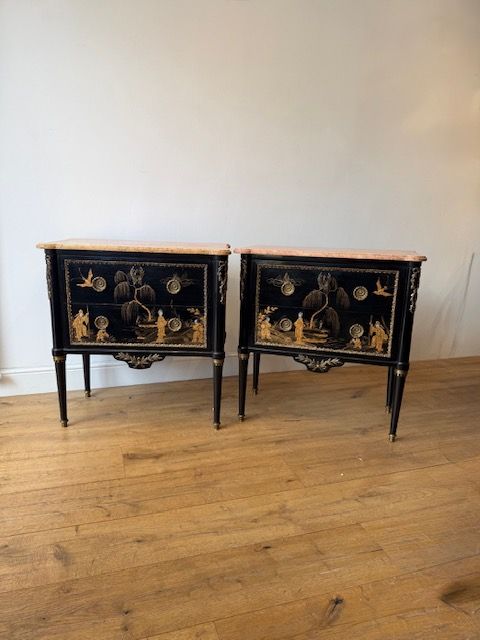
When you search for an oriental small side table, you encounter compact occasional furniture spanning the nineteenth century up to the nineteen-thirties. The most frequent versions on this page are Chinoiserie decorated cabinets, lamp tables, and plant stands produced in wood, lacquer, and marble.
The regional origins of these pieces range across Chinese provincial and export workshops, Japanese Meiji items, and Anglo-Indian carved tables. Forms vary from dropleaf lamp tables and circular occasional tables to small chests and jardiniere stands.
Makers and retail houses such as Liberty and Co also contributed to this eclectic mix of styles. You will find that these smaller tables serve well as bedside surfaces, plant pedestals, or coffee tables.
Materials and construction
Construction relies heavily on traditional hardwoods including Chinese elm and ebonised elm. These dense timbers provide a sturdy framework for occasional tables and side cabinets.
Surface decoration defines many of these pieces through lacquered wood, gilt, and painted Chinoiserie finishes. Other examples incorporate inlaid bone, marble inserts, and brass details.
Carving techniques appear prominently in Anglo-Indian productions from regions such as Bombay and Hoshiarpur. Artisans utilised intricate relief work on circular tables and plant stands.
Object forms span side cabinets, dropleaf lamp tables, occasional tables, and jardiniere stands across various Chinoiserie and Anglo-Indian styles.
Assessing quality in oriental small side tables
Quality rests upon the crispness of the hand-carving and the preservation of the painted or lacquered surfaces. Finer pieces retain their original gilt and decorative motifs without extensive modern repainting.
The selection of materials creates a clear distinction between standard production and superior examples. Hardwoods like elm combined with genuine marble inserts or detailed bone inlay represent the upper tier of craftsmanship.
Structural integrity in joints and tripartite bases dictates longevity in smaller occasional tables. A well-balanced frame shows precise joinery that withstands daily use as a lamp or wine table.
Liberty and Co
The Oriental Small Side Table Glossary
- Chinoiserie
- European decorative style imitating Chinese artistic traditions. This appears frequently in the lacquered cabinets and decorated tables on this page.
- Anglo-Indian
- Furniture produced in India during the British colonial period, often featuring dense carved hardwood and inlaid elements. These pieces reflect a distinct cross-cultural design aesthetic.
- Jardiniere Stand
- A tall or low pedestal designed to hold a plant pot or flower bowl. Many examples incorporate marble tops to protect against moisture.
- Meiji
- Japanese historical period spanning the late nineteenth and early twentieth centuries. Items from this era often utilise ebonised wood and fine decorative techniques.
- Tripartite Base
- A support structure dividing into three sections, commonly seen beneath small wine tables and plant stands. This configuration provides stability on smaller furniture footprints.
Oriental Small Side Table: Frequently Asked Questions
What is an oriental small side table used for?
These compact surfaces function well as lamp tables, wine tables, or small coffee tables in a living space. Their modest proportions allow them to fit easily beside seating or in hallways.
They also serve as plant stands or jardiniere pedestals to display decorative objects. The variety of heights accommodates different interior layouts.
How do I date a Chinoiserie side table?
Dating relies on examining the timber construction, the type of lacquer, and stylistic clues from periods such as Victorian production or the nineteen-twenties. Earlier nineteenth-century examples often display heavier hardwood frames and hand-painted motifs.
Twentieth-century pieces from the nineteen-thirties frequently show different lacquer formulations and brighter decorative palettes. Comparing construction methods with documented pieces helps confirm the era.
What is the difference between Chinese export and provincial tables?
Export pieces were specifically manufactured for Western markets, often featuring elaborate Chinoiserie decoration, gilt, and refined finishes tailored to European tastes. Provincial items tended to follow local domestic traditions with simpler utilitarian designs.
Examining the complexity of the lacquerwork and the choice of timber clarifies whether an item was made for international trade or local use.
How do I care for lacquered and inlaid wood?
Keep these surfaces away from direct sunlight and excessive moisture to prevent the lacquer from cracking or lifting. Dust gently with a dry, soft cloth rather than using liquid polishes.
Marble inserts and bone inlay require similar caution, avoiding harsh chemical cleaners that might damage the surrounding wood or adhesive bonds.