




19th Century Ceramic Planter
These 19th century ceramic planters bring substantial texture and traditional planting forms into interior and garden spaces.
19th Century Ceramic Planter
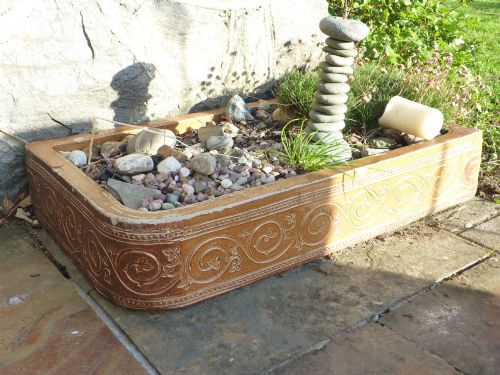
A 19th century ceramic planter encompasses vessels originally made to house plants, flowers, or water within domestic and garden settings. Buyers encounter various forms on this page, ranging from standard circular jardinieres to large troughs, footbaths, and figural flower carts.
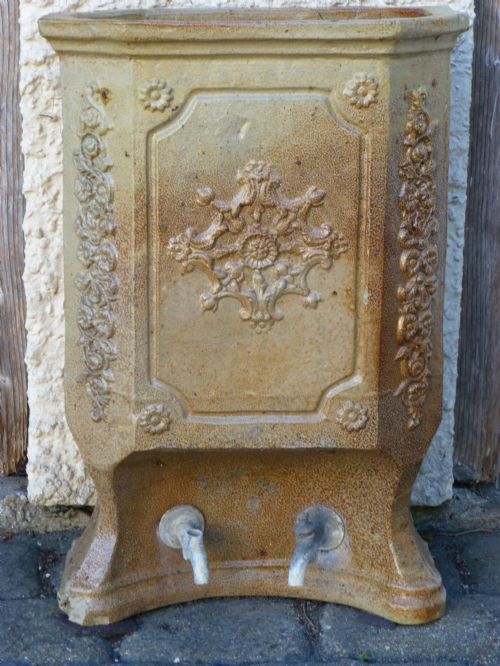
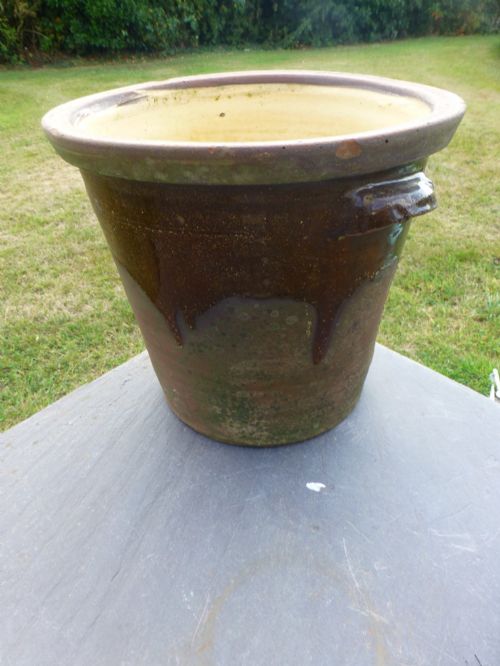
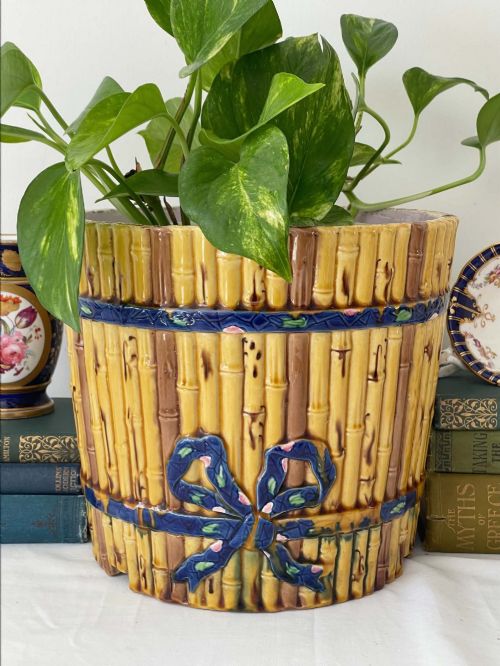
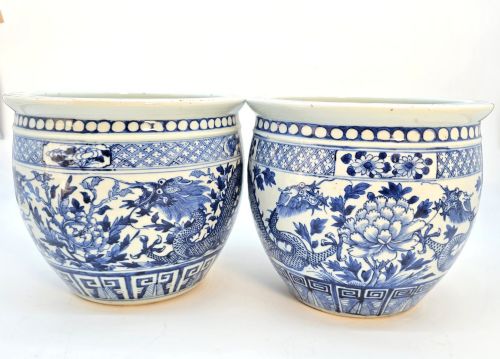
Makers across England, France, Germany, and Asia produced these pieces in earthenware, terracotta, stoneware, and porcelain. The selection frequently includes majolica wares alongside blue and white transfer-printed items and salt-glazed containers.
Materials and methods of production
Potters shaped earthenware, stoneware, and terracotta either by hand or utilising moulds before applying glazes or salt treatments. Terracotta pieces often received natural finishes, while porcelain and majolica vessels required detailed hand-painting and multiple kiln firings.
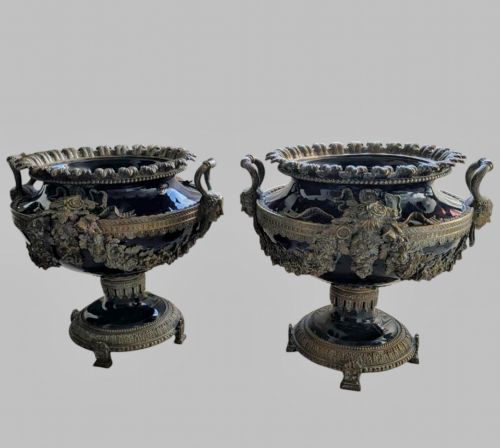
Certain utilitarian items combined ceramic bodies with metallic mounts such as ormolu, while others utilised transfer printing or hand-applied relief decoration to achieve intricate botanical and naturalistic textures.
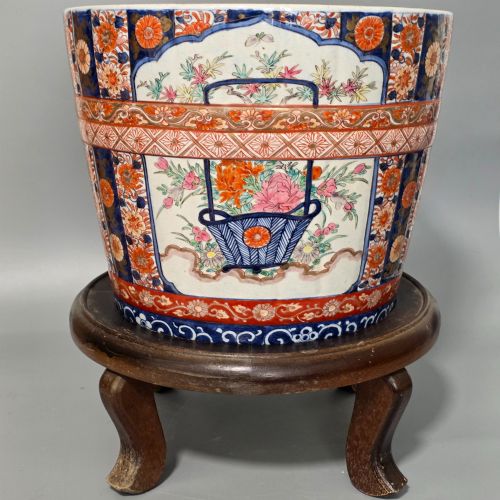
Listings feature 19th-century periods spanning Regency, Victorian, and Meiji eras, alongside materials like porcelain, earthenware, and salt-glazed terracotta.
Distinctions in craftsmanship
Quality reveals itself in the crispness of moulded relief details, the depth and evenness of coloured glazes, and the precision of hand-painted motifs. Superior examples maintain structural integrity alongside well-balanced proportions and clear factory or date markings.
Pieces featuring complex decorative techniques, such as majolica glazes with naturalistic rockwork or finely executed armorial designs, demonstrate higher levels of artisan skill than standard utilitarian vessels.
Minton·Barr Flight And Barr·Royal Worcester·George Jones·Kister Scheibe Alsbach
The 19th Century Ceramic Planter Glossary
- Jardiniere
- A decorative ceramic pot or stand designed to hold growing plants or flowers. These vessels often sit on interior tables or floor pedestals.
- Majolica
- A type of earthenware coated with an opaque tin-glaze and painted with brightly coloured metal oxides. This technique was popular in Victorian England and Europe for ornate, naturalistic plant containers.
- Salt glaze
- A vitreous coating formed by throwing common salt into the kiln during high-temperature firing. The process creates a durable, slightly textured surface common on stoneware troughs and jars.
- Transfer printing
- A method of decorating ceramics by transferring a design from an engraved copper plate onto tissue paper and then onto the biscuit-fired clay. This technique allowed for consistent blue and white patterns on footbaths and liners.
- Terracotta
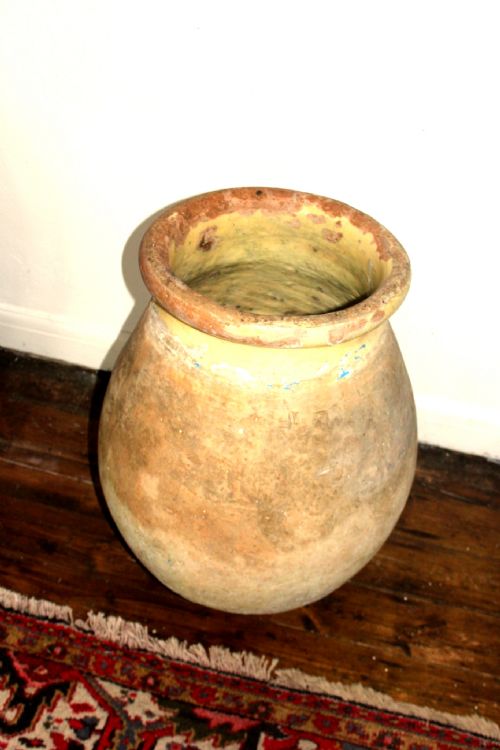
- Unglazed or glazed fired clay possessing a porous, reddish-brown body. Garden urns and confit jars typically utilise this durable material for botanical use.
19th Century Ceramic Planter: Frequently Asked Questions
What is a 19th century ceramic planter?
These pieces are fired clay vessels created in the eighteen-hundreds to display live plants, house flowers, or serve functional utility roles inside homes and conservatories.
They appear in earthenware, terracotta, porcelain, and stoneware, reflecting the diverse manufacturing centres of Britain, Europe, and Asia during that era.
How were these planters originally used?
Households placed them on tables, washstands, and floors to hold potted greenery, ferns, or cut floral arrangements.
Larger versions functioned as footbaths, log bins, or garden troughs, adapting utilitarian ceramic vessels for domestic decorative display.
Can I use these antiques outdoors?
Terracotta and salt-glazed stoneware containers suit garden environments, provided they are protected from freezing temperatures that can crack historic clay.
Porcelain and majolica pieces remain best suited for indoor placement to preserve their delicate hand-painted glazes and decorative finishes.
How do I identify the period of a planter?
Makers marks, registration diamonds, and stylistic cues such as Victorian naturalism or Rococo Revival details help determine the date of manufacture.
Material composition and glazing techniques also align specific pieces with the Victorian, Regency, or Meiji production periods.