

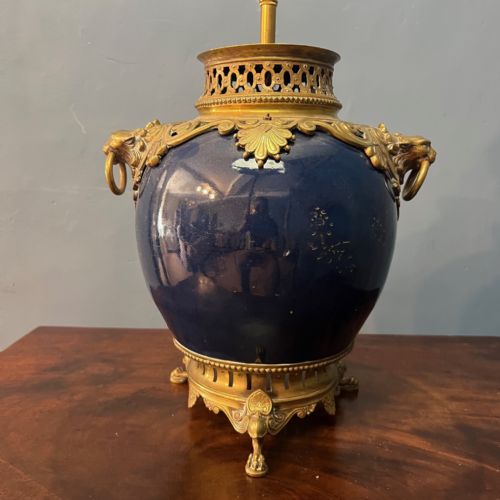
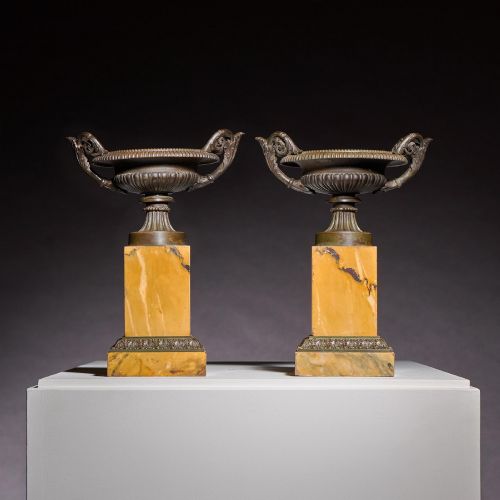
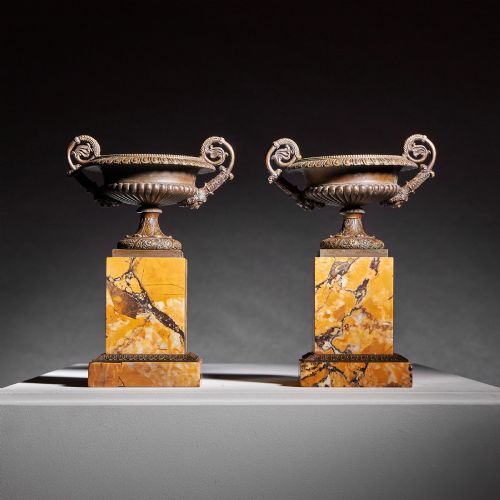
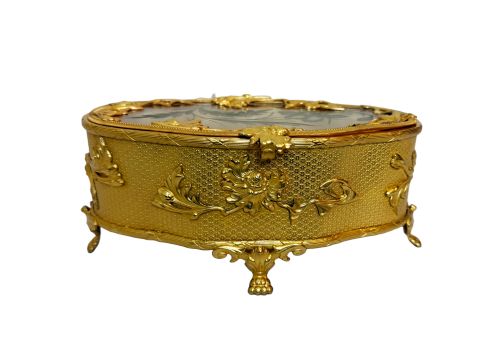
19th Century Bronze Tables
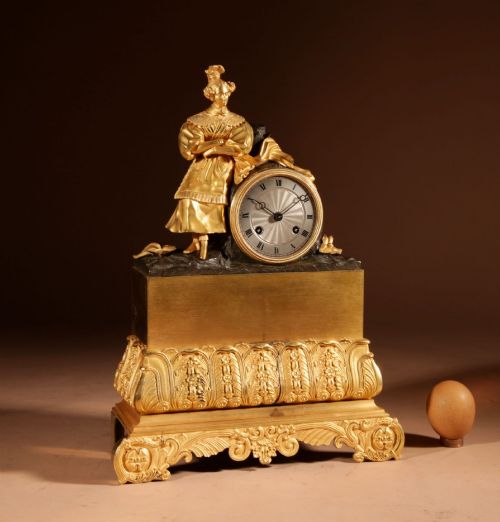
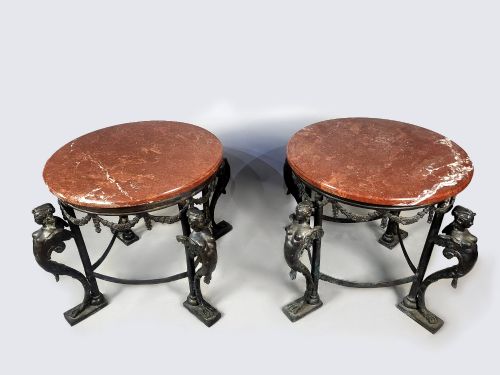
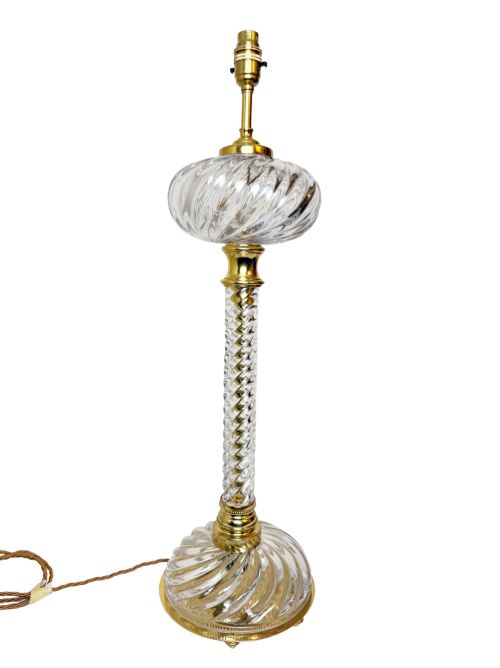
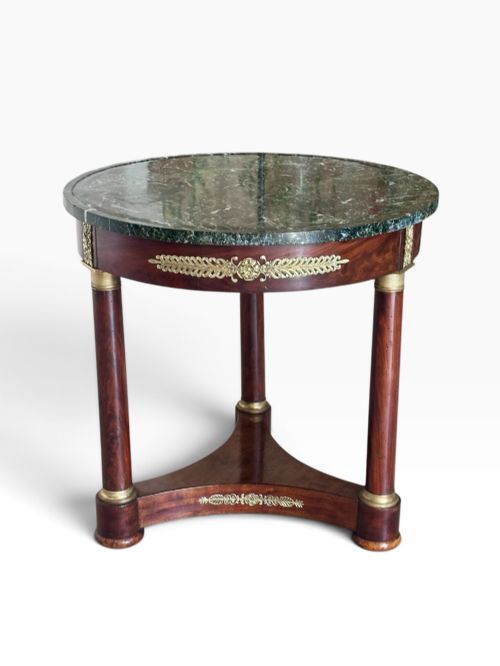
These 19th century bronze tables bring French revivalism and neoclassical design into a room through heavy gilt mounts and rich timber frames.
19th Century Bronze Tables
When searching for 19th century bronze tables, a buyer encounters pieces rooted in French design revivals, incorporating styles from Louis XV and Louis XVI alongside the Napoleon III period and French Empire aesthetics. These items frequently take the form of centre tables, writing tables, desks, and side tables that blend heavy metalwork with timber structures.
The assortment on this page draws heavily from French workshops, showing how cabinetmakers and metalworkers combined functional surfaces with ornamental metal mounts. The forms range from small occasional items to substantial centre tables designed to anchor a principal room.
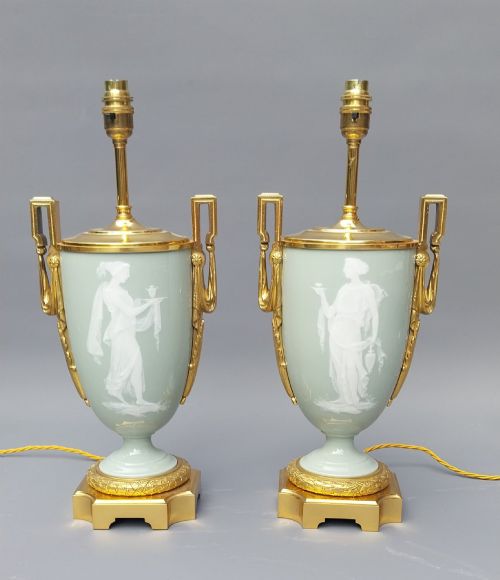
Makers and designers of the era deployed bronze, ormolu, and brass to accent surfaces of kingwood, walnut, rosewood, and amboyna, often incorporating marble tops or porcelain plaques. Such pieces reflect a period of intense historicism where nineteenth-century craftsmen reinterpreted earlier court furniture.
How they were made
Craftsmen built the core frames of these tables from dense hardwoods such as kingwood, walnut, and rosewood, frequently applying marquetry or amboyna veneers to the primary surfaces. These timber structures provided the necessary rigidity to support heavy stone and metal elements.
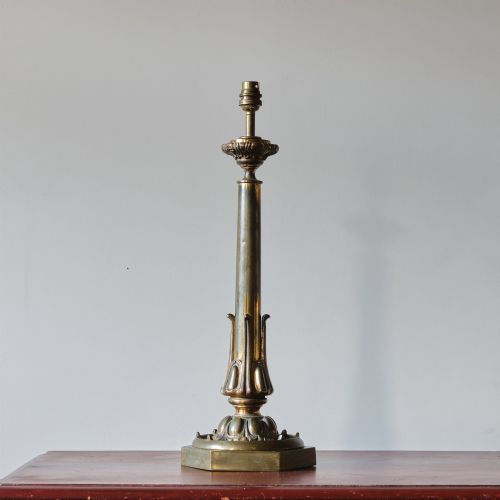
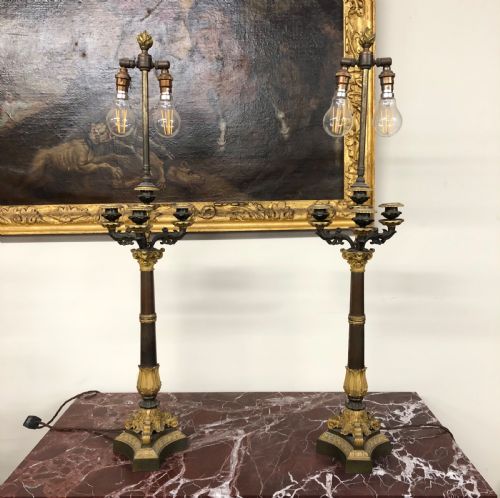
Decorative metal components relied on bronze, brass, and ormolu, cast in sections and finished by hand to create crisp relief work on mounts, sabots, and trims. Gilt bronze details were applied directly to table edges and legs, uniting the metal and timber elements.
19th Century Bronze Tables Retail Price Guide 2026
Typical asking prices for 19th century bronze tables among the pieces listed under this phrase on Sellingantiques today, from the lower quarter to the upper quarter. They describe what is for sale here now, not the wider market.
Materials recorded on this page span gilt bronze, kingwood, walnut, porcelain, and Baccarat crystal.
What varies in quality
The standard of the bronze and ormolu chasing sets the finest examples apart from routine production, showing sharp detail in hair, drapery, and acanthus foliage without softening from worn moulds. High-grade casting requires minimal subsequent filing and retains deep, clean recesses.
Timber selection and marquetry precision dictate the merit of the wooden chassis, where tight joints and well-matched grain patterns indicate superior cabinetmaking. When marble tops or porcelain plaques are present, their thickness, mineral consistency, and secure seating within the frame influence the overall standard.
Japy Freres·Maison Millet·Gillows·Jean-Baptiste Delettrez
The 19th Century Bronze Tables Glossary
- Ormolu
- Gilded bronze produced by applying a mercury-gold amalgam to a cast bronze base and heating it to vaporise the mercury. This technique creates a durable, luminous golden surface characteristic of fine furniture mounts.
- Bureau plat
- A freestanding writing table fitted with a flat top, often lined with leather, and supported by four legs. These tables frequently feature drawer banks in the frieze and elaborate bronze mounts.
- Gueridon
- A small round table supported by a central column or multiple legs, originating in the seventeenth century and revived during the nineteenth century. They served various decorative and functional roles in grand interiors.
- Marquetry
- The art of applying small pieces of veneer to a structure to form decorative patterns and pictorial scenes. Craftsmen utilised dyed woods, fruitwoods, and exotic timbers to achieve complex visual depth.
19th Century Bronze Tables: Frequently Asked Questions
How do I identify a 19th century bronze table?
Examine the construction methods beneath the surface, looking for hand-cut dovetails, traditional joinery, and heavy bronze or ormolu mounts fixed with threaded pins rather than modern screws. The weight of the piece and the presence of dense hardwoods like kingwood or walnut confirm the period.
The style often references Louis XV, Louis XVI, or French Empire designs, reflecting the historicism popular among nineteenth-century European cabinetmakers. Signatures or foundry stamps on the bronze elements provide further clues to origin.
Were these tables used for writing or display?
Many examples function as desks and writing tables, equipped with leather-lined tops and fitted drawers for correspondence. Others serve as centre tables or side tables designed to hold decorative objects, lamps, and clocks.
The versatile forms accommodated both the formal reception rooms and private studies of nineteenth-century homes, blending utility with ornamental display.
How should I care for the bronze mounts?
Dust the bronze and ormolu regularly with a soft, dry brush to prevent dirt accumulation in the chased recesses. Avoid abrasive cleaners, polishes, or chemical solvents that strip the original gilding.
Maintain stable humidity levels in the room to protect both the underlying timber frame and the secure seating of the metal mounts.
What distinguishes Napoleon III style tables?
Napoleon III pieces draw on a eclectic mix of historical precedents, prominently featuring Boulle marquetry of tortoiseshell and brass, alongside rich ormolu mounts. They embrace ornate symmetry and opulent materials suited to the Second French Empire.
The integration of exotic woods and classical motifs marks the output of this era, distinguishing it from earlier austere neoclassical designs.