

Neoclassical Marble Table
A neoclassical marble table brings architectural proportion and classical stone surfaces into a room.
Neoclassical Marble Table
When you search for a neoclassical marble table, you encounter console tables, centre tables, and side tables defined by stone tops and classical symmetry.
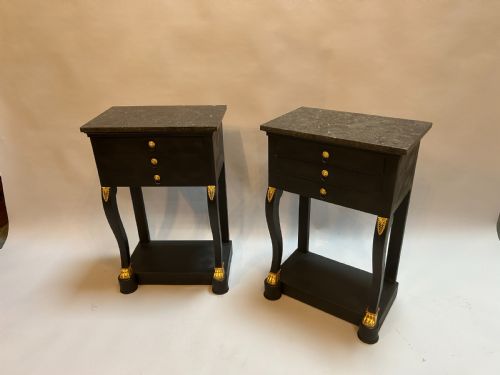
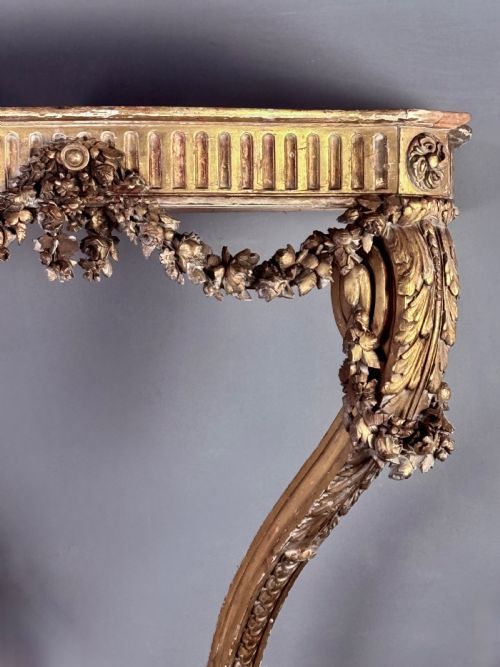
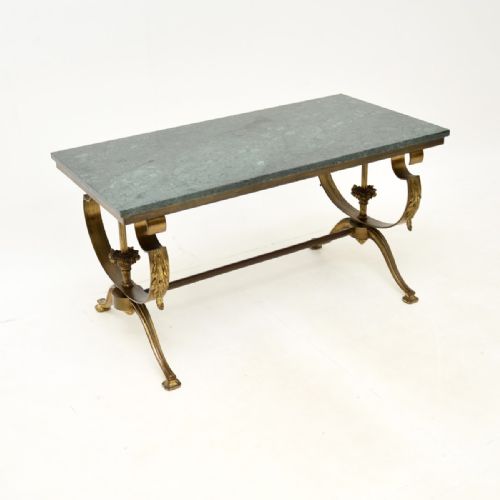
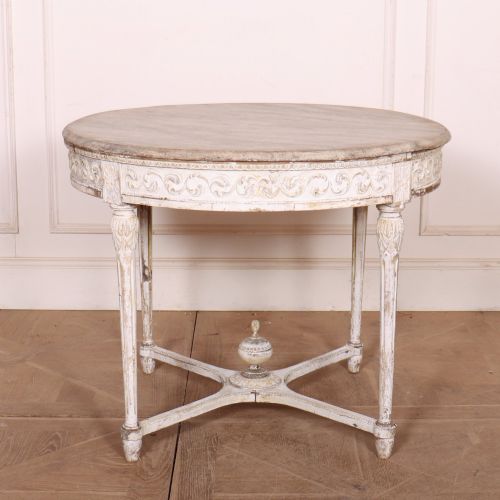
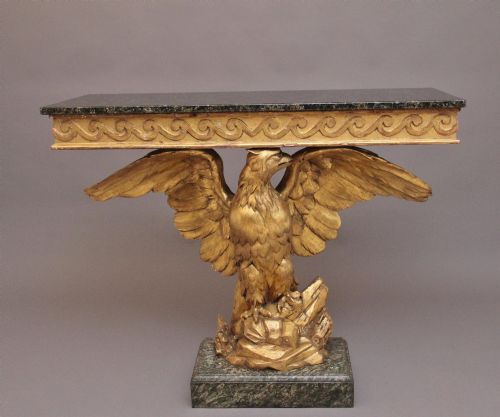
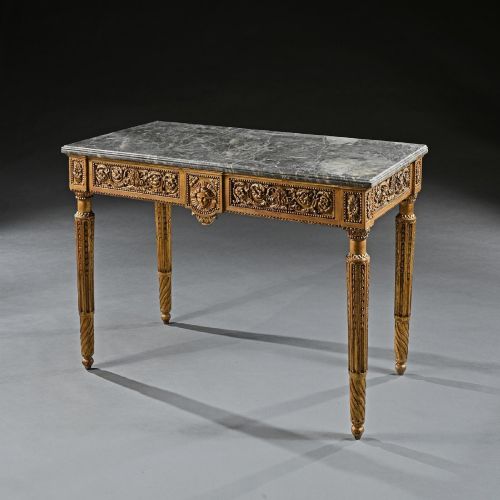
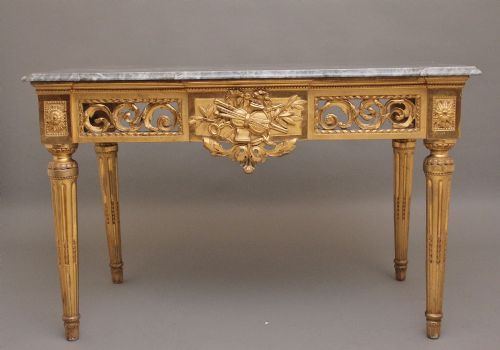
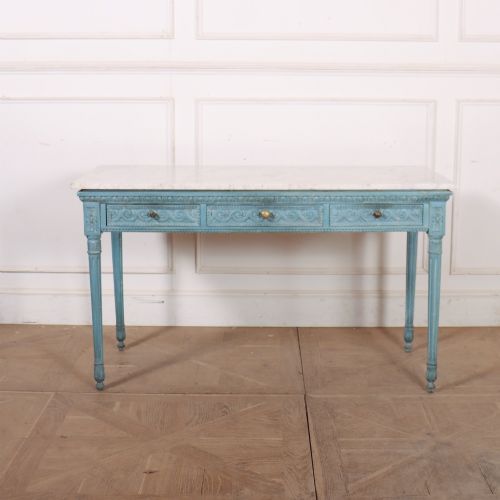
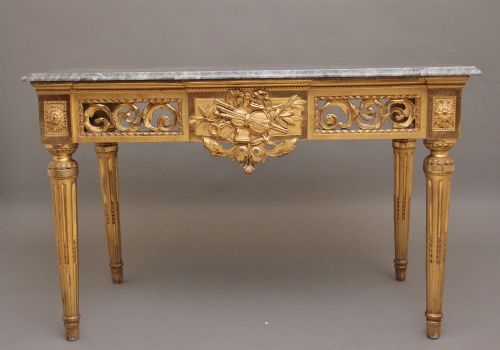
The version you meet most often on this page is a console or coffee table featuring a fitted marble top supported by a carved or gilded wooden frame.
These pieces draw on eighteenth and nineteenth-century design traditions, utilising styles such as Louis XVI, French Empire, and Italian Neoclassical.
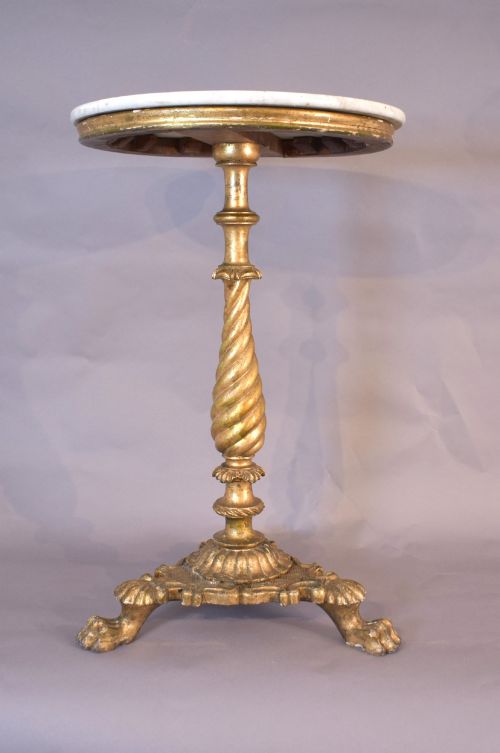
Alongside standard tables, the selection includes related forms like guéridons and occasional tables incorporating the same characteristic materials.
How they were made
Cabinetmakers constructed the main framework from woods such as mahogany, rosewood, and pine, applying carved details or gesso before finishing with paint, parcel gilt, or gilding.
Surfaces received heavy slabs of white, black, or rouge marble, cut and polished to fit precisely within wooden or metal borders.
Metal elements, including cast brass, gilt bronze, and ormolu mounts, embellish the frames and legs with classical motifs like rams' heads and architectural moulding.
Materials across the selection include mahogany, rosewood, giltwood, fabric, enamel, and brass alongside marble.
What varies in quality
The distinction between an ordinary piece and a finer example rests on the crispness of the woodcarving and the depth of the gilding applied to the frame.
Quality shows in the selection of the marble itself, distinguishing standard slabs from thick, richly figured varieties with complex veining.
Metal mounts indicate the standard of production, with finely chased ormolu displaying sharper detail than simple cast brass.
Charles à Orléans·Reiche·Masion Ramsay
The Neoclassical Marble Table Glossary
- Console table
- A table designed to stand against a wall, frequently secured with brackets and topped with marble. These pieces often feature elaborate carved or gilded bases.
- Ormolu
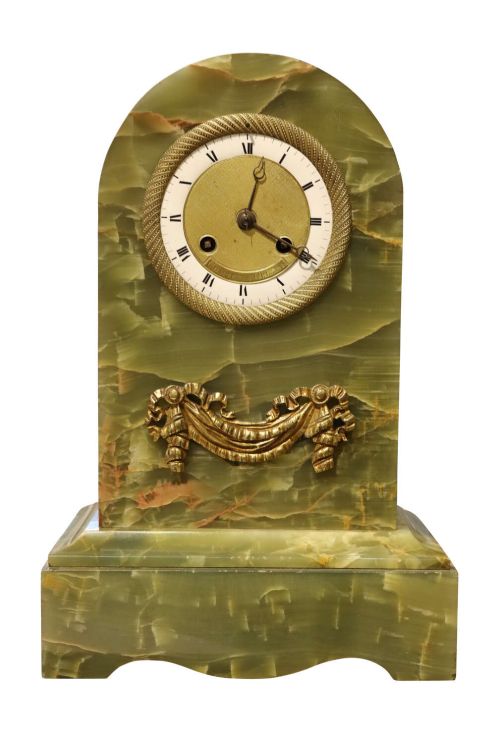
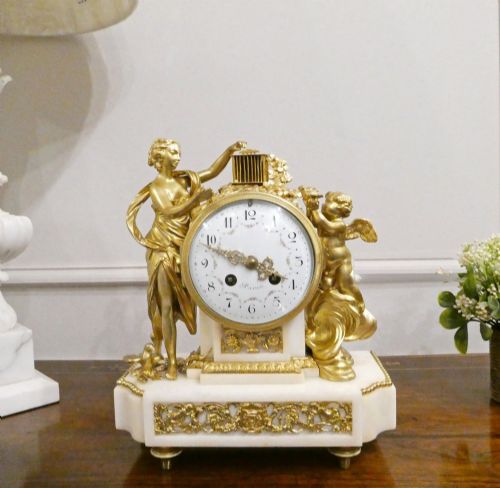
- Gilded bronze used for decorative mounts on furniture and clocks. This technique was widely utilised in French neoclassical cabinetmaking.
- Guéridon
- A small round table supported by a central column or tripod base. Versions often incorporate marble tops and brass mounts.
- Louis XVI style
- A design movement characterised by straight lines, classical symmetry, and ancient Roman motifs. Furniture from this repertoire relies on rectangular geometry rather than rococo curves.
- Bouillotte table
- A small neoclassical occasional table with a raised gallery around the marble top to keep items from sliding off.
Neoclassical Marble Table: Frequently Asked Questions
How do I identify a neoclassical table?
Look for straight tapered legs, architectural symmetry, and classical motifs such as acanthus leaves, urns, or fluting. The combination of a stone top with carved wood or cast metal provides a primary visual indicator.
Examine the overall geometry and proportions, which lean towards classical restraint rather than ornate curvature.
What marble types appear on these tables?
Listings feature white marble, black marble, and rouge marble, alongside green onyx and alabaster. These stones are selected for their dense grain and decorative veining.
The choice of stone often reflects the period and region of manufacture, with Italian and French pieces displaying distinct regional preferences.
Where should I place a console table?
Console tables function best against flat walls in entrance halls, living rooms, or dining spaces. Because they often have finished fronts and flat backs, placement against a vertical surface ensures stability.
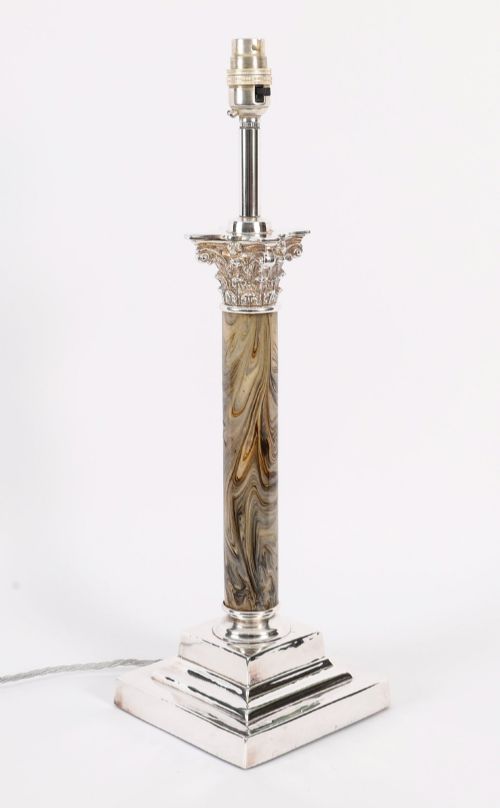
Pairing the table with a mirror or placing a lamp upon the surface completes the traditional arrangement.
Are these tables sturdy enough for daily use?
Tables with heavy marble tops rely on solid wood frames and secure fastening to remain stable. While sturdy, the weight of the stone means these pieces should be lifted rather than dragged when moved.
Routine maintenance involves dusting the carved or gilded wooden frames with a dry cloth and wiping the stone surface carefully.