







Regency Marble Centre Table
A regency marble centre table brings architectural presence and a cool stone surface to the middle of a room.
Regency Marble Centre Table
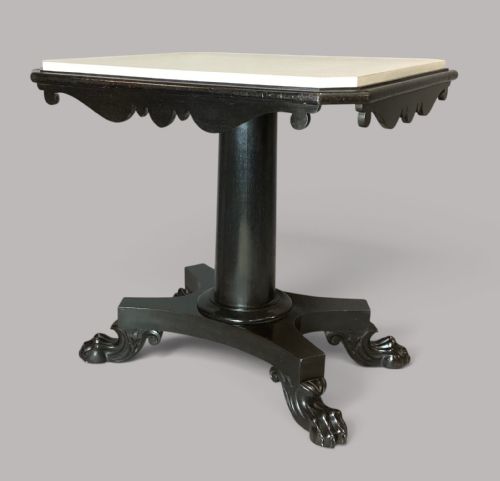
A regency marble centre table stands freestanding in a room, designed to be viewed from every angle rather than pushed against a wall. The form appears primarily across the nineteenth century, including the Regency, George IV, and William IV periods, alongside later revivals.
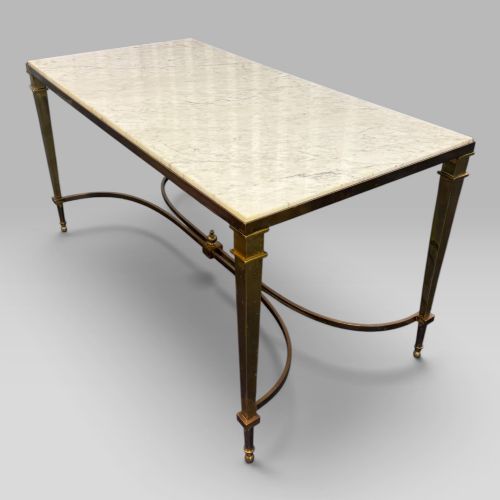
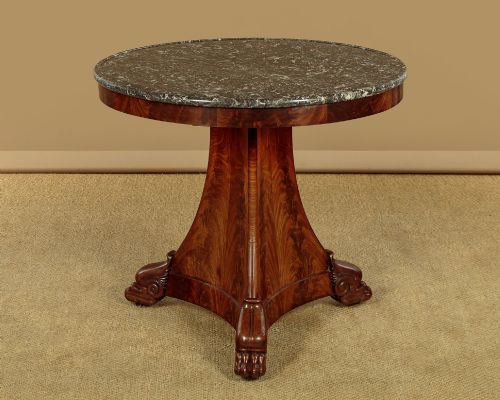
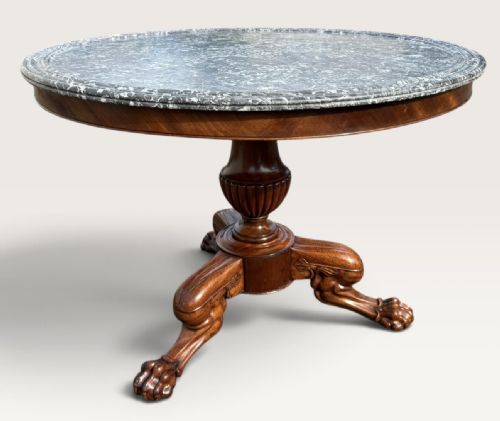
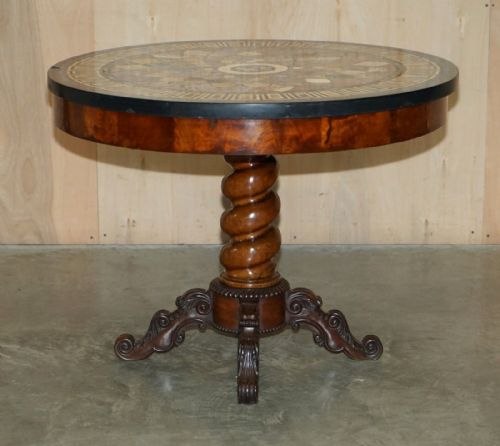
Most examples feature a circular stone top supported by a central pedestal or a tripod base, though occasional rectangular forms emerge. The tables function variously as breakfast tables, lamp tables, and dramatic centrepieces in a hallway or principal reception room.
Origins span English workshops of the early nineteenth century alongside continental centres like Florence and Venice, drawing on French Empire, Neoclassical, and Grand Tour influences.
Materials and Construction
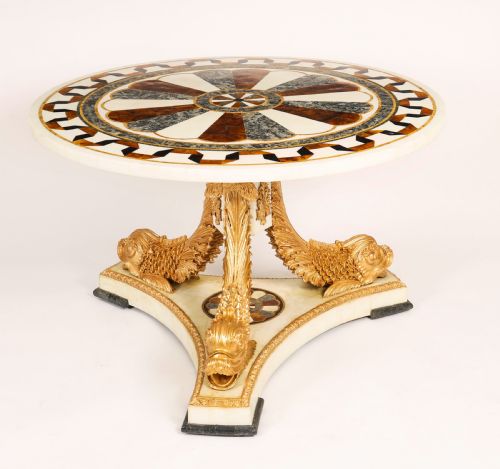
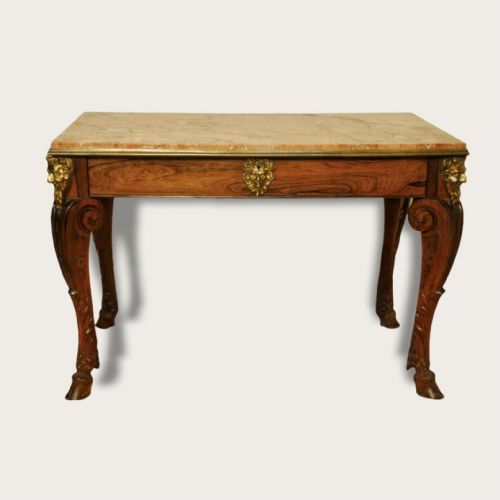
Makers paired heavy stone tops of white marble, Siena marble, or multi-coloured specimen marbles with robust wooden frames in mahogany, rosewood, oak, walnut, and ebonised wood. Pietra dura inlay and micro-mosaic work frequently adorn the most ambitious stone surfaces.
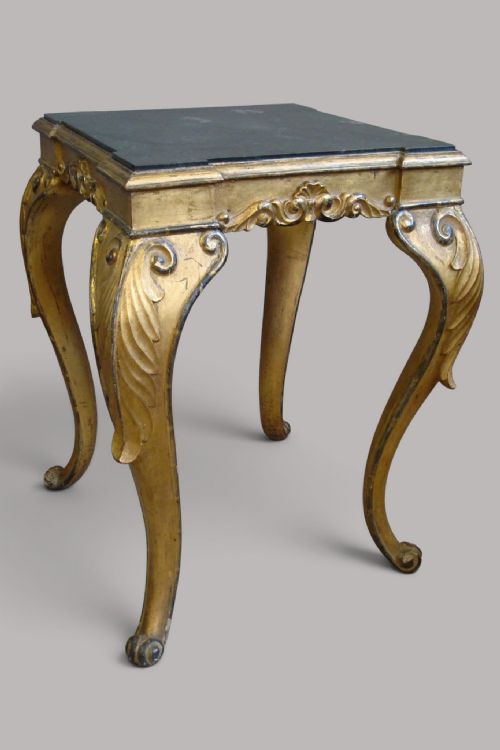
Structural support relies on dense timbers often enriched with giltwood, ormolu mounts, and cast brass details. Carved wooden motifs like dolphins frequently anchor the pedestals beneath the heavy stone.
Regency Marble Centre Table Retail Price Guide 2026
Typical asking prices for regency marble centre table among the pieces listed under this phrase on Sellingantiques today, from the lower quarter to the upper quarter. They describe what is for sale here now, not the wider market.
Forms span the nineteenth century alongside later revivals, covering breakfast tables, gueridons, and coffee tables.
Evaluating Craftsmanship
Quality rests upon the ambition of the stone top and the crispness of the base carving. Specimen marble tops and detailed pietra dura bird inlays demand exceptional lapidary skill, distinguishing standard tables from important ones.
The choice of timber and secondary metals shapes the distinction of a piece. Solid flame mahogany, finely chased ormolu, and substantial giltwood enrichments denote superior workshop production.
The Regency Marble Centre Table Glossary
- Pietra dura
- An artistic technique using cut and fitted polished coloured stones to create pictorial designs. The method produces intricate floral or avian motifs on tabletops.
- Gueridon
- A small circular table supported by a central column or figures. Originating in seventeenth-century France, the form persisted strongly through the Regency period.
- Specimen marble
- A tabletop composed of numerous geometric or jigsaw pieces of different marbles assembled together. Grand Tour travellers frequently collected these stones as souvenirs.
- Ormolu
- Gilded bronze mounted onto furniture as decorative enrichment. The technique requires mercury gilding or modern electroplating to achieve its golden finish.
Regency Marble Centre Table: Frequently Asked Questions
Where should a centre table go?
These tables are designed to sit freestanding in the middle of a room or a large hallway. They allow light to catch the polished stone surface from multiple angles.
Ensure there is enough walking space around the perimeter so the piece functions properly as a focal point.
How do I care for a marble top?
Wipe the stone surface regularly with a soft, damp cloth to remove dust and prevent grit from scratching the polish. Avoid using acidic cleaners or harsh chemicals that can etch the mineral structure.
Use coasters under glasses and place mats beneath objects to protect the antique surface from rings and impacts.
What is a specimen marble top?
A specimen top brings together many different varieties of coloured stone into a single geometric or pictorial arrangement. These pieces were often acquired by travellers on the Grand Tour.
The resulting surface displays a rich mosaic of natural geological colours and patterns.
How do I distinguish Regency from later revivals?
Authentic Regency pieces generally date from the early nineteenth century and rely on dense native or imported timbers combined with classical proportions. Later nineteenth and twentieth-century revivals often adopt similar Neoclassical motifs but employ different secondary woods.
Examining the construction methods and timber shrinkage helps clarify the period of manufacture.