


19th Century Bronze Candlesticks
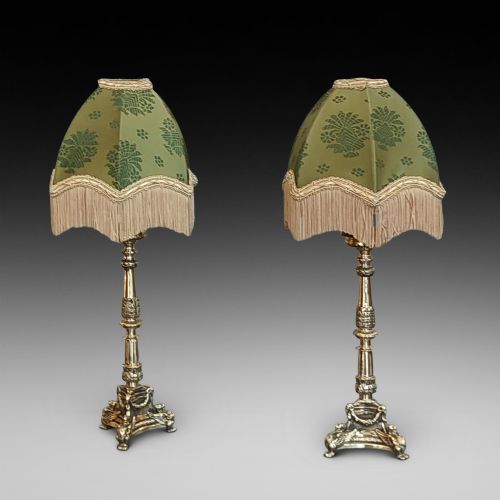
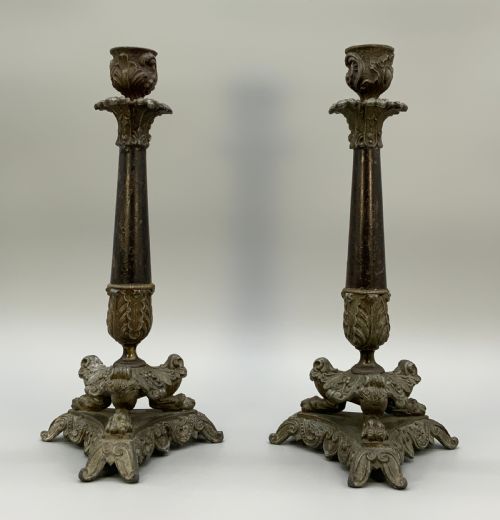
Selecting a pair of 19th century bronze candlesticks brings architectural weight and classical modelling to an interior.

19th Century Bronze Candlesticks
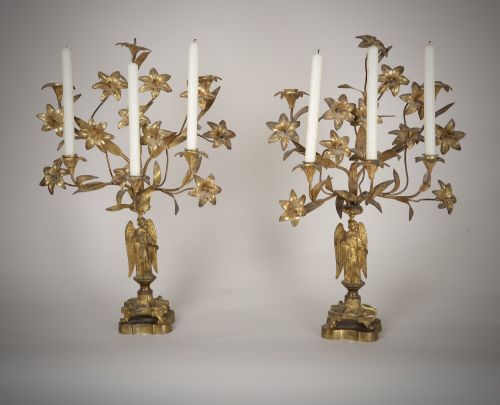
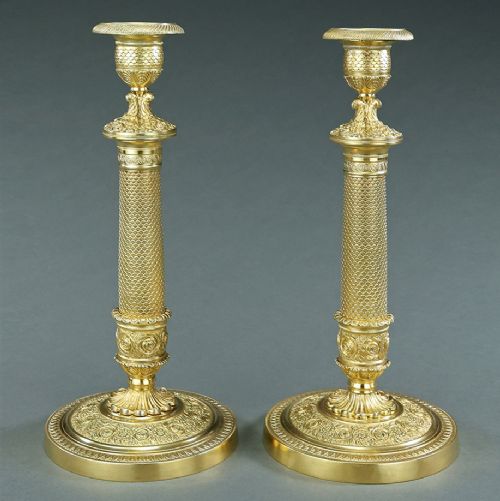
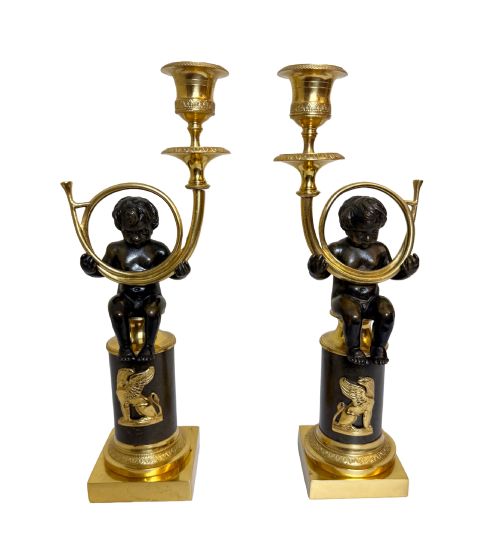
These metal lighting supports draw upon French Empire, Regency, and Victorian aesthetics, often taking the form of paired display objects on square or plinth bases. When searching for 19th century bronze candlesticks, a buyer encounters everything from simple patinated metal shafts to elaborate figural compositions featuring cherubs, animals, and classical motifs.
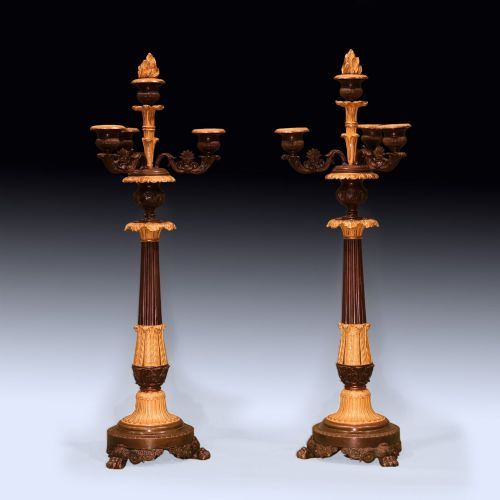
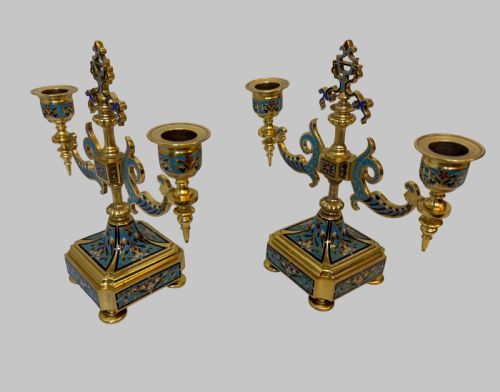
Continental workshops, particularly French houses working in the Empire or Rococo Revival manner, dominate the selection alongside English and Swedish examples. Forms extend beyond standard single-light sticks into multi-branch candelabra, desk accessories, and pieces subsequently adapted into table lamps.
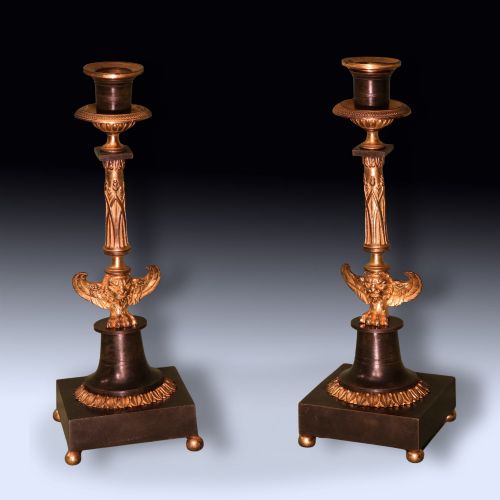
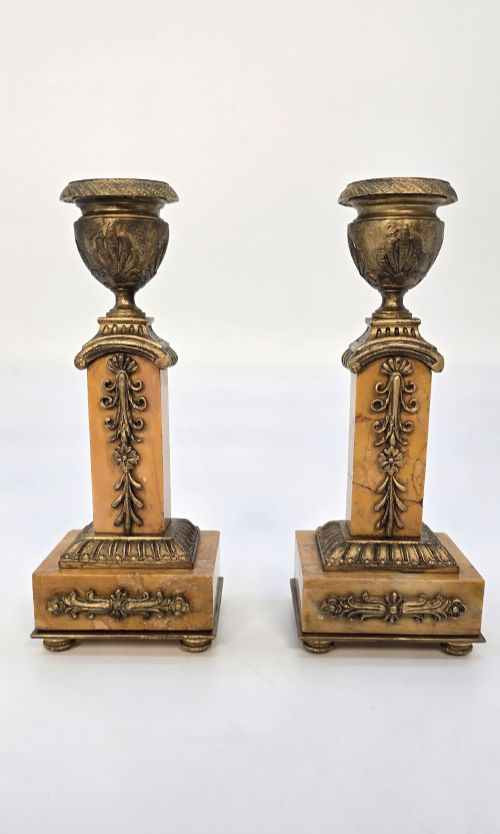
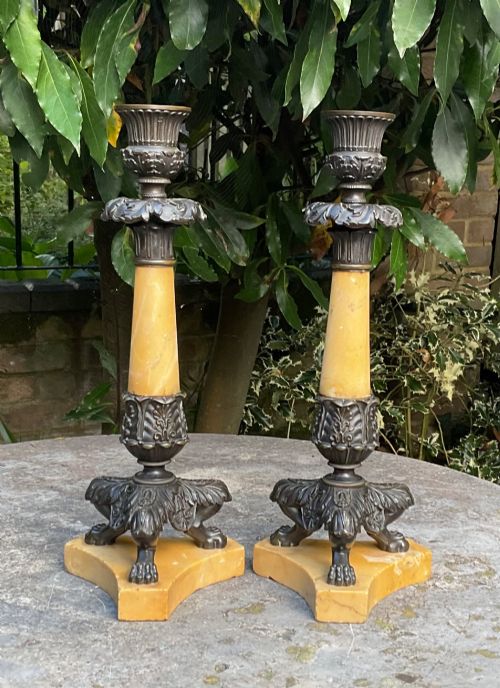
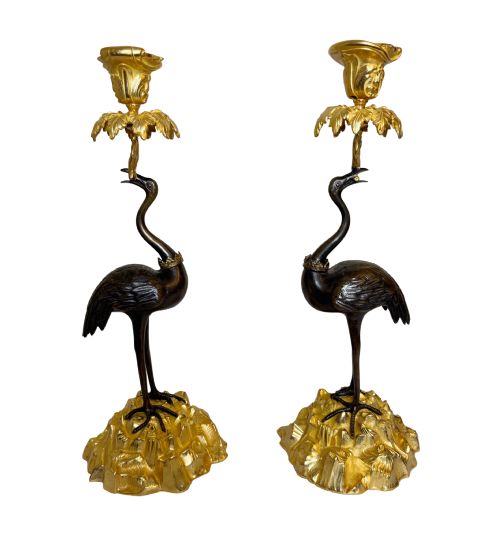
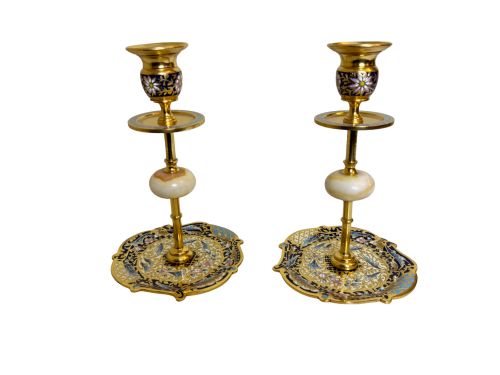
Material combinations frequently unite dark patinated bronze with bright ormolu accents, mounted upon white marble, sienna marble, or onyx plinths. More ornate interpretations incorporate champlevé enamel or glass lustre drops to catch the candlelight.
Materials and Construction
Foundry work relied heavily on metal casting techniques to produce detailed figural elements and crisp acanthus leaf moulding. Makers combined solid cast bronze components with gilded elements, applying mercury gilding to achieve the rich surface finish known as ormolu.
Stonework bases required precision cutting to support heavy metal shafts, utilising contrasting white, black, or coloured marble plinths. Secondary materials such as champlevé enamel cells and glass prisms were then integrated by hand into the cast frames.
19th Century Bronze Candlesticks Retail Price Guide 2026
Typical asking prices for 19th century bronze candlesticks among the pieces listed under this phrase on Sellingantiques today, from the lower quarter to the upper quarter. They describe what is for sale here now, not the wider market.
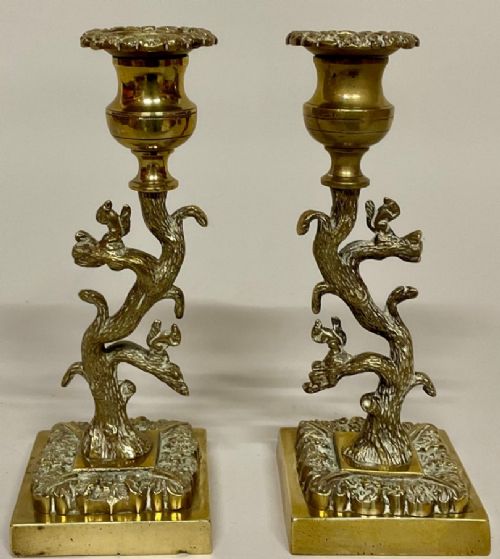
Squirrels clamber up cast bronze tree trunks among the branches of Regency candlesticks.
Assessing Craftsmanship and Detail
The definition in the chasing separates ordinary production from superior workshop output, visible in the sharpness of hair, drapery, and cast foliage. Stronger examples retain crisp tool marks and deep relief rather than soft, rounded edges from worn moulds.
The contrast between patinated dark surfaces and fire-gilt ormolu highlights dictates visual balance across a pair. Heavier cast weight and stable marble plinths without repairs indicate better structural integrity.
Henri Picard·Thomas Hope
The 19th Century Bronze Candlesticks Glossary
- Ormolu
- Gilded bronze produced by applying a mercury and gold amalgam to a bronze base before heating. This technique creates a distinctive golden lustre characteristic of French decorative metalwork.
- Patination
- The surface coloration resulting from age, wear, or intentional chemical treatment of bronze. A dark patinated bronze often provides visual contrast against gilded mountings.
- Champlevé
- An enamelling technique where troughs are dug into the metal surface and filled with vitreous enamel paste before firing. It frequently appears on late nineteenth century decorative accessories.
- Campana
- A vase-shaped lighting socket resembling an ancient Roman bell-shaped mixing vessel. It forms the upper candle cup on many classical designs.
- Pricket
- A sharp spike rising from the centre of a drip pan to secure a thick wax candle. These appear on older or ecclesiastical forms rather than standard socket holders.
19th Century Bronze Candlesticks: Frequently Asked Questions
How do I clean antique bronze candlesticks?
Dust gently with a soft dry brush to protect delicate patination and gilt surfaces. Avoid harsh metal polishes that strip original finishes.
Moisture should be kept away from marble bases and enamel insets to prevent staining or structural damage over time.
Were these candlesticks converted to lamps?
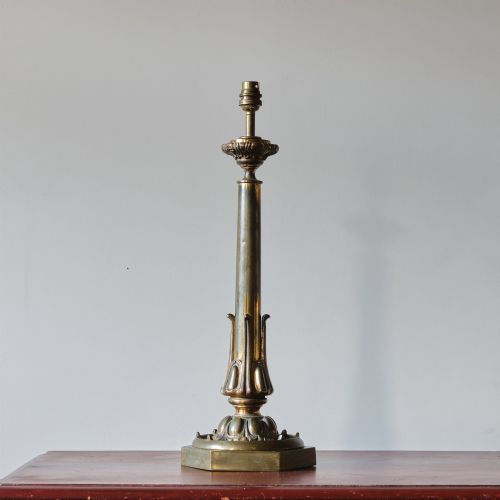
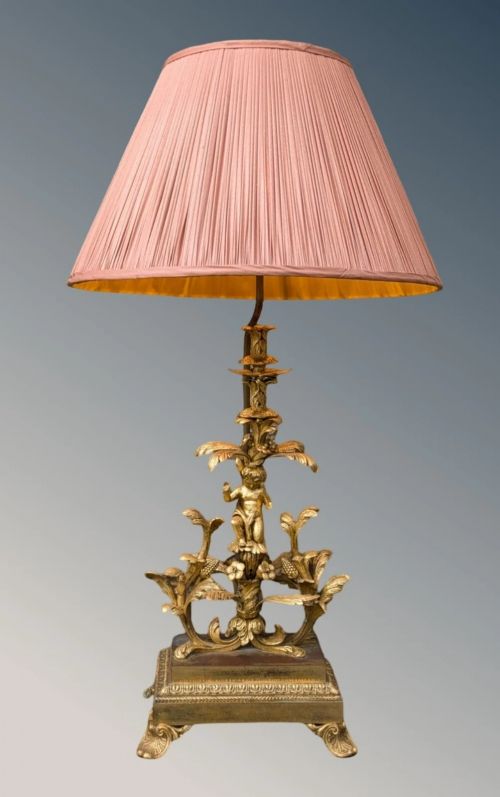
Many nineteenth century examples underwent later electrification to serve as functional table lamps in modern interiors. This conversion often involves wiring threaded through the central column.
Collectors weigh the originality of the piece against the practicality of wired lighting when selecting for a room.
How can I tell French from English pieces?
French production frequently favours classical Empire, Rococo, or Retour d'Egypte motifs executed in bright ormolu and dark bronze. These often incorporate detailed figural casting such as cherubs or mythological creatures.
English variants tend toward restrained Regency designs or Gothic revival interpretations with heavier structural proportions.
Why are marble bases used?
Heavy stone plinths provide essential counterweight and stability for tall metal stems and multi-branch candelabra. Sparing use of white, sienna, or black marble also frames the metallic tones.
These contrasting natural materials reflect Neoclassical taste popular throughout the nineteenth century.