

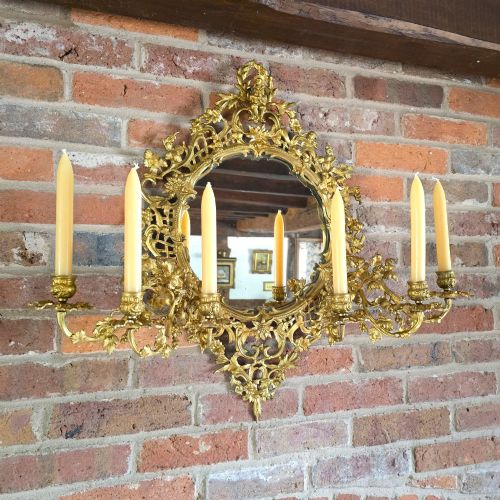
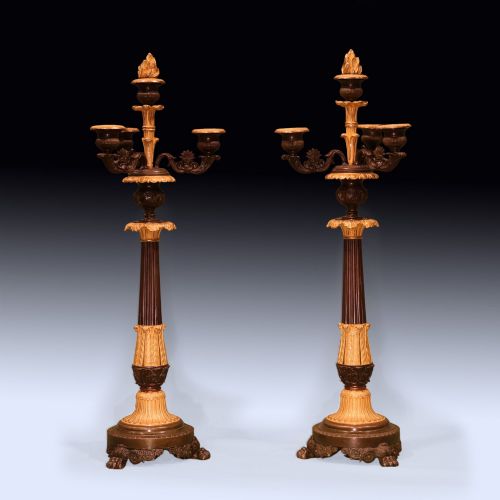
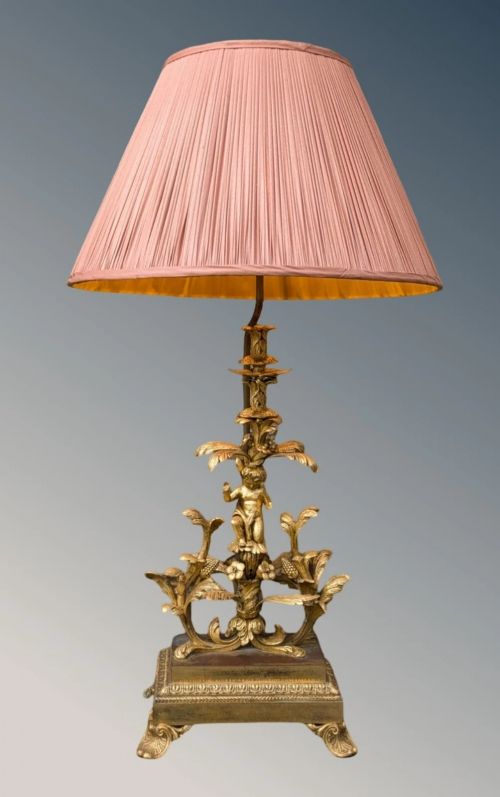
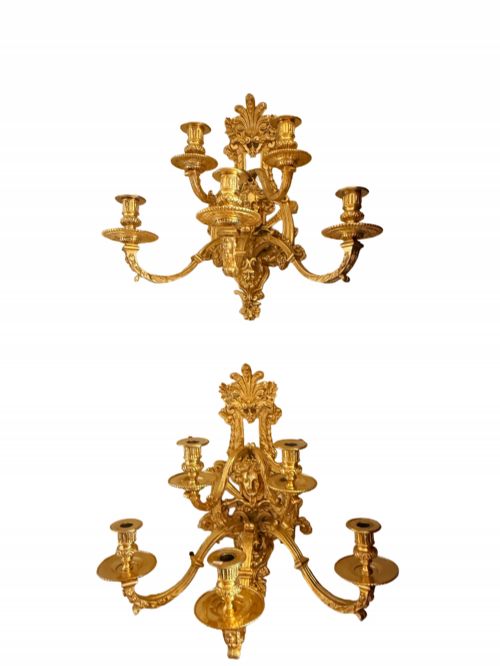
19th Century Bronze Candelabra
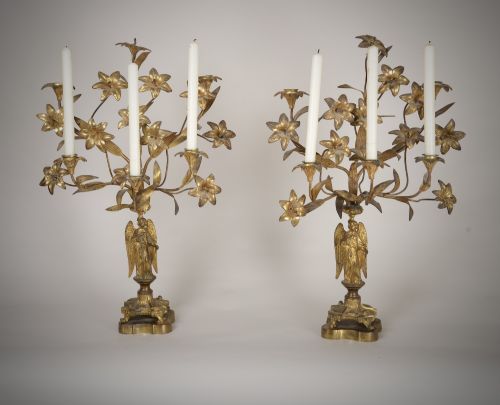
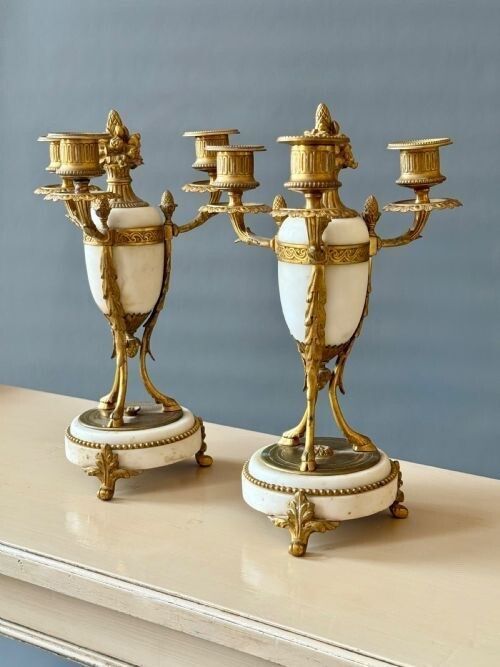
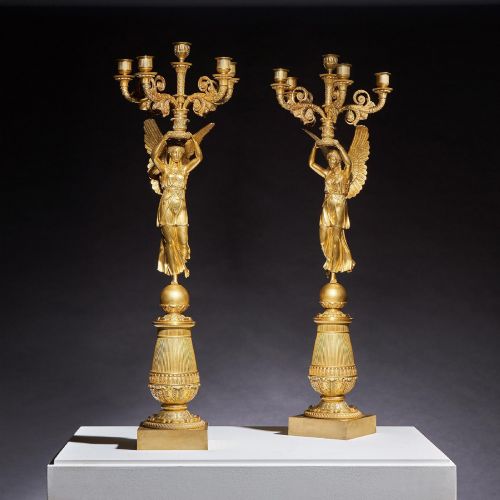
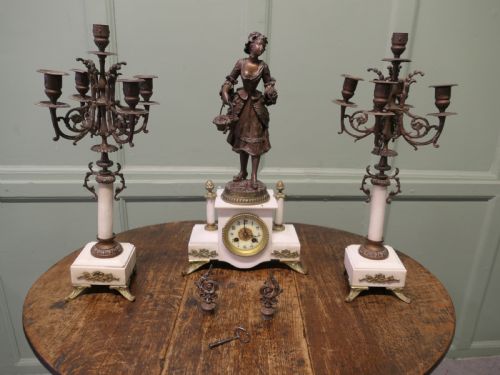
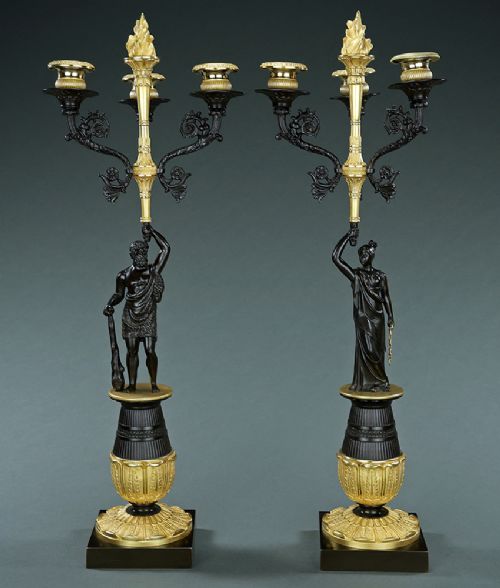
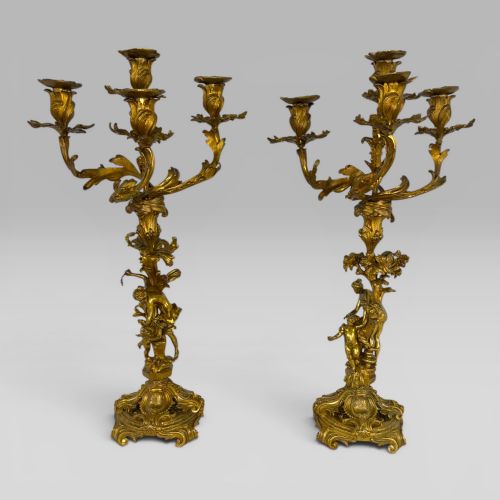
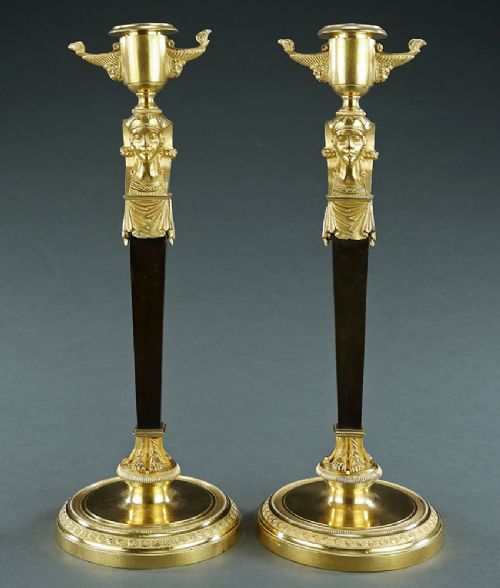
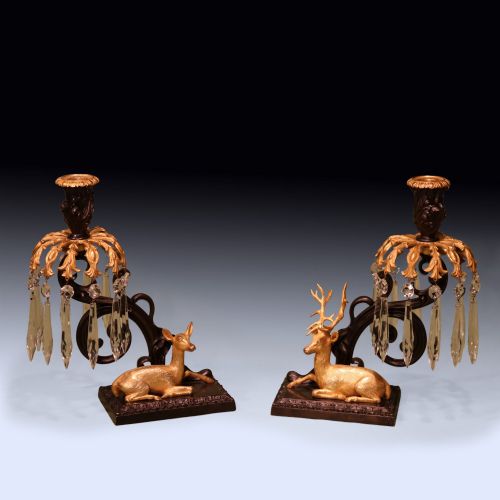
These 19th century bronze candelabra combine heavy patinated or gilded metal with sculptural figures to anchor a room.
19th Century Bronze Candelabra
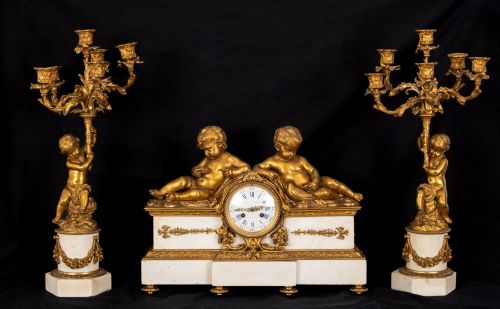
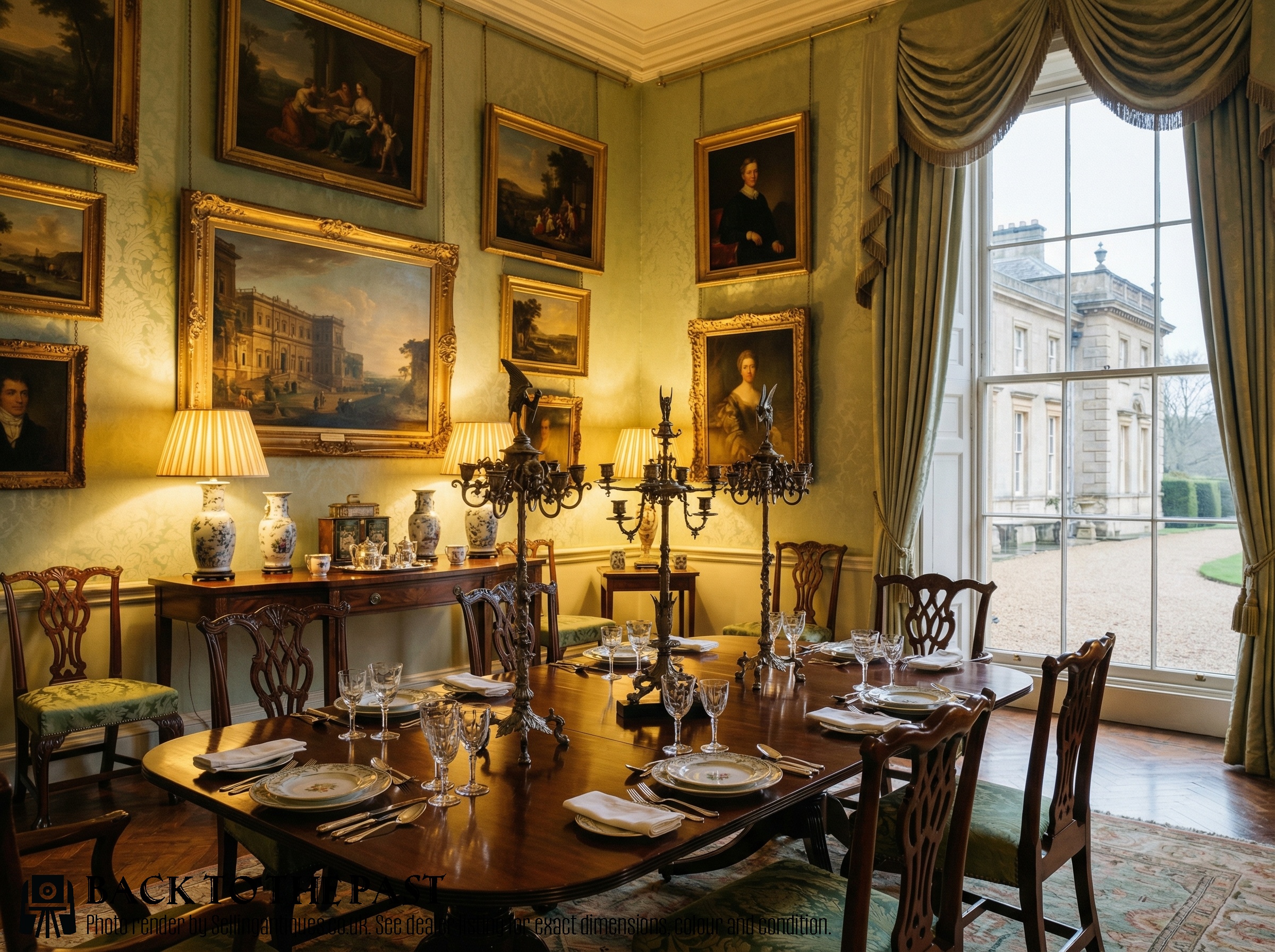
When you search for 19th century bronze candelabra, you encounter multi-branch lighting fixtures designed to hold several candles at once. These pieces frequently appear in matched pairs and often form part of larger mantel garniture sets alongside matching clocks.
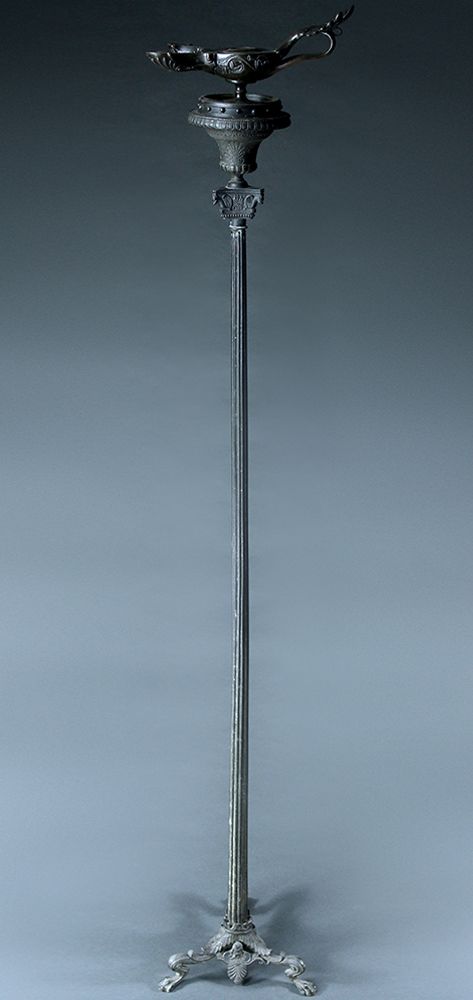
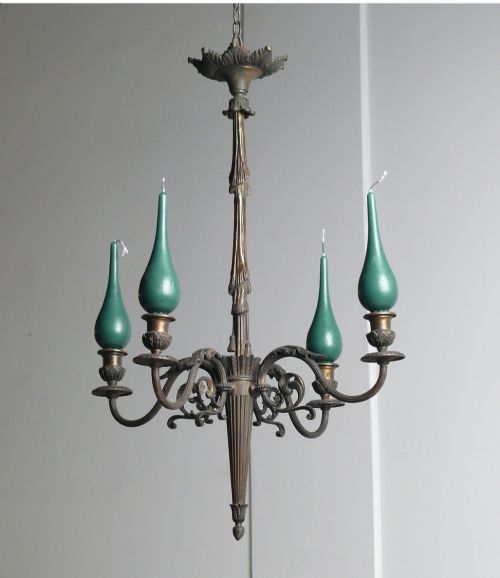
The selections on this page lean heavily toward French manufacturing centres, showing stylistic influences from the Empire, Rococo Revival, and Louis XVI periods. Alongside standard multi-branch candelabra, the inventory includes related forms such as single candlesticks, wall sconces, and floor-standing lamps.
Originating largely from the nineteenth century, these objects range from austere Regency designs to ornate, figurative works incorporating cherubs, knights, or classical deities. Their forms span simple two-branch table pieces up to monumental multi-light structures.
What varies in quality
The richness and preservation of the mercury gilding or ormolu dictate much of the visual impact. Heavy, uniform gilding that retains its original matte and burnished highlights indicates superior workshop execution compared to thin, worn plating.
Pierre Philippe Thomire·Rabiat·Henry Dasson
The 19th Century Bronze Candelabra Glossary
- Ormolu
- Gilt bronze created by applying a finely ground gold-mercury amalgam to a bronze object before firing. This technique produces a characteristic warm, deep lustre unique to period French metalwork.
- Patinated bronze
- Metal treated with chemical solutions to darken the raw bronze surface into rich brown or black tones. This dark finish highlights the brighter gilt elements placed alongside it.
- Clock garniture
- A matching decorative set comprising a central mantel clock flanked by matching candelabra or urns. These ensembles were designed to sit harmoniously on a fireplace mantel.
- Garniture
- A coordinated set of ornamental objects designed for display together on a piece of furniture. In this context, they typically match the materials and decorative style of the associated candelabra.
- Champlevé
- An enamelling technique where troughs are dug into the bronze surface and filled with vitreous enamel paste before firing. The resulting coloured patterns add vibrant decoration to the metal base.
19th Century Bronze Candelabra: Frequently Asked Questions
How do I clean bronze candelabra?
Dust these pieces gently with a soft, dry brush to prevent dirt accumulation in the recessed crevices of the casting. Avoid chemical dips or abrasive metal polishes, which strip away historical patination and damage delicate gilt surfaces.
For stubborn grime, use a slightly damp cloth with mild soap, drying the metal thoroughly afterwards. Preserving the original surface finish maintains both the visual character and the historical integrity of the bronze.
Were these electrified later?
Many nineteenth-century lighting pieces have undergone conversion to electricity to suit modern residential use. Professional conversions often run wiring internally through the central stem to preserve the exterior appearance.
Unconverted examples retain their original sconces and drip pans designed strictly for wax candles. Collectors frequently debate the merits of retaining original candle use versus modern electrical adaptation.
How do I spot a reproduction?
Authentic period pieces display consistent hand-chasing marks and heavy, solid bronze casting weights appropriate to the nineteenth century. Modern reproductions often exhibit spongy casting voids, uniform machine-buffed surfaces, and lightweight metal alloys.
Examine the construction joints and fasteners to ensure they match historical manufacturing methods rather than modern assembly screws. Genuine patination develops naturally over decades and resists simple duplication.