

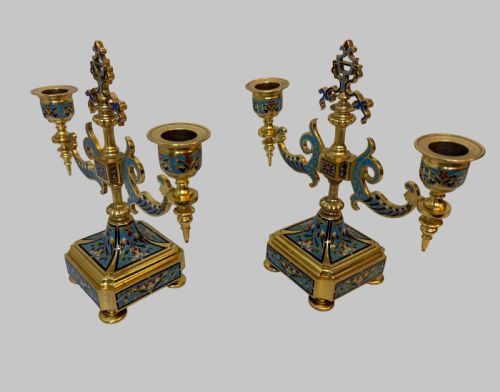


Antique French Table Candelabra
These antique french table candelabra bring the heavy, gilded presence of nineteenth-century salons directly onto a sideboard or mantelpiece.
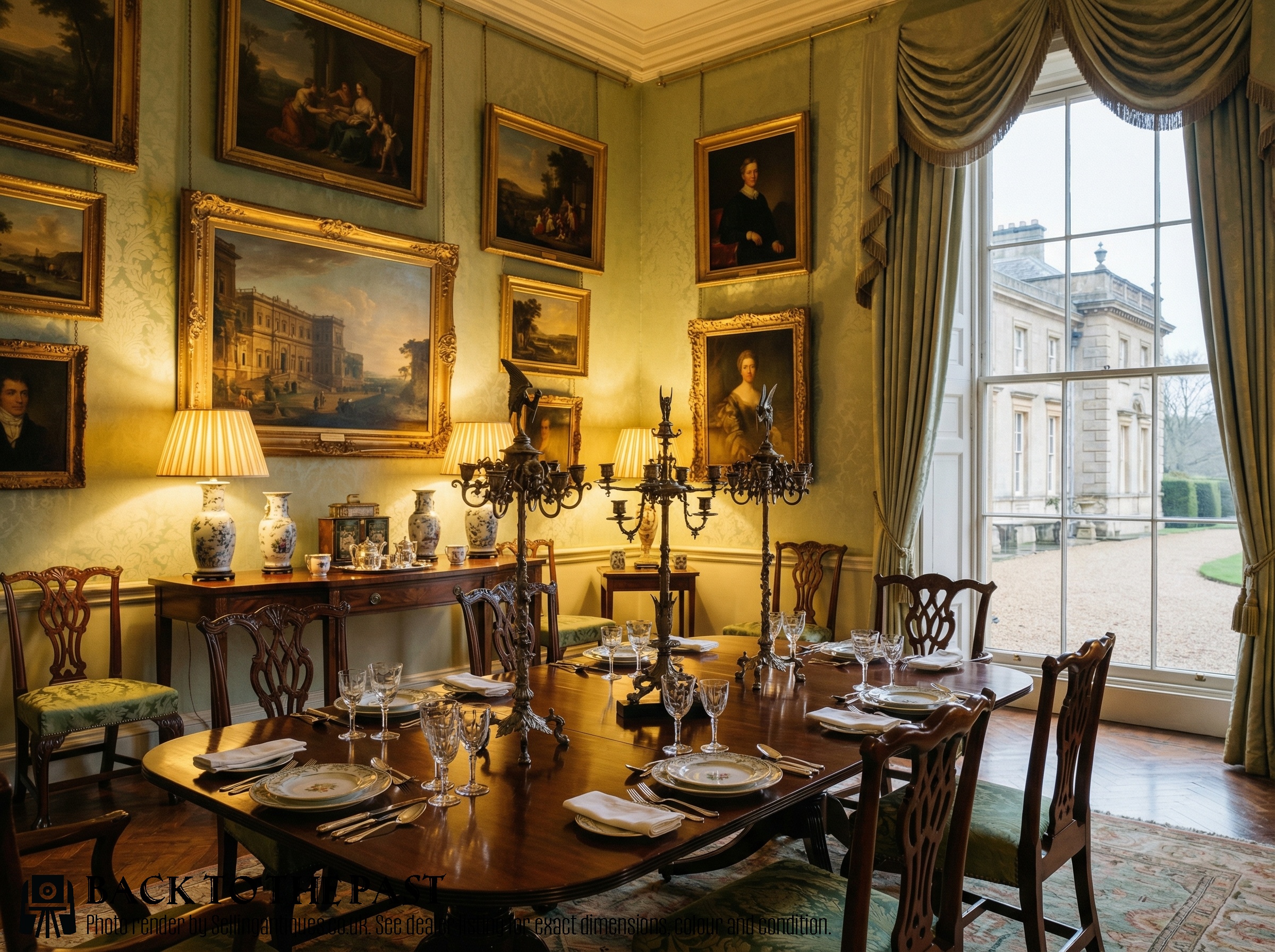
Antique French Table Candelabra
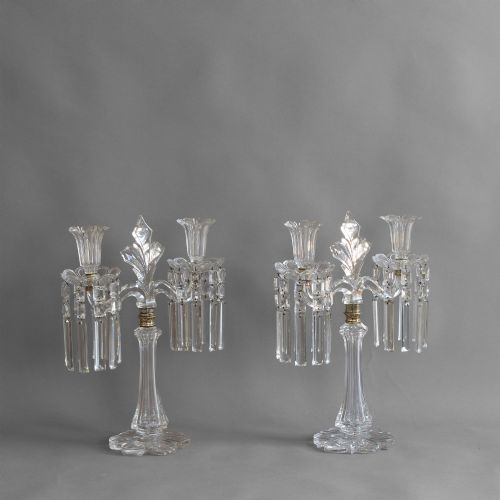
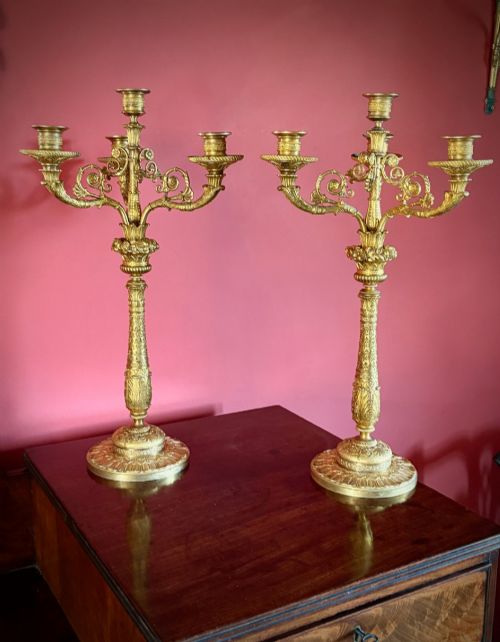
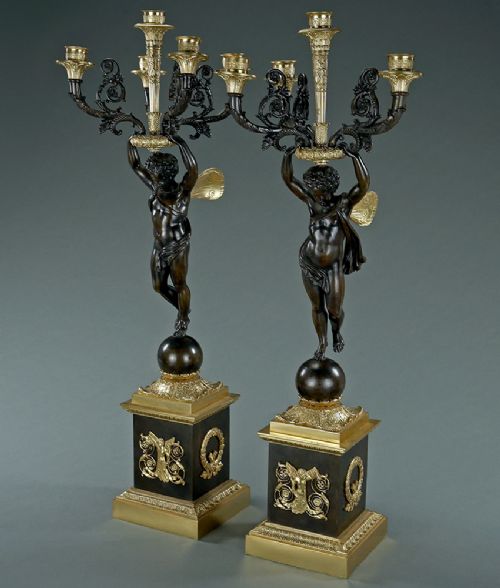
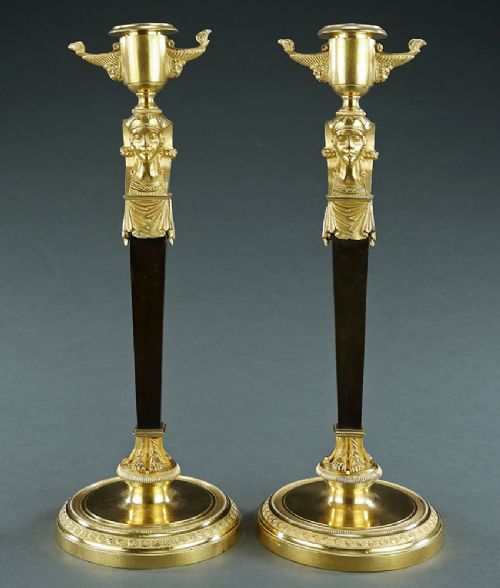
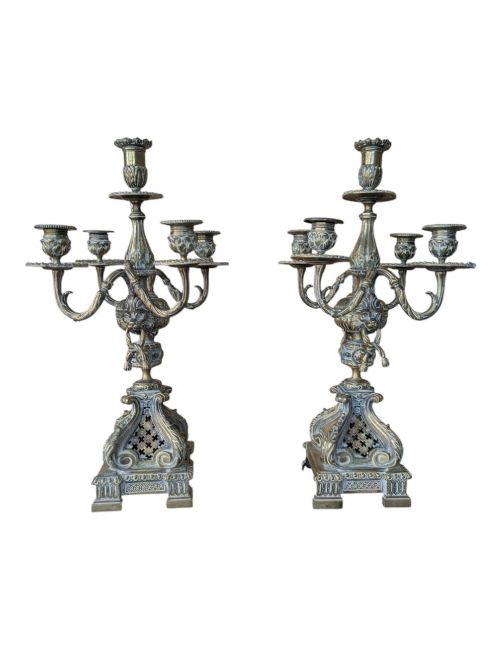
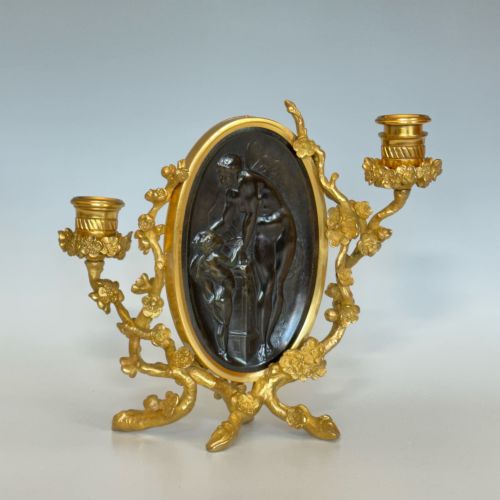
When searching for antique french table candelabra, you find multi-branch lighting pieces designed to sit on tables, chests, and clock garnitures. These items span periods from the Regency era through to the early twentieth century, carrying the stylistic marks of French Empire, Rococo Revival, and Louis XVI designs.
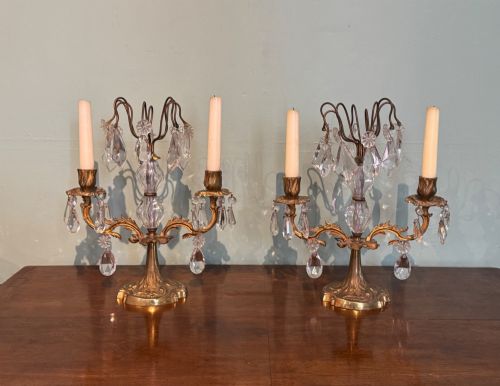
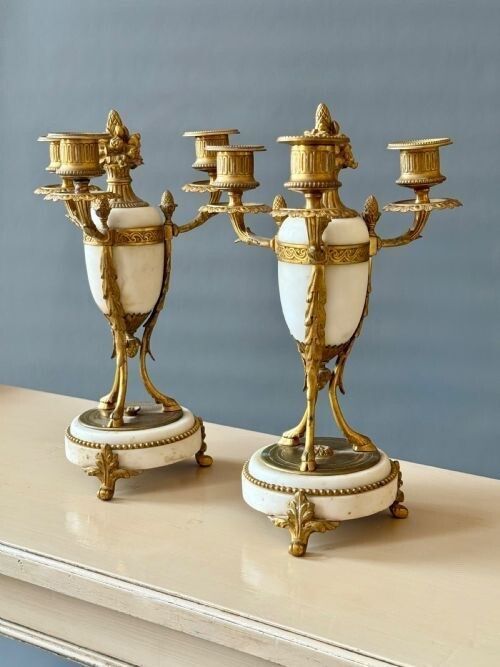
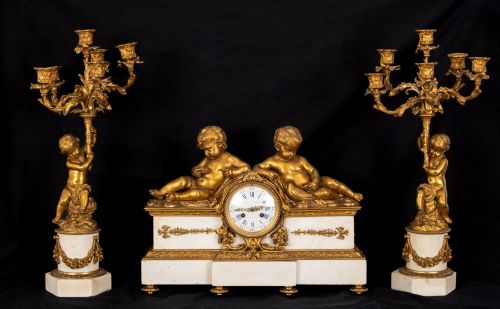
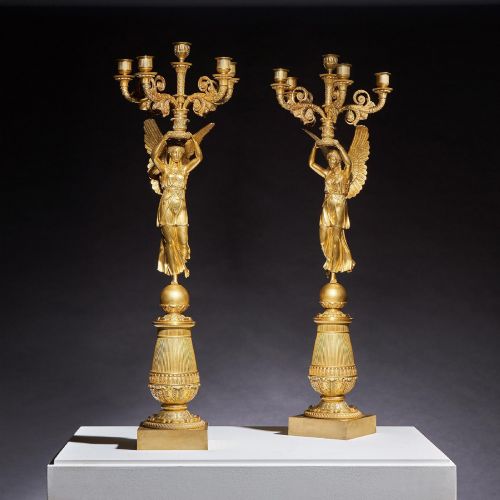
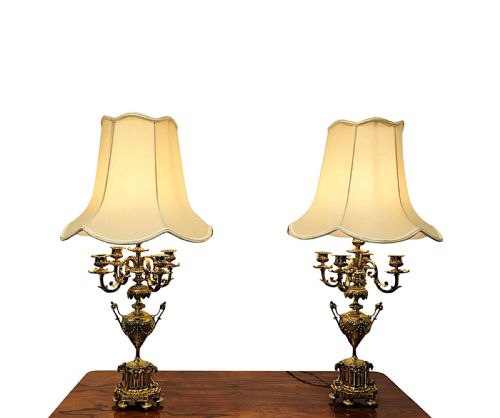
The most common examples you meet on this page are pairs of gilt bronze, ormolu, or brass candelabra, often incorporating white marble bases or cut glass drops. Alongside standard multi-arm candle holders, the selection includes pieces converted to table lamps or paired with matching mantel clocks.
How they were made
Foundry work relies heavily on cast bronze, brass, and gilt bronze, frequently mercury-gilded to produce the characteristic ormolu finish that catches the light. Metal branches and figures are often combined with turned white marble bases, champlevé enamel, or cast spelter.
Detailing is achieved through hand-chasing after casting, sharpening up the acanthus leaves, cherubs, and classical figures. Many pieces incorporate suspended cut glass crystal drops or lustres, wired separately where conversions to electricity took place later.
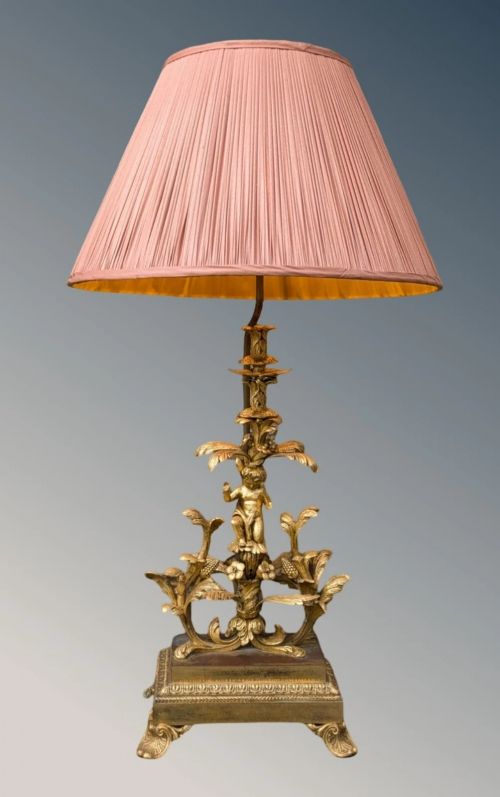
Several pairs feature small bronze cherubs and puttis perched precariously among candle branches, seemingly caught mid-mischief.
What varies in quality
The crispness of the original metal chasing dictates much of the visual appeal, separating sharply cast figures and foliate scrolls from softer, mass-produced versions. Heavy, substantial bronze or ormolu carries a better weight and depth of gilding than thin brass or plated alternatives.
Composition and balance define the higher tier of these pieces, where cherubs, puttis, or Greco-Roman figures integrate naturally with the candle arms rather than appearing awkward or bolted together from mismatched components.
Pierre Philippe Thomire·Thiebaut Freres·Rabiat·Auguste Cain
The Antique French Table Candelabra Glossary
- Ormolu
- Gilt bronze produced by applying a mercury and gold amalgam to a bronze object and firing it. This technique creates a deep, durable golden surface characteristic of fine nineteenth-century French metalwork.
- Clock garniture
- A set comprising a central mantel clock accompanied by matching side pieces such as candelabra or urns. They were designed to create a symmetrical display across a fireplace mantel.
- Champlevé
- An enamelling technique where troughs are dug into a metal surface and filled with vitreous enamel powder before firing. It adds colourful patterns to the bodies of candlesticks and bases.
- Retour d'Egypte
- A stylistic phase in French design inspired by Napoleon's campaign in Egypt. It introduces motifs such as sphinxes, pharaohs, and classical military elements into decorative metalwork.
Antique French Table Candelabra: Frequently Asked Questions
How do I date an antique French candelabrum?
Dating relies on identifying the prevailing design style, such as Empire, Régence, or Louis XVI Revival, alongside the manufacturing materials and casting quality. The physical construction of the screw threads, nut fittings, and the composition of the bronze or brass also offer clear chronological clues.
Signed pieces bearing foundry marks or maker stamps provide a direct link to specific nineteenth-century workshops, though many surviving examples remain unsigned.
Can I safely use converted candelabra lamps?
Many antique candelabra were adapted during the twentieth century to function as electric table lamps by running wiring through the central column. You should have an electrician inspect older wiring to ensure safety before plugging them into a modern mains supply.
Conversions often retain the original candle nozzles, allowing the wiring to be removed if you prefer to burn wax candles.
How should I clean ormolu and gilt bronze?
Ormolu and gilt bronze require gentle dusting with a soft, dry brush to prevent the accumulation of dirt in the chased recesses. You must avoid using metal polishes, abrasive cloths, or chemical cleaners, as these substances strip away the fragile gold layer beneath.