




Gold Candelabra Set
A gold candelabra set brings heavy cast metalwork, marble bases and flickering candlelight together into a balanced table arrangement.
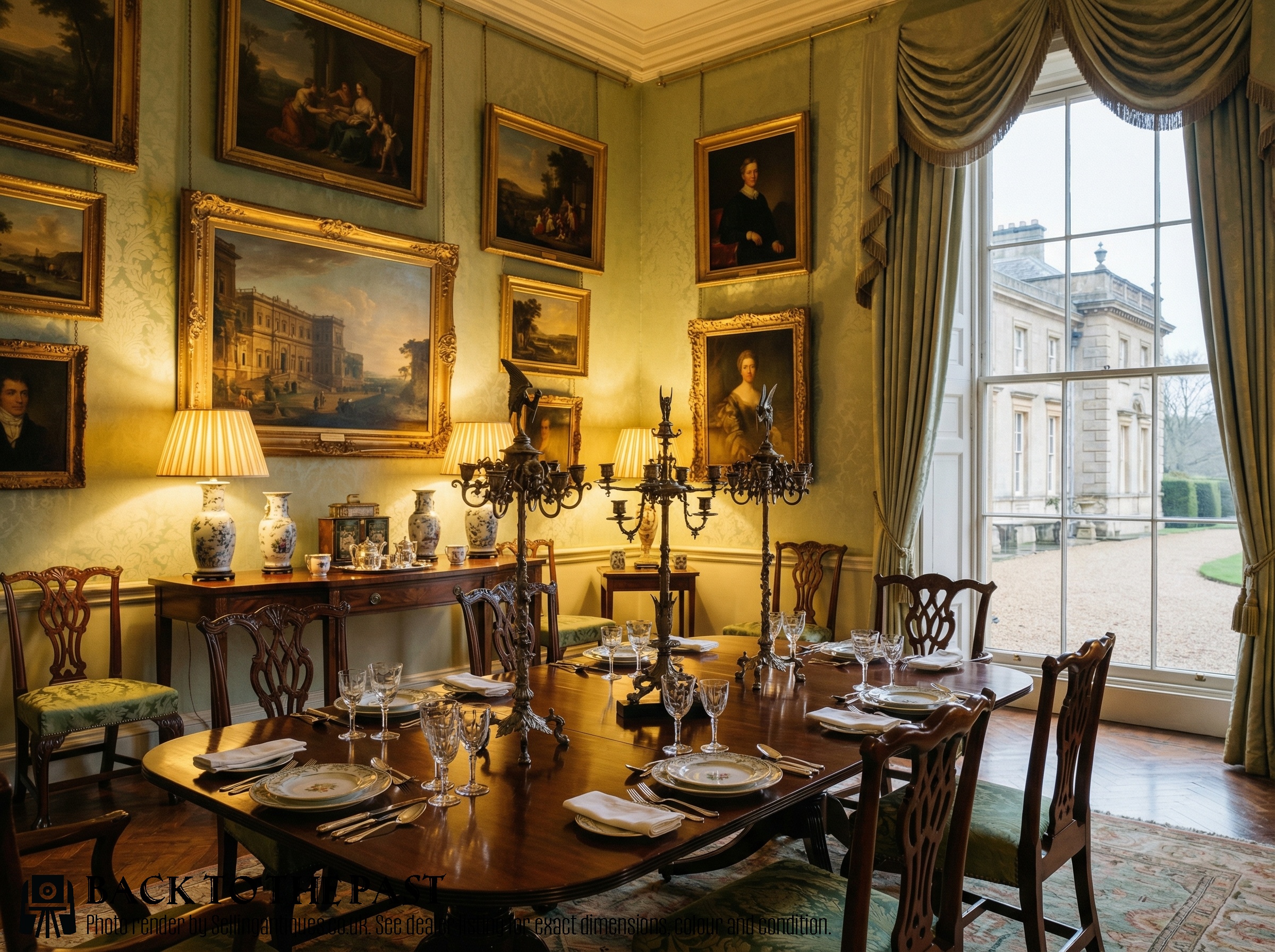
Gold Candelabra Set
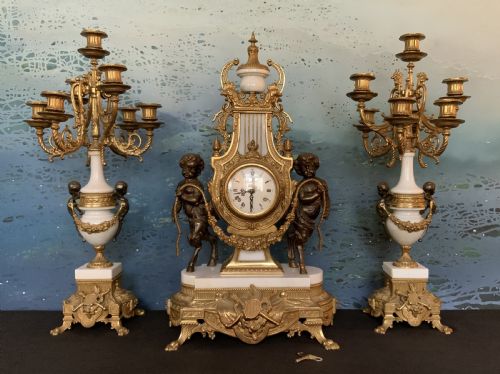
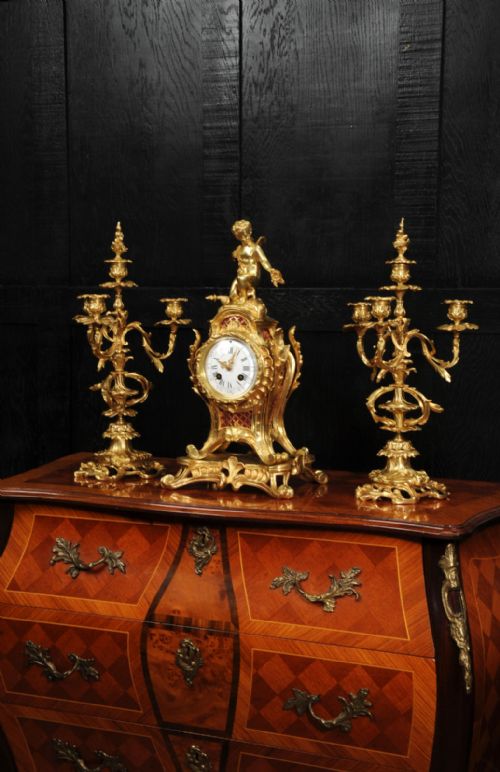
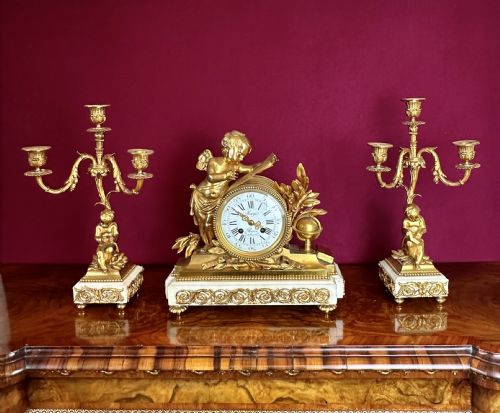
A gold candelabra set consists of matching branched candle holders, frequently paired alongside a central mantel clock to form a complete garniture. You are most likely to meet French and Italian examples from the nineteenth century, finished with gilt bronze or ormolu and mounted on white marble.
The styles lean heavily into Louis XVI, Neoclassical and Rococo revivals, featuring cast cherubs, scrollwork and classical motifs. These groupings were designed to sit symmetrically upon a drawing room mantelpiece or a dining sideboard.
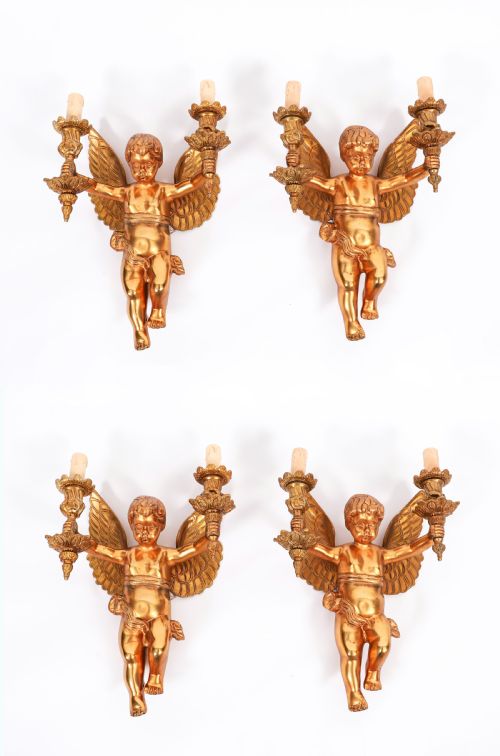
Many survivors form part of a three-piece or four-piece matching ensemble that includes wall sconces or multi-branch candelabra alongside the clock. The materials combine patinated bronze, giltwood and enamel dials within the standard configurations.
How they were made
The metal components rely on bronze or brass cast in multiple sections, then chased by hand to sharpen the leaf work and figurative details before receiving a layer of fire gilding or ormolu. This gold finish gives the metal its characteristic warm gleam.
Marble elements are turned on a lathe or sawn into heavy plinths and columns, then polished smooth to contrast against the bright gilded bronze mounts and patinated bronze figures.
Many sets include mischievous cast bronze cherubs stubbornly holding up heavy branches of candlelight.
What varies in quality
The weight of the casting and the crispness of the hand-chasing separate standard production pieces from the finest workshop output. Superior sets retain sharp detail in the cherubs' hair, the acanthus leaves and the cast mounts without softness or blurriness.
The depth and durability of the original fire gilding or ormolu dictate the visual richness of the surface. Finer examples combine multi-toned patination with heavy, well-balanced marble bases that anchor the branched candelabra securely.
Henry Dasson·Auguste Cain·Raingo Fres·Deniere·Vincenti·Japy Freres
The Gold Candelabra Set Glossary
- Ormolu
- Finely chopped gold amalgamated with mercury and applied to bronze, then heated to drive off the mercury and leave a golden coat. This historic fire-gilding technique creates a deep, warm lustre.
- Garniture
- A set of ornamental objects designed to match and display together on a mantelpiece or sideboard. They typically comprise a central clock flanked by two candelabra or vases.
- Chasing
- The manual finishing of a metal casting using small steel punches and hammers to refine surface details and textures. It is the step that separates mechanical production from master craftsmanship.
- Patinated bronze
- Bronze treated with chemical solutions or heat to alter its surface colour to brown, green or near-black. It provides a dark contrast against bright ormolu mounts.
Gold Candelabra Set: Frequently Asked Questions
What is a gold candelabra set?
A gold candelabra set is a matched grouping of branched candle holders, often accompanied by a matching clock in a garniture arrangement.
These pieces were produced primarily in nineteenth-century France and Italy, using gilded bronze or ormolu paired with marble.
How were these sets used?
They were placed centrally on drawing room mantelpieces, cabinets or dining sideboards to provide both ambient illumination and formal decoration.
The branched candelabra held wax candles, while the accompanying clock tracked time for the household.
How do I clean the ormolu?
Gilded surfaces require only gentle dusting with a soft, dry brush to prevent the accumulation of dirt in the chased recesses.
Moisture and chemical polishes strip the historic ormolu surface and should be avoided entirely.
How do I date a set?
Dating relies on stylistic markers such as Louis XVI revival motifs, material choices like white marble and gilt bronze, and maker signatures stamped on the bronze or clock movements.
Nineteenth-century examples frequently feature cast brass components and enamel clock dials characteristic of the period.