
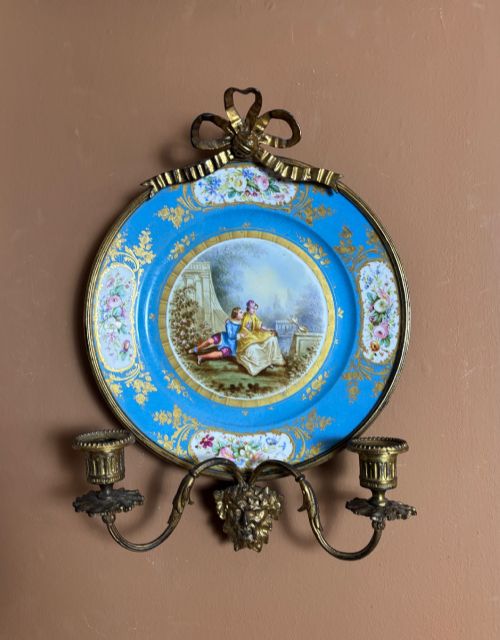
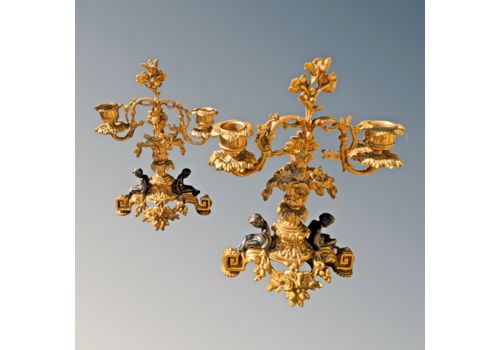


French Second Empire Candelabra
These French second empire candelabra combine gilt and patinated bronze with marble or porcelain, bringing grand nineteenth-century illumination and presence to a room.
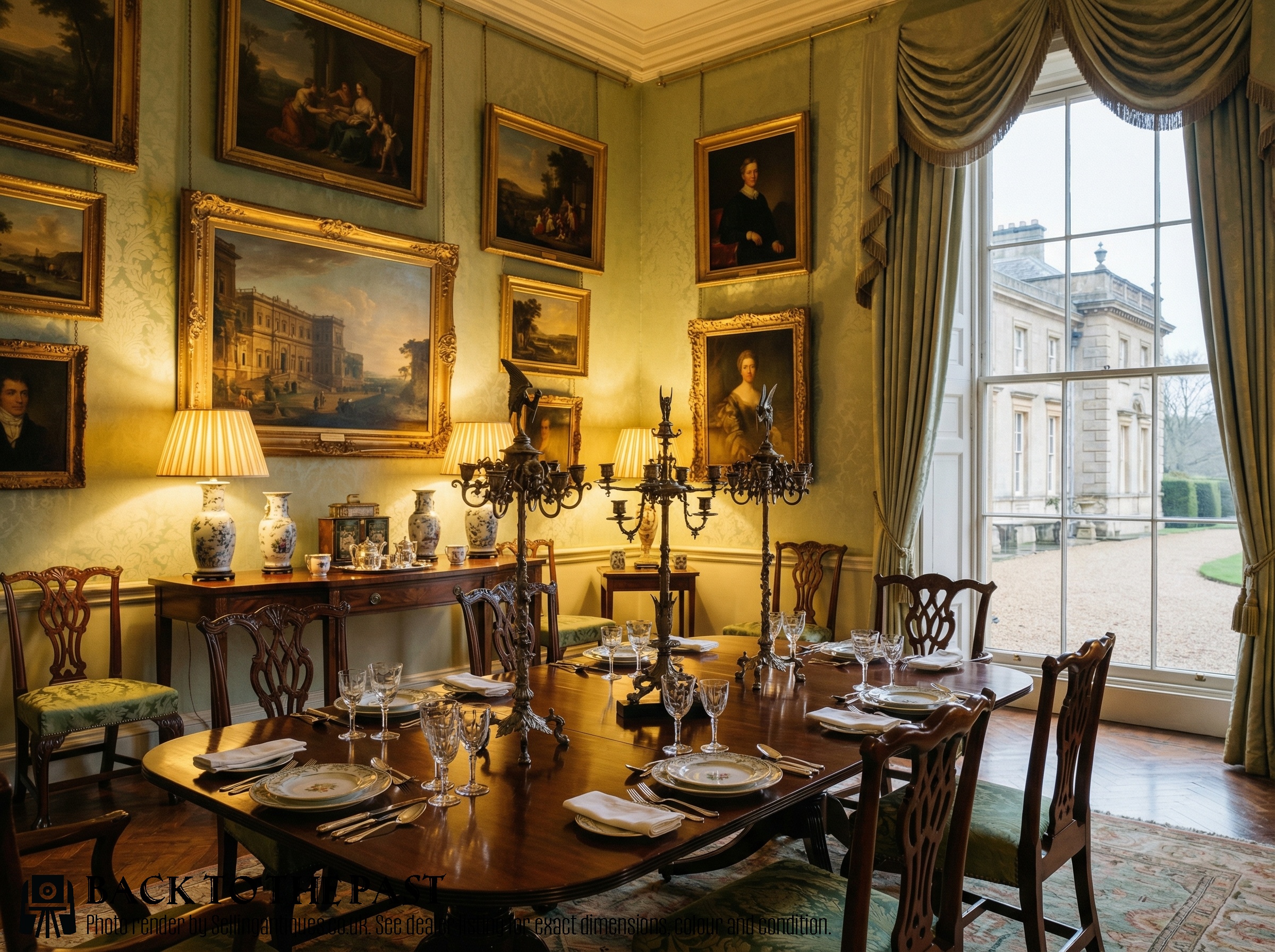
French Second Empire Candelabra
French second empire candelabra represent a flamboyant chapter of nineteenth-century decorative arts, frequently taking the form of multi-branch table candelabra, wall sconces, and figural torchères. These pieces draw heavily on earlier historical vocabularies like French Rococo Revival, Louis XVI, and French Empire while maintaining a distinct mid-century weight.
The versions most commonly met on this page pair gilt bronze and ormolu with patinated bronze, often incorporating figures such as cherubs or mounted porcelain elements. Dating largely from the 1860s and 1870s, they reflect the opulent interior tastes of the Second Empire period through substantial cast forms and elaborate branch configurations.
How they were made
The manufacture of these candelabra relied on the sophisticated combination of cast bronze finished in bright gilding or ormolu alongside contrasting dark patinated bronze. This dual-finish technique created strong visual depth, highlighting the muscular contours of figures and the intricate foliage of the candle branches.
Selected examples incorporate additional materials such as Sevres porcelain, marble, glass, or silvered bronze to elevate the decorative scheme. Individual components were cast separately and mechanically joined, allowing complex arrangements of cherubs, scrolls, and multiple light branches to hold together securely.
Cherubs appear with surprising frequency across these nineteenth-century branches, keeping watch over the flickering candles.
What varies in quality
The architectural ambition of the piece also dictates its standing, distinguishing modest two-arm candlesticks from monumental multi-branch figural torchères and wall sconces. Integration of finer auxiliary materials, such as hand-painted porcelain bodies or heavy marble bases, separates standard production from exceptional studio output.
Auguste Cain·François-Christophe-Armand Toussaint
The French Second Empire Candelabra Glossary
- Ormolu
- Gilt bronze created by applying a mercury-gilding amalgam to a cast bronze base. This technique produces a rich, durable golden surface characteristic of fine French decorative objects.
- Patinated bronze
- Bronze treated with chemical solutions to produce a dark, weathered brown or black surface. It provides a striking textural and tonal contrast against bright ormolu mountings.
- Torchère
- A tall ornamental stand or candelabrum designed to carry lights high above a surface. In nineteenth-century pieces, these often take the form of figural bronze supports.
- Sconces
- Wall-mounted light fixtures featuring projecting branches for candles. They share the decorative motifs and gilt finishes of their freestanding candelabra counterparts.
French Second Empire Candelabra: Frequently Asked Questions
What materials make up French second empire candelabra?
These pieces primarily utilise cast bronze finished in combinations of bright gilding, ormolu, and dark patination.
Secondary materials often include Sevres porcelain, marble, glass, and silvered bronze to enrich the overall composition.
How do I distinguish these from earlier empire pieces?
Second empire lighting tends to exhibit heavier proportions and a busier incorporation of figural elements like cherubs compared to strict neoclassical empire designs.
They also frequently blend earlier stylistic revivals such as rococo scrollwork within a single nineteenth-century casting.
Were these designed for candles or electricity?
Original examples were strictly produced for lighting by wax or tallow candles mounted in sockets along the branches.
Many surviving pieces have since been adapted to table lamps or wired for electricity while retaining their original bronze bodies.
How do I care for gilt and patinated bronze?
Maintenance requires gentle dusting with a soft, dry brush to prevent dirt accumulation in the recessed chasings of the metal.
Harsh commercial metal polishes must be avoided entirely, as they strip away the historic gilding and patination.