


Gilded Bronze Light Holder
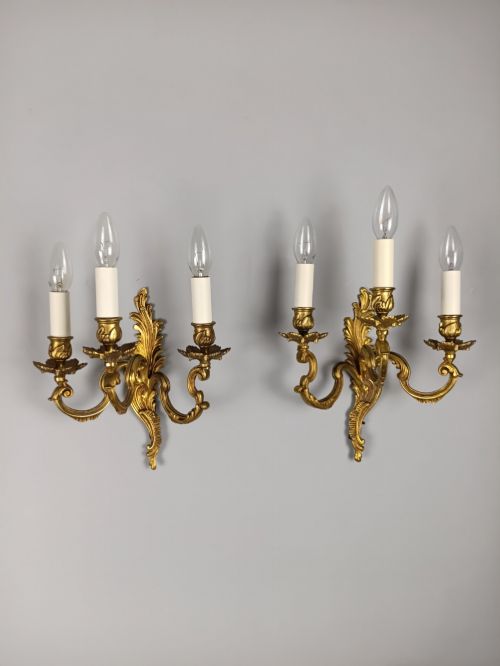
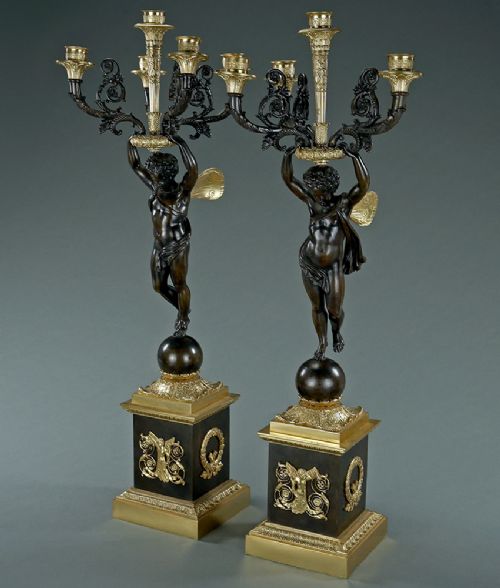
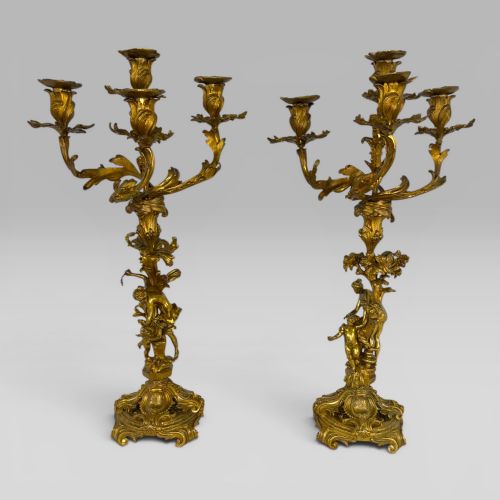
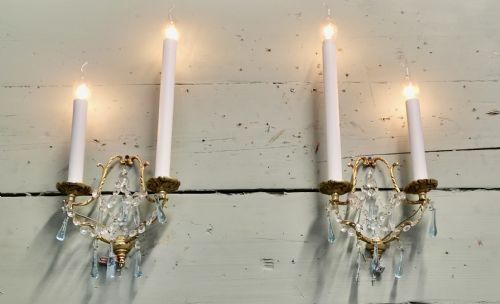
These gilded bronze light holder pieces bring nineteenth-century French and English illumination to a room.
Gilded Bronze Light Holder
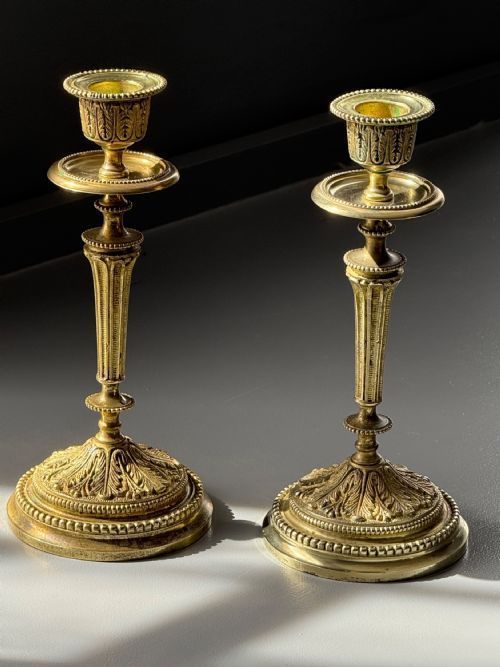
A gilded bronze light holder appears as candlesticks, candelabra, wall lights, and sconces originating mainly from the eighteenth and nineteenth centuries. The selection here leans heavily towards French Rococo Revival, Louis XVI, and Empire styles alongside Victorian interpretations.
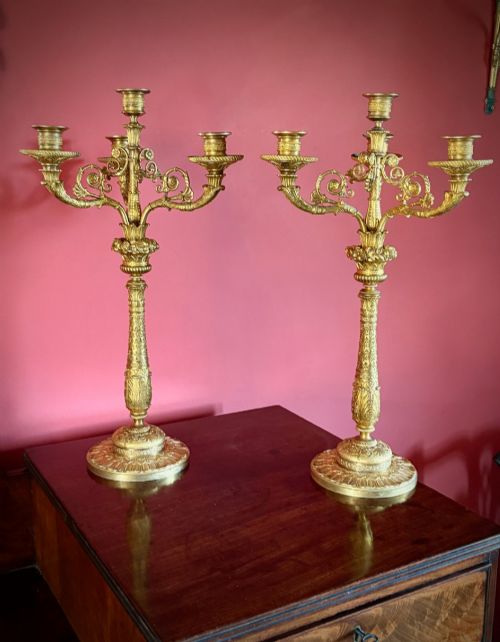
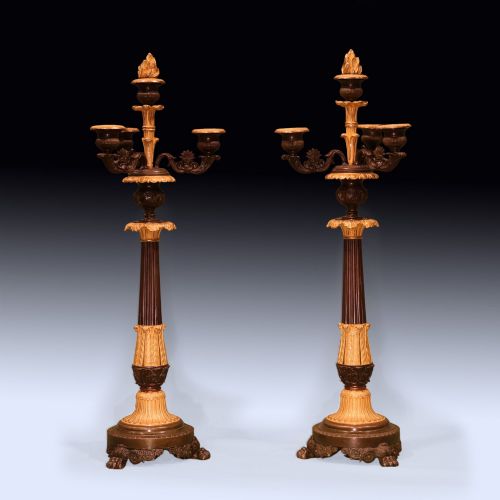
Buyers encounter pairs of multi-arm candelabra and single candlesticks frequently. These objects combine cast metal frameworks with candle sockets intended to hold taper candles securely for domestic illumination.
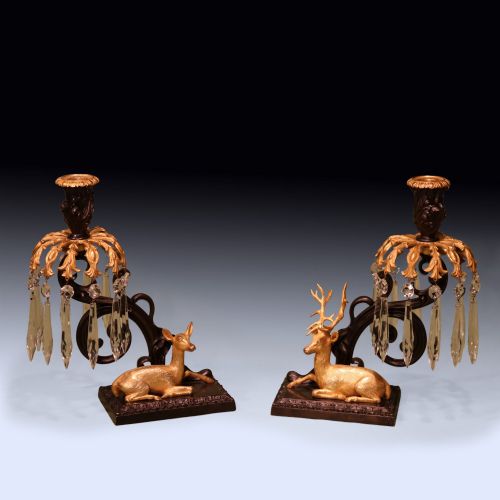
Origin points span French workshops, English makers, and Swedish Empire production. Many items incorporate figural elements such as stags, does, dolphins, or caryatid shafts alongside classic floral motifs.
Materials and construction methods
Makers utilised cast bronze, brass, and patinated bronze as foundational metals. Ormolu and gilt bronze finishes provide the characteristic golden surface through mercury gilding or modern electroplating techniques.
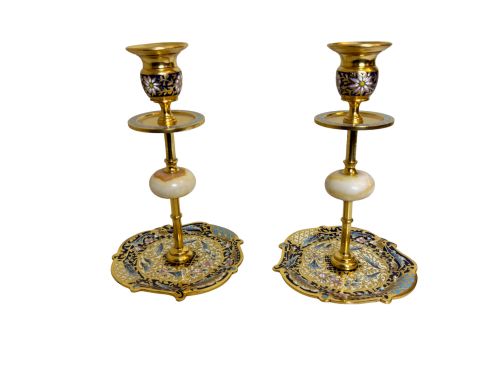
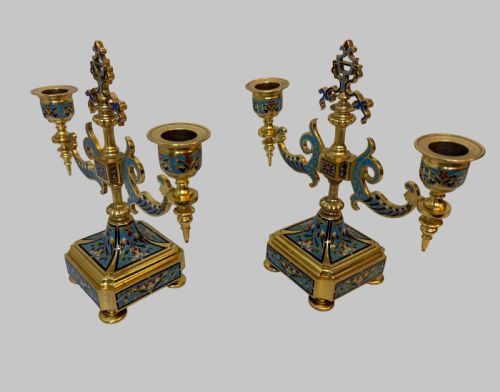
Many examples integrate contrasting materials including white marble, onyx, champlevé enamel, cloisonné, and porcelain elements like Meissen figures. These diverse components are joined mechanically using threaded rods and screws.
Listings feature items dated from 1750 through the 1930s, encompassing French Rococo, Regency, and Victorian design movements.
Assessing quality in metalwork
The crispness of the metal chasing separates standard production from finer work. Superior examples exhibit deeply incised details and smooth hand-finished surfaces on every leaf, scroll, and figural feature.
The choice of secondary materials influences the overall grade of the piece. High-end items use solid white marble or dense onyx bases paired with substantial bronze castings rather than lighter brass alloys.
Galle
The Gilded Bronze Light Holder Glossary
- Ormolu
- Gilded bronze produced by applying a gold-mercury amalgam to a bronze base and heating it. This technique creates a durable, luminous golden finish characteristic of French decorative arts.
- Candelabra
- A branched candlestick designed to hold multiple candles simultaneously. They often feature removable nozzles to catch dripping wax.
- Champlevé
- An enamelling technique where troughs are dug into a metal surface and filled with vitreous enamel powder before firing. It appears on nineteenth-century decorative stems and bases.
- Pricket
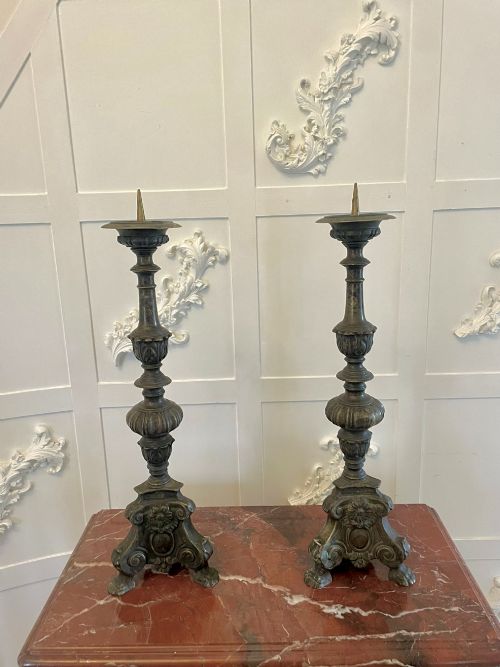
- A sharp metal spike set in the drip pan of a candlestick to impale the base of a candle. This form appears on older ecclesiastical and revival pieces.
- Caryatid
- A sculpted female figure serving as an architectural support or candlestick shaft. They frequently appear on neoclassical and Grand Tour designs.
Gilded Bronze Light Holder: Frequently Asked Questions
What is the difference between ormolu and gilt bronze?
Ormolu specifically describes high-status mercury gilding used on historical French decorative metalwork. Gilt bronze serves as the broader modern category for any bronze object coated in gold.
Both terms refer to the same underlying metal substrate treated with a gold layer. The visual distinction usually comes down to the depth of the finish achieved during the period of manufacture.
How do I clean a gilded bronze light holder?
Dust these pieces gently with a dry microfibre cloth to remove surface particles. Avoid chemical polishes that strip away historical gilding.
Moisture can damage embedded marble or enamel components, so liquid cleaners must be avoided entirely. Professional conservation is recommended for tarnished metal.
How can I tell a Louis XVI style piece from Empire?
Louis XVI items display refined neoclassical symmetry, ribbons, husks, and delicate fluted columns. They celebrate lightness and classical restraint.
Empire pieces project military power and heavy Roman influence through sphinxes, eagles, and dense patinated bronze contrasts. The forms are considerably more robust and imposing.