


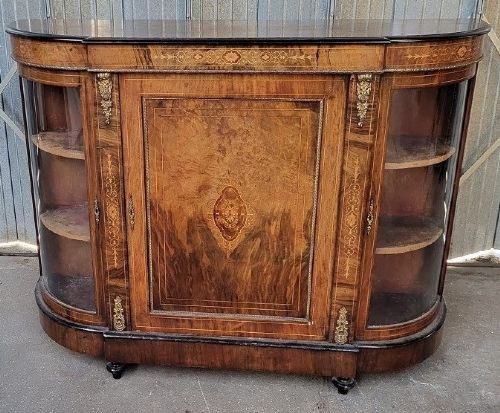

19th Century Breakfront Sideboard
A 19th century breakfront sideboard provides grand storage and display with a stepped central section, drawing the eye through rich timber figures.
19th Century Breakfront Sideboard
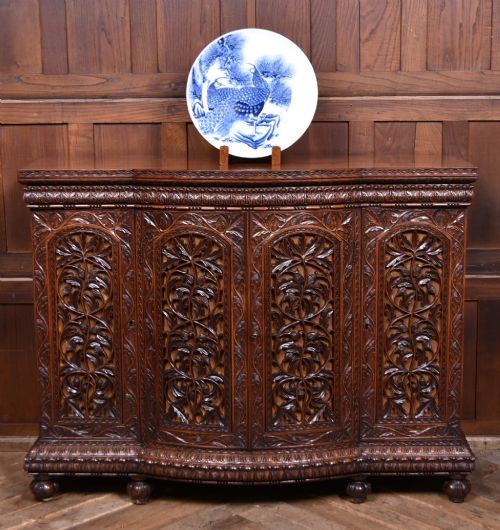
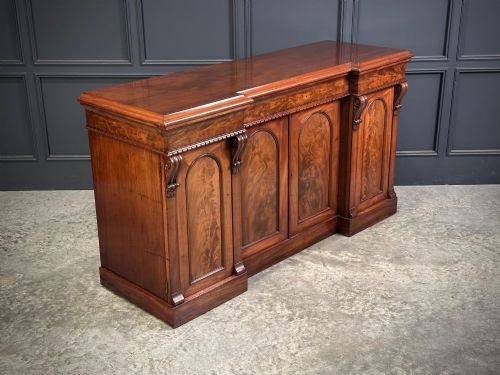
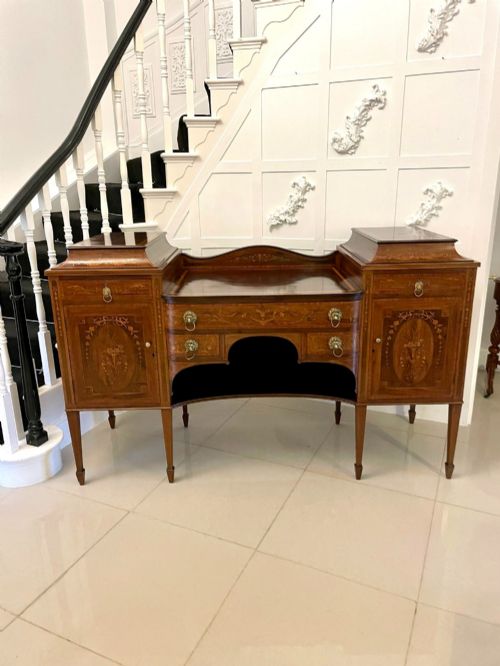
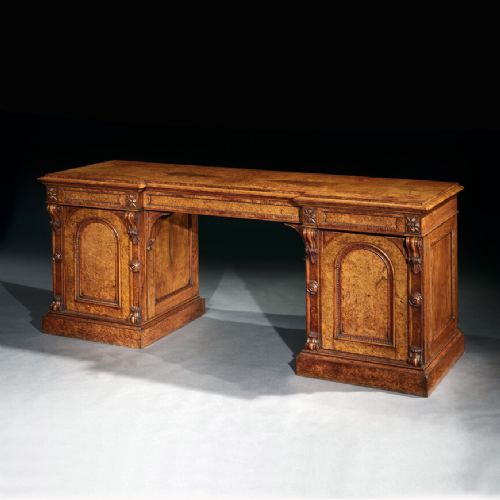
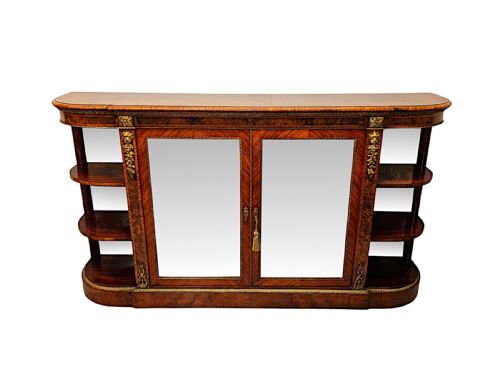
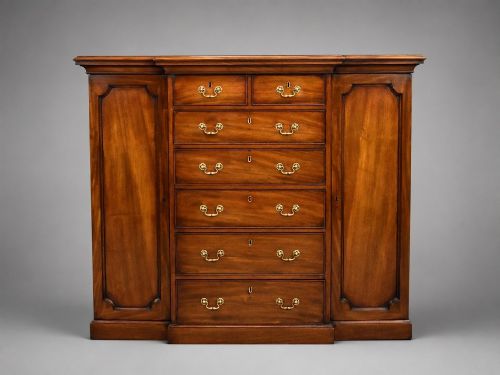
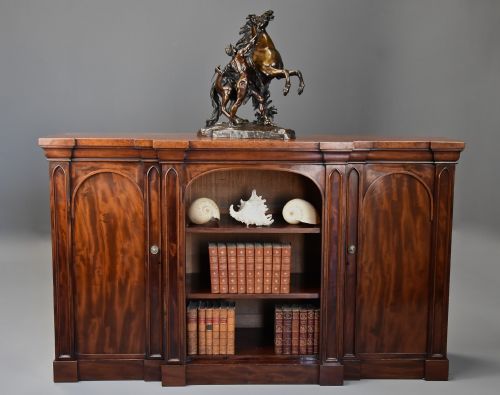
A 19th century breakfront sideboard typically presents a substantial footprint designed for dining rooms and large reception spaces, featuring a projecting central cabinet flanked by recessed pedestals or doors. The version most frequently encountered on this page spans Victorian mahogany or burr walnut constructions, often incorporating credenza forms and glazed or panelled side cabinets.
The phrase encompasses pieces originating from the Regency period through to the late Victorian era, taking in styles such as Louis XVI Revival, Sheraton Revival, and William IV alongside standard English and French forms. These items served primarily for storing silver, linen, and glassware while presenting a polished architectural surface for serving food or displaying decorative ceramics.
How They Were Made
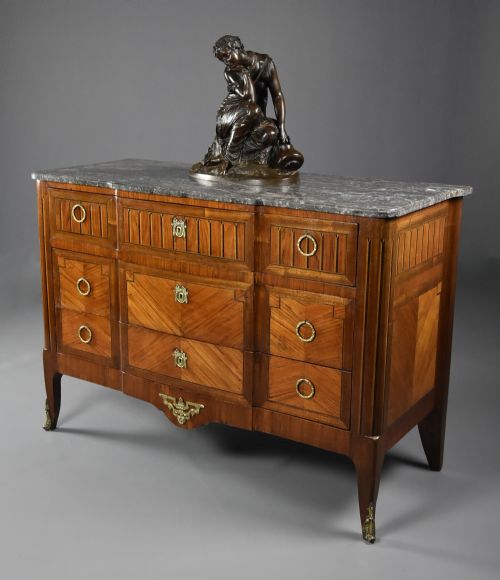
Cabinet makers built these pieces using solid timbers and decorative veneers such as flame mahogany, burr walnut, rosewood, padouk, and kingwood applied to sturdy secondary woods. Surface ornamentation frequently relied on intricate marquetry inlay, ebonised details, brass mounts, and ormolu framing to accentuate the architectural breakfront silhouette.
Many examples incorporate fitted interiors, including secretaire writing drawers, adjustable shelving, and lined cellarette compartments behind panelled or glazed doors. Advanced pieces integrated marble tops, porcelain plaques, and cast brass gallery rails requiring precise carpentry and metalwork integration.
Listings feature woods like flame mahogany, burr walnut, rosewood, amboyna, padouk, and kingwood paired with marble tops.
What Varies in Quality
The standard of timber selection and veneer matching dictates much of the visual distinction, where continuous grain patterns across multiple doors elevate the piece significantly. Subtle execution of hand-cut marquetry and the crispness of cast ormolu mounts separate standard production items from workshop-attributed commissions.
Internal construction details, such as solid mahogany drawer linings with hand-cut dovetails and original working locks signed by reputable makers, distinguish finer examples. The integration of complex elements like curved glass panels and fitted secretaire drawers further marks out superior craftsmanship.
Hewetsons London·Gillows
The 19th Century Breakfront Sideboard Glossary
- Breakfront
- A piece of furniture whose central section projects forward from the flanking outer cabinets. This architectural arrangement creates dynamic shadow lines and depth across the front elevation.
- Credenza
- A low cabinet, frequently enclosed by doors and mounted with ormolu, originating in Italy and widely adapted during the Victorian era. These pieces often feature central glazed display sections.
- Ormolu
- Gilded bronze used for decorative mounts, handles, and feet on high-status nineteenth-century furniture. The metal is cast and chased before receiving a fine gold amalgam finish.
- Marquetry
- The art of applying decorative veneer pieces of different woods, metals, or shells to form pictorial or geometric designs. This technique demands immense precision from the marqueter.
- Boulle
- A form of marquetry employing tortoiseshell and brass inlay developed in France. The resulting metallic sheen creates striking contrast against ebonised timber surfaces.
19th Century Breakfront Sideboard: Frequently Asked Questions
What is a breakfront sideboard?
A breakfront sideboard is a large storage unit featuring a central section that steps forward from the flanking cabinet doors. This configuration breaks the flat line of a wall and creates visual depth in a room.
Cabinet makers used this design throughout the nineteenth century in mahogany, walnut, and rosewood. The central projection often houses wider drawers or cupboards flanked by shallower side storage.
How were nineteenth century sideboards used?
These sideboards served practical and decorative functions in formal dining rooms and large reception spaces. Households stored silverware, fine porcelain, table linen, and bottled wine within the enclosed cupboards and drawers.
The flat top surface provided space for serving dishes during meals or displaying decorative items between gatherings. Some variations included specialised lined drawers for holding cutlery or writing compartments for household accounts.
Where did these pieces originate?
The listings on this page include furniture made across England, France, and wider European traditions during the eighteen hundreds. British workshops produced robust mahogany and oak examples influenced by Regency and Victorian tastes.
Continental makers, particularly in France, favoured exotic veneers like kingwood and tulipwood paired with marble tops and ormolu mounts. Anglo-Indian colonial pieces also appear, utilising dense imported timbers like padouk.
How do I live with a large sideboard?
Living with a nineteenth century sideboard requires allocating sufficient wall space and clearance for doors to open fully. Their substantial weight and solid timber construction mean they anchor a room visually and need little surrounding clutter.
Maintenance involves regular dusting with a soft cloth and occasional application of appropriate furniture wax to nourish the antique timber. Keeping them away from direct heat sources prevents the veneers from drying out and lifting over time.
How do I tell Victorian from Regency periods?
Regency pieces generally date from the early part of the century up to the eighteen thirties, displaying classical restraint and clean architectural lines. Mahogany and rosewood predominate, often accented with simple brass inlay or brass grilles.
Victorian items span the middle and late decades, tending toward heavier proportions, darker burr walnut veneers, and ornate marquetry decoration. The introduction of specific revival styles, such as Louis XVI or Sheraton Revival, points directly to later nineteenth century manufacturing.