


19th Century Black Cupboard
A 19th century black cupboard offers deep dark finishes and striking gilt or painted decoration, ranging from French ebonised display pieces to Chinese lacquer storage.
19th Century Black Cupboard
When searching for a 19th century black cupboard, buyers encounter a diverse selection spanning European ebonised furniture, Regency penwork, and Chinese lacquered cabinets. The pieces include corner cupboards, side cabinets, pier cabinets, and larger storage units originating from Victorian England, France, and China.
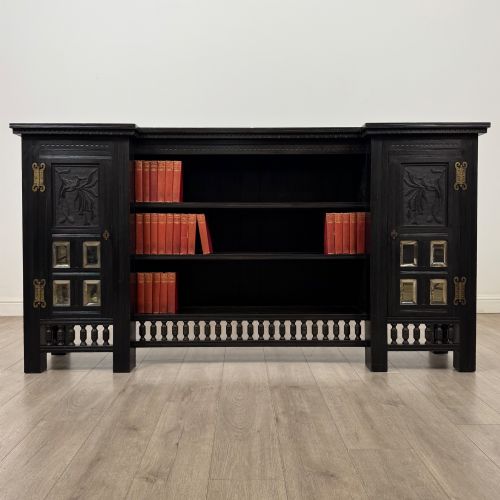
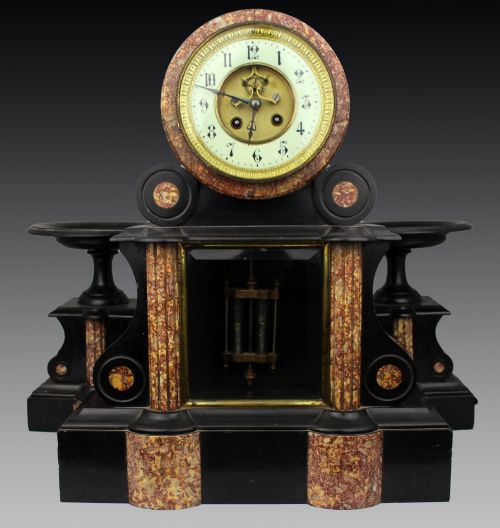
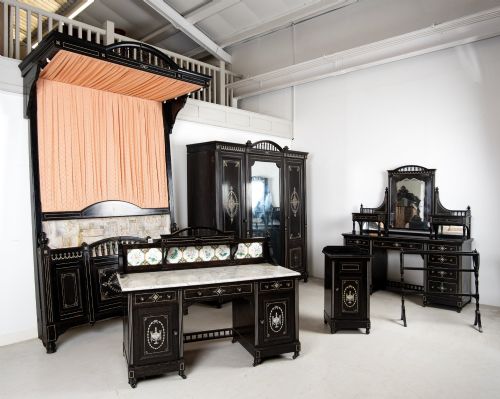
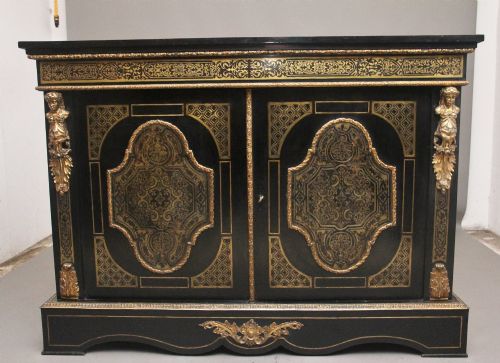
The assortment on this page reflects distinct regional traditions from the 19th century, featuring French Napoleon III ebonised cabinets mounted with ormolu and porcelain plaques alongside Asian export lacquer and Chinoiserie works. Buyers frequently meet items finished with dark polish, paint, or black lacquer, incorporating brass, marble, and gold leaf details.
Materials and construction
Cabinetmakers utilised various woods such as pine, oak, elm, and ebony, frequently applying ebonisation or black lacquer to achieve a dark surface. Decoration often involved hand-painting, penwork, or applying gold leaf and ormolu mounts to enhance the visual depth of the dark exterior.
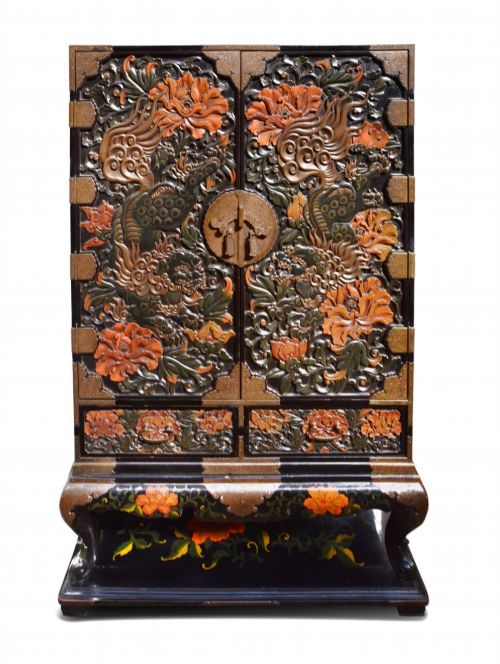
Many European examples incorporate brass inlay in boullework alongside marble tops and porcelain plaques. Chinese pieces employ traditional lacquer techniques on wood bases, sometimes combined with carved detailing and elaborate hardware.
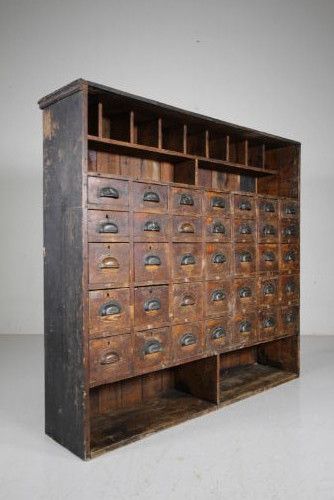
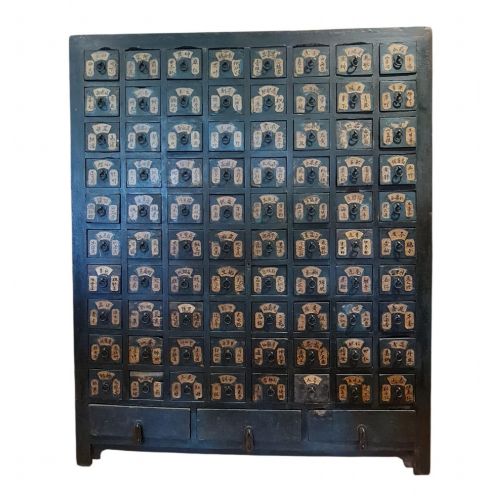
One exceptional apothecary chest provides eighty distinct small drawers for organising traditional medicinal ingredients.
Assessing quality and execution
The standard of a 19th century black cupboard depends on the precision of its surface finish and the integrity of its decorative elements. Finer pieces demonstrate meticulous hand-painting, crisp gilding, and securely fitted mounts of brass or ormolu rather than superficial surface masking.
Construction methods and material selection dictate durability, visible in the stability of timber joints and the preservation of delicate lacquer, penwork, or porcelain insets. Superior examples maintain the original balance between structural cabinetry and decorative surface artistry.
Japy Frères·Henry Ogden & Son·Melissa White
The 19th Century Black Cupboard Glossary
- Ebonised
- Wood treated with a dark stain or finish to imitate true ebony. This technique was popular on Victorian and Napoleon III furniture.
- Chinoiserie
- European decorative style reflecting Chinese artistic motifs. It appears frequently on 19th century painted and lacquered cabinets.
- Boulle
- Technique of inlaying brass and tortoise-shell into a dark ground. It is named after the French cabinetmaker André-Charles Boulle and defines many pier cabinets.
- Ormolu
- Gilded bronze used for decorative mounts and feet. Makers applied it to enrich the corners and frames of ebonised furniture.
- Pietra Dura
- Inlay work using cut and fitted polished coloured stones. It creates pictorial or geometric panels on select high-end cabinets.
19th Century Black Cupboard: Frequently Asked Questions
Where were these cupboards placed in a Victorian home?
These cabinets served multiple domestic functions depending on their form, from corner cupboards fitted into reception rooms to display pier cabinets in drawing rooms.
Smaller side cabinets and medicine chests held specialised collections or household goods in studies and bedrooms.
How do I care for a lacquered or ebonised finish?
Maintain the surface by keeping the furniture away from direct sunlight and fluctuating humidity, which can damage delicate lacquer and wood joints.
Dust gently with a soft dry cloth and avoid harsh chemical cleaners that strip the historic polish.
What distinguishes French Napoleon III cabinets from English pieces?
French Napoleon III pieces typically feature dense ebonised finishes paired with heavy ormolu mounts, marble tops, and Sevres style porcelain plaques.
English equivalents often lean toward painted Chinoiserie decoration, japanning, or understated timber construction.
Are Chinese export cabinets from the same period different?
Chinese export pieces from the 19th century utilise traditional lacquer and gilt decoration applied to regional woods like elm.
They often take the form of compound cabinets, tables cabinets, or apothecary chests with numerous small drawers.