
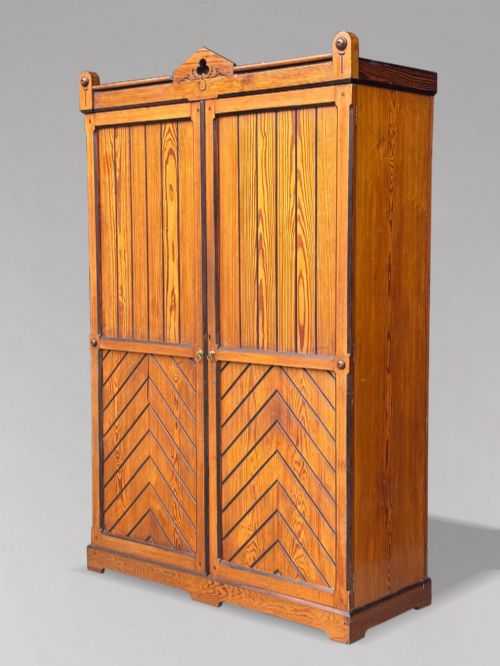
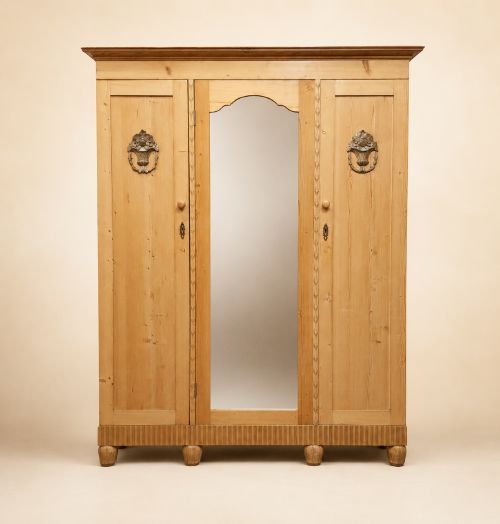
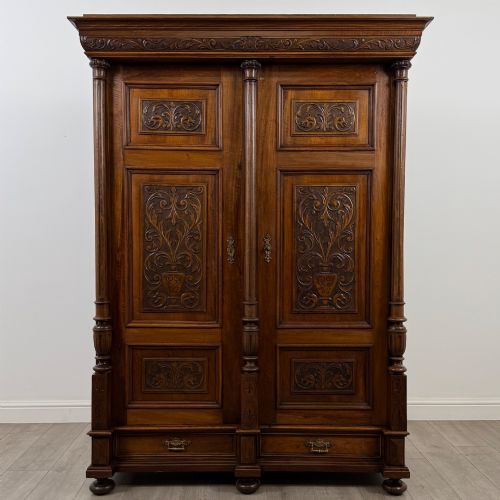
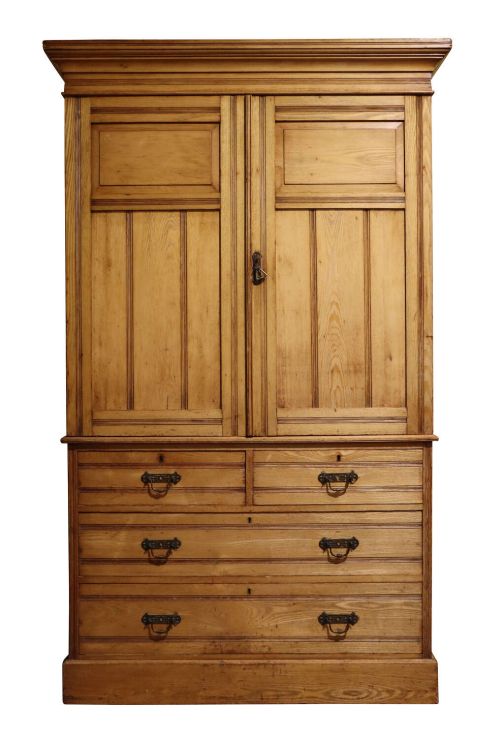
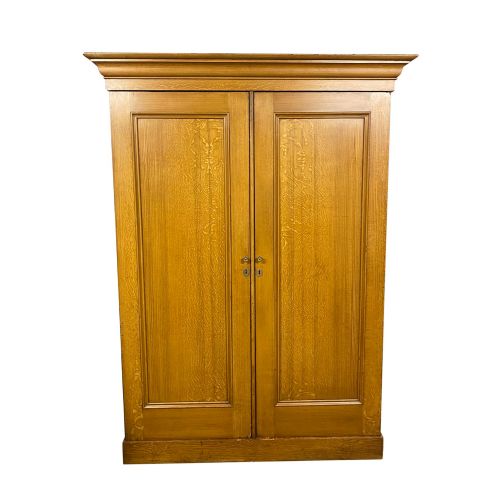
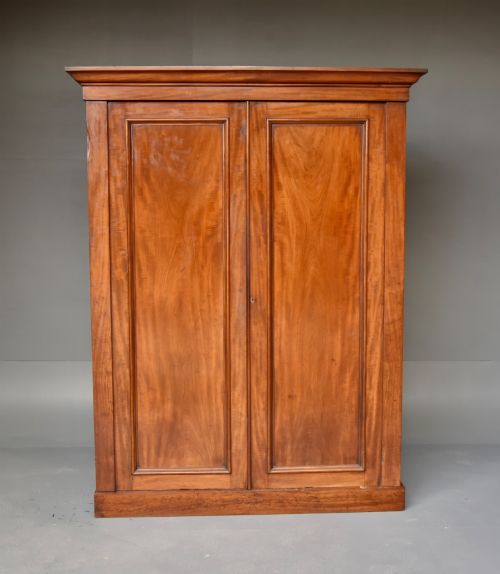
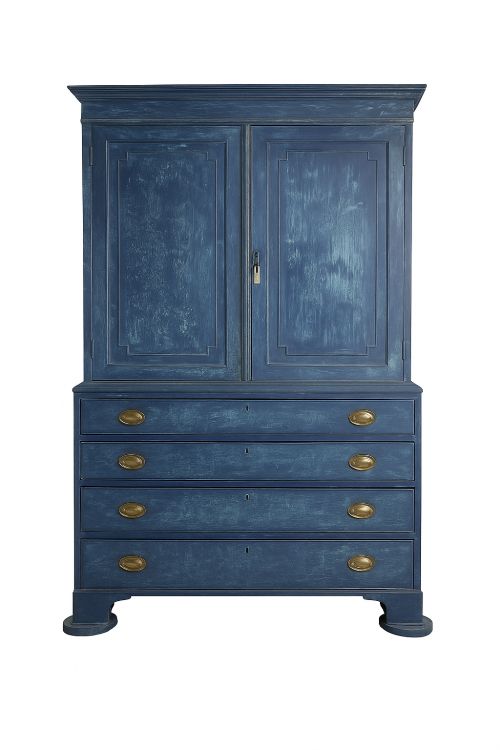
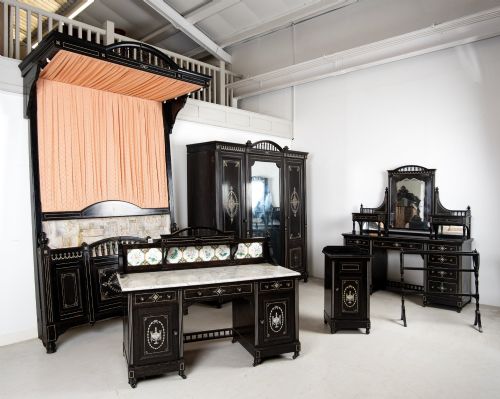
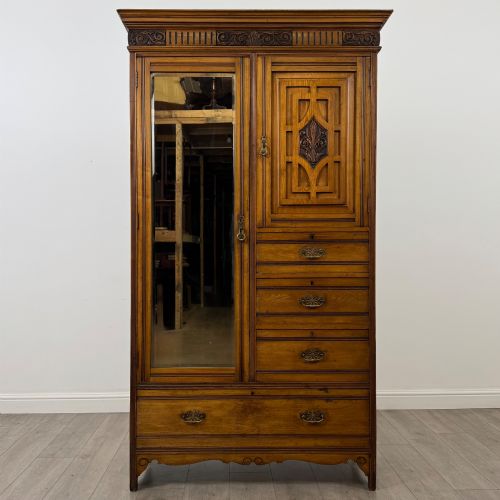
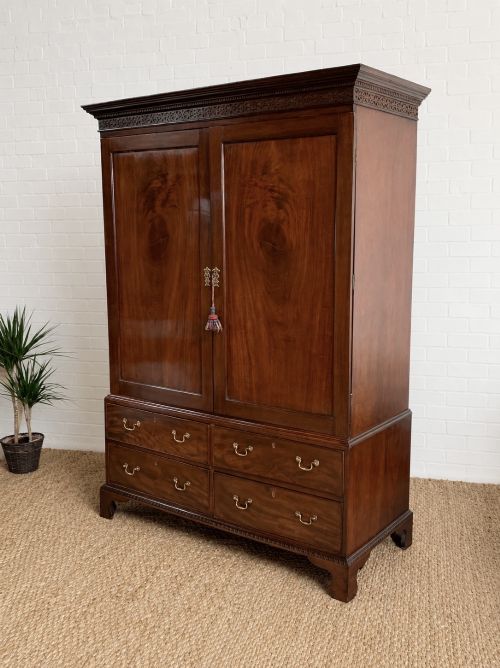
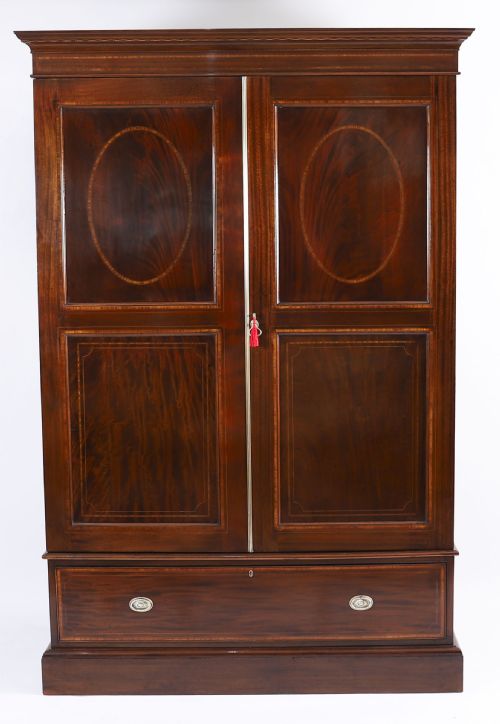
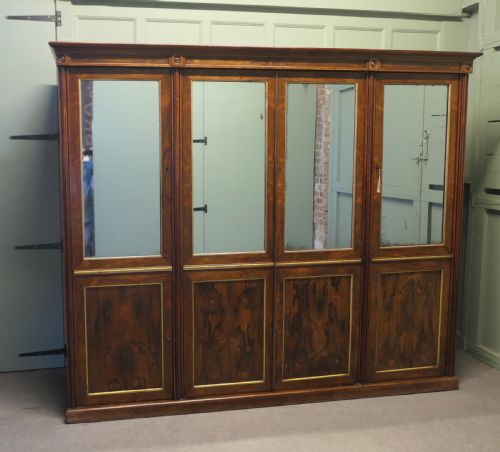
19th Century Bedroom Wardrobe
A 19th century bedroom wardrobe offers generous storage and architectural presence, providing an authentic period focal point for any traditional interior.

19th Century Bedroom Wardrobe
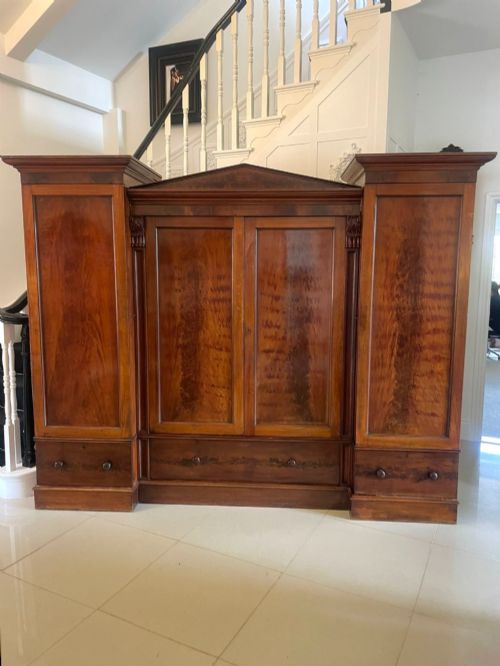
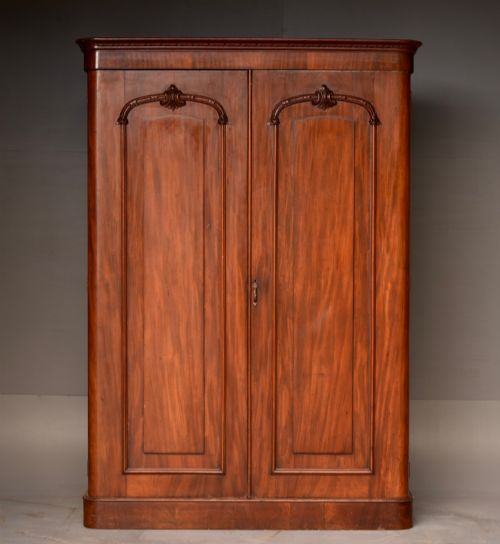
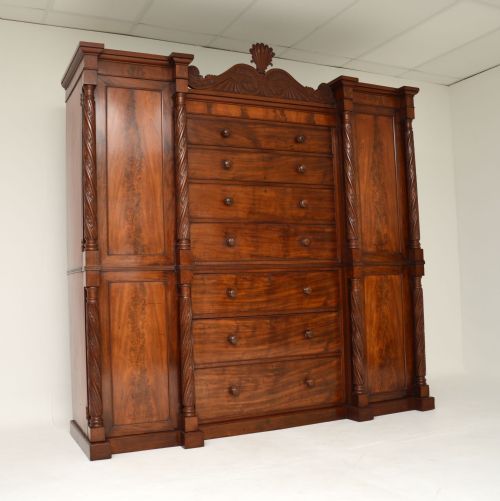
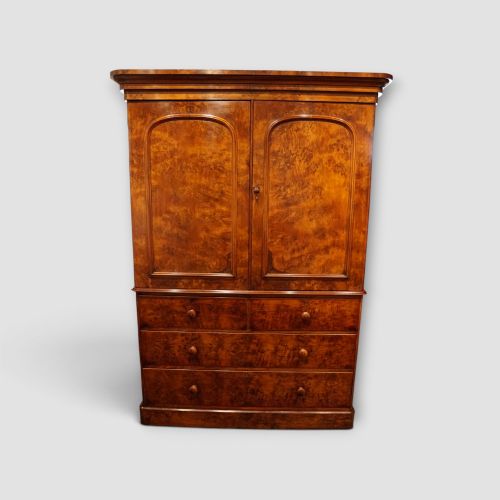
A 19th century bedroom wardrobe encompasses large timber storage units designed for hanging garments, linen storage, and internal drawers. These pieces appear in forms such as double and triple wardrobes, compactums, and linen presses across Victorian, Regency, and Georgian styles.
Buyers are most likely to encounter Victorian mahogany double wardrobes and burr walnut compactums on this page. Pieces range from grand architectural four-door designs to smaller single-door armoires and painted pine variations.
Originating from English, Scottish, and French workshops, these items reflect the domestic requirements of their era. They combine hanging space with linen trays and sliding drawers to organise period apparel.
Materials and Technique
Cabinet makers utilised solid timbers alongside veneers, applying flame mahogany, burr walnut, and rosewood crossbanding to display rich natural grain patterns. Pine served as a sturdy secondary wood for internal carcass construction and drawer linings.
Construction techniques involved traditional dovetailing for drawers and mortise and tenon joinery for framing large doors. Decorative elements relied on brass hardware, glass panels, blind fretwork cornices, and occasionally scumble faux oak paintwork.
Judging Quality
Quality rests upon the choice of timber and the sophistication of the veneer work, where book-matched flame mahogany or burr walnut elevates the visual impact. The handling of secondary details, such as blind fretwork and inlaid stringing, distinguishes standard production from exceptional cabinet work.
Structural integrity and original proportion govern the desirability of each piece. Successful examples maintain balanced door alignments and well-integrated internal configurations without awkward alterations to their original form.
Maple and Co·Holland and Sons·Heals
The 19th Century Bedroom Wardrobe Glossary
- Compactum
- A multi-compartment wardrobe that combines hanging space, sliding linen trays, and multiple drawers within a single fitted unit. This design became popular for efficient storage in Victorian bedrooms.
- Linen Press
- A tall storage piece featuring upper cabinet doors enclosing sliding trays, placed above a chest of base drawers. Originally utilised for flat textiles, these units often share categories with wardrobes.
- Compactium
- A historical variant spelling found in trade descriptions for multi-functional fitted wardrobes. It denotes the same internal arrangement as a compactum.
- Scumble paintwork
- A decorative surface finish applied with a translucent glaze to imitate the appearance of finer hardwoods like oak. It appears on alternative regional pieces.
- Crossbanding
- A narrow strip of veneer laid perpendicularly to the surrounding grain along the border of a panel. This technique frames the primary wood figure.
19th Century Bedroom Wardrobe: Frequently Asked Questions
Will a 19th century bedroom wardrobe fit modern hangers?
Many early wardrobes feature shallower internal depths than modern closets because period clothing was narrower or folded rather than hung on bulky hangers. Some examples utilise pull-out hanging pegs or require specialised slim hangers.
Buyers often measure the internal depth before purchase to ensure contemporary garments hang correctly without obstructing the closing doors.
How do I distinguish a compactum from a standard wardrobe?
A standard wardrobe focuses primarily on vertical hanging space behind two or three full-length doors. A compactum incorporates a modular internal layout with central banks of drawers and sliding linen trays flanked by hanging compartments.
This multi-purpose internal division allows compactums to provide comprehensive storage for folded items alongside coats and dresses.
Are these large wardrobes delivered fully assembled?
Due to their substantial size and heavy solid timber construction, many large Victorian and Georgian wardrobes were built to dismantle into modular sections. This modular design helped cabinet makers transport and install heavy furniture up staircases.
Buyers should confirm whether a specific piece uses knock-down construction or remains fixed as a single solid carcass.
How do I care for antique mahogany and walnut surfaces?
Maintenance requires keeping timber pieces away from direct heat sources and sudden humidity changes to prevent veneer cracking or wood shrinkage. Regular dusting with a dry, soft cloth preserves the polish without building up chemical residues.
Periodic application of traditional beeswax feeds the timber and maintains the natural lustre of the polished grain.