
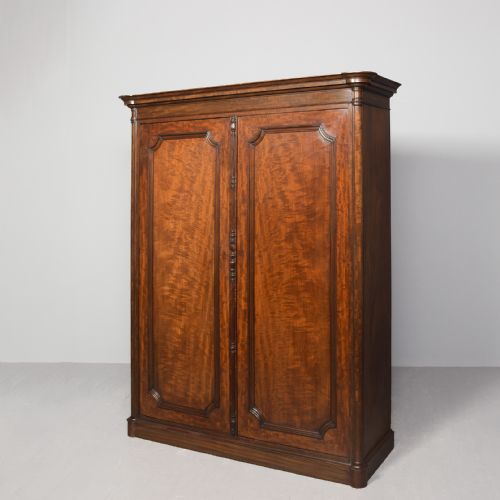
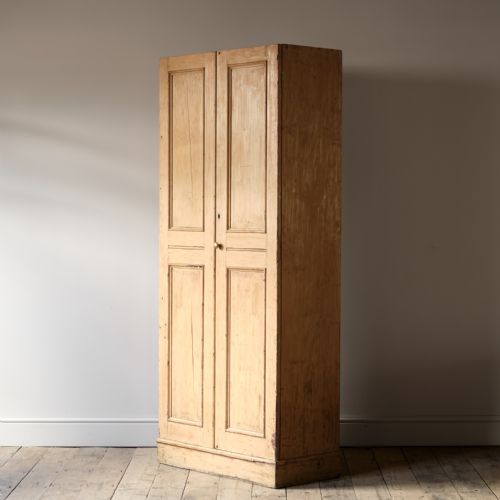
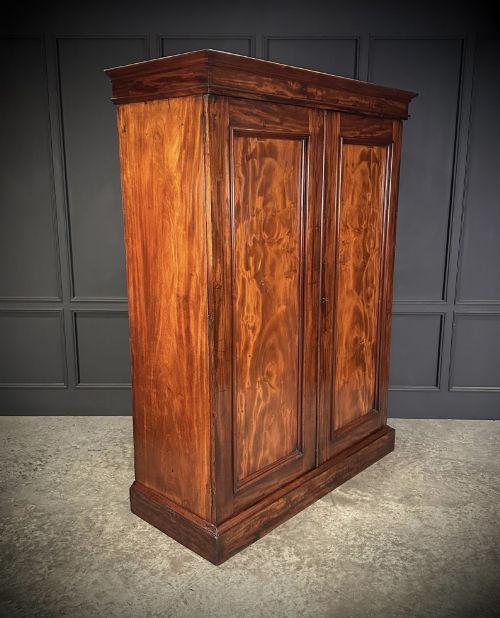
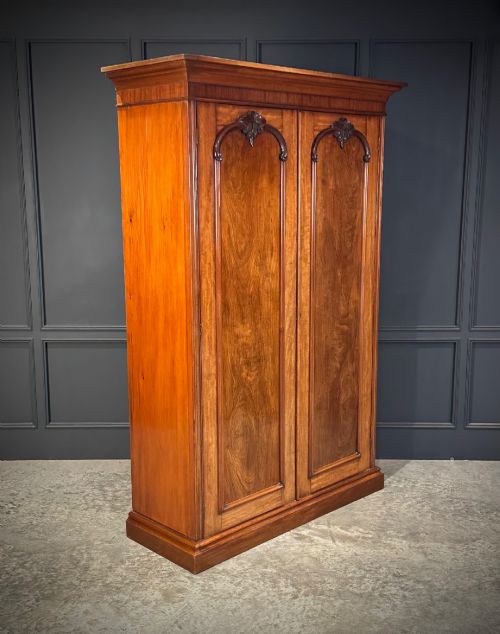
19th Century Double Wardrobe
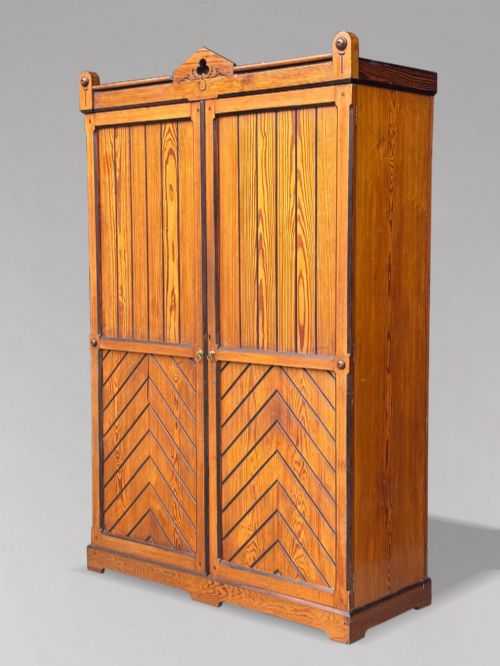
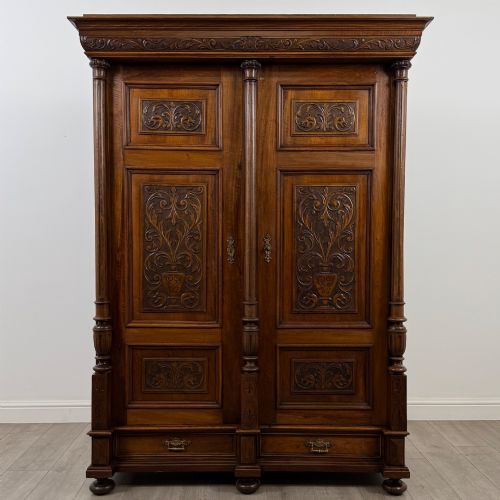
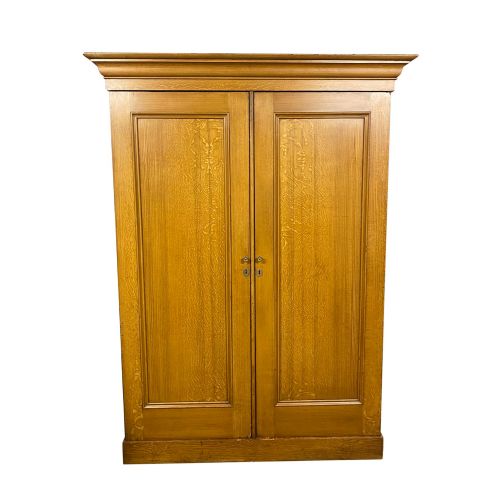
A 19th century double wardrobe provides substantial hanging space and architectural presence, offering generous proportions built for period bedrooms.
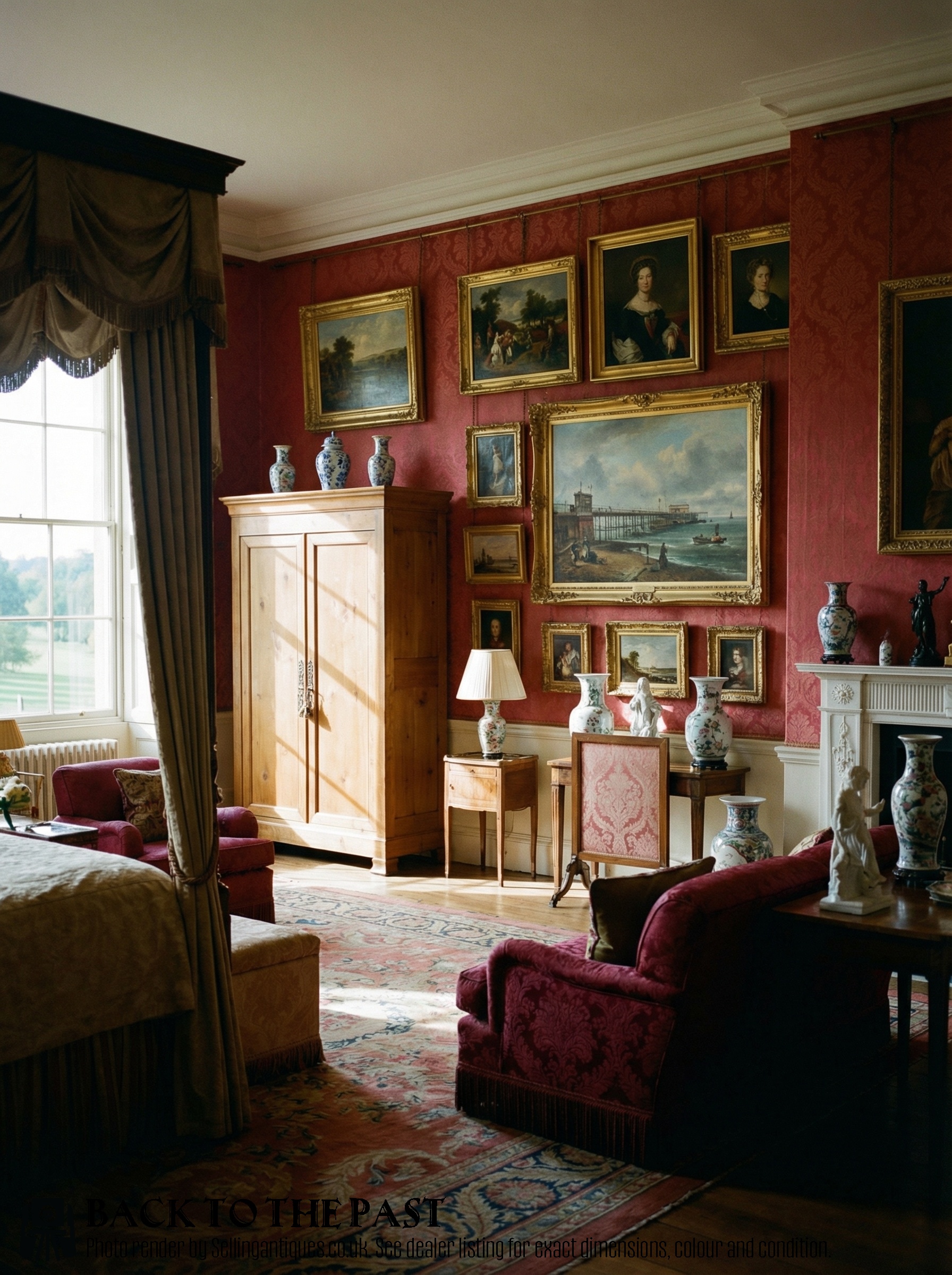
19th Century Double Wardrobe
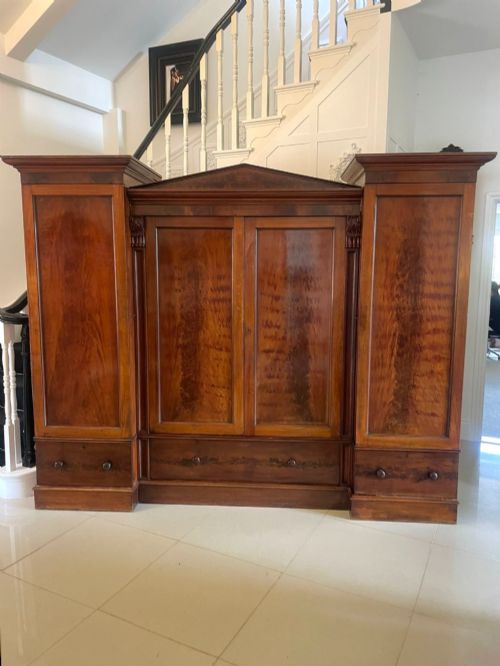
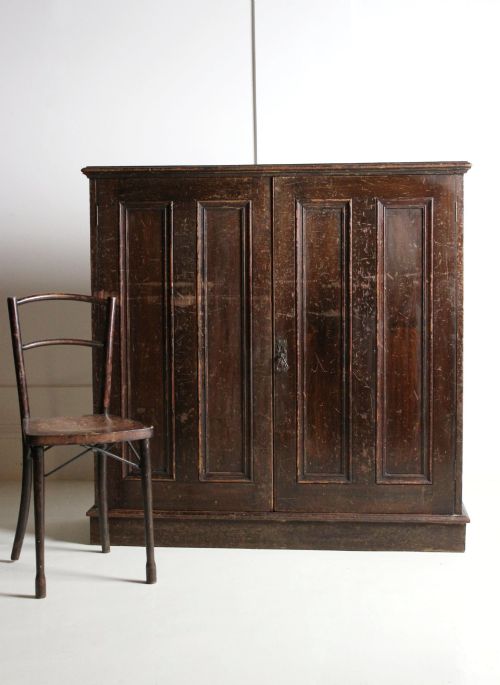
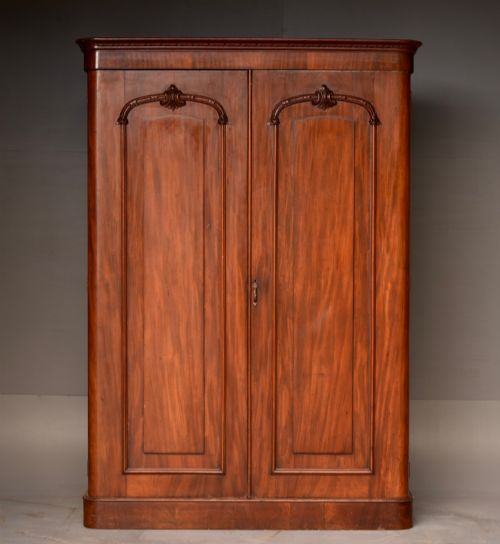
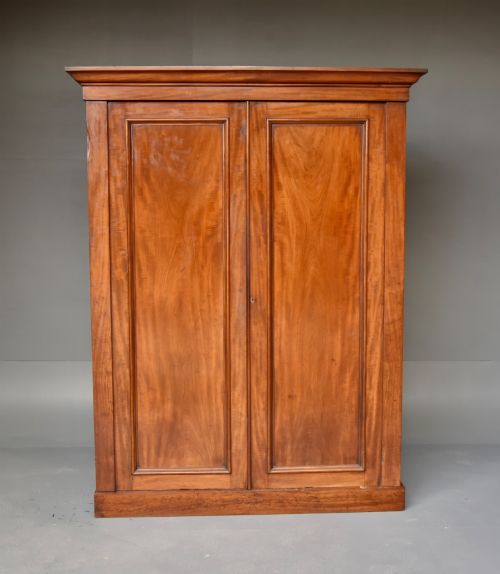
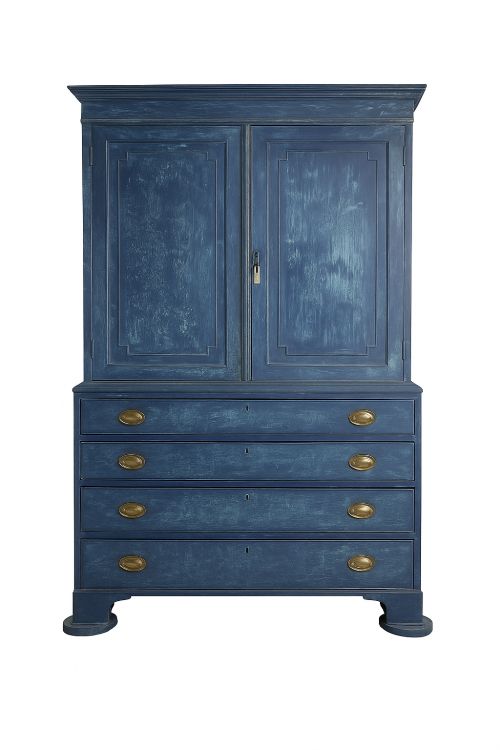
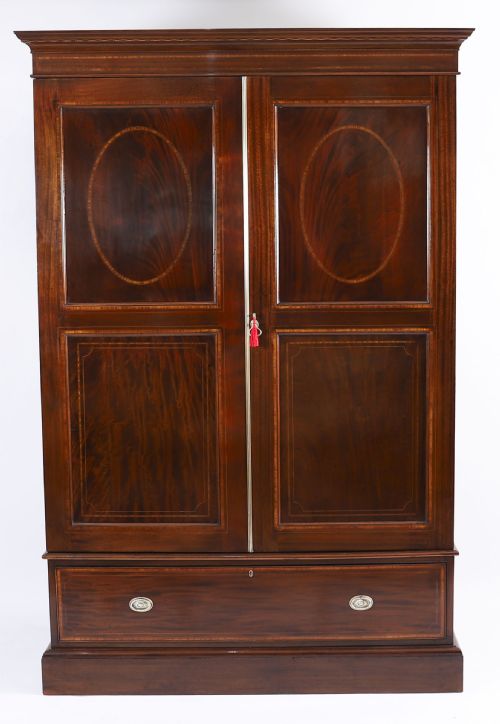
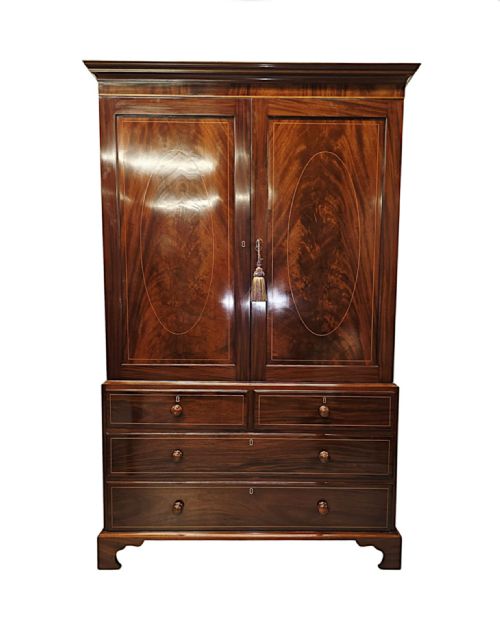
A 19th century double wardrobe encompasses large-scale clothes storage units designed with twin doors, frequently appearing alongside related forms such as compactums, linen presses, and armoires. These pieces emerge from periods spanning the Georgian, Regency, William IV, and Victorian eras, reflecting diverse regional origins from English workshops to French provincial centres.
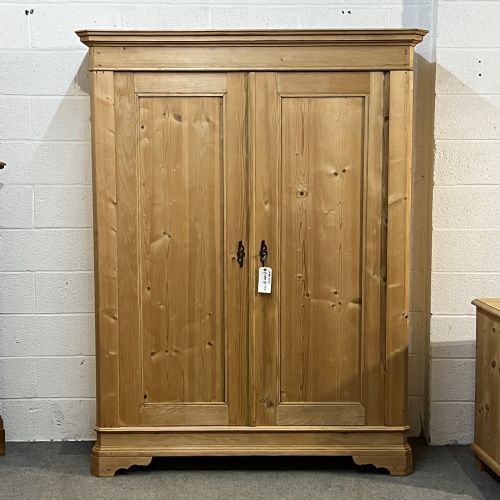
The most common iterations encountered on this page are constructed from timbers such as mahogany, pine, and walnut, often demonstrating styles ranging from traditional Victorian and French provincial to Biedermeier and Arts and Crafts. Many examples incorporate knockdown construction methods, allowing large carcass frames to dismantle for transport into domestic spaces.
Interior configurations frequently include hanging space paired with linen shelves or drawers, adapting earlier press cupboard designs to accommodate longer garments. Buyers select these large furniture pieces to anchor a bedroom scheme while supplying functional storage capacity.
Materials and Construction Techniques
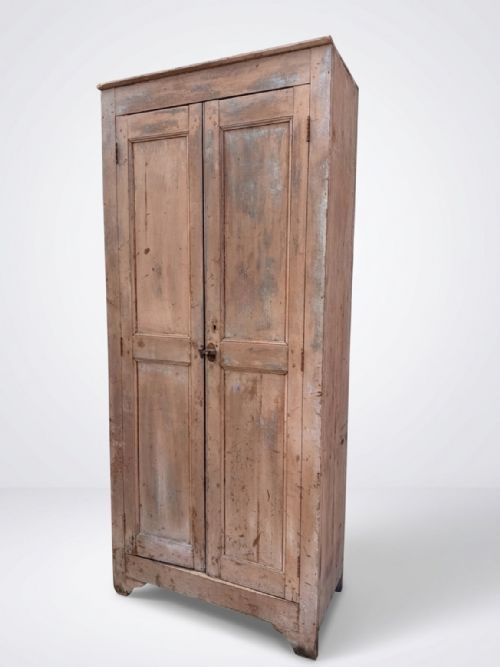
Cabinet makers utilised dense hardwoods like solid mahogany, flame mahogany veneer, walnut, and rosewood for formal English and continental pieces, often applying figured veneers to display striking wood grain patterns. Softer timbers including pine, ash, cherry, maple, and oak served for regional wardrobes and painted country furniture.
Surface treatments varied widely between polished timber finishes and painted or decorative schemes, such as scumble faux oak paintwork and traditional ragwork. Structural integrity relied on deep carcasses, sturdy brass hardware, and panelled doors, with knockdown joints engineered to support substantial timber frames.
Listings feature woods spanning mahogany, flame mahogany veneer, walnut, pine, oak, cherry, maple, ash, rosewood, and satinwood.
Factors Distinguishing Quality
The calibre of a piece rests upon the selection of timber veneers, the precision of cabinet joinery, and the integrity of the original hardware and surface finish. Finer examples display carefully matched figured mahogany or walnut veneers across wide door panels, alongside sophisticated interior drawer construction and intact cornices.
Proportion and execution define the upper tiers of the range, where balanced architectural details such as columns, paneling, and fine mouldings elevate utilitarian storage into formal furniture. Lesser examples rely on simpler pine construction, plain painted surfaces, or utilitarian hardware without decorative ambition.
S and H Jewell·Howard and Sons
The 19th Century Double Wardrobe Glossary
- Compactum
- A multi-compartment wardrobe combining hanging space, linen shelves, and internal drawers within a single carcass. This form provides comprehensive storage for various garments.
- Linen Press
- A dual-stage storage piece featuring sliding trays or shelves in the upper section above a base of deeper drawers. These units originally stored household linens before wardrobes gained dominance.
- Flame Mahogany Veneer
- Thin slices of mahogany cut from the fork of the tree where branches meet, creating a distinctive flickering flame pattern. Cabinet makers applied these veneers to primary display surfaces.
- Knockdown Wardrobe
- A large furniture piece designed with pegged or bolted joints that allow the main frame to dismantle entirely. This engineering facilitated transport up narrow stairwells and into period properties.
- Scumble Paintwork
- A decorative surface technique involving translucent glazes manipulated over a base coat to simulate the appearance of figured oak or other fine woods. Artisans applied this finish to humble pine furniture.
- Biedermeier
- A Central European style spanning the mid-19th century characterised by clean lines, minimal ornamentation, and a focus on the natural beauty of wood veneers. These pieces emphasise functional elegance.
19th Century Double Wardrobe: Frequently Asked Questions
What is a compactum wardrobe?
A compactum is a specialised multi-functional storage piece that divides its interior between hanging space and banks of internal drawers or shelves. These units often include specialised compartments for accessories.
They represent a more complex evolution of the standard double wardrobe found during the Victorian period.
How do linen presses differ?
Linen presses traditionally house sliding trays or shelves behind upper doors, sitting above a chest of lower drawers for smaller items. Over time, many of these presses were converted to full hanging wardrobes by removing internal trays.
They offer an alternative storage format to standard double door wardrobes.
What woods were commonly used?
Makers utilised mahogany and walnut for formal English and continental pieces, frequently employing flame veneers for visual impact. Regional and country pieces relied heavily on pine, oak, ash, and cherry.
Some provincial examples also feature historic painted finishes or scumble decoration.
How can I date a wardrobe?
Dating relies on observing stylistic markers, construction methods, and timber choices across different periods such as Regency, William IV, and Victorian eras. Georgian and Regency pieces often display cleaner architectural lines, while Victorian examples embrace grander proportions and figured veneers.
Hardware styles and interior fittings also provide reliable chronological clues.