
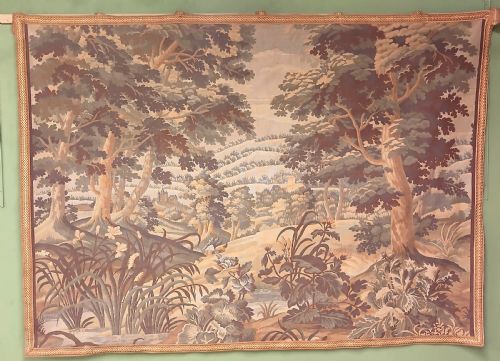


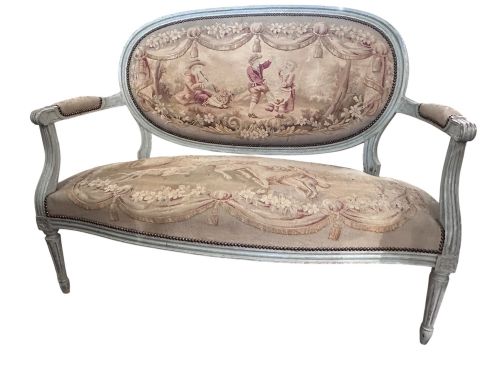


19th Century Aubusson Tapestry
These 19th century aubusson tapestry pieces bring French textile artistry into a room, offering woven pastoral scenes and floral motifs.
19th Century Aubusson Tapestry
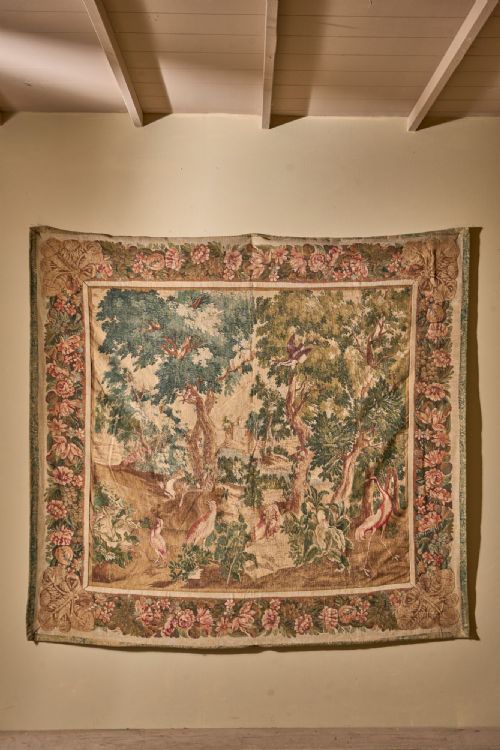
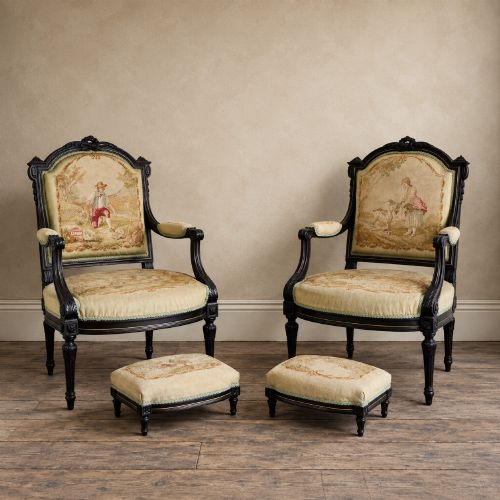
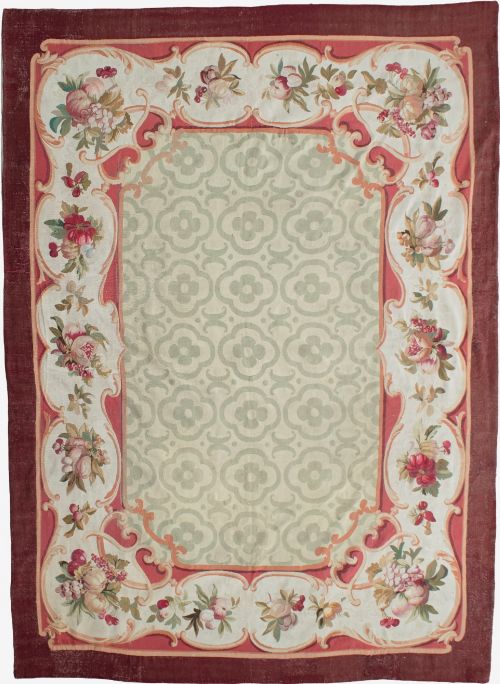
A 19th century aubusson tapestry takes many forms on this page, appearing as large wall hangings, area rugs, cushions, screens and upholstered seat furniture. Buyers seek these items to introduce historic French textile work into interior spaces.
The pieces span the 19th century, drawing on French Chateau, Louis XVI Revival and Rococo Revival styles. They include wall panels, portieres, and entre-fenetres alongside salon suites and armchairs upholstered in the weave itself.
How they were made
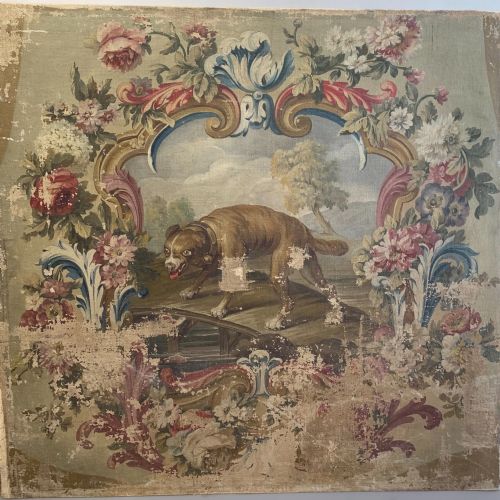
The textiles rely on wool, cotton and silk fibres combined on traditional looms to build pictorial or floral designs. Many pieces incorporate preparatory painted cartoons in oil on canvas or gouache before the weaving begins.
Furniture frames supporting the tapestries utilise beech, ebonised beech, and giltwood, sometimes carved or painted. Cushions and panels integrate these woven textiles with structural timber and brass details.
Listings feature materials including wool, cotton, silk, giltwood, beech, brass, and ebonised beech across various furniture and textile forms.
What varies in quality
The calibre of a 19th century aubusson tapestry depends on the fineness of the weave and the complexity of the colour palette within the wool and silk threads. Superior examples display subtle tonal shading and meticulous pictorial depth in their pastoral or floral subjects.
For upholstered forms and screens, quality rests on the harmony between the textile and the supporting giltwood, beech or ebonised frame. Pieces derived from detailed gouache or oil cartoons maintain sharper graphical precision in the final textile.
The 19th Century Aubusson Tapestry Glossary
- Entre-fenetre
- A tall, narrow tapestry designed to hang on the wall space between two windows. These vertical panels balance architectural room proportions.
- Portiere
- A heavy curtain hung over a doorway to reduce drafts and frame a passage. In this context, the panel is formed from tapestry weave.
- Cartoon
- A full-scale painted design on canvas or paper used by weavers as a template. Painters prepared these in oil or gouache prior to loom work.
- Giltwood
- Timber coated with gold leaf or gilt paint to create a reflective surface. This material frames salon suites and armchairs.
- Verdure
- A tapestry style dominated by botanical subjects, foliage and woodland scenes. These compositions typically feature trees, leaves and small animals.
19th Century Aubusson Tapestry: Frequently Asked Questions
How do I hang a large wall tapestry?
Large wall panels distribute their weight across a batten or hidden rail system secured to the wall. This method prevents distortion of the wool and silk fibres over time.
Ensure the hanging height keeps the textile away from direct heat sources and strong sunlight to preserve the dyed yarns.
Were these tapestries used on furniture?
Weavers produced textiles specifically tailored to upholster salon suites, armchairs, settees and folding screens. These pieces integrated the loom work directly into domestic seating.
Matching footstools and multi-piece salon sets coordinate the textile design across several items of furniture in a single room.
What is the difference between a rug and a wall hanging?
Rugs and carpets use a denser foundation structure suited to foot traffic on the floor. Wall panels and entre-fenetres utilise lighter tension meant for vertical display.
Examining the reverse side reveals the density of the weave and whether the backing supports horizontal placement.
How do I care for antique textile cushions?
Antique cushions require gentle handling and minimal friction to protect the delicate wool and silk threads. Keep them out of direct sunlight to prevent fading of the dyed colours.
Spot cleaning by a textile specialist preserves the structural integrity of the weave without damaging the underlying fibres.