




Woven Pictorial Wall Tapestry
These woven pictorial wall tapestry pieces bring historic narrative and rich textile artistry directly into a room, offering centuries of decorative tradition.
Woven Pictorial Wall Tapestry
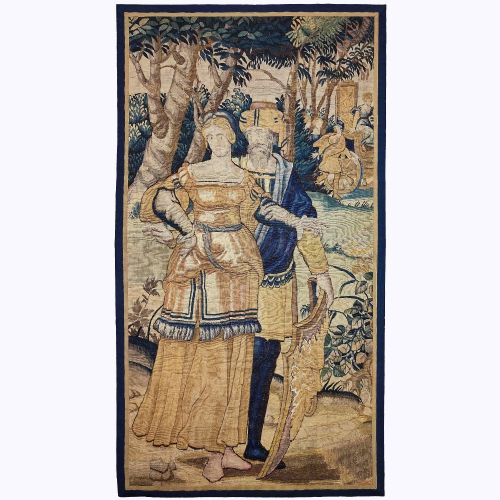
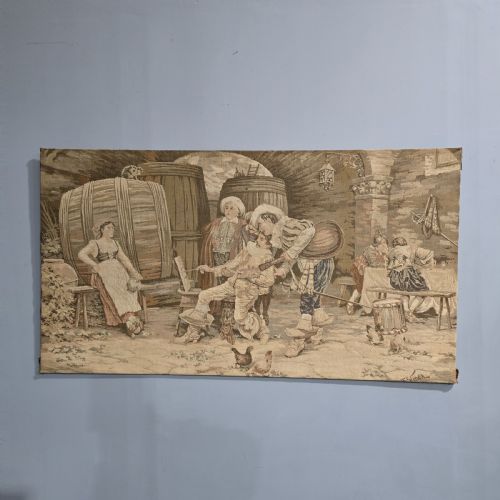
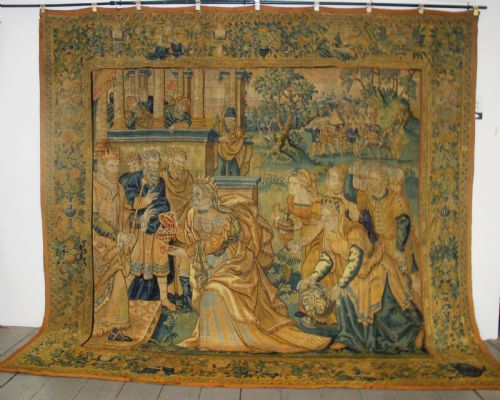
A woven pictorial wall tapestry transforms a vertical surface through textile art, spanning centuries of craftsmanship from European rooms to Persian workshops. When you search for a woven pictorial wall tapestry, you encounter heavy wall hangings and needlework pieces designed to depict figurative scenes, portraits, or elaborate landscapes.
The selections here range from sixteenth-century Flemish panels and eighteenth-century European needlework to later nineteenth-century French Aubusson styles and early twentieth-century Persian rugs utilised as pictorial displays. Flemish Renaissance works and French Baroque compositions sit alongside Qajar Persian portrait rugs and signed pieces mounted on wood boards.
Most examples rely on traditional forms such as large wall hangings, tapestries, and panel formats. Buyers frequently find substantial sixteenth-century fragments alongside larger decorative works from the nineteen-twenties and thirties.
Materials and construction methods
Makers constructed these textiles predominantly from wool, silk, cotton, and linen fibres, intertwining yarns to build complex pictorial surfaces. Many historical examples employ heavy wool grounds combined with silk highlights to create depth and texture within the imagery.
Needlework pieces involve stitching fine threads directly onto a prepared canvas foundation rather than utilising a loom-woven weft entirely. Certain twentieth-century formats incorporate wood board backings to support the heavy textile structure for hanging.
Assessing quality in historical textiles
Quality rests in the density of the weave, the complexity of the narrative design, and the survival of the original fibres and colour palette. Finer pieces demonstrate precise control over figurative proportions and tonal gradation across wool and silk yarns.
The distinction between standard decorative hangings and museum-grade works depends upon the integrity of the textile structure and the clarity of the pictorial composition. Early sixteenth-century Flemish panels exhibit intricate loom techniques that differ significantly from later twentieth-century needlework interpretations.
Mohtasham Kashan
The Woven Pictorial Wall Tapestry Glossary
- Aubusson style
- A design tradition originating from the French town renowned for flat-weave tapestries, typically featuring floral or pastoral scenes within decorative borders.
- Flemish Renaissance
- The artistic movement spanning the sixteenth century in Flanders, known for densely populated narrative tapestries woven with rich wool and silk yarns.
- Kashan
- A city in central Iran famous for fine pile-woven rugs and pictorial carpets, often depicting historical figures or elaborate garden scenes.
- Needlework
- A technique where individual threads are hand-stitched through a textile ground to build up a pictorial image rather than woven on a loom.
- Qajar Persian
- The artistic style associated with the Qajar dynasty in Iran, characterised by detailed portraiture and traditional Persian motifs.
Woven Pictorial Wall Tapestry: Frequently Asked Questions
How do I hang a heavy textile safely?
Large wall hangings require even distribution of weight across the upper margin to prevent distortion of the weave. Professional conservators recommend stitching a wide cottonvelcro or sleeve support along the back edge.
Avoid hanging heavy wool and silk panels in direct sunlight or damp environments to preserve the integrity of the natural fibres.
What is the difference between a rug and a wall tapestry?
While both utilise woven or knotted techniques, wall tapestries are specifically designed for vertical display and often feature pictorial narratives without a thick pile. Rugs are engineered for floor use, though certain pictorial Kashan examples bridge this division.
Historical listings show that some fine pictorial carpets were adapted for wall display due to their detailed artistic portraits.
How do I date a sixteenth-century fragment?
Dating relies on stylistic analysis of the figures, border designs, and the specific type of wool and silk dyes used in the weave. Sixteenth-century Flemish panels display distinct architectural and costume details characteristic of that period.
Comparing the weave density and material degradation against documented museum examples helps confirm the approximate age.