





Large Wall Hanging Tapestry
A large wall hanging tapestry brings scale and historical depth to an interior, transforming an empty surface with woven narratives and lush foliage.
Large Wall Hanging Tapestry
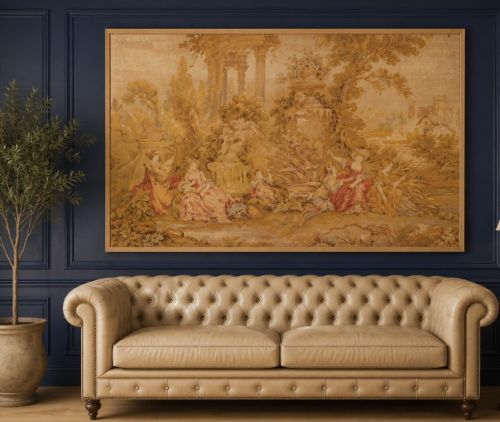
A large wall hanging tapestry serves as a grand textile anchor for a room, originating from European weaving centres like France and Flanders as well as Central Asian textile traditions. These works encompass woven wall coverings, embroidered panels, needlework pieces, and framed textile art designed to span substantial wall spaces.
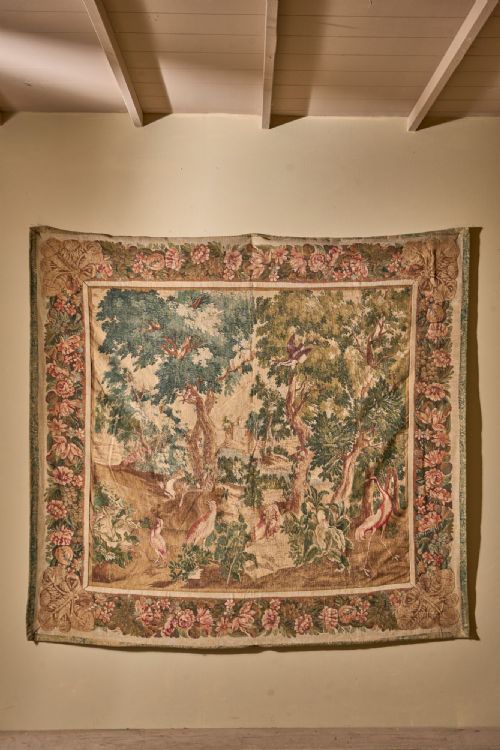
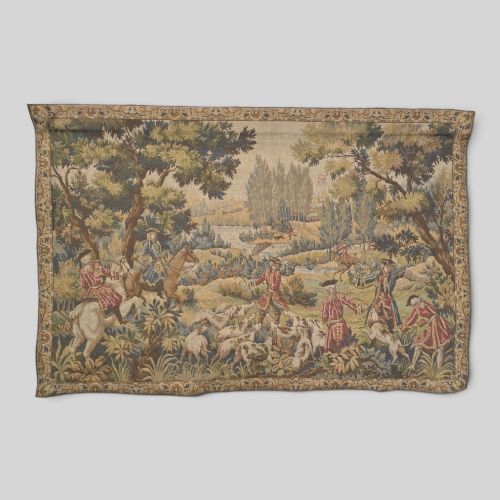
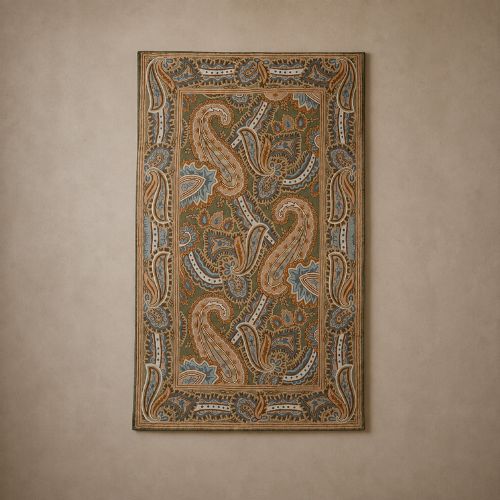
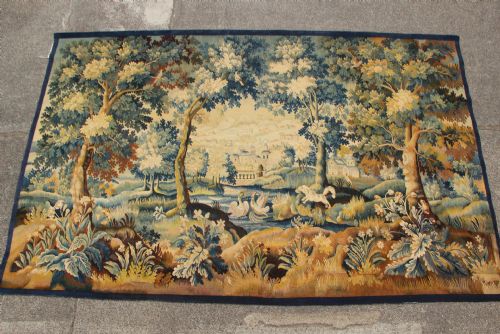
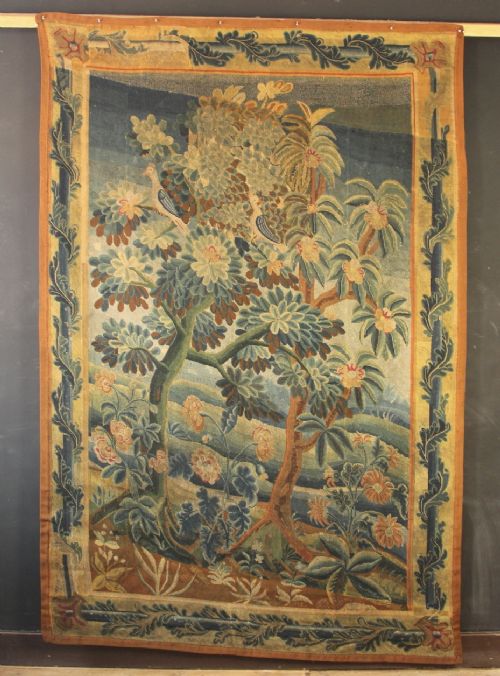
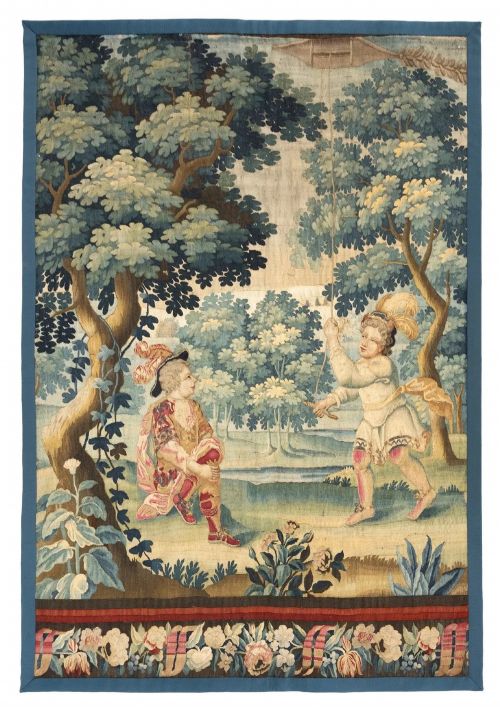
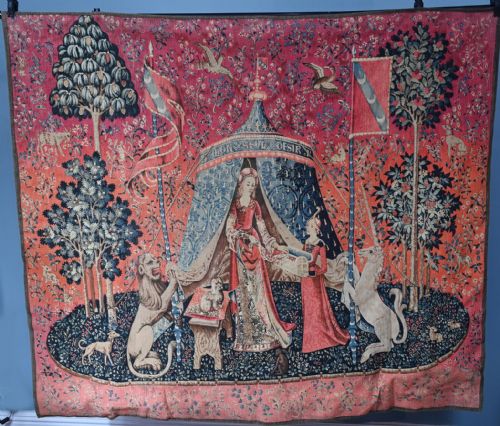
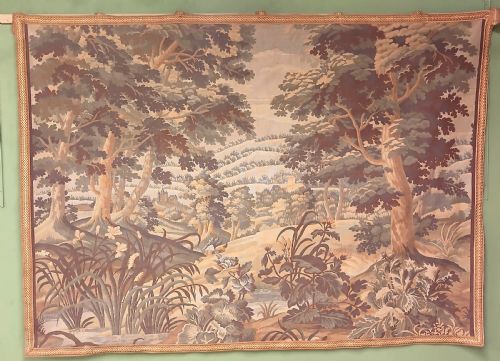
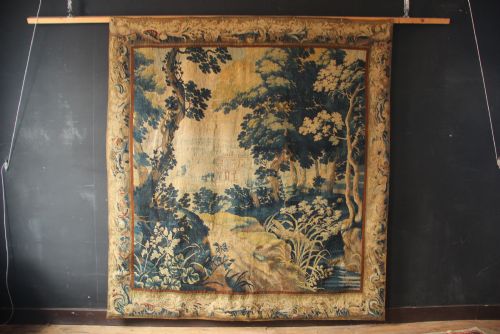
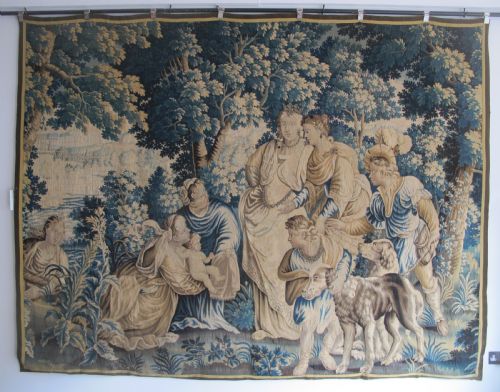
The selections available here range from centuries-old Flemish verdure scenes and Biblical Aubusson compositions to later French pastoral depictions, crewelwork panels, and intricate Asian embroideries. Buyers most frequently encounter 17th to 19th-century European woven landscapes alongside decorative panels from international textile traditions.
The physical forms vary from unmounted woven wool and silk textiles intended to drape freely to rigid framed panels and mounted wall art. Each piece functions primarily as a substantial acoustic and visual room adornment rooted in historical craft.
What varies in quality
The fidelity of the pictorial composition and the subtlety of the colour gradation separate standard decorative textiles from masterworks of weaving. Earlier Flemish and French works demonstrate intricate botanical detail and harmonious tonal transitions that require considerable artisan time.
The integrity of the textile weave, the density of the thread count, and the survival of the original borders or framing elements influence the overall visual impact. Material richness, such as the inclusion of silk highlights or metal threads, elevates the complexity of the piece.
The listings span multiple centuries of production, featuring wool, silk, cotton, and linen woven pieces alongside needlework and embroidery.
The Large Wall Hanging Tapestry Glossary
- Verdure
- A type of tapestry featuring a dominant landscape motif composed of trees, foliage, and plants, often populated by birds or animals. These green-toned forest scenes were widely produced in Flemish and French workshops.
- Aubusson
- A style or origin designation stemming from the French town renowned for its woven tapestries and carpets. These pieces frequently depict pastoral, floral, or mythological subjects.
- Crewelwork
- A type of embroidery executed using wool yarn on a plain-weave cotton or linen foundation. This technique allows for textured, raised surface designs on wall hangings.
- Suzani
- A type of embroidered tribal textile originating from Central Asia, typically featuring large-scale floral and medallion motifs worked in silk on a cotton ground.
Large Wall Hanging Tapestry: Frequently Asked Questions
How do I hang a heavy tapestry?
Large woven textiles require even weight distribution across the upper edge to prevent stretching or distortion of the fibres. Conservation methods often involve sewing a sturdy canvas casing or Velcro strip to the reverse and mounting it to a matching wooden batten.
Heavier framed tapestries utilise traditional mirror plates and secure wall fixings suited to the specific weight of the wooden structure. Avoid hanging textiles directly in strong sunlight to protect the natural dyes from fading.
Where were most historical tapestries woven?
The primary historical centres for large-scale European tapestry production were located in Flanders, including towns such as Audenaarde, and various French regions including Aubusson. These workshops operated for centuries, supplying royal courts and affluent estates with narrative wall coverings.
Other regional textiles originate from Central Asian workshops, producing distinctive embroidered panels and decorative wall hangings utilising local motifs and materials.
How do I care for an antique textile?
Maintenance involves gentle surface dusting using a soft brush or low-suction vacuum applied through a protective mesh screen. Professional textile conservators should handle any significant cleaning or structural repairs to preserve the fragile historical fibres.
Maintaining stable indoor humidity levels and keeping the piece away from direct heat sources ensures the longevity of wool, silk, and cotton materials.
What is a verdure tapestry?
A verdure tapestry depicts a lush woodland scene filled with stylized trees, leaves, flowers, and occasionally small animals or distant architectural elements. These pieces served as forest landscapes inside stone-walled rooms during earlier centuries.
Colour palettes historically relied on various shades of green, blue, and ochre, rendered through intricate wool and silk weaving techniques.