
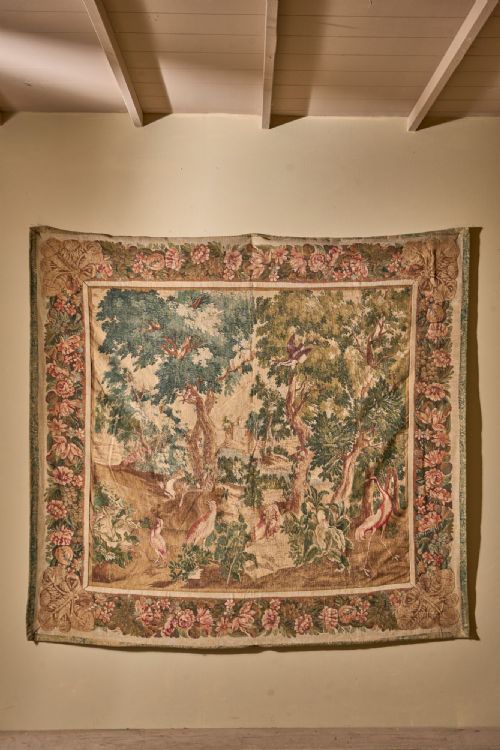
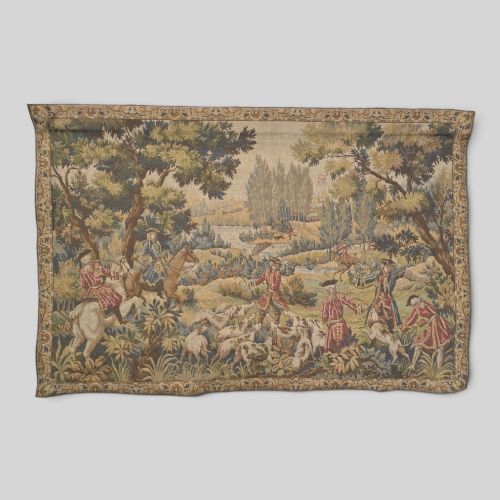
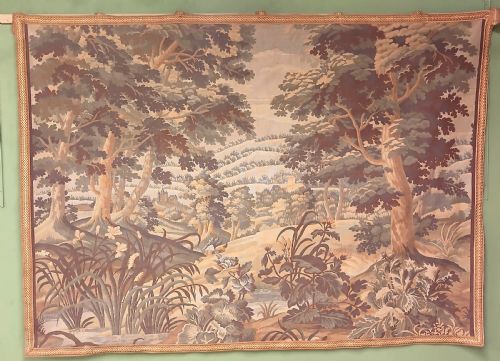
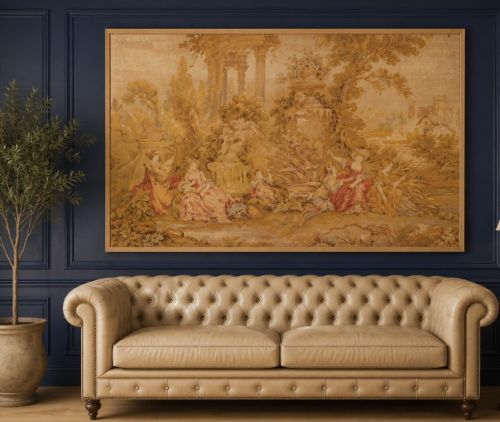




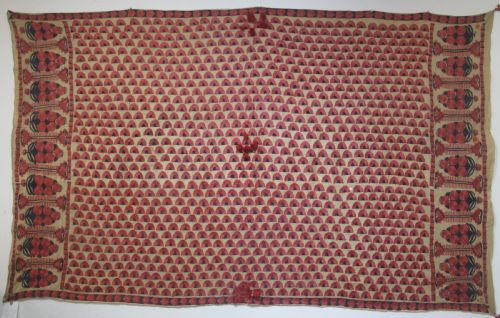


Beige Woven Wall Hanging
These beige woven wall hanging pieces bring centuries of textile artistry into a room, offering tactile warmth and historic narrative through woven wool and silk.
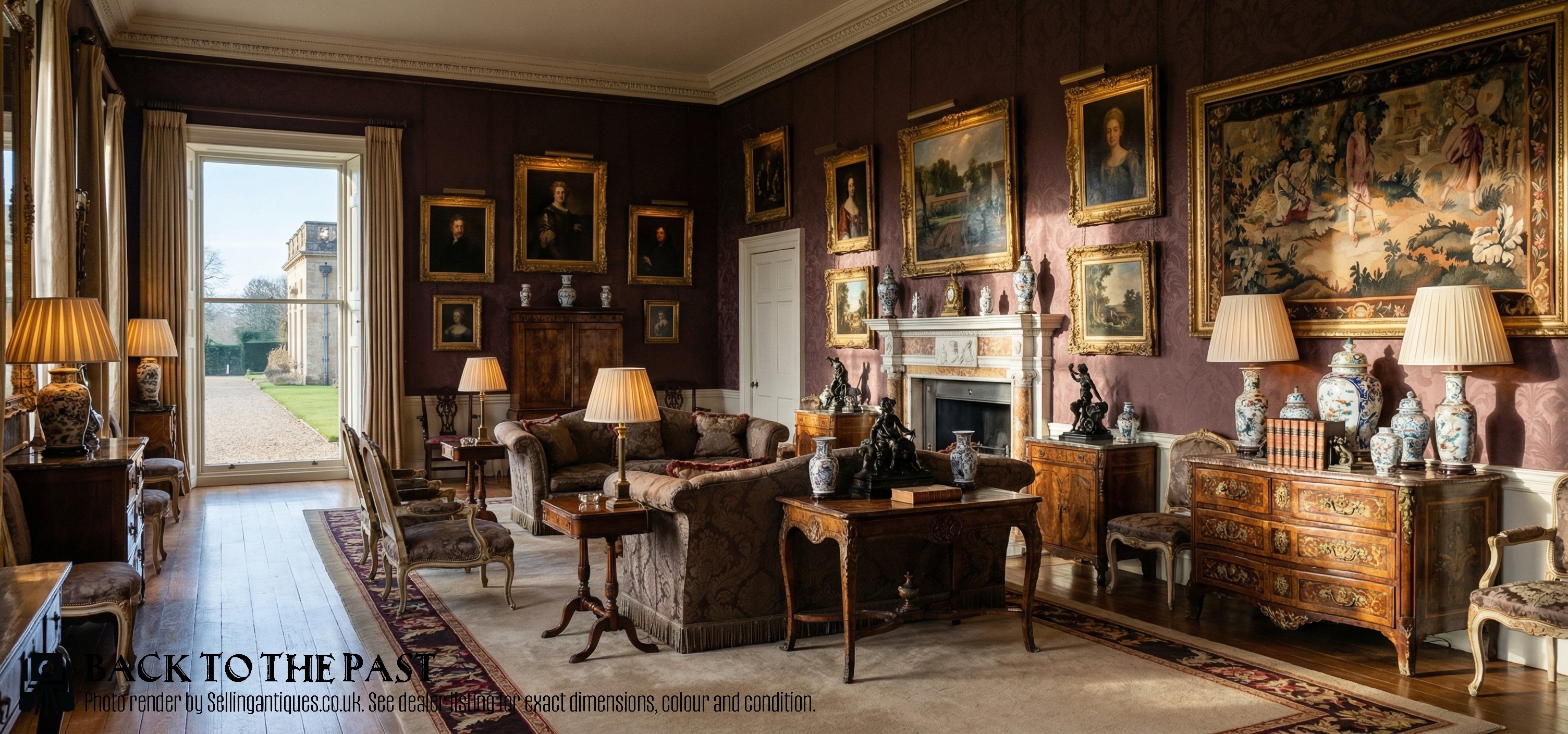
Beige Woven Wall Hanging
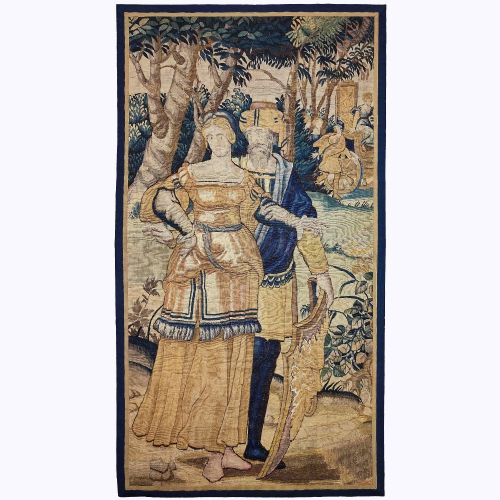
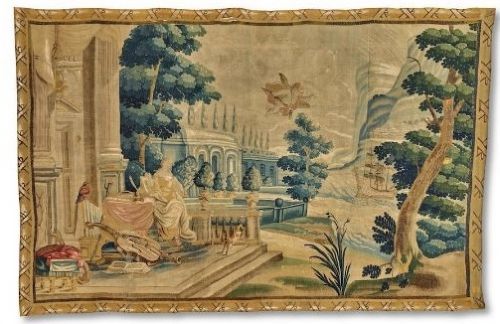
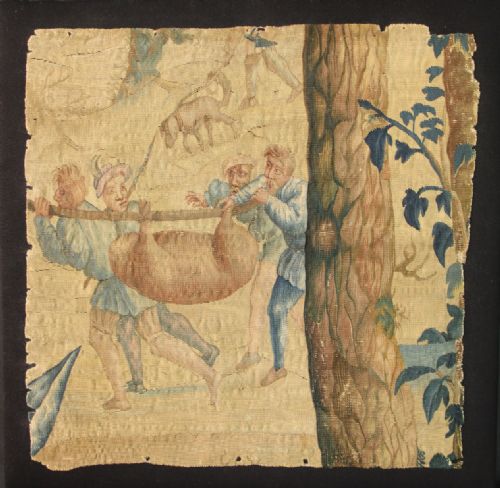
When you search for a beige woven wall hanging, you encounter historic textiles ranging from monumental Flemish and Brussels works to French Aubusson panels and intricate needlework. These pieces span multiple centuries, appearing as grand mythologies, pastoral scenes, or framed fragments.
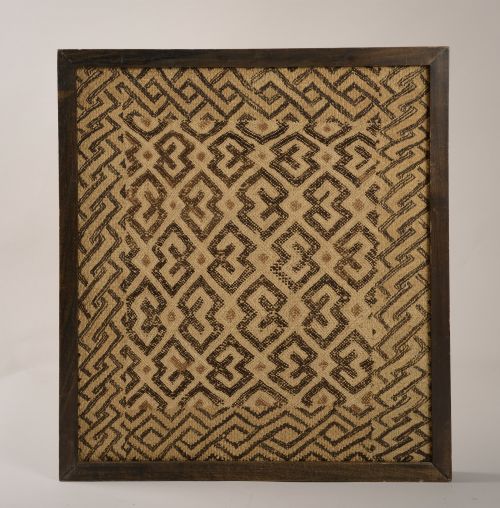
The selections available here lean heavily toward large French and Flemish wall tapestries alongside textured panels and woven rugs. Buyers typically find substantial wool and silk compositions suited to anchoring a large wall space.
How they were made
Artisans constructed these textiles primarily using wool, cotton, and silk threads woven on looms or meticulously embroidered by hand. Many pieces incorporate sturdy timber frames or wood backing boards to support the weight of the heavy fabric.
Makers employed techniques ranging from traditional high-warp tapestry weaving to detailed needlework and textured embroidery. Natural dyes and meticulous fibre blending created the subtle tonal variations characteristic of these historic hangings.
Beige Woven Wall Hanging Retail Price Guide 2026
Typical asking prices for beige woven wall hanging among the pieces listed under this phrase on Sellingantiques today, from the lower quarter to the upper quarter. They describe what is for sale here now, not the wider market.
Listings span from the 16th century through the 1930s, featuring wool, silk, cotton, and timber frames.
What varies in quality
The distinction between ordinary and exceptional works rests on the fineness of the weave and the complexity of the pictorial design. Denser thread counts and sophisticated pictorial depth separate ambitious workshop productions from simpler decorative items.
Condition and integrity also define the upper tier of the range, where surviving fragments retain their original borders and strong structural support. The clarity of the narrative scene and the skill of the execution dictate the standing of each piece.
The Beige Woven Wall Hanging Glossary
- Aubusson
- A traditional type of tapestry woven in the French town of Aubusson, known for pastoral and floral motifs without a visible warp. These works often replicate oil paintings in textile form.
- Entre-fenetre
- A tall, narrow tapestry specifically designed to hang on the wall space between two windows. Such pieces balance vertical architecture with proportioned pictorial scenes.
- Warp
- The set of lengthwise threads held under tension on a loom on which the transverse weft is woven. The quality of the warp often determines the durability of the textile.
- Tapestry fragment
- A surviving portion of a larger historic wall hanging, often salvaged and mounted for display. These pieces preserve specific figural groups or decorative borders from lost masterworks.
Beige Woven Wall Hanging: Frequently Asked Questions
How do I hang a heavy tapestry?
Most large textiles require a timber support or a concealed wooden batten attached along the top edge to distribute the weight evenly across the wall.
Avoid hanging delicate wool and silk directly on nails or hooks, as this concentrates tension and damages the historic fibres.
Where were these textiles produced?
The pieces originate primarily from European weaving centres in France and Flanders, alongside regional variations from other textile traditions.
Major workshops in cities like Brussels and Aubusson dominated production across the seventeenth and nineteenth centuries.
How do I clean an antique wall hanging?
Surface dust can be gently removed using a soft brush or low-suction vacuum applied through a protective mesh screen.
Professional textile conservators should handle deep cleaning or structural repairs to prevent fibre degradation.
How do I date a woven wall hanging?
Dating relies on stylistic analysis of the figures, floral borders, and woven motifs compared against known workshop production periods.
Material composition and framing techniques also provide chronological markers for pieces spanning the sixteenth to the twentieth centuries.