





French Woven Tapestry
A french woven tapestry brings historic textile artistry into a room, offering rich textures and classical scenes passed down through centuries.
French Woven Tapestry
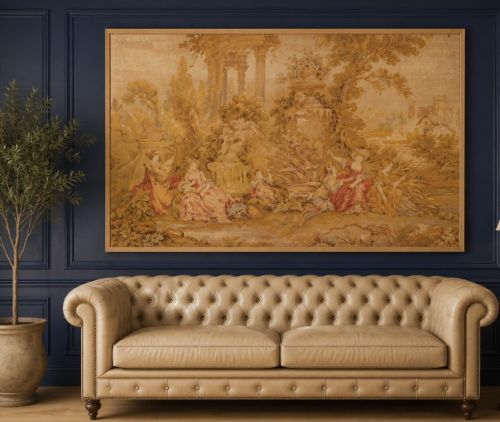
When you search for a french woven tapestry, you encounter heavy wall hangings, framed panels, carpets, and screens originating from historic workshops. The items on this page span from the seventeenth century through the early twentieth century, reflecting enduring traditions in European interior decoration.
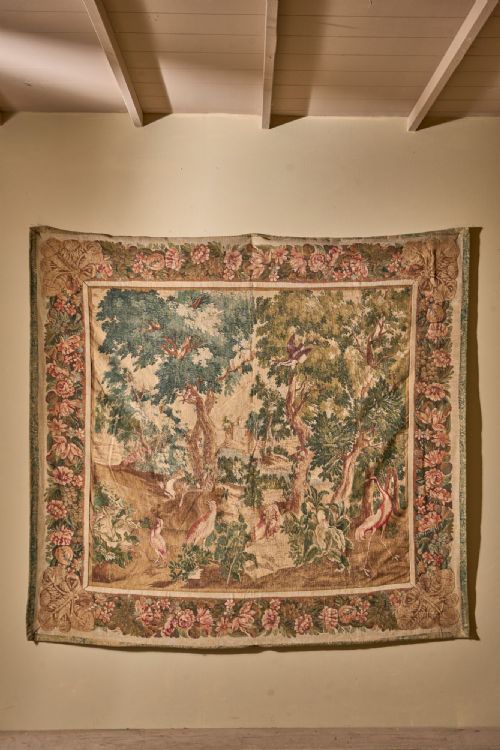
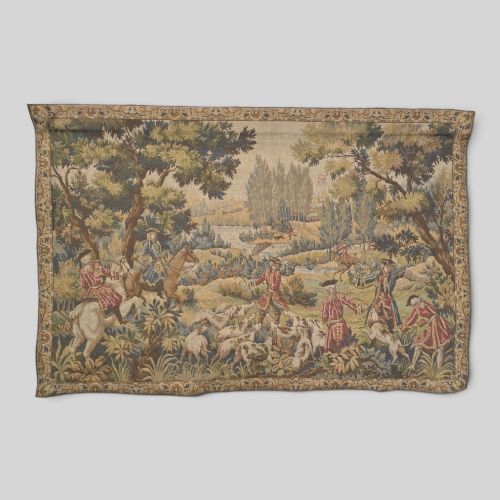
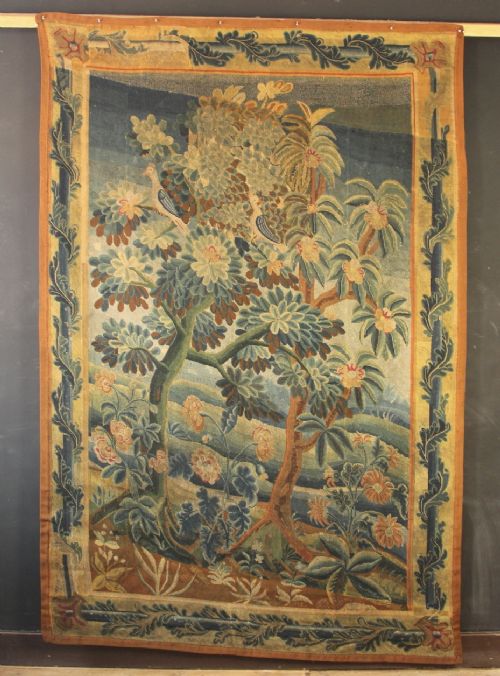
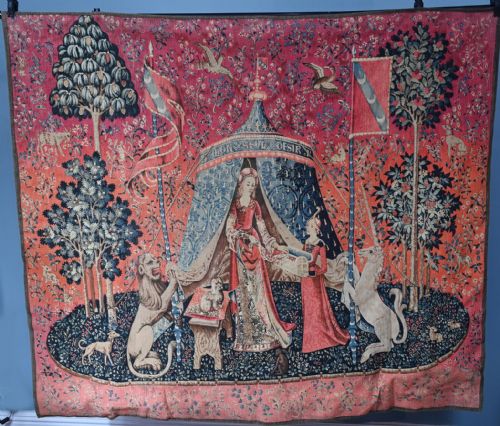
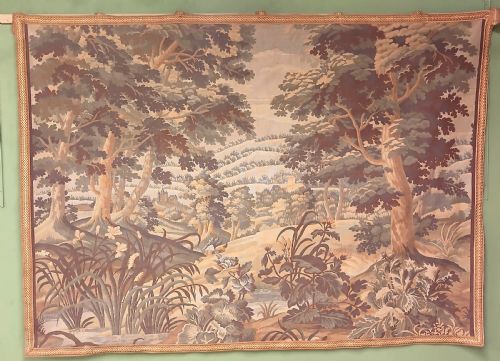
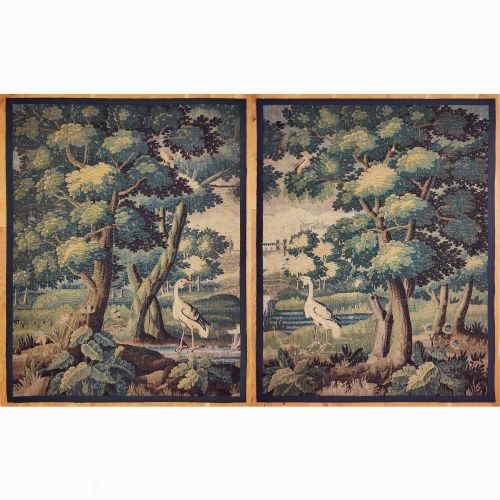
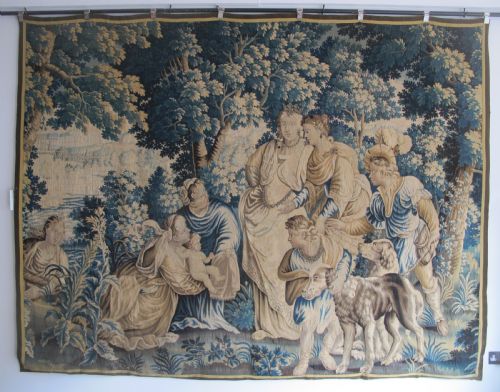
The most common form is the wall tapestry or verdure panel depicting pastoral landscapes, foliage, and mythological or biblical scenes. These textiles served traditionally to insulate stone walls while displaying wealth and narrative art.
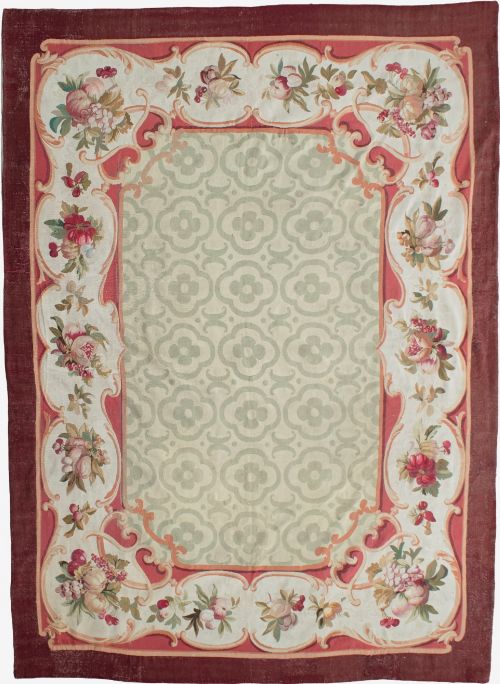
Pieces frequently emerge from Aubusson or general French provincial origins, appearing as large wall coverings, narrow entre-fenêtre panels, or decorative cushions. Each format showcases intricate hand or mechanical weaving traditions adapted for domestic display over generations.
Materials and construction methods
These textiles rely predominantly on wool, silk, cotton, and linen fibres spun and dyed to create complex pictorial surfaces. Artisans wove these threads on horizontal or vertical looms, building up dense imagery through warp and weft interlockings.
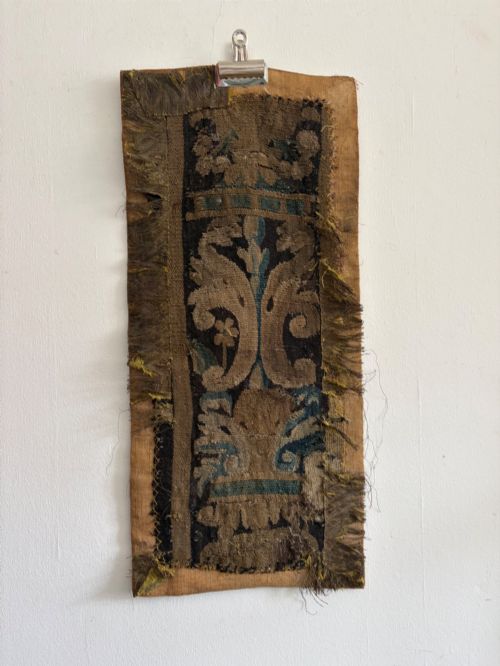
Many works incorporate secondary structural elements of wood, brass, and textile backing mounts, particularly when framed or adapted as screens and wall panels. Needlework additions and mounted border fragments demonstrate the resourceful conservation methods applied to historic fabrics over time.
Common object formats on this page include wall panels, area rugs, cushions, entre-fenêtre strips, and armchair upholstery.
Distinctions in quality and execution
The distinction between ordinary and exceptional works rests in the density of the weave and the subtlety of the colour palette. Fine examples display intricate shading and precise botanical or figural detail rendered by skilled hands.
Compositional balance and the preservation of the original borders or pictorial integrity separate standard decorative panels from museum-grade survivals. Pieces retaining rich verdure foliage and intact structural mounts command greater visual depth.
The French Woven Tapestry Glossary
- Aubusson
- A style and origin of tapestries and carpets produced in the town of Aubusson in central France, known for verdure and pastoral designs.
- Verdure
- A type of tapestry featuring a dominant landscape of trees, plants, foliage, and often birds or animals.
- Entre-fenetre
- A tall, narrow tapestry designed specifically to hang on the wall space between two windows.
- Mille-fleurs
- A decorative style characterised by a background filled with a multitude of small flowers and plants.
- Needlework
- A textile created by hand stitching yarn or thread onto a pre-existing woven canvas ground rather than producing the pattern on a loom.
French Woven Tapestry: Frequently Asked Questions
How do I hang a heavy tapestry?
Large textiles require even weight distribution across the upper edge. Conservation methods often involve sewing a sturdy linen sleeve to the back and sliding a flat wooden batten through it.
Alternatively, specific fabric loops can be attached to hook onto a discreet wall-mounted rod. This prevents pulling stress on individual threads.
What is a verdure tapestry?
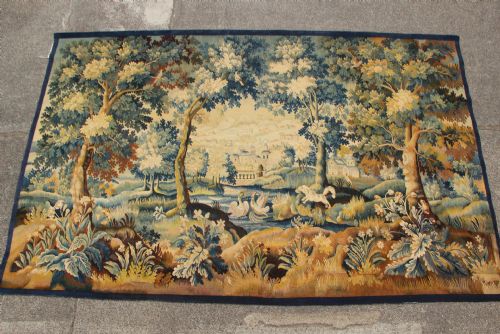
A verdure tapestry depicts a lush forest landscape filled with stylized trees, foliage, and occasionally small animals or distant chateaus. These pieces were immensely popular in French weaving centres for bringing natural scenery indoors.
They rely on deep greens, blues, and earth tones that have mellowed gracefully over the centuries.
Are these pieces hand-woven?
Many historical examples from the seventeenth through the nineteenth centuries are traditional hand-woven loom products from ateliers such as Aubusson. Later nineteenth and twentieth-century interpretations utilise varying mechanical and needlework techniques.
Examining the reverse side reveals the knotted threads and weave inconsistencies typical of genuine textile production.