
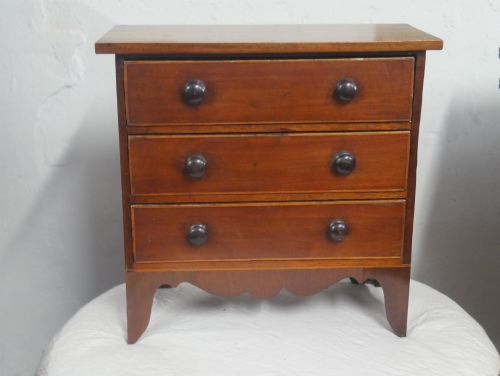
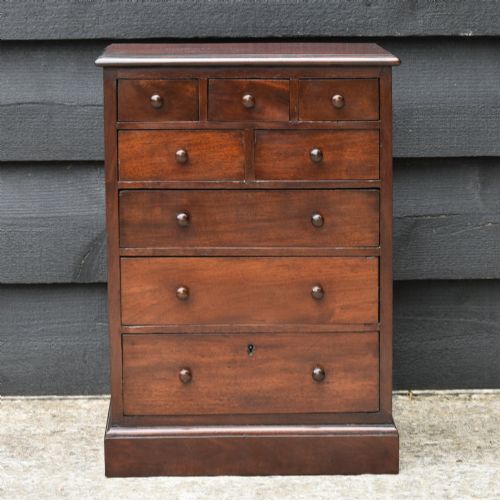
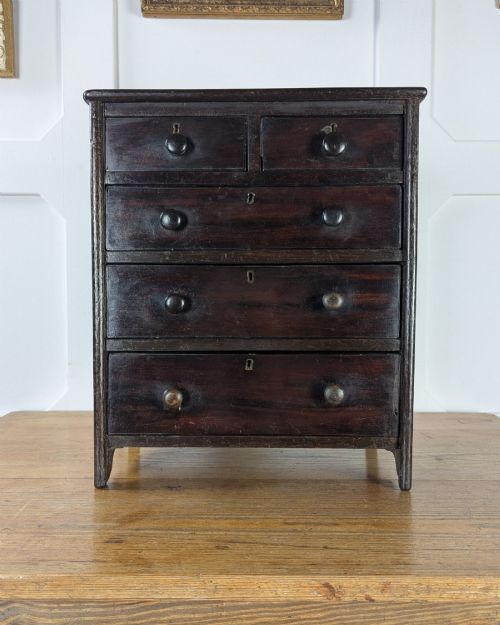
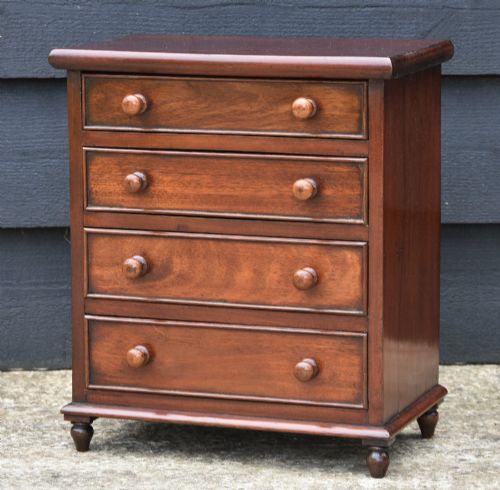
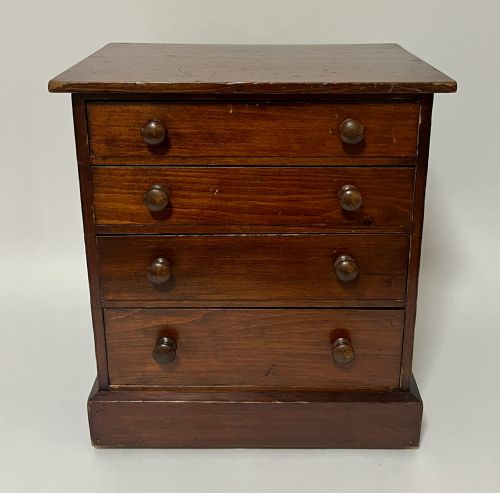
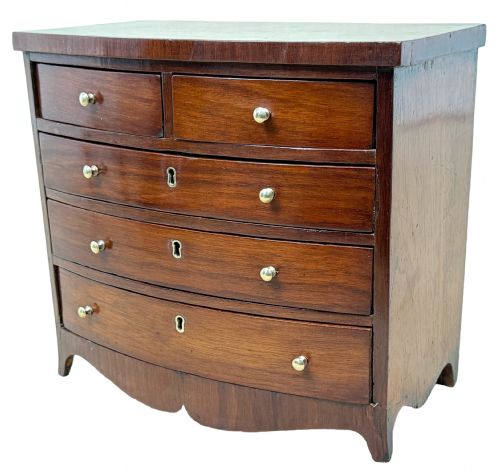


19th Century Apprentice Chest
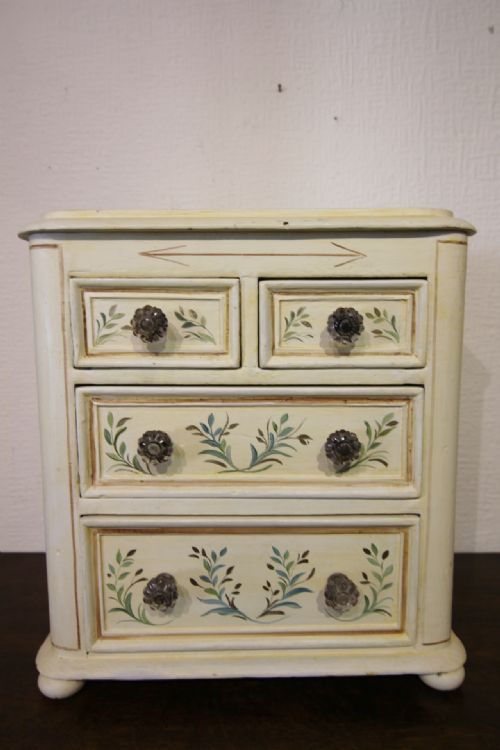
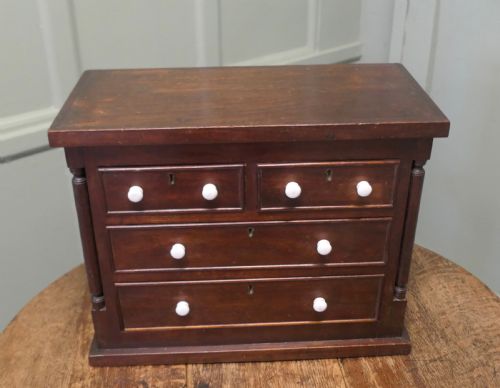
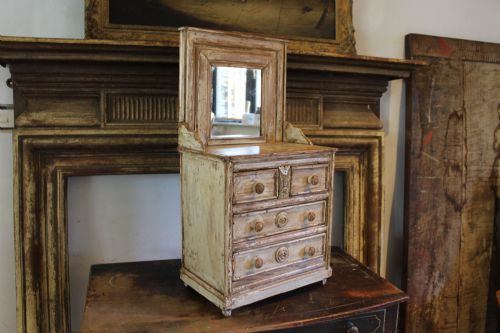
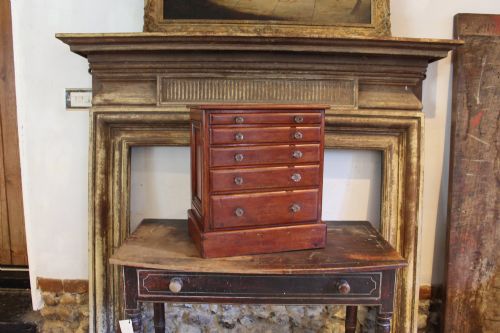
These small-scale pieces, known as a 19th century apprentice chest, represent miniature furniture created to demonstrate craftsmanship or serve as salesmen's samples.
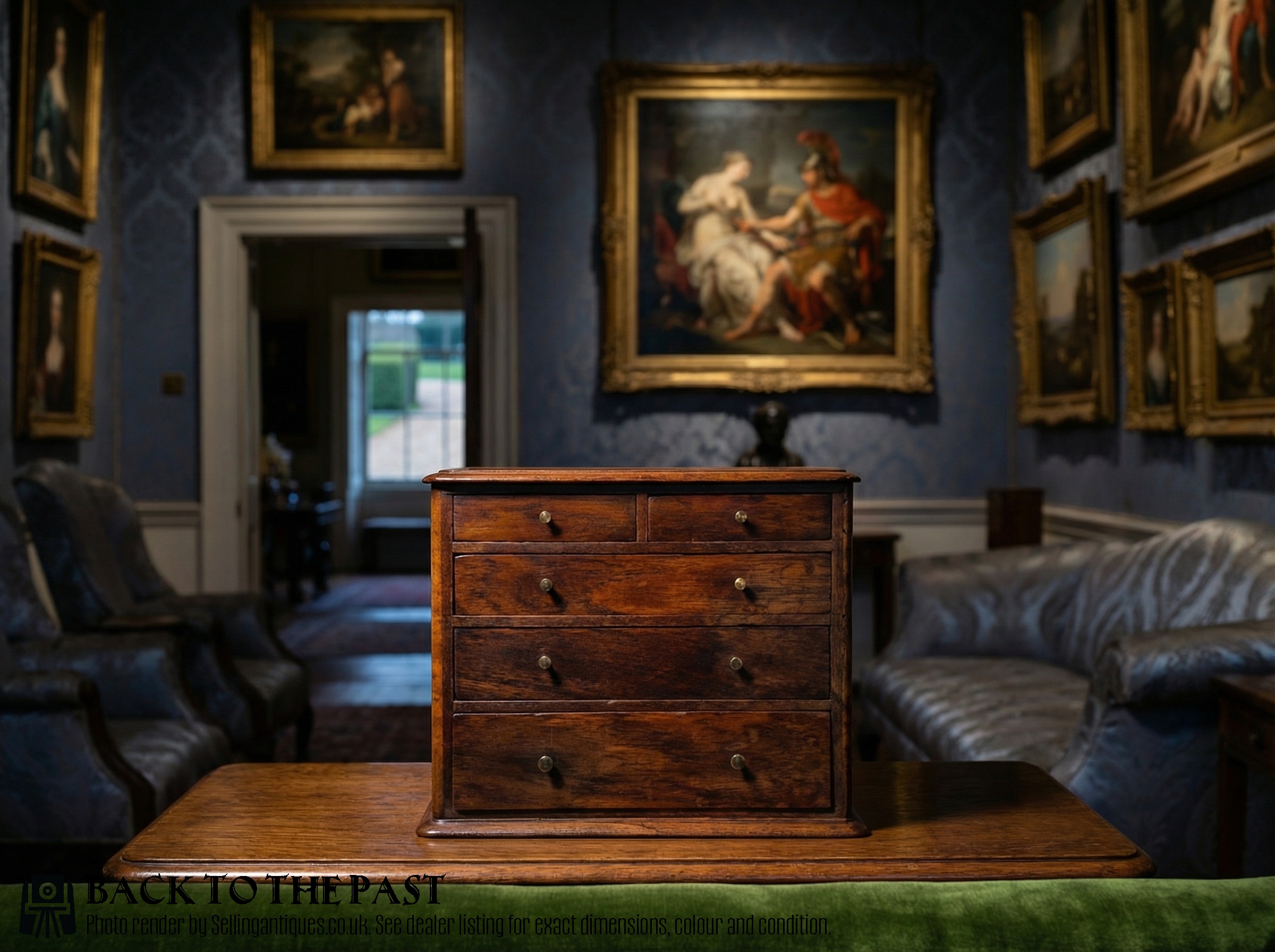
19th Century Apprentice Chest
A 19th century apprentice chest takes the form of a miniature chest of drawers, sideboard, or cabinet built with the joinery and proportions of full-sized furniture. These pieces appear frequently in mahogany, pine, and oak, often reflecting regional styles such as Scottish, Regency, and Victorian designs.
Makers produced these items across the nineteenth century, ranging from simple painted pine examples to sophisticated mahogany bowfront chests with mother of pearl inlay or secret drawers. Their utility spans from tabletop work chests and collectors cabinets to tea caddies and jewellery boxes.
The selection here encompasses various miniature forms, including Wellington chests, commodes, and wall-hanging spice boxes. Buyers encounter pieces originating from English, French, and Scottish workshops spanning the Georgian era into the early twentieth century.
How they were made
Cabinetmakers utilised dense hardwoods like mahogany, walnut, and rosewood alongside softer timbers such as pine and oak to construct these miniature chests. Surfaces often receive French polish or paint, while finer examples incorporate bone, glass, brass handles, and delicate wood inlay.
Joinery techniques mirror standard domestic furniture production of the period, employing dovetail joints for drawer construction and precise framing for carcases. Woodworkers shaped solid timbers for drawer fronts and applied veneers over secondary woods for decorative effect.
Some miniature chests include tiny secret drawers hidden behind locking stiles for valuables.
What varies in quality
Proportion and scale distinguish standard workshop practice from superior cabinetwork, as skilled makers maintained the exact architectural balance of full-sized furniture in miniature. The precision of the drawer dovetailing and the choice of timber figure, such as burr yew or matched mahogany veneers, determine the grade of the piece.
Hardware selection and secondary detailing separate basic utility items from exceptional examples. Original brasses, working locks with keys, secret compartments, and clean internal linings indicate a higher standard of original commission.
The 19th Century Apprentice Chest Glossary
- Apprentice piece
- A miniature furniture item built by a woodworker in training to demonstrate mastery of joinery to a guild or master. These objects replicate full-scale furniture with exact detail.
- Bowfront
- A furniture front that curves outward in a convex arc. This shape demands advanced skill from the cabinetmaker to bend wood and fit drawers.
- Wellington chest
- A tall, narrow chest of drawers secured by a locking stile hinged on one side that covers the drawer edges. This specific form appears in miniature across the Victorian period.
- Patina
- The surface sheen and deep colour acquired by wood through age, handling, and light exposure over decades. A natural patina indicates an untouched finish.
- Secret drawer
- A concealed compartment built into the structure of a cabinet, often accessed by removing another drawer or pressing a hidden spring. Master cabinetmakers included these to demonstrate ingenuity.
19th Century Apprentice Chest: Frequently Asked Questions
What is an apprentice chest?
An apprentice chest is a small-scale model of a chest of drawers made by a woodworker learning the cabinetmaking trade. These pieces allowed makers to practice complex joints and scaling before building full-sized furniture.
Over time, many of these miniature chests found practical use on dressing tables or desks for storing small items like jewellery, sewing equipment, or letters.
How were miniature chests used?
Historically, woodworkers used these scaled-down chests as demonstration pieces for trade guilds or as samples for travelling salesmen to show clients. Households later adopted them for domestic storage on tabletops.
Today, collectors use them to display small collections or store trinkets, jewellery, and stationery in domestic settings.
Are all miniature chests apprentice pieces?
Not every small chest served an apprentice's training; many were manufactured as luxury tabletop cabinets, jewellery boxes, or salesmen's samples. The term apprentice piece is frequently applied broadly to nineteenth-century miniature furniture.
Makers also produced miniature furniture for children or as specialty decorative items for wealthy Victorian households.
How do I date a miniature chest?
Dating relies on examining the secondary timbers, construction methods, and prevailing style of the piece. Characteristics such as hand-cut dovetails, timber choices like mahogany or pine, and hardware styles align the piece with Georgian, Regency, or Victorian eras.
Regional variations, such as Scottish architectural traits or French commode shaping, provide further clues to the decade of manufacture.