


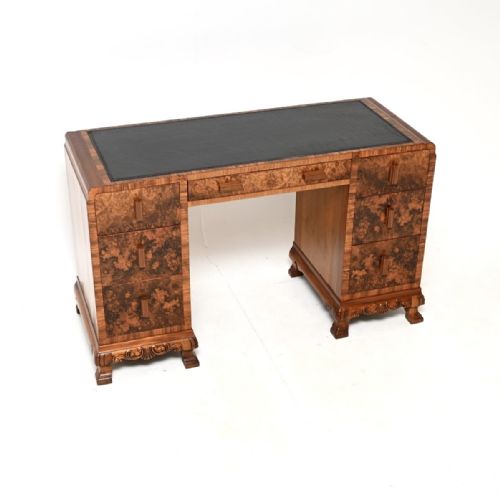
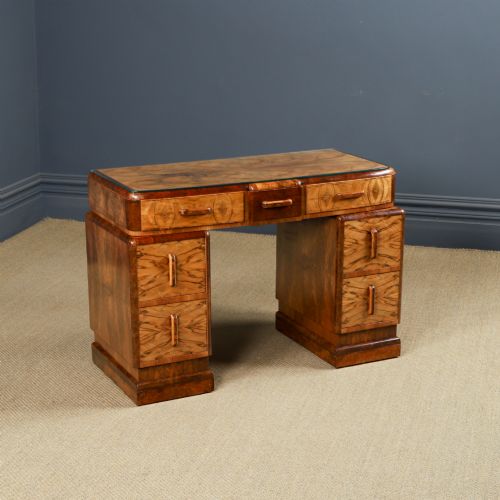
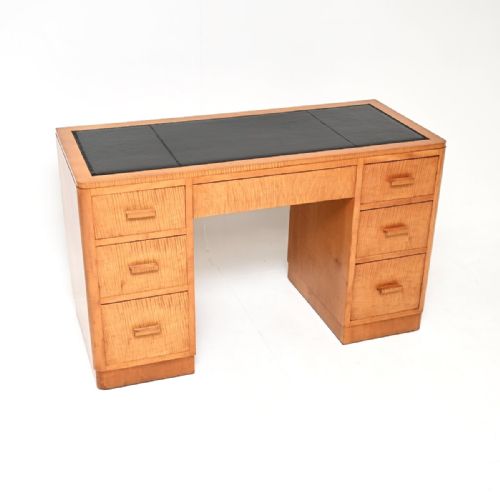
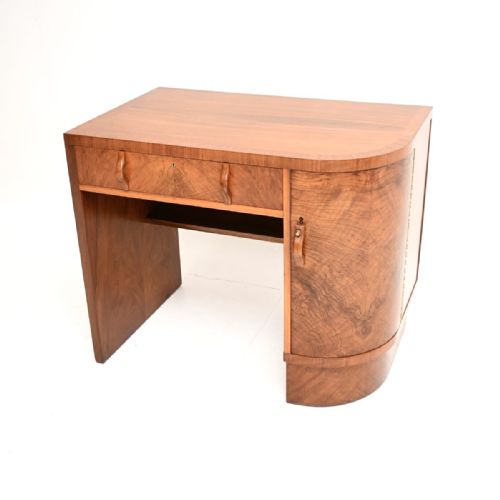
1930s Writing Desk
A 1930s writing desk brings together striking veneers and functional compartments, offering a workspace defined by twentieth-century design.
1930s Writing Desk
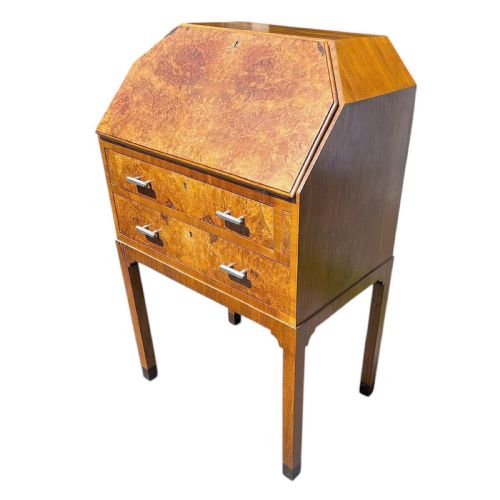
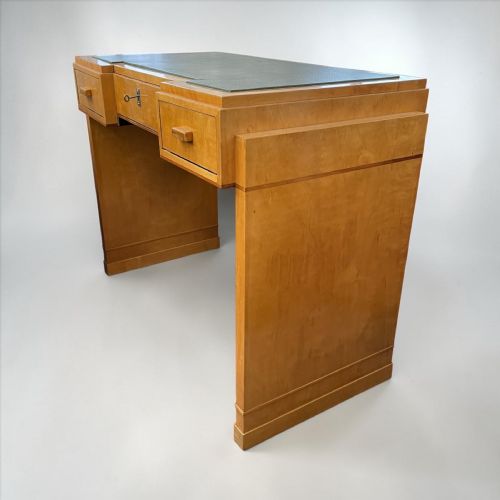
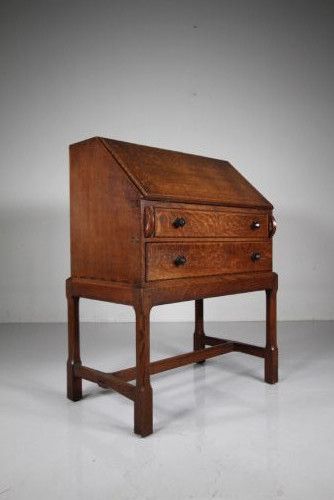
A 1930s writing desk encompasses pedestals, bureaus, and writing tables shaped by Art Deco, Arts and Crafts, and Modernist movements. Pieces on this page originate primarily from the 1930 and 1920 periods, alongside Edwardian examples.
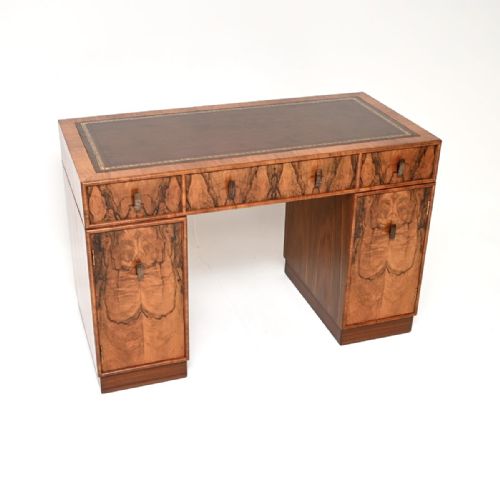
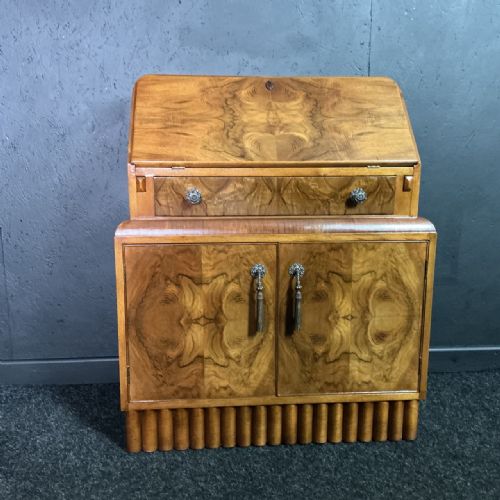
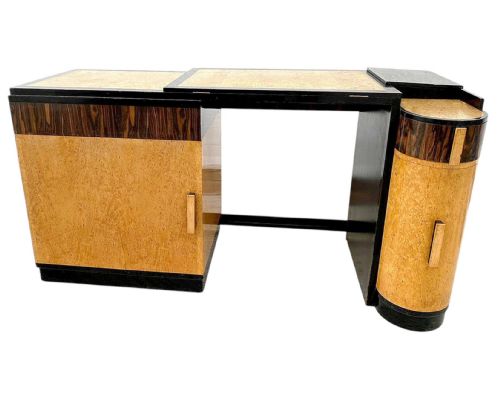
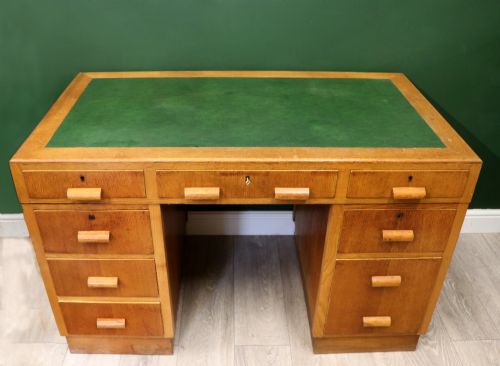
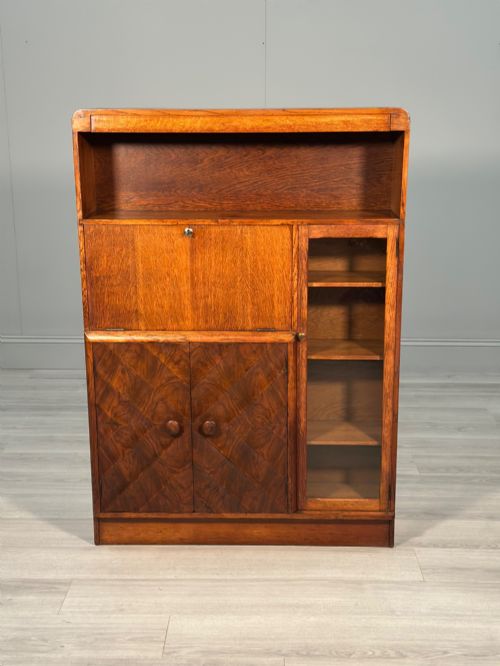
The dominant forms include pedestal desks with leather writing surfaces, drop-front bureaux, and compact writing tables. Timber selection defines the character of these pieces, utilising walnut, burr walnut, oak, mahogany, and birch.
Makers and designers of the period produced both streamlined office furniture and domestic writing furniture with integrated compartments or lighting. Regional British workshops and continental designers both contribute to the variety found in this selection.
How They Were Made
Cabinet makers utilised solid hardwoods like oak and mahogany alongside decorative veneers such as burr walnut, rosewood, and satin birch applied to carcases. Brass hardware and leather inserts provide functional contrast to the wooden surfaces.
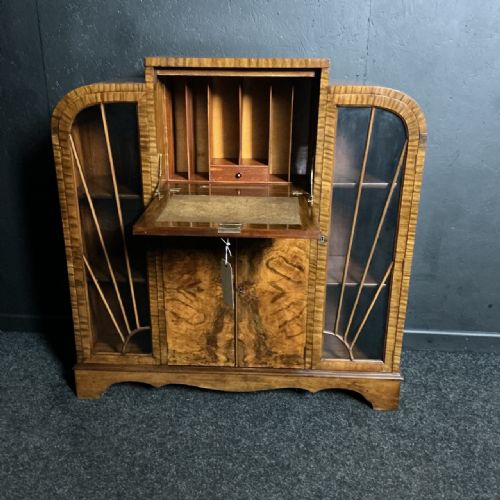
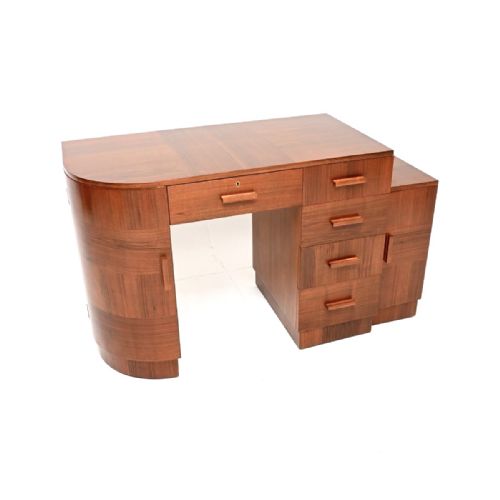
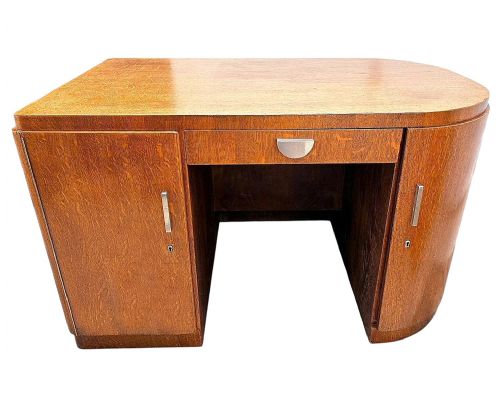
Construction techniques combine traditional joinery with the geometric, curved, or cloud-shaped profiles characteristic of Art Deco design. Glass elements and integrated lamps appear on specialised pedestal and skyscraper forms.
1930s Writing Desk Retail Price Guide 2026
Typical asking prices for 1930s writing desk among the pieces listed under this phrase on Sellingantiques today, from the lower quarter to the upper quarter. They describe what is for sale here now, not the wider market.
Listings feature walnut, oak, birch, and rosewood materials shaped into pedestal desks, bureaux, and console tables.
What Varies in Quality
Quality rests in the selection and matching of grain patterns across prominent surfaces, particularly on burr walnut and figured walnut models. Superior pieces display thoughtful integration of secondary timbers and hardware.
Design execution separates standard commercial production from documented work by notable makers and workshops. The clarity of geometric lines, veneer symmetry, and the retention of original maker labels elevate individual examples.
F.H. Marshall & Co Glasgow·Stanley Webb Davies·Hubert Simpson of Kendal·Heal's·Betty Joel·Étienne Kohlmann·Maurice Adams·Maurice Dufrêne
The 1930s Writing Desk Glossary
- Pedestal desk
- A freestanding desk comprising two independent pedestals of drawers supporting a single top. This form often incorporates a leather writing insert.
- Bureau
- A desk featuring a hinged sloping flap that opens to reveal a fitted interior of small drawers and pigeonholes. Examples from this era frequently employ flame-fronted mahogany or burr walnut.
- Burr walnut
- A prized timber veneer showing swirling, knotty grain patterns formed from tree growths. It provides high decorative impact on Art Deco desk surfaces.
- Skyscraper desk
- A stepped, vertical pedestal desk style popular in the Art Deco period. This architectural form echoes contemporary skyscraper design.
- D end
- A desk or table end curved in the shape of a capital letter D. This outline appears frequently on modernist and Art Deco writing tables.
1930s Writing Desk: Frequently Asked Questions
What defines a 1930s writing desk?
These desks are characterised by geometric Art Deco styling, modernist influences, and the use of figured veneers like walnut and birch. They range from pedestal office desks to drop-front bureaux and compact writing tables.
Makers of the period experimented with architectural silhouettes, curved D-ends, and integrated lighting, moving away from heavy Victorian revival styles toward cleaner, functional forms.
How do I identify an Art Deco desk?
Art Deco desks display symmetrical wood veneers, stepped architectural outlines, and polished metal or glass details. They often utilise burr walnut, satin birch, or rosewood to create bold visual patterns across the writing surface and drawers.
Many incorporate integrated compartments, cloud-shaped writing flaps, or pedestal configurations designed to maximise both workspace and decorative impact.
Where were these desks made?
Production spans English workshops, London retail houses, Welsh oak makers, and continental European studios. Pieces range from labelled factory production to items attributed to specific modernist designers.
Regional British cabinet makers and prominent London firms both contributed distinct interpretations of the form using native and exotic woods.
How should I care for a veneer desk?
Maintain wood and leather surfaces by avoiding direct sunlight and excessive moisture, which can damage delicate veneers and leather inserts. Regular dusting with a soft, dry cloth preserves the finish without harming the historic polish.
Treat leather writing surfaces with appropriate conservation balms if dryness occurs, ensuring any applied products suit antique materials.