
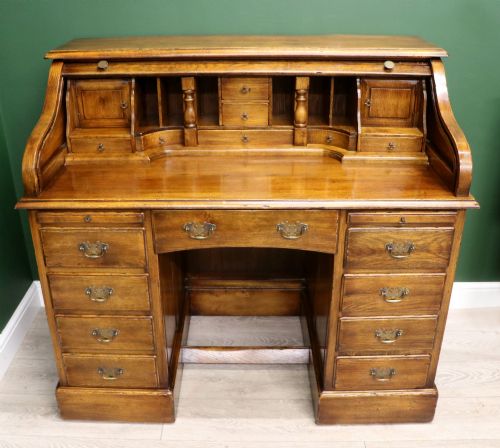


Solid Oak Bureau Desk
A solid oak bureau desk offers a practical writing surface paired with concealed compartments, combining enduring utility with heavy timber construction.
Solid Oak Bureau Desk
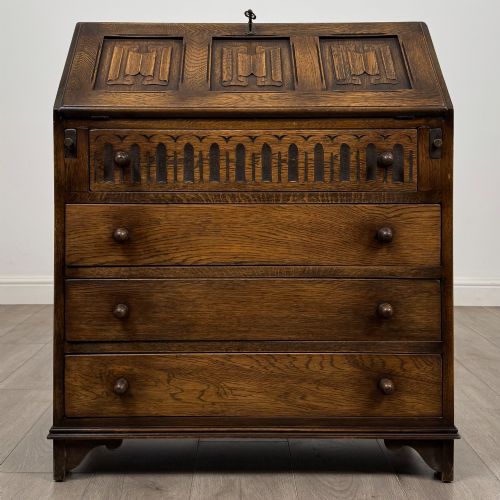
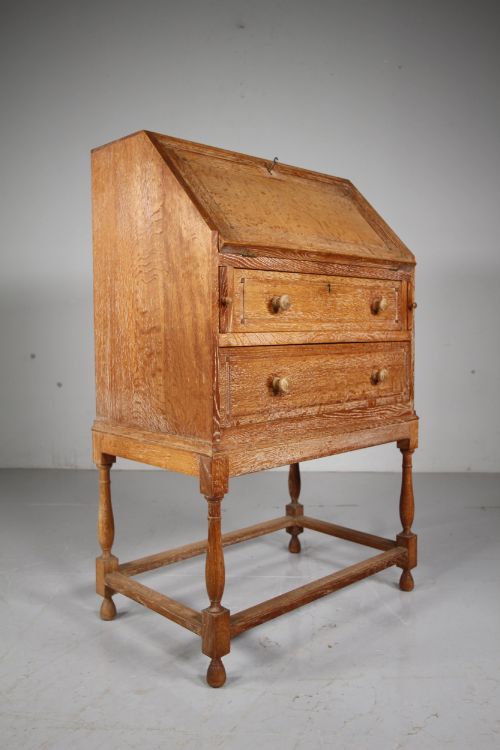
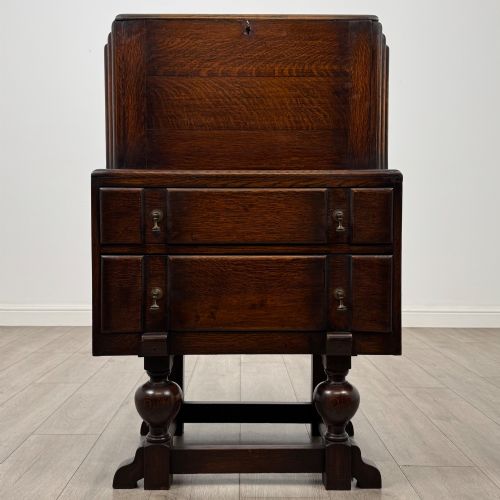
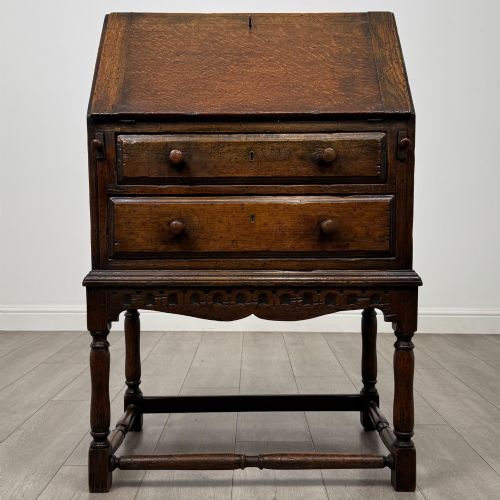
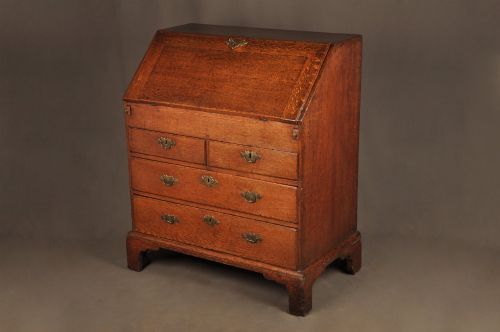
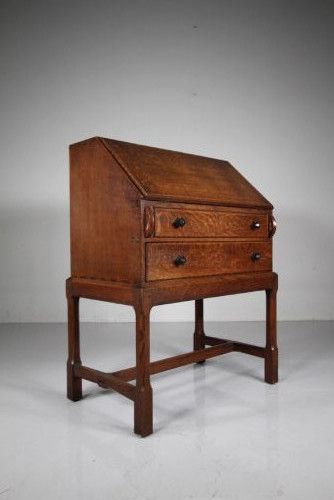
When you examine a solid oak bureau desk, you are looking at a traditional piece of furniture designed for correspondence and storage, featuring a hinged writing flap that drops down to reveal fitted interior pigeonholes and small drawers.
The versions most commonly met on this page date from the Edwardian era and the 1920s, alongside earlier examples from the 18th century, Georgian period, and later 20th-century pieces.
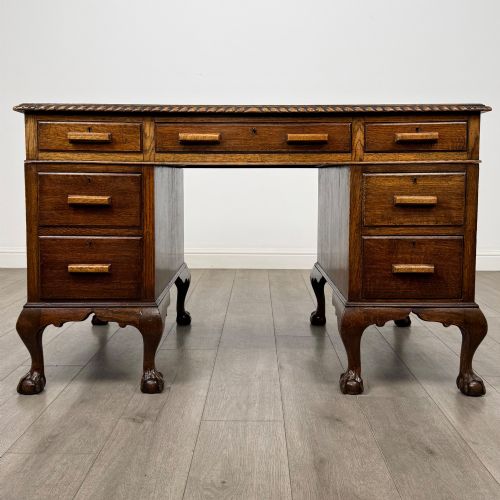
Forms vary from compact fall-front writing bureaux to larger bureau bookcases, pedestal desks, and roll-top desks equipped with tambour shutters or 'S' shaped tops.
How they were made
Construction relies primarily on oak and English oak, selected for durability and sturdy grain patterns, sometimes enhanced by carved linenfold motifs or panelled details.
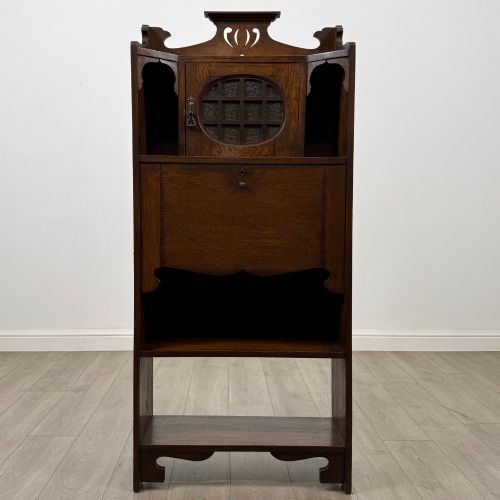
Hardware and internal fittings incorporate brass for handles and hinges, while secondary elements employ glass, lead, iron, and wrought iron on selected styles like Arts and Crafts or Jacobean Revival.
Listings span periods from the 18th century through the Edwardian era up to the 1940s, executed in oak, English oak, and brass.
What varies in quality
Quality in a solid oak bureau desk is determined by the selection of timber figures, the crispness of hand-carved elements such as linenfold panels, and the complexity of the interior stationery fittings.
Superior construction involves precise joinery in the drawers and the fall-front mechanism, distinguishing workshop-produced pieces from simpler mass-produced variants.
Heals of London·Stanley Webb Davies·Bryn Mawr·Robert Mouseman Thompson·Liberty and Co·James Shoolbred and Co
The Solid Oak Bureau Desk Glossary
- Bureau
- A writing desk with a sloping hinged lid that covers pigeonholes and small drawers. It provides a concealed surface for correspondence.
- Fall front
- A hinged flap that lowers to create a horizontal writing platform. This mechanism hides the internal compartments when closed.
- Roll top
- A flexible tambour shutter made of narrow slats of wood that slides in a track to cover the desk surface. It permits access to the workspace without swinging doors.
- Linenfold
- A style of wood carving that imitates folded linen cloth. It appears frequently on panels of period furniture.
- Pedestal desk
- A heavy writing table supported by two columns of drawers. It provides substantial storage beneath the main work surface.
Solid Oak Bureau Desk: Frequently Asked Questions
How do I date a solid oak bureau desk?
Dating relies on stylistic clues, construction methods, and hardware styles. Edwardian and 1920s pieces often show machine-assisted dovetails and specific revival motifs.
Earlier 18th-century and Georgian examples display hand-cut joinery, pegged joints, and characteristic timber patination that develops over centuries.
What is the difference between a bureau and a roll top desk?
A bureau uses a sloping fall-front flap that drops down to reveal stationary compartments. The writing surface remains enclosed when the flap is closed.
A roll top desk uses a slatted tambour shutter that slides vertically or horizontally over the desk interior. This allows the workspace to be secured quickly without folding down a flap.
How do I care for solid oak furniture?
Solid oak requires stable indoor humidity levels to prevent timber movement or splitting. Keep pieces away from direct heat sources and strong sunlight.
Apply natural beeswax periodically to nourish the grain and maintain the protective finish of the wood.
What styles are common in oak desks?
Common styles span several historical revivals and design movements. Edwardian and Arts and Crafts examples emphasise functional simplicity and honest construction.
Earlier Georgian, Jacobean Revival, and Tudor Revival pieces incorporate more elaborate carving, heavy mouldings, and structural turns like barley twists.