
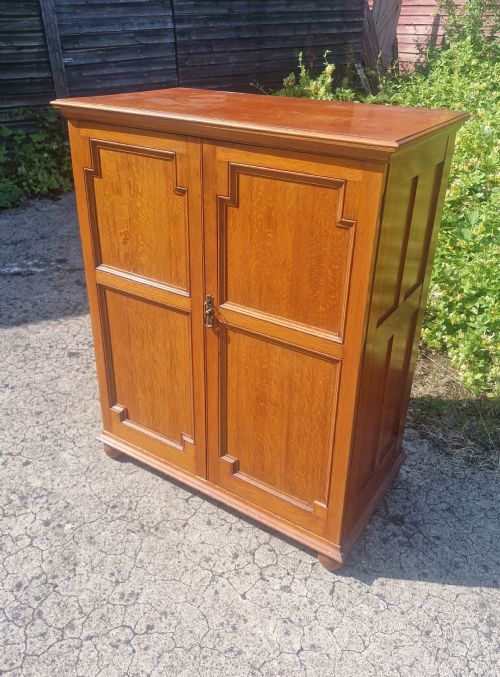

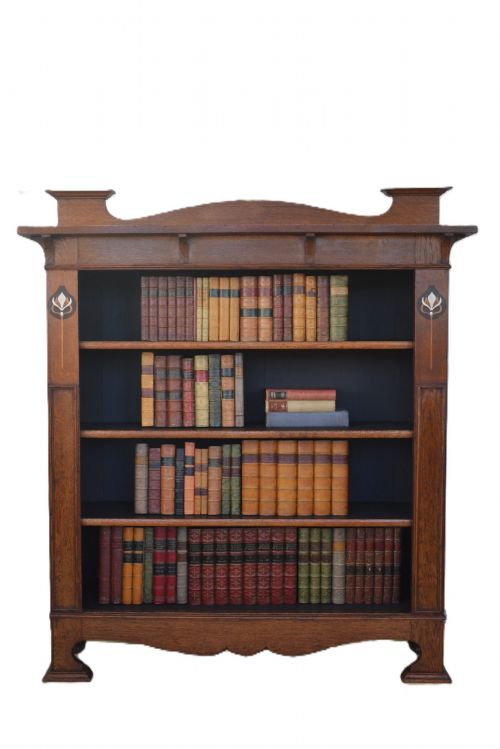

Medium Oak Cabinet
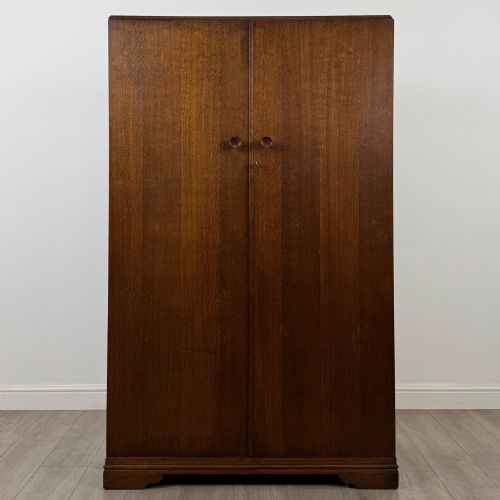
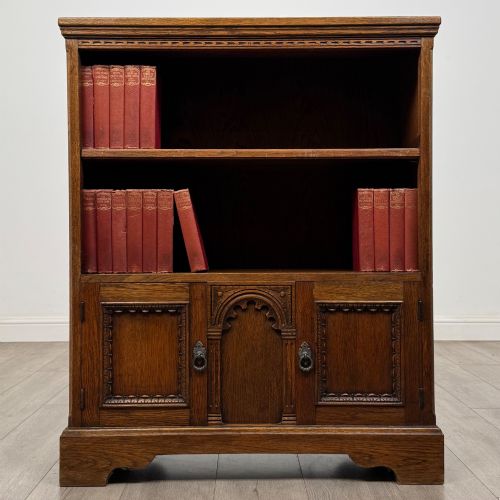
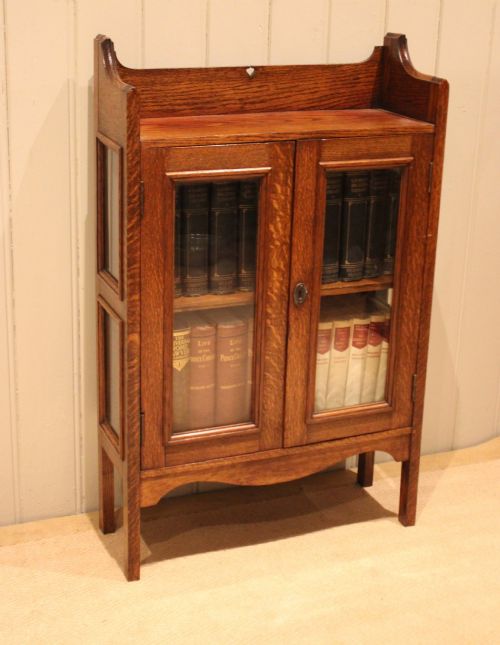
Medium oak cabinet examples range from Edwardian filing pieces to Arts and Crafts bookcases, offering solid timber utility for period interiors.
Medium Oak Cabinet
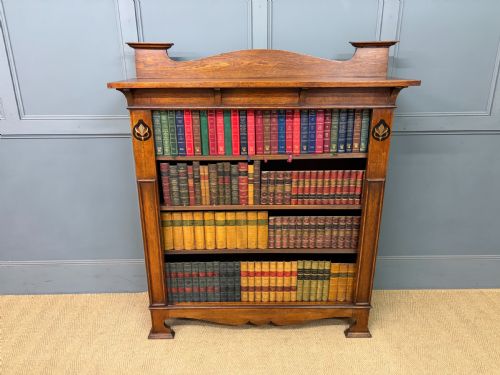
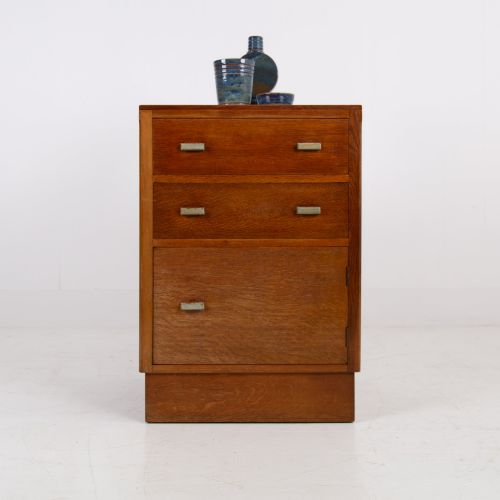
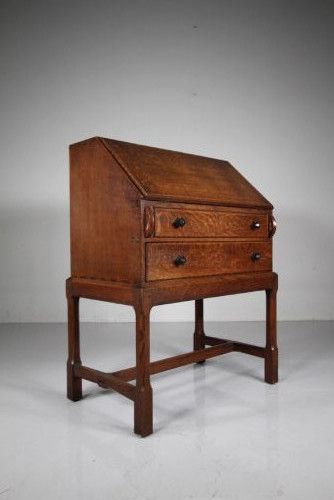
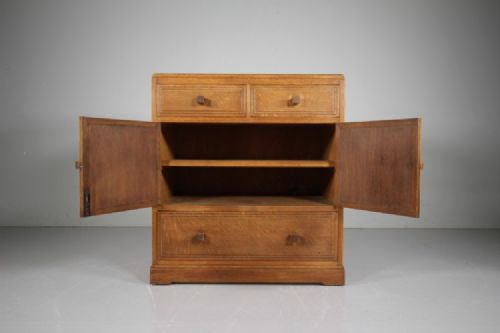
A medium oak cabinet provides practical storage through a variety of forms spanning the late nineteenth century and the early decades of the twentieth century. When searching for a medium oak cabinet, buyers encounter diverse object types including bookcases, filing units, writing bureaus, and display cabinets.
The pieces appearing on this page originate predominantly from the Edwardian era, the 1900s, 1910s, 1920s, and 1930s. Makers and designers such as Gomme, Stanley Webb Davies, Bryn Mawr, Betty Joel, and Liberty of London contribute specific variants to the selection.
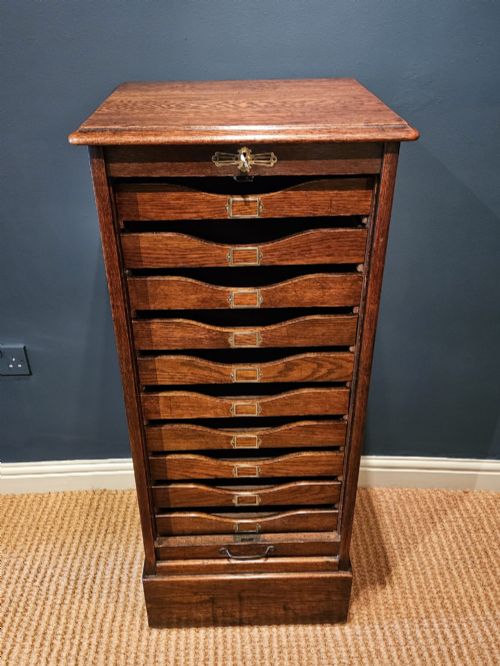
Stylistic expressions vary widely across the inventory, encompassing Arts and Crafts, Art Deco, Art Deco Modernist, Jacobean Revival, Louis XV style, and nineteenth century vernacular forms. Buyers are most likely to meet practical bookcases with glazed or open fronts, alongside tambour-front filing furniture and fitted writing bureaus.
What varies in quality
The standard of execution separates workshop-produced pieces by notable designers from standard commercial output. Refinement shows in the selection of figured timber grain, the precision of marquetry or inlay work, and the integration of specialised mechanisms like smooth-running tambour shutters.
Structural integrity depends on the retention of original brass and iron hardware, working locks with keys, and unaltered internal fittings such as stationary drawers and adjustable shelf brackets.
Card index filing units double as wine racks in archive records, proving that stubborn office furniture can enjoy a cheerful retirement.
Gomme·Stanley Webb Davies·Bryn Mawr·Betty Joel·Liberty of London
The Medium Oak Cabinet Glossary
- Tambour
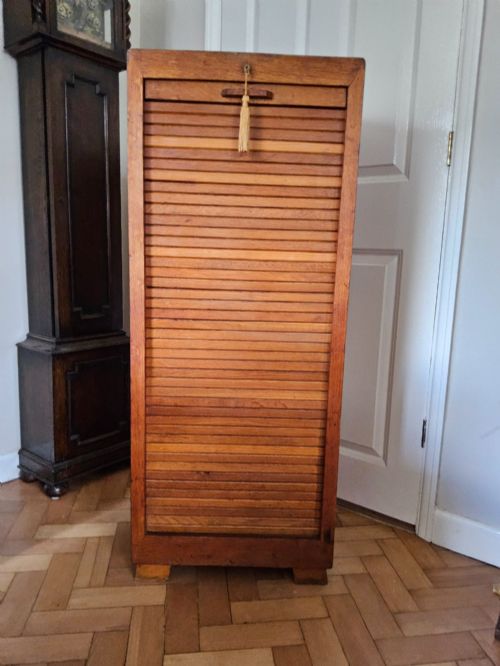
- A flexible door or shutter made of narrow strips of wood glued to a canvas backing, allowing it to slide around a curve.
- Marquetry
- The art and craft of applying pieces of veneer to a structure to form decorative patterns and pictures.
- Parquetry
- Geometric mosaic woodwork used for floors or furniture tops, constructed from differing wood tints.
- Leaded glass
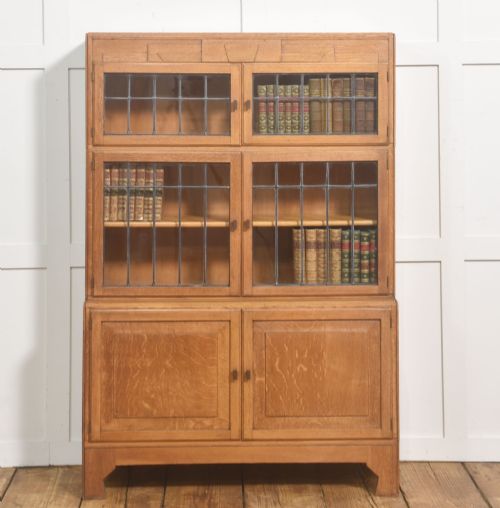
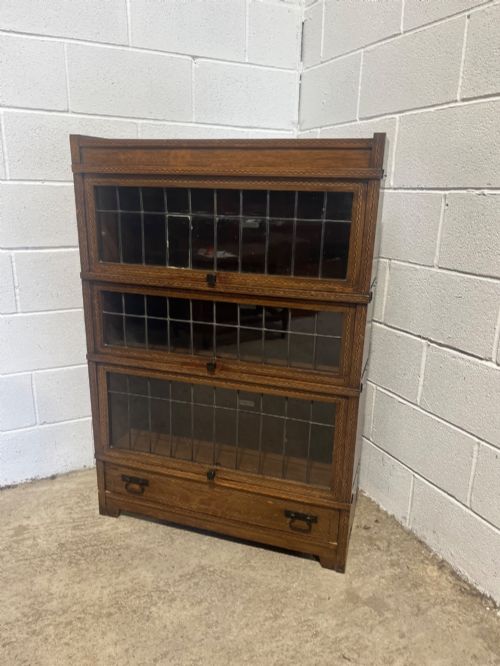
- Small panes of glass held together by strips of lead called cames, typical of Arts and Crafts and Art Deco design.
- Globe Wernicke
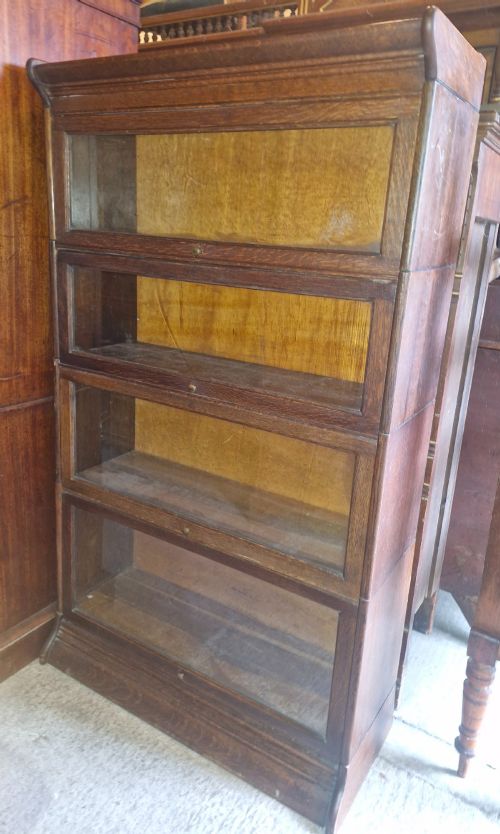
- A sectional barrister bookcase system featuring stacking glazed compartments designed for modular expansion.
Medium Oak Cabinet: Frequently Asked Questions
What is a tambour cabinet?
A tambour cabinet uses sliding slatted wooden shutters that retract into the body of the piece rather than swinging outward on hinges. This mechanism proved especially popular for office filing furniture and compact writing desks.
Evidence shows this format utilised frequently in Edwardian and 1930s business and domestic environments to save space while concealing documents.
How do I date an oak bureau?
Dating relies on stylistic clues like hardware design, timber selection, and construction methods. Pieces from the 1900s often display Arts and Crafts simplicity, while 1920s and 1930s examples introduce Art Deco geometry or Jacobean Revival twists.
Makers' labels, stamps, and specific interior stationery fittings also help anchor the piece to a particular decade.
What is a Globe Wernicke bookcase?
A Globe Wernicke bookcase consists of modular, stackable sections with upward-lifting glass doors. This sectional design allowed owners to add units as their book collections expanded.
Listings demonstrate these practical oak units appearing across the early twentieth century, combining modular utility with display capability.
Are these cabinets made of solid oak?
Many pieces feature solid oak construction, though cabinet makers also employed oak veneers over secondary timbers for large flat surfaces like bureau falls and sideboard tops. Decorative elements frequently incorporate brass handles, iron hinges, and leaded glass.
Examining the grain and interior joinery reveals whether a piece utilises solid timber or veneered panels.