
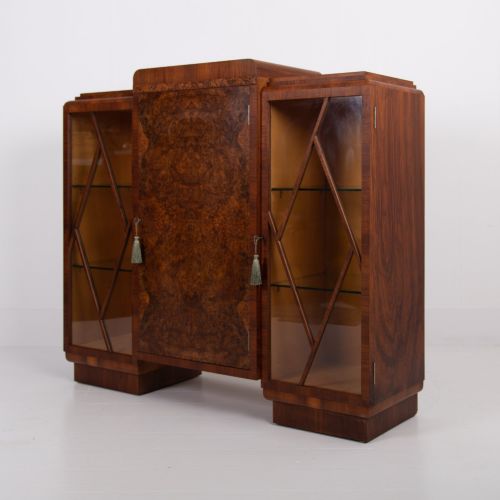


1930s Glazed Display Case
A 1930s glazed display case holds your objects behind glass with the bold geometry of the period.
1930s Glazed Display Case
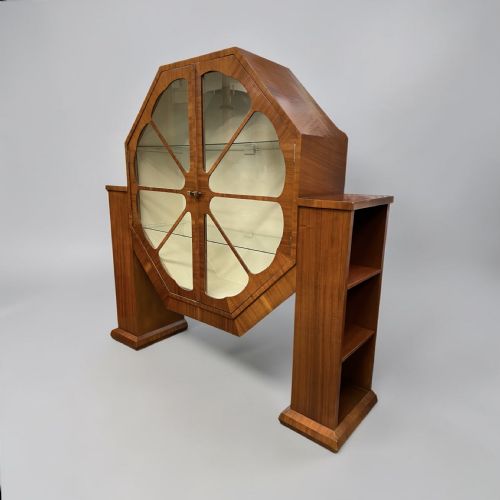
A 1930s glazed display case is primarily an Art Deco cabinet designed to show ceramics, books or ornaments behind glass doors. These pieces emerge predominantly from the interwar period, offering architectural silhouettes for domestic and commercial interiors.
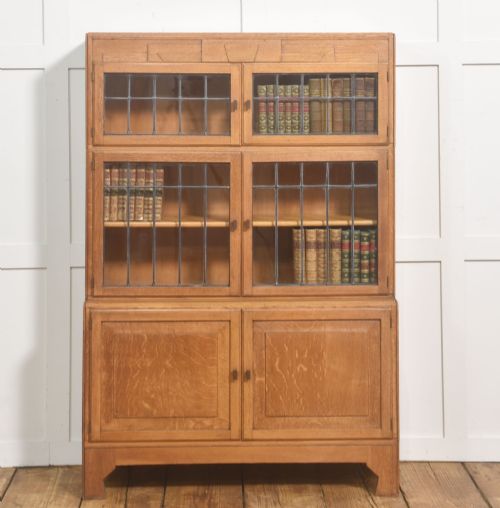
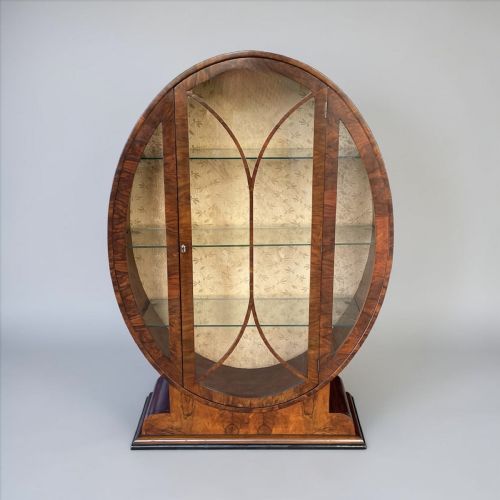
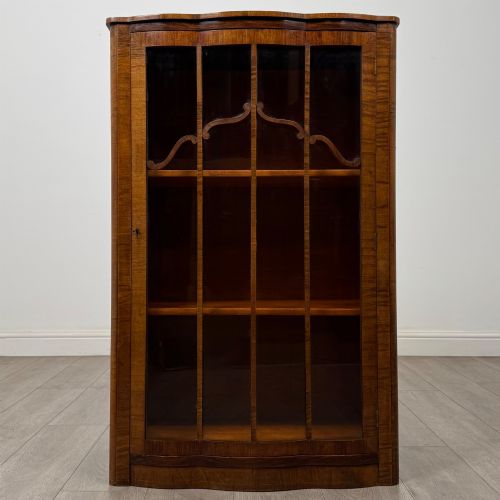
You will encounter display cabinets, bookcases, and corner cabinets shaped as circles, hexagons, octagons, ovals, and clove profiles. The Edwardian period also contributes early 20th-century walnut variants alongside solid oak designs.
The selection leans heavily on English manufacture, ranging from domestic corner units to commercial triple shop display cabinets. They serve to organise collections while anchoring a room with period character.
How they were made
Cabinet makers built these pieces using solid oak, mahogany, and various cuts of walnut including burr and figured veneers. Sycamore and maple frequently appear as secondary contrasting timbers within the internal joinery.
Glazing techniques combine standard fitted glass with leaded sections held by traditional cames. Brass hardware provides functional closure while fabric often lines the interior display compartments.
Construction relies on distinct regional and commercial traditions, spanning Cotswold School joinery to commercial shopfitting by makers such as E. Pollard and Co. Ltd.
Cabinet makers of this era turned their hands to geometry, shaping walnut into circles, cloves, and hexagons just to show off.
What varies in quality
The choice of timber veneer fundamentally dictates visual merit, shifting from standard walnut to highly figured burr walnut and maple surfaces. Grain matching across curved and geometric doors requires exceptional skill from the cabinet maker.
Structural geometry sets the simpler rectangular bookcases apart from ambitious circular, hexagonal, and octagonal vitrines. The complexity of curved glass and specialised joinery elevates the execution of the piece significantly.
Epstein·E. Pollard and Co. Ltd.
The 1930s Glazed Display Case Glossary
- Art Deco
- A design style characterised by sleek geometric shapes, streamlined forms, and modern industrial materials popular during the interwar years.
- Burr walnut
- A prized timber cut from the gnarled growth of a walnut tree, yielding complex, swirling grain patterns highly valued in cabinet making.
- Leaded glass
- Small panes of glass joined together by narrow strips of lead, forming decorative geometric or floral patterns within windows and cabinet doors.
- Vitrine
- A glass-fronted cabinet or display case specifically designed for exhibiting fine objects, porcelain, or curiosities.
1930s Glazed Display Case: Frequently Asked Questions
How do I style a glazed display case?
Arrange your collection by height and colour, leaving breathing space between objects to let the timber frame and glass panels command attention. Grouping ceramics or glassware inside creates a focal point that complements the cabinet's geometry.
Position the piece away from direct sunlight to protect interior fabrics and timber finishes from fading. Adequate ambient room lighting helps the glazed doors reflect light rather than glare.
Are these cabinets suitable for small rooms?
Corner cabinets and slender circular or hexagonal vitrines make efficient use of compact spaces while providing vertical storage. The glass doors visually expand a room by allowing light to pass through the furniture.
Measure your floor space carefully, as Art Deco curved and polygonal footprints require specific clearance to open doors fully. Ensure the proportions match existing furniture heights for visual balance.
How do I care for walnut veneer?
Dust the timber regularly with a soft, dry cloth and avoid silicone-based polishes that can build up on the antique surface. Maintain stable room humidity to prevent the walnut veneer from drying and lifting.
Clean the glass panes with a mild glass cleaner applied to a cloth rather than sprayed directly onto the surface, protecting the surrounding wood and lead work.