
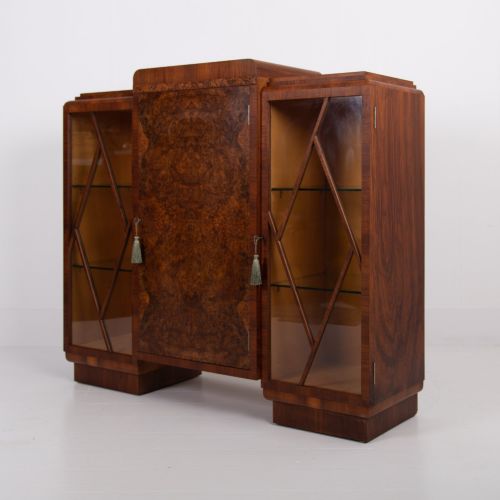


1930s Glazed Display Cabinet
A 1930s glazed display cabinet brings architectural warmth and visible storage to a room through figured veneers and curved glass.
1930s Glazed Display Cabinet
When searching for a 1930s glazed display cabinet, buyers encounter pieces designed to exhibit collections behind glass while enclosing items safely within timber frames. The selection centres heavily on the Art Deco style, alongside Edwardian, Arts and Crafts, and industrial forms.
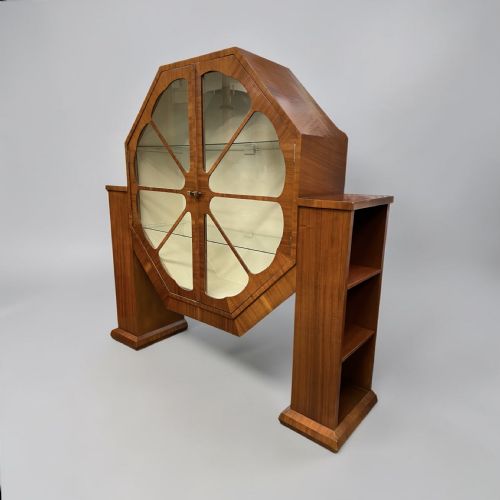
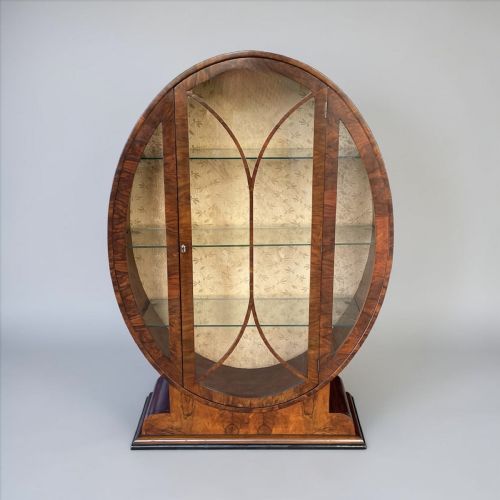
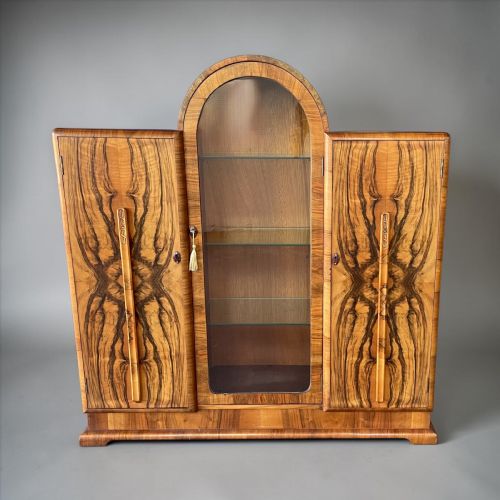
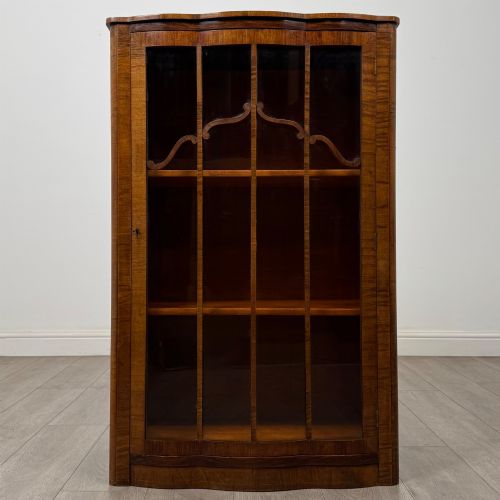
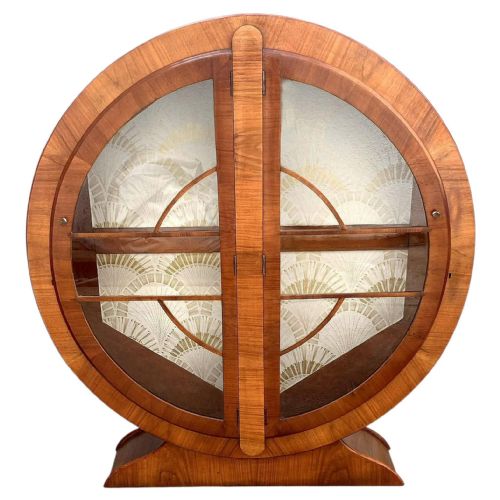
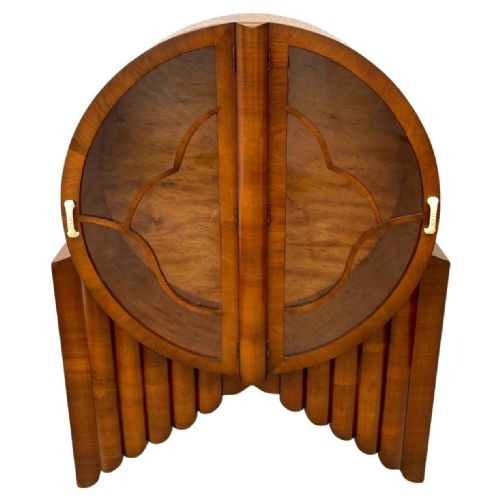
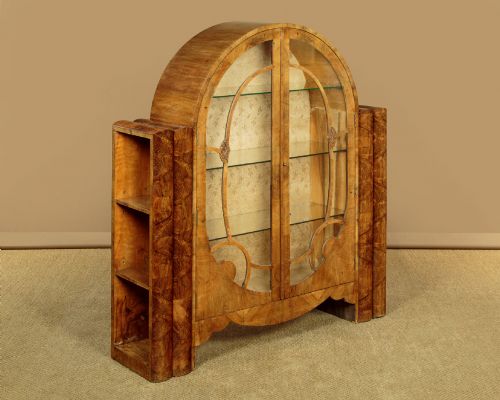
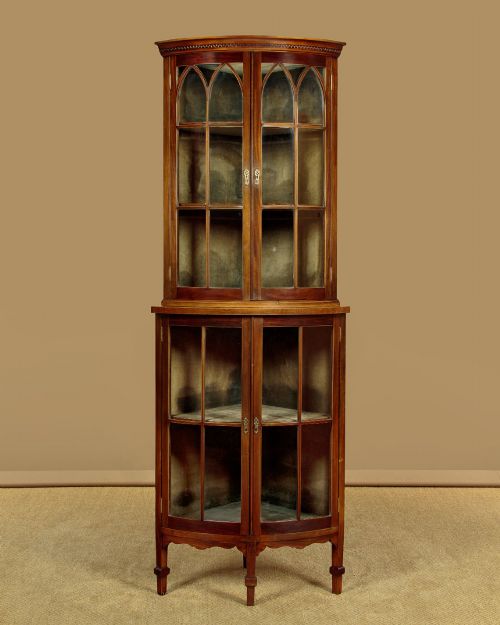
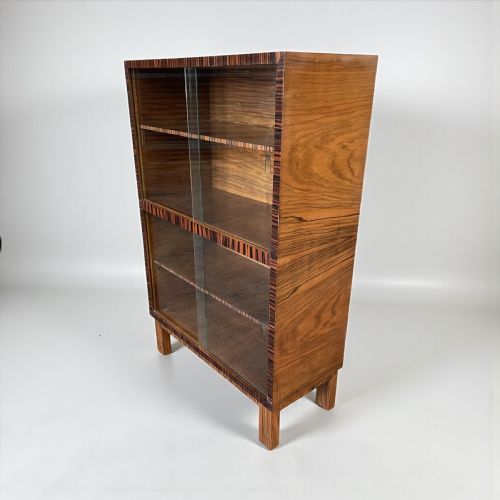
Most examples date from around 1930 and take shapes such as circular drums, oval fronts, rocket cabinets, corner units, and upright bookcases. Walnut and burr walnut dominate the forms, frequently paired with sycamore, mahogany, or oak.
Makers and designers from the period, including Epstein and Maurice Adams, produced distinctive glazed pieces alongside unassigned English and continental workshops. Buyers will find everything from compact vitrines to substantial bookcase cabinets and sideboards.
What varies in quality
Quality in these cabinets rests upon the choice of veneers and the precision of curved timber work. Pieces utilising matched burr walnut and sycamore show greater ambition than standard oak or mahogany alternatives.
The sophistication of the silhouette defines the upper tier of the range, with circular drums, rocket forms, and custom brass mounting setting apart bespoke commissions from standard production models.
Listings feature walnut, burr walnut, oak, mahogany, and pine, spanning Art Deco, Edwardian Revival, and Industrial styles.
Epstein·Maurice Adams·Rurka
The 1930s Glazed Display Cabinet Glossary
- Vitrine
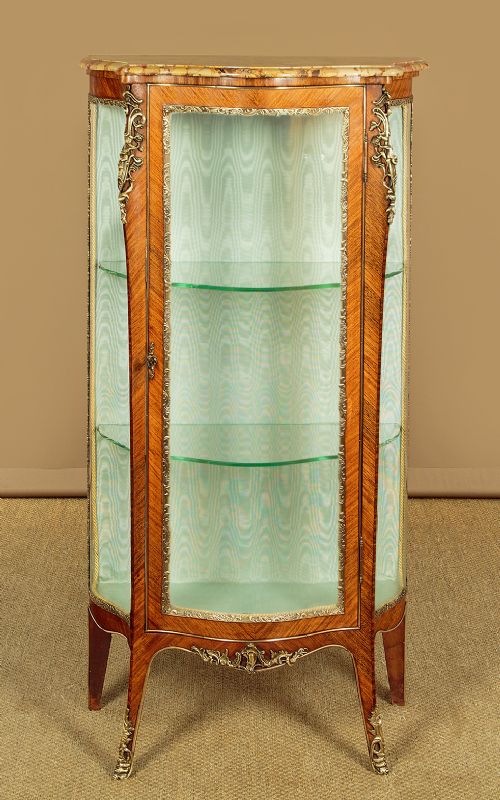
- A glass-fronted cabinet designed specifically for the display of porcelain, curiosities, or fine objects. These pieces often feature glass on multiple sides to allow maximum light penetration.
- Burr walnut
- A prized timber veneer harvested from the irregular growth knot of a walnut tree, yielding swirling, highly decorative grain patterns. Cabinet makers utilised this material on the primary doors and facades of high-status pieces.
- Art Deco
- A dominant design movement of the interwar period characterised by streamlined geometric shapes, symmetrical layouts, and machine-age influences. Pieces in this style reject Victorian clutter in favour of clean, sweeping curves.
- Leaded glass
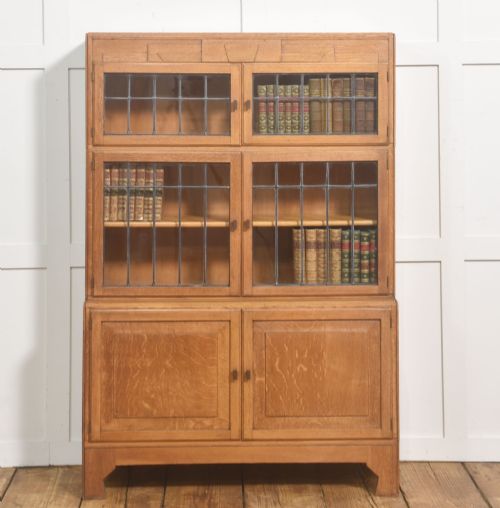
- Individual panes of glass joined together by narrow strips of lead came to form geometric or decorative patterns within a window or cabinet door. This technique appears frequently in oak bookcases from the era.
1930s Glazed Display Cabinet: Frequently Asked Questions
What is a rocket cabinet?
A rocket cabinet is a tall, slender Art Deco display piece featuring curved or tapered sides resembling the silhouette of an early rocket. These forms showcase dramatic walnut veneers and wrap-around glass.
They function as statement display pieces in contemporary living spaces, offering vertical storage without taking up excessive floor area.
How do I identify Art Deco furniture?
Art Deco furniture relies on symmetrical geometric forms, rich figured veneers like burr walnut, and curved silhouettes. Decoration is minimal, depending instead on the natural grain of the wood and subtle brass mounts.
These designs emerged during the interwar period as a direct rejection of heavier, more ornate Edwardian and Victorian styles.
Were these cabinets used for books or display?
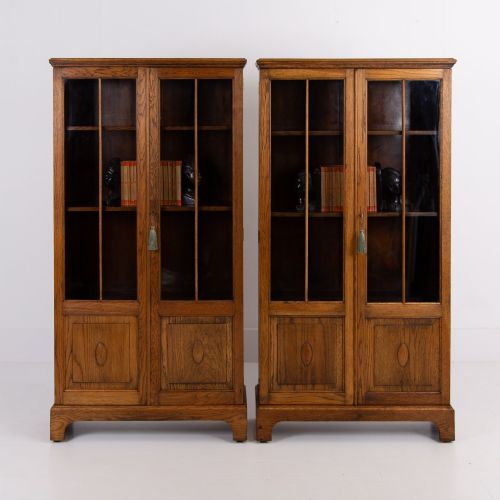
Many examples serve a dual purpose as both bookcases and display cabinets, combining open or glazed shelving for volumes with enclosed lower cupboards. Makers built them to house personal libraries alongside decorative objects.
The inclusion of adjustable wooden shelving allowed owners to customise interior spaces for mixed collections.
Where should I place a circular cabinet?
Circular and drum-shaped cabinets suit corners or freestanding positions where light can strike the curved glass from multiple angles. Their rounded profiles soften rigid room layouts and awkward transitions between walls.
Positioning them away from direct sunlight protects both the walnut veneers and internal fabric linings from fading.