




1930s Mahogany Cabinet
A 1930s mahogany cabinet brings practical storage and distinct period character to a room, offering craftsmanship from the Art Deco and revival eras.
1930s Mahogany Cabinet
A 1930s mahogany cabinet encompasses a diverse range of domestic and commercial forms, from cocktail bars and display vitrines to bedside tables and bookcases. These pieces reflect both modernist Art Deco sensibilities and traditional revival styles including Georgian, Queen Anne, and French Louis XV.
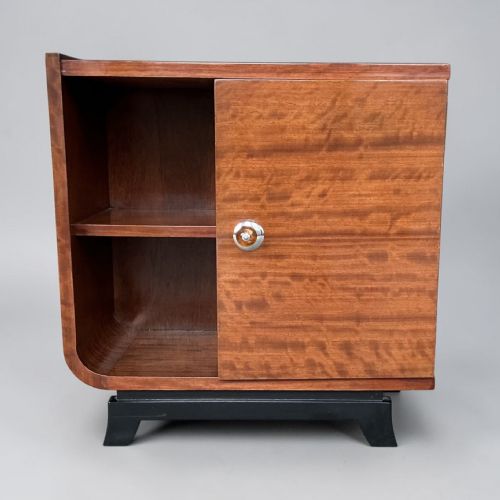
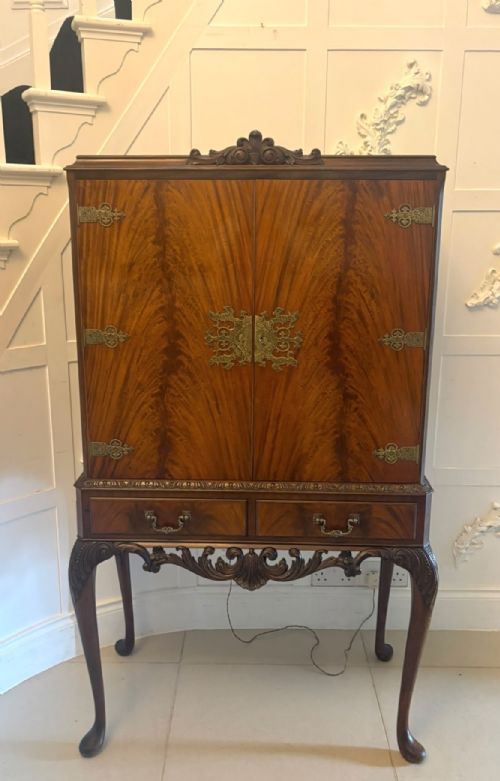
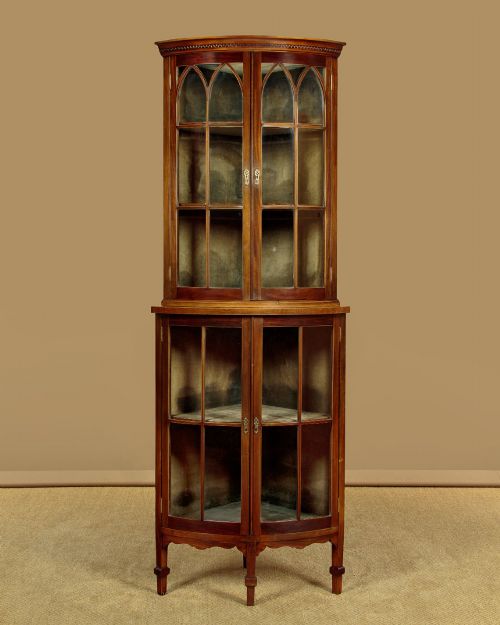
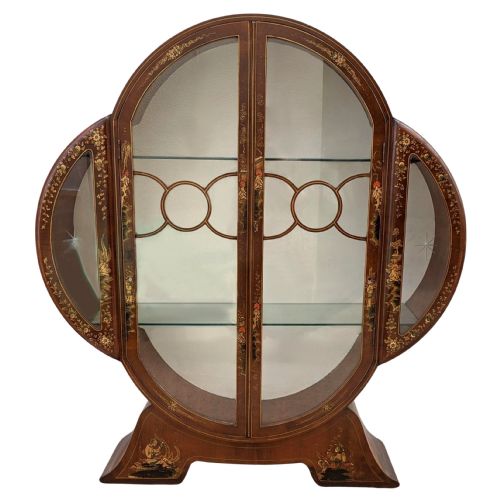
The version most commonly met on this page is the Art Deco or revival display cabinet, often featuring glazed doors or illuminated interiors designed to showcase objects. Side cabinets and cocktail drinks cabinets also feature prominently, utilising the rich grain of the timber to create striking focal points.
Originating predominantly from English and French workshops, these items capture a transitional design period where geometric shapes met classical timber traditions. Buyers encounter everything from compact bedside cupboards to large triple shop display units.
How they were made
Construction relies heavily on solid mahogany and figured mahogany veneers, frequently contrasted with maple, walnut, or ebonised wood to accentuate geometric lines and door panels. Timber selection determines the surface pattern, with flame-fronted and figured grains prized for their natural movement.
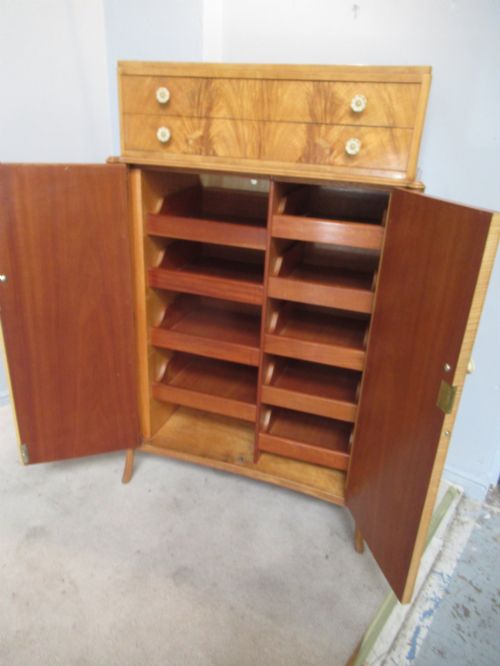
Hardware plays a structural and decorative role, incorporating brass mounts and chrome fittings that define the period aesthetic. Glass panels are integrated into vitrines and display units, while specialised internal fittings accommodate books, drinks, or shop merchandise.
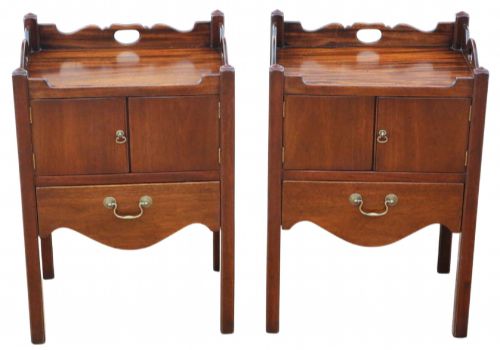
Several bedside tables are shaped specifically as kidney beans, bringing a distinctly organic French curve to the bedroom.
What varies in quality
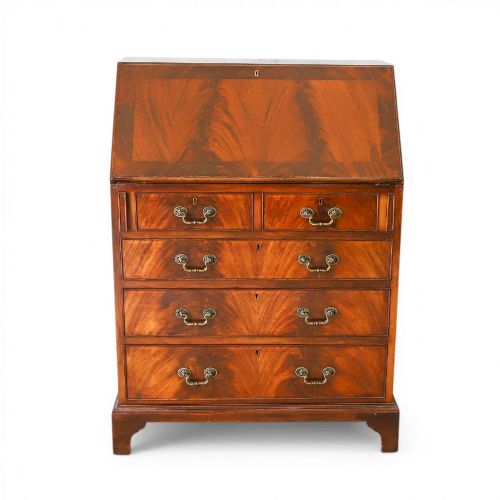
The standard of timber preparation and veneer matching separates standard utility pieces from exceptional examples. Finer cabinets display continuous, symmetrical grain patterns across doors and drawer fronts, particularly in figured mahogany and flame-fronted designs.
Joinery execution and the integration of secondary woods, such as maple and walnut, dictate the structural integrity of the piece over time. Furthermore, the sophistication of period hardware, from cast brass mounts to specialised internal lighting or stacking mechanisms, indicates the original maker's tier of production.
Bowman Brothers·Epstein·E. Pollard & Co. Ltd.
The 1930s Mahogany Cabinet Glossary
- Art Deco
- A design style characterised by sleek geometric shapes, streamlined forms, and modern industrial materials that emerged in the interwar period. It heavily influences the silhouette of many cabinets from this decade.
- Vitrine
- A glass-fronted cabinet or display case designed specifically for showing porcelain, books, or curiosities. These pieces often feature internal illumination or mirrored backs.
- Flame-fronted
- A descriptive term for wood veneer cut in a manner that produces a flame-like or rippling grain pattern. This technique creates high visual movement on drawer and door fronts.
- Serpentine
- A curved line or shape featuring a convex centre flanked by concave ends, commonly seen on the front edges of high-end sideboards and cabinets. It requires advanced woodworking skill to execute cleanly.
- Compactum
- A multi-functional wardrobe or storage cabinet combining hanging space, drawers, and shelving within a single footprint. They offer efficient storage for smaller living spaces.
1930s Mahogany Cabinet: Frequently Asked Questions
What is a 1930s mahogany cabinet used for?
These cabinets serve multiple domestic purposes, acting as cocktail bars for entertaining, bookcases for libraries, or vitrines for displaying collections. Smaller variants function well as bedside tables or compact sideboards in living areas.
Their varied internal layouts, from open shelving to specialised drawers and cupboards, allow them to adapt easily to modern storage needs while retaining historical character.
How do I identify an Art Deco cabinet?
Art Deco pieces typically display clean geometric lines, symmetry, and contrasting timber veneers such as maple or walnut alongside mahogany. They often incorporate streamlined hardware in chrome or brass.
Unlike revival styles that mimic earlier centuries, these designs embrace the modernist aesthetic of the interwar period with stepped forms and minimal ornamentation.
Are these cabinets made of solid mahogany?
Many pieces utilise a combination of solid timber for structural frames and figured mahogany veneers applied to secondary woods. This technique allowed makers to achieve dramatic grain patterns without warping.
Inspect the edges and internal surfaces to understand how the timber and veneers were combined during construction.
How do I care for a mahogany cabinet?
Keep the wood away from direct sunlight and strong heat sources to prevent the mahogany and its underlying veneers from drying out or fading. Regular dusting with a soft, dry cloth maintains the finish without building up residue.
Occasional treatment with appropriate furniture wax helps nourish the timber and preserve the natural depth of the grain.