



1930s Console Table
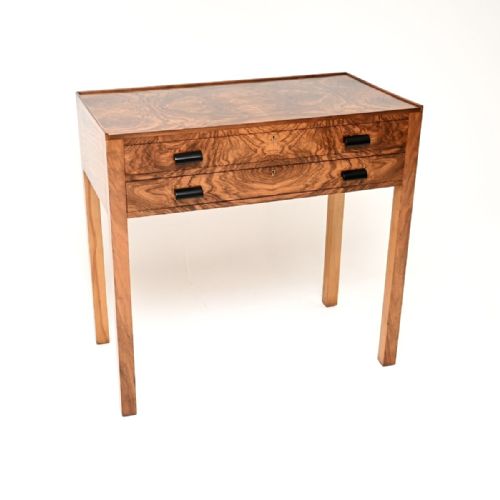
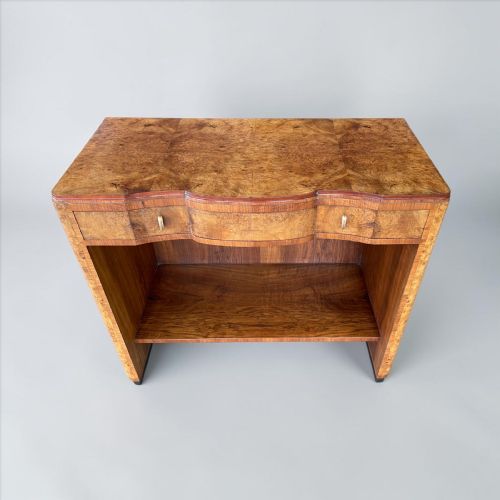
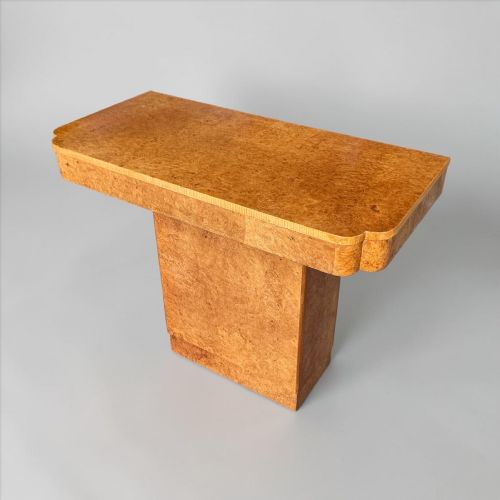
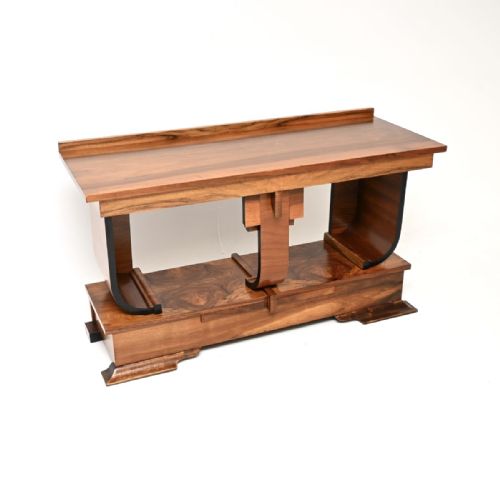
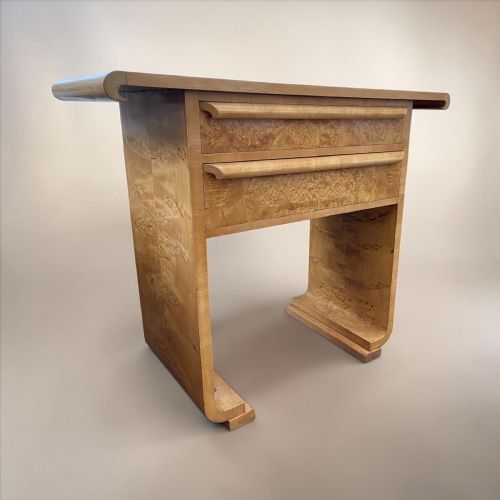
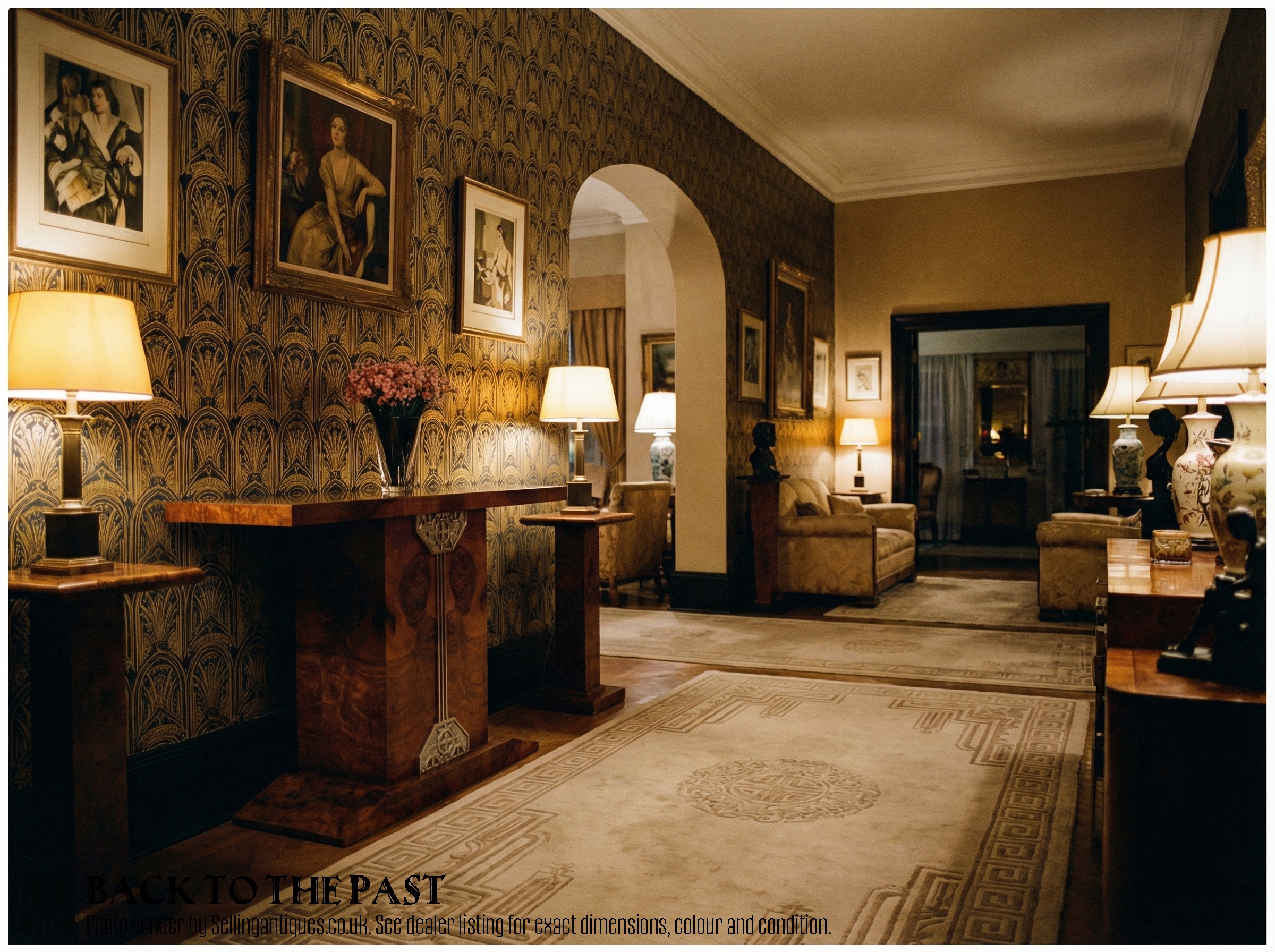
A 1930s console table brings linear elegance and striking figured timber to a hallway or living room, anchoring the space with period distinction.
1930s Console Table
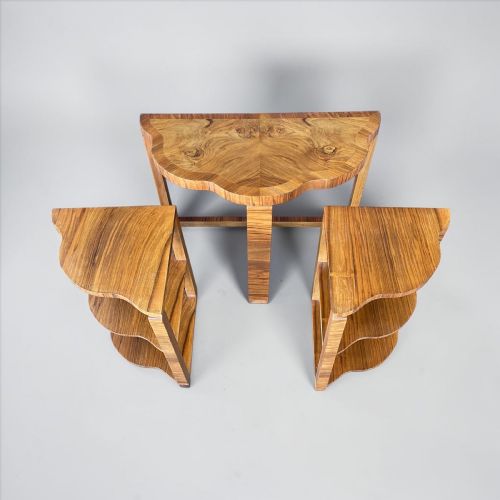
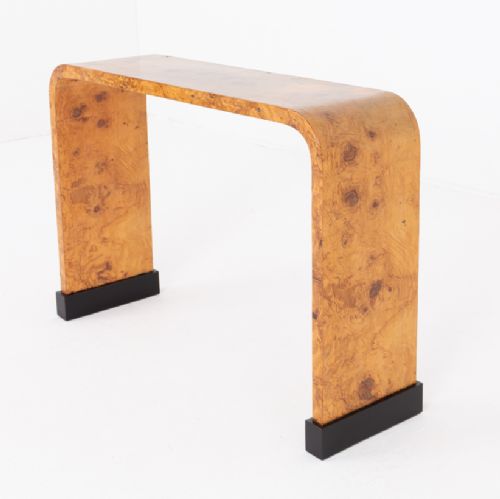
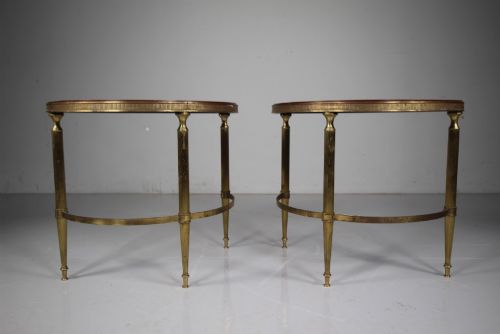
A 1930s console table represents a period dominated by Art Deco design, clean geometric forms, and architectural presence against a wall. The pieces listed here span console tables, serving tables, and narrow side tables designed for transitional spaces within the home.
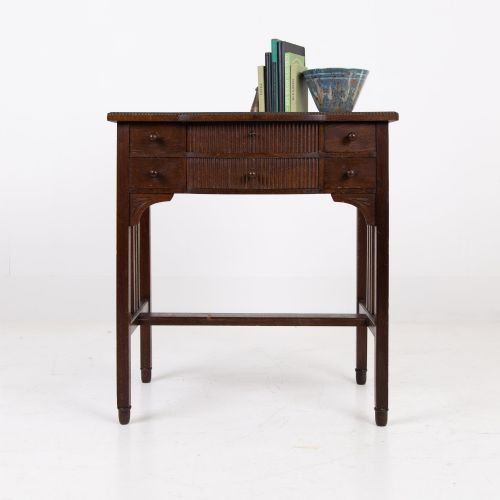
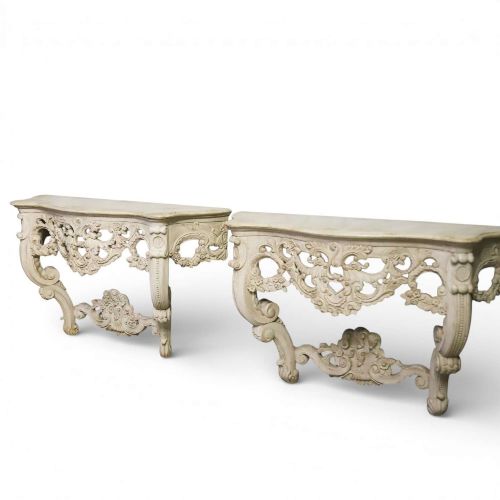
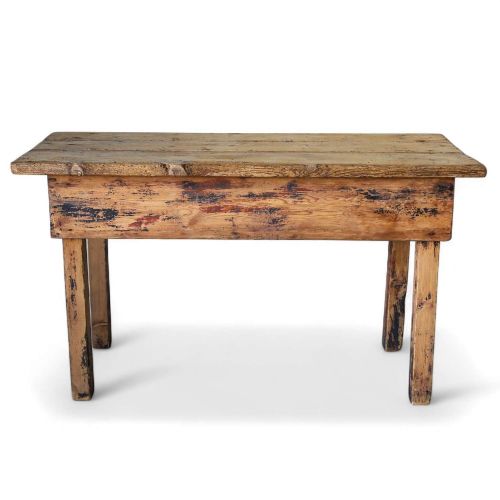
While Art Deco examples in walnut and burr walnut dominate, the selection also incorporates oak, mahogany, elm, and painted finishes reflecting French provincial or rustic farmhouse styles. These tables served both decorative and utilitarian roles in period interiors, frequently paired with mirrors or placed in entrance halls.
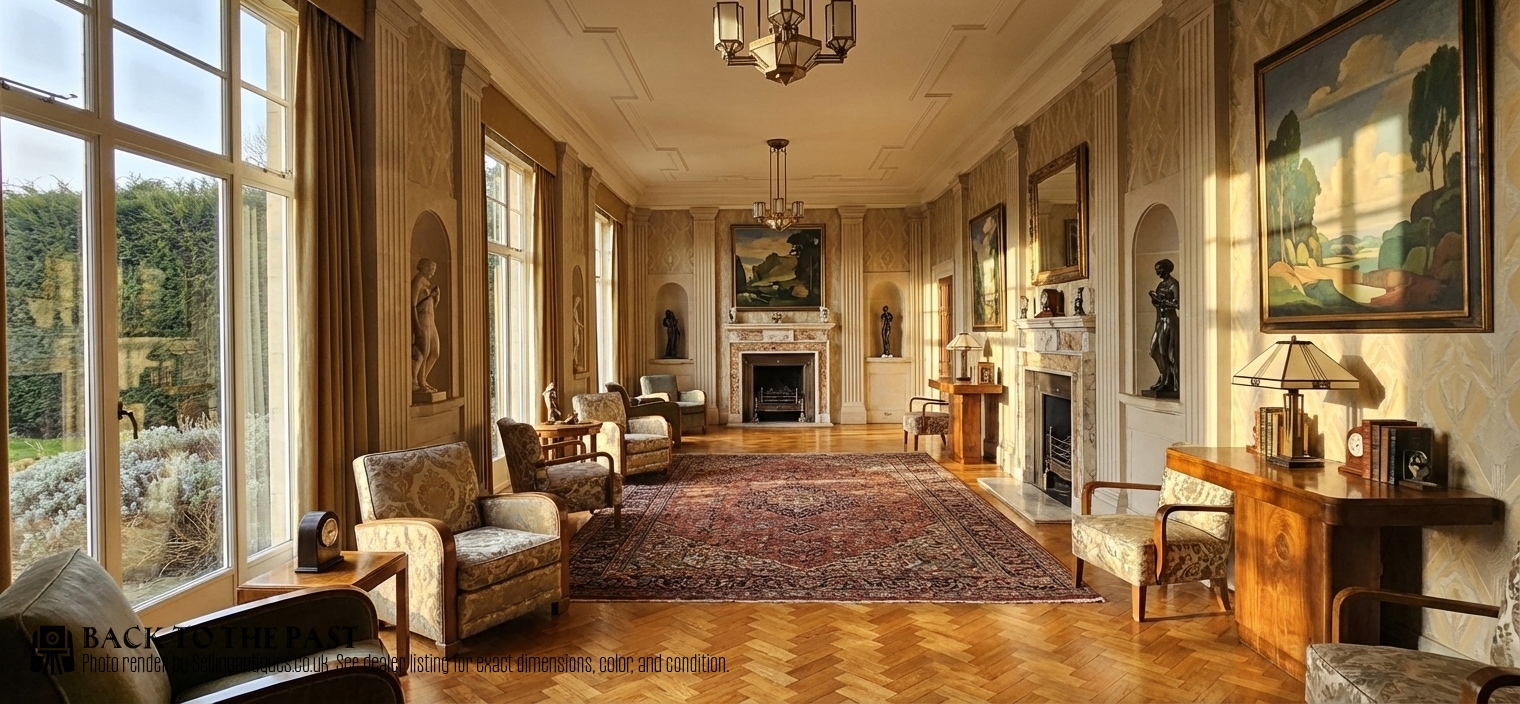
Makers and retailers of the era, from prominent London department stores to specialised cabinet makers, produced these forms to satisfy a growing appetite for modern luxury. Buyers encounter both wall-mounted console designs and freestanding pieces suited for everyday placement.
Materials and construction
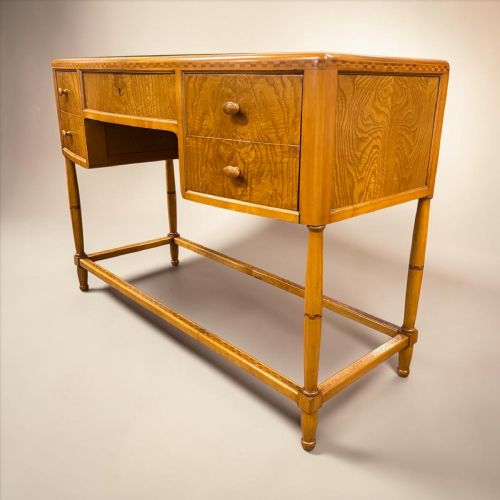
Cabinet makers of this era relied heavily on walnut, burr walnut, and birds eye maple veneers applied to sturdy secondary woods, creating dramatic grain patterns across wide tabletops. Ebonised wood and brass details provided sharp contrasts, defining the geometric vocabulary characteristic of the decade.
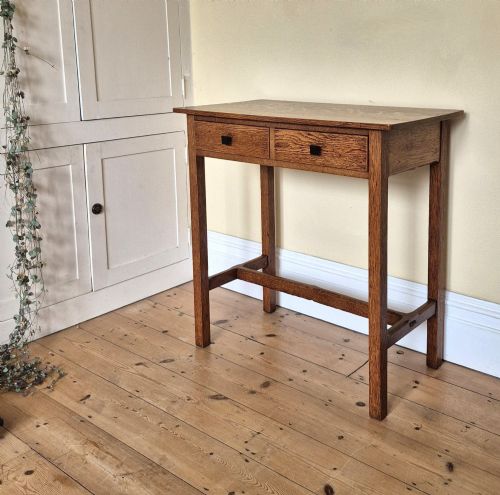
Solid timbers such as oak, mahogany, elm, and pine appear in regional and farmhouse pieces, utilising traditional joinery adapted to modernist or vernacular demands. Applied finishes ranged from high-gloss French polish on luxury Art Deco surfaces to antique white paint and rustic wax on provincial items.
1930s Console Table Retail Price Guide 2026
Typical asking prices for 1930s console table among the pieces listed under this phrase on Sellingantiques today, from the lower quarter to the upper quarter. They describe what is for sale here now, not the wider market.
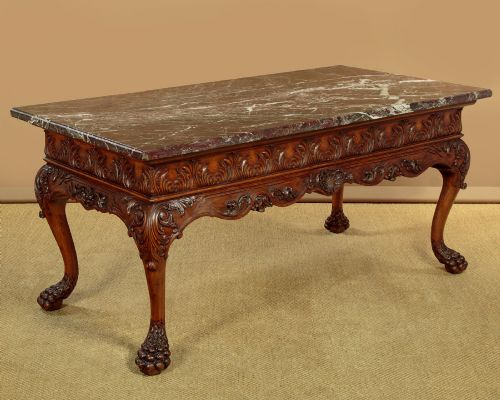
Period influences span Art Deco, Arts and Crafts, George II Revival, French Provincial, and rustic farmhouse styles.
Assessing quality and execution
Quality in these tables rests upon the selection and matching of veneer figures, where book-matched burr walnut or birds eye maple creates symmetrical, harmonious patterns across the top surface. Lesser examples employ plain timber or repetitive commercial veneers lacking depth and careful alignment.
The integrity of the construction, from the weight and gauge of brass mounts to the tightness of corner joints and stability of wall fixings, distinguishes standard retail production from bespoke workshop output. Master cabinet makers achieved seamless transitions between curved aprons, pedestals, and supporting legs without relying on excessive filler or masking.
Maurice Adams·Hille·Hubert Simpson·Fortnum and Mason·Epstein·Heals of London·Elkington and Co
The 1930s Console Table Glossary
- Art Deco
- A design style spanning the 1920s and 1930s characterised by sleek geometric shapes, streamlined forms, and lavish materials. It remains the defining aesthetic for furniture of this decade.
- Burr Walnut
- Wood harvested from walnut tree growths that produces intricate, swirling grain patterns highly prized by cabinet makers. It is frequently utilised for decorative table surfaces.
- Demi-Lune
- A half-moon shape used for tables designed to sit flush against a wall. This format saves floor space while offering a display surface.
- Veneer
- A thin slice of superior wood glued over a base timber to provide an ornamental exterior without structural instability. High-end pieces use thick veneers carefully laid by hand.
- Ebonised Wood
- Timber treated with a finish that darkens the grain to resemble ebony. It provides stark visual contrast against lighter figured woods.
1930s Console Table: Frequently Asked Questions
Where should I place a console table?
These narrow tables suit entrance halls, narrow corridors, or living room perimeters where floor space is limited yet a display surface is required.
Their shallow depth allows them to sit comfortably behind sofas or beneath wall-mounted mirrors without obstructing walkways.
How do I care for walnut veneer?
Maintain walnut surfaces by dusting regularly with a soft, dry cloth and avoiding direct sunlight that can fade the natural grain.
Apply a quality beeswax sparingly to nourish the wood finish, buffering gently to preserve the historic sheen.
Are these tables sturdy enough for daily use?
Most freestanding console and serving tables offer robust construction suitable for supporting lamps, decorative objects, and everyday items.
Wall-fixed console variations require proper anchoring to masonry or studwork to ensure complete stability during use.
How can I identify Art Deco style?
Look for symmetrical geometric arrangements, contrasting inlay lines, and stylized motifs drawn from industrial design and modernist architecture.
The embrace of exotic veneers and polished metallic accents further signals the distinct aesthetic of the period.