




Art Deco Entry Table
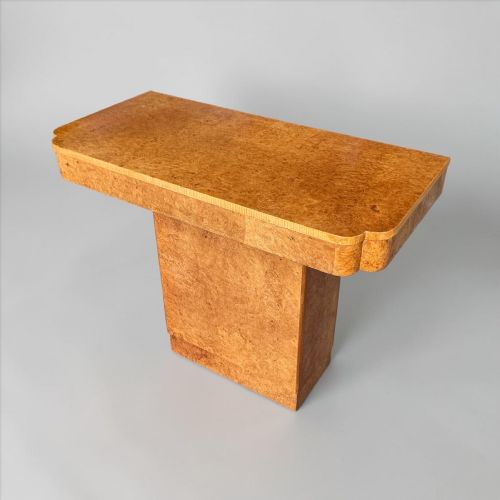
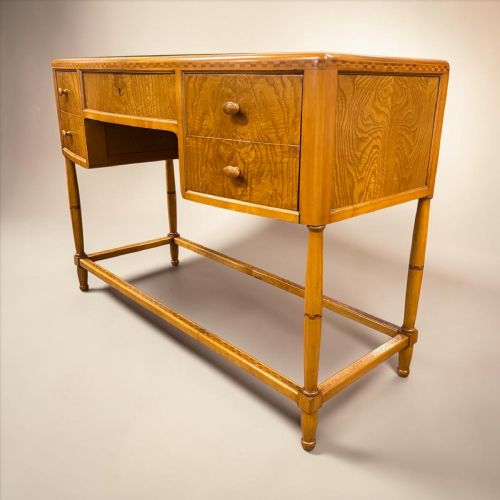
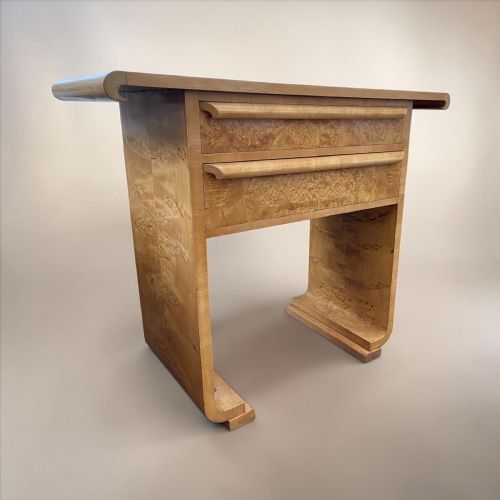
These art deco entry table selections offer striking geometric lines and rich veneers, bringing immediate 1930s character to a hallway.
Art Deco Entry Table
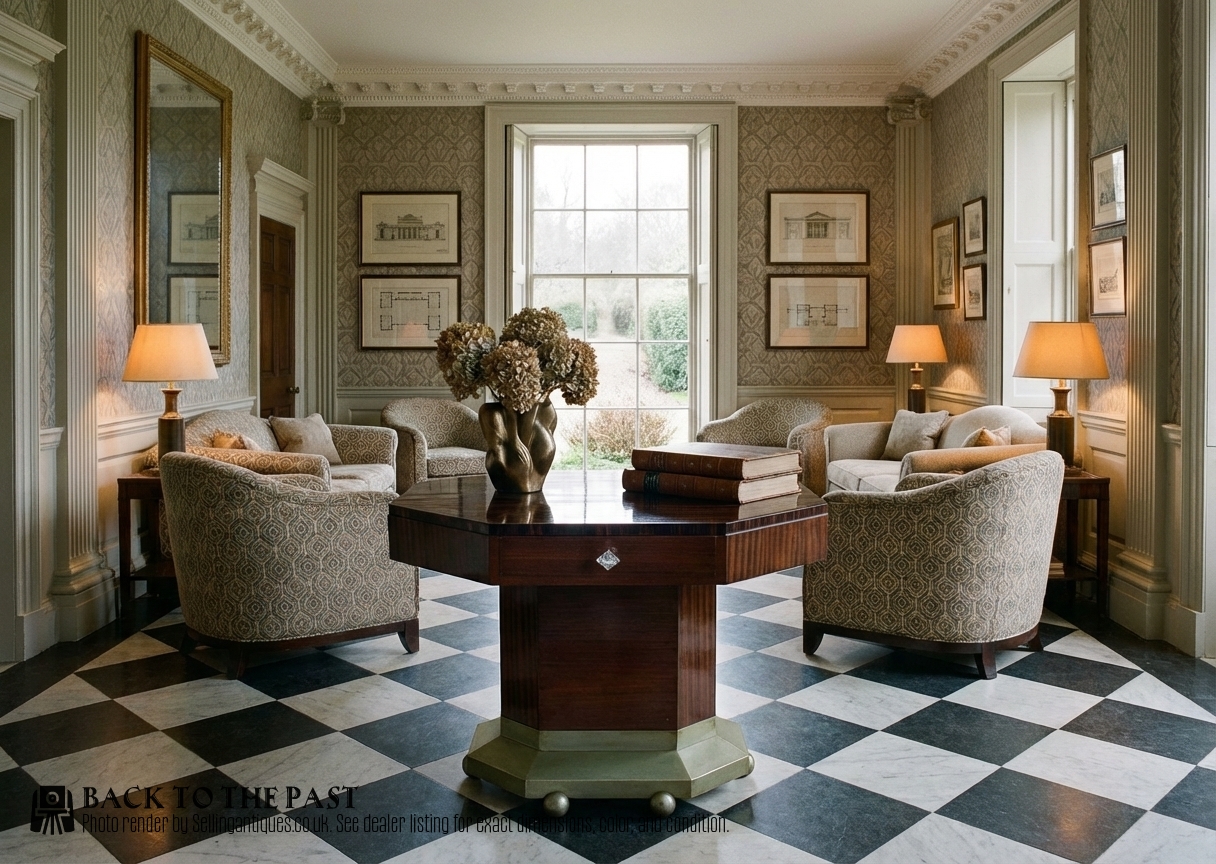
An art deco entry table embodies the architectural spirit of the 1930s, designed to anchor a hallway or reception space with clean silhouettes. These pieces appear primarily as console tables and centre tables, serving both practical placement and visual impact.
How They Were Made
Cabinet makers utilised solid timber frameworks overlaid with finely figured wood veneers such as burr birch, burr maple, and Macassar ebony. This technique allowed craftsmen to display dramatic grain patterns across wide tabletops and apron fronts.
Glass elements integrate into the construction to complement the polished timber surfaces. Joinery methods of the period prioritized smooth, uninterrupted planes that accentuate the natural beauty of exotic woods.
Art Deco Entry Table Retail Price Guide 2026
Typical asking prices for art deco entry table among the pieces listed under this phrase on Sellingantiques today, from the lower quarter to the upper quarter. They describe what is for sale here now, not the wider market.
Listings span the 1930 period, featuring console and centre tables constructed from burr birch, burr maple, Macassar ebony, timber, and glass.
What Varies in Quality
Excellence in these pieces rests upon the selection and bookmatching of veneer, where striking figures like burr maple or Macassar ebony dictate the visual rhythm of the surface. Lesser examples rely on plain timber surfaces with minimal grain movement.
The sophistication of the silhouette defines the upper tier of the range, distinguishing simple utility forms from ambitious modernist designs created by notable retailers and workshops of the 1930s.
Fortnum and Mason
The Art Deco Entry Table Glossary
- Console table
- A narrow table designed to stand against a wall, frequently utilised in entrance halls and corridors.
- Macassar ebony
- A heavily figured exotic hardwood featuring distinctive dark brown and golden stripes, favoured in 1930s modernist furniture.
- Burr veneer
- A thin slice of wood cut from a tree growth or knot, displaying swirling and intricate grain patterns.
- Centre table
- A freestanding table intended to be viewed from all sides, placed in the middle of a room or grand hallway.
Art Deco Entry Table: Frequently Asked Questions
Where do I put an art deco entry table?
These pieces suit narrow hallways, landings, and reception areas where a strong geometric presence establishes the character of the interior.
Because console variants sit flush against walls, they occupy minimal floor space while providing a useful surface for decorative objects.
How do I care for wood veneer surfaces?
Polished timber veneers require dusting with a soft, dry cloth and protection from direct sunlight to prevent fading of exotic woods like Macassar ebony.
Avoid placing damp items directly on the surface to safeguard the historic polish.
What materials define 1930s tables?
The period relies heavily on figured timbers such as burr birch, burr maple, and Macassar ebony combined with glass elements.
Cabinet makers used these materials to create high contrast and striking visual movement across flat surfaces.
Are centre tables different from console tables?
Centre tables are freestanding designs meant to be seen from every angle in an open space, whereas console tables stand flat against a wall.
Both forms appear within 1930s interior schemes to serve distinct spatial roles.