



Golden Birch Side Table
A golden birch side table brings pale, figured timber and clean proportions to a room, drawing the eye with warm honey tones.
Golden Birch Side Table
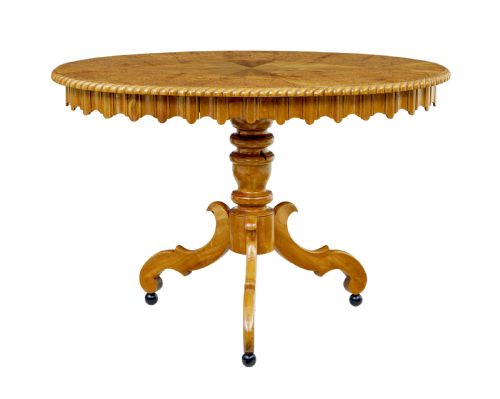
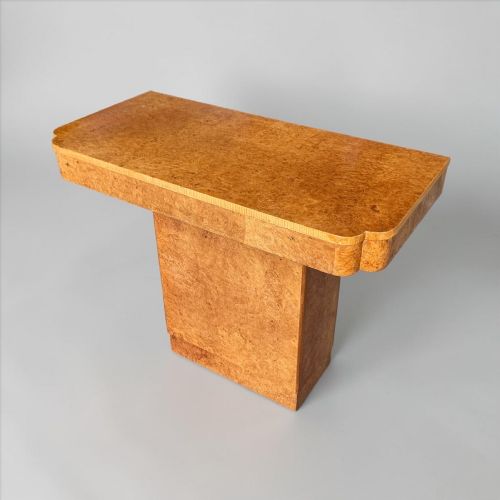
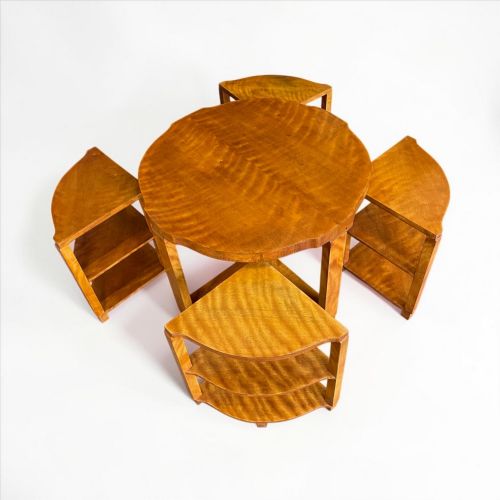
A golden birch side table encompasses various compact wooden furnishings designed for occasional use, ranging from nineteenth-century Scandinavian pieces to twentieth-century Art Deco forms. Buyers searching for a golden birch side table encounter numerous nineteenth-century occasional, console, and sofa tables alongside twentieth-century bedside and coffee tables.
The material appears under several descriptions including burr birch, satin birch, and karelian birch, often showcasing distinctive natural figuring in the timber. Swedish and continental workshops produced many of the surviving examples, incorporating styles from Biedermeier and Empire Revival to Victorian and Art Deco.
Determinants of distinction
The selection of the birch veneer sets the visual standard, with dense, highly figured burr or karelian timber commanding greater appreciation than plain planks. Superior examples display careful book-matching of the grain across table tops and harmonious proportions between top and base.
The refinement of secondary details, such as precise inlay work, well-cast ormolu mounts, and robust structural joinery, elevates a piece. Makers who achieved balanced lines within Biedermeier or Art Deco idioms demonstrate a mastery that distinguishes finer tables from standard utilitarian items.
Golden Birch Side Table Retail Price Guide 2026
Typical asking prices for golden birch side table among the pieces listed under this phrase on Sellingantiques today, from the lower quarter to the upper quarter. They describe what is for sale here now, not the wider market.
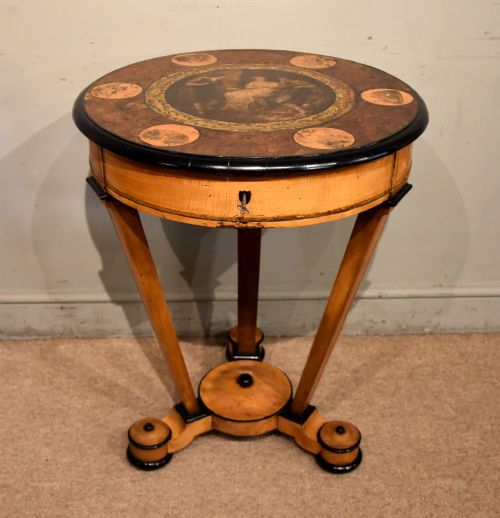
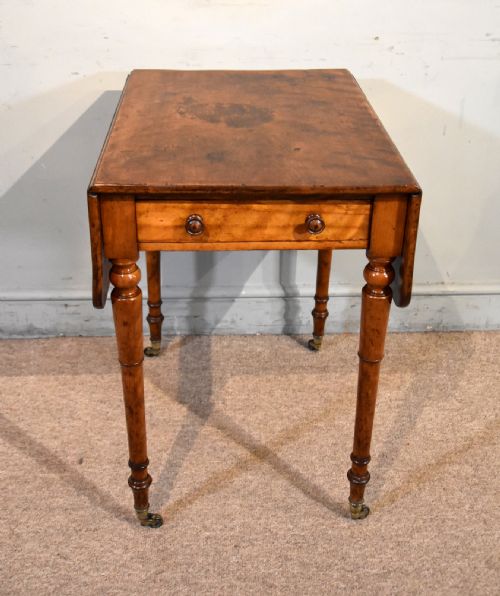
One nineteenth-century sewing table conveniently arrives complete with its original vintage contents still tucked inside.
Johnstone and Jeanes
The Golden Birch Side Table Glossary
- Burr birch
- A growth deformity in the birch tree that produces dense, swirling cluster patterns in the timber grain. This highly decorative wood is sliced into veneers for prominent display on furniture surfaces.
- Biedermeier
- A prominent Central European design style spanning the early to mid-nineteenth century, characterised by utilitarian comfort and clean lines. Pieces from this era often showcase pale native timbers like birch without excessive ornamentation.
- Satin birch
- A term used by cabinetmakers to describe birch timber with a smooth, reflective grain resembling satin. It gained particular favour during the nineteenth century for bedroom and occasional furniture.
- Ormolu
- Gilded bronze mounts applied to furniture for decorative contrast. Makers utilised these metallic accents on nineteenth-century pieces to highlight structural outlines.
- Tripod table
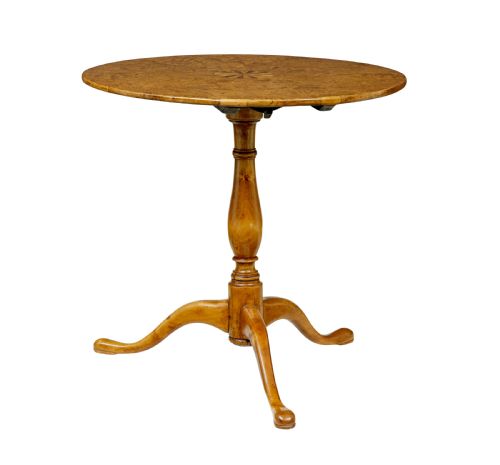
- A small freestanding table supported by a central pillar above three spreading feet. This form appears frequently among nineteenth-century occasional tables.
Golden Birch Side Table: Frequently Asked Questions
How do I style a golden birch side table?
These pale tables suit neutral rooms where their warm, figured grain adds subtle texture without dominating the space. Pair them with darker seating or walls to create a striking tonal contrast.
Because they appear in forms from tripod tables to Art Deco coffee tables, they function easily beside armchairs, beds, or sofas as practical display surfaces.
Are these tables sturdy enough for daily use?
Most occasional, console, and bedside tables from the nineteenth and twentieth centuries were built for functional domestic service. Solid construction and durable timber veneers ensure they withstand normal placement of lamps and books.
Care should be taken with tilting mechanisms on older occasional tables to avoid straining the central pivot joint.
How can I identify a Biedermeier golden birch table?
Biedermeier tables typically exhibit restrained neoclassical proportions with a focus on unadorned wood surfaces rather than carved ornamentation. They frequently employ birch veneers with symmetrical grain patterns.
Such pieces date primarily from the early to mid-nineteenth century and often originate from Scandinavian or Germanic workshops.