

1930s Burr Table
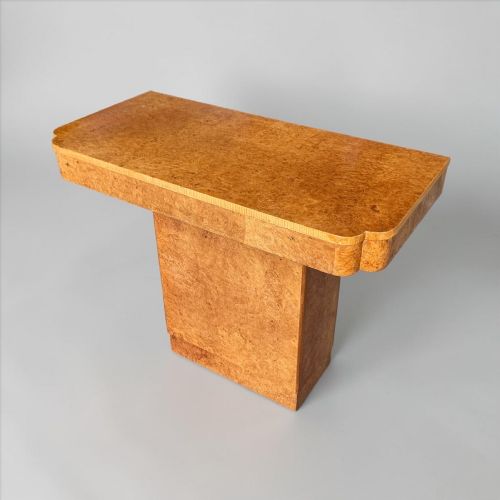
A 1930s burr table brings rich grain and distinctive Art Deco lines into a room, offering both practical surface space and architectural presence.
1930s Burr Table
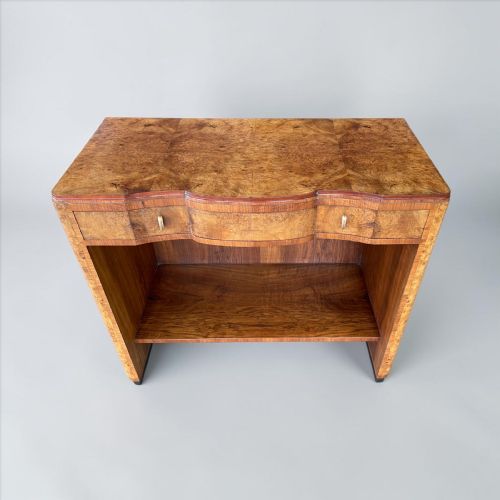
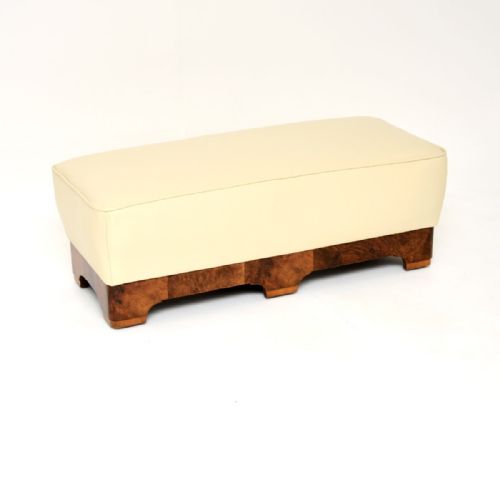
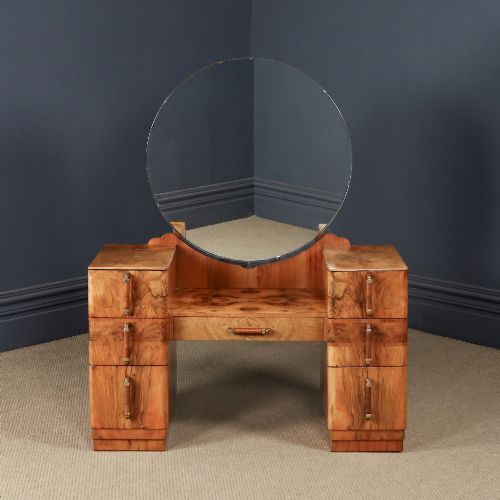
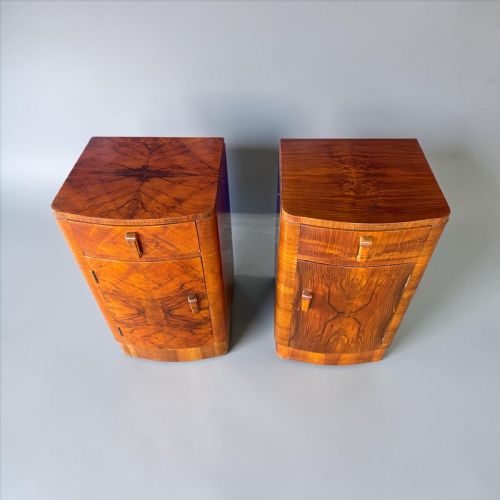
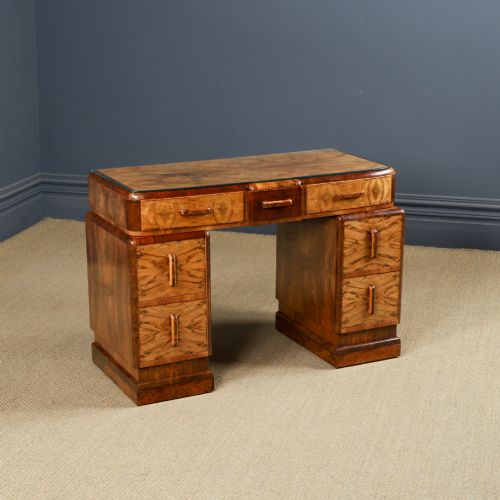
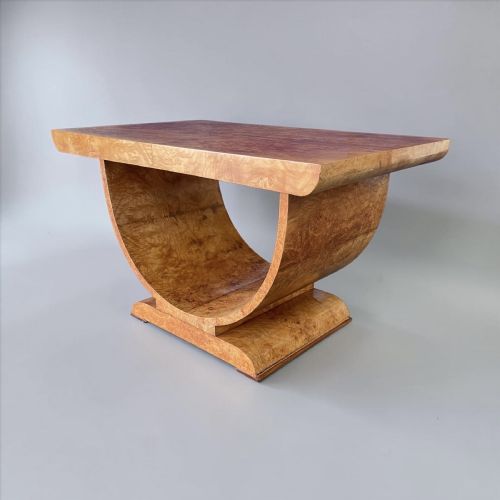
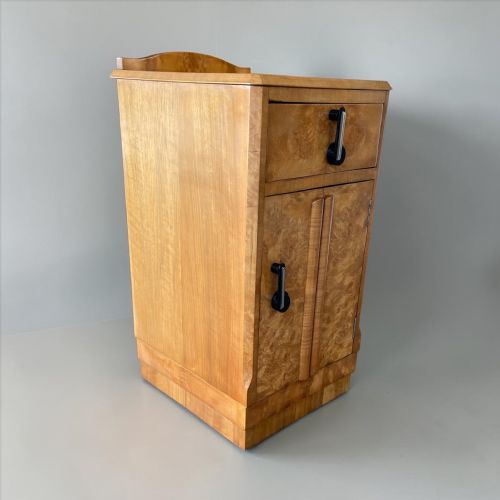
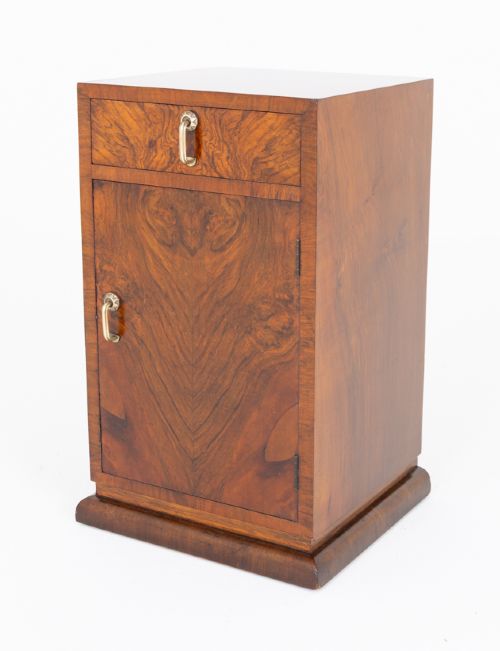
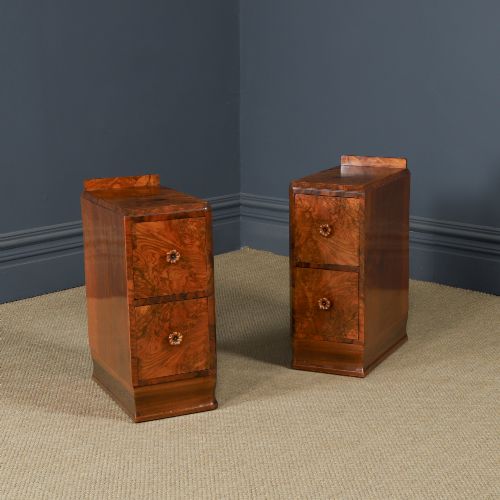
A 1930s burr table encompasses various forms designed during the interwar period, most notably coffee tables, console tables, and bedside tables. These pieces predominantly reflect the Art Deco style, displaying geometric silhouettes alongside organic wood figures.
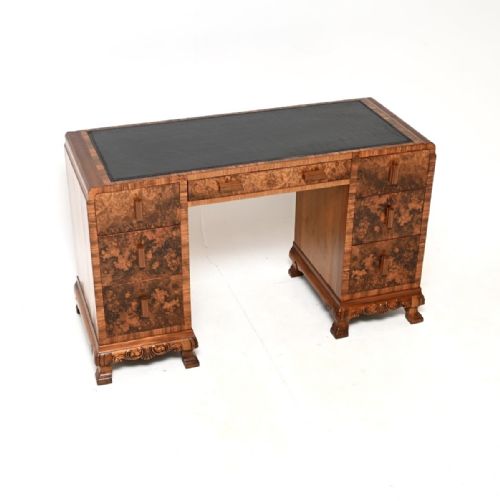
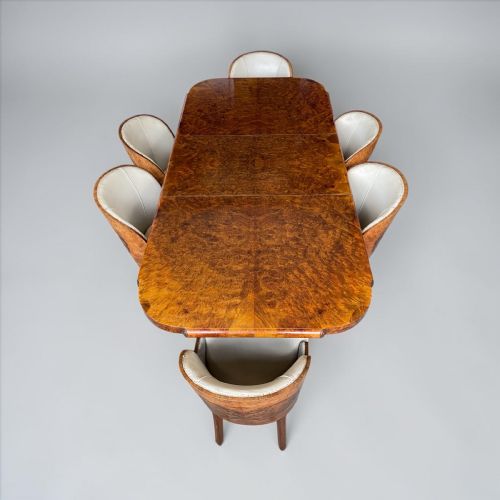
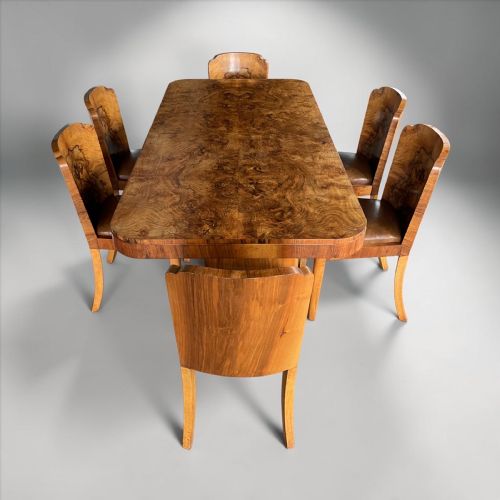
Buyers encountering this selection will frequently find walnut and burr walnut surfaces, often accompanied by matching chairs, cabinets, or desks from the same era. The designs range from compact occasional tables to large dining sets and extending tables.
Originating largely from English workshops, these tables combine robust functional forms with decorative wood veneers. The period aesthetic relies heavily on the natural patterns of the timber to provide visual interest rather than heavy carving.
Construction and materials
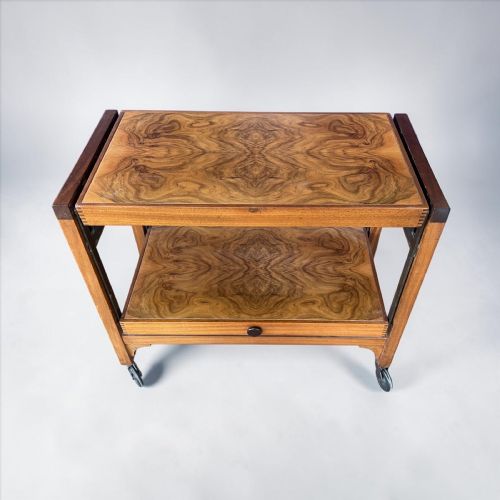
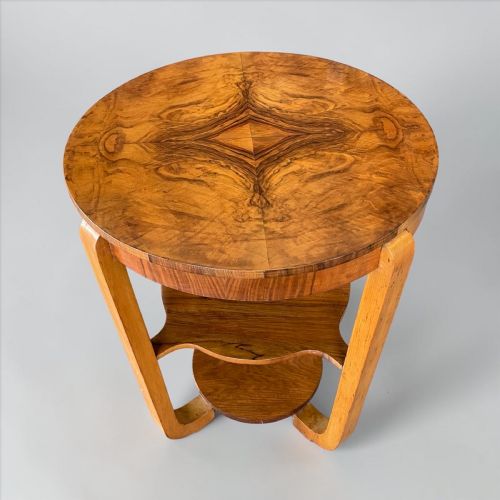
Cabinet makers utilised thin veneers of burr walnut, burr elm, and burr maple applied over solid secondary timber bases to create swirling grain patterns. These figured veneers were often symmetrically arranged across table tops to maximise the visual impact of the wood.
Secondary materials such as brass, chrome, and leather appear alongside the wood, providing contrast on handles, feet, and inset writing surfaces. Glass tops and tiers also feature on several occasional and coffee table designs from the period.
Some tables double as cocktail bars or metamorphic trolleys, proving interwar designers took evening refreshment very seriously indeed.
Evaluating quality and craftsmanship
Quality in a 1930s burr table rests on the selection and matching of the veneer, where symmetrical book-matching demonstrates superior cabinet work. The depth of the grain figure and the preservation of the polished finish distinguish finer examples from standard production pieces.
Structural integrity also separates workshop-made items from mass-produced alternatives, particularly in the construction of pedestal bases, joints, and extending mechanisms. Maker attribution to notable firms adds a documented standard of period craftsmanship.
Maurice Adams·Hille·Frank Taylor and Co·Harry and Lou Epstein·Fortnum and Mason·Walter Carter Harrods·Haller
The 1930s Burr Table Glossary
- Burr walnut
- A wood veneer taken from the wart-like growth on a walnut tree, producing highly intricate, swirling grain patterns. It forms the primary decorative surface on many interwar tables.
- Art Deco
- A design movement prevalent in the 1920s and 1930s characterised by sleek geometric shapes, streamlined forms, and stylised ornamentation. This aesthetic governs the silhouette of the majority of these tables.
- Veneer
- A thin slice of figured wood applied over a stable base timber to produce decorative surfaces without using expensive solid lumber. Skilled application ensures the grain flows continuously across joints.
- Cross-banded
- A technique where a border of veneer is laid perpendicular to the main grain of the table top, creating a framed effect. This detail often outlines the perimeter of surfaces on better tables.
1930s Burr Table: Frequently Asked Questions
How do I care for a burr walnut table?
Keep the wood away from direct sunlight and excessive heat sources to prevent the veneer from drying or cracking.
Polish the surface occasionally with traditional beeswax and use coasters to protect the polished finish from moisture.
Are these tables suitable for daily use?
Interwar tables were built for practical domestic living, offering sturdy construction suitable for regular placement of drinks, books, or lamps.
Using protective mats and handling drawers or extending leaves with care helps preserve the vintage veneers during everyday routines.
How can I identify Art Deco furniture?
Look for clean geometric lines, stepped pedestals, and smooth curved edges that define the architectural style of the 1930s.
The absence of heavy Victorian or Edwardian carving distinguishes these pieces, relying instead on striking wood grains for decoration.
Did these tables come as part of larger suites?
Many tables were produced alongside matching dining chairs, sideboards, or bedroom furniture as part of comprehensive interior furnishing schemes.
Occasional and coffee tables were also made as standalone items to complement contemporary drawing rooms and studies.