





Blonde Wood Console Table
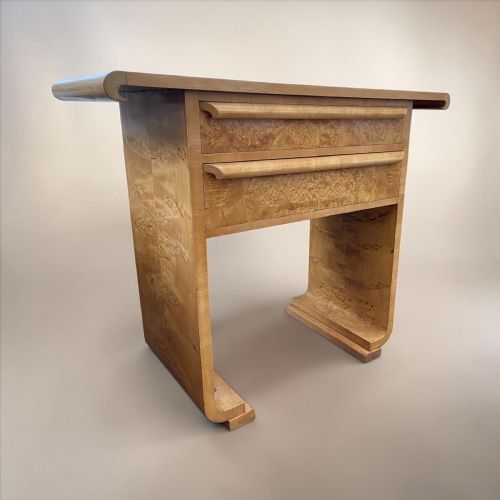
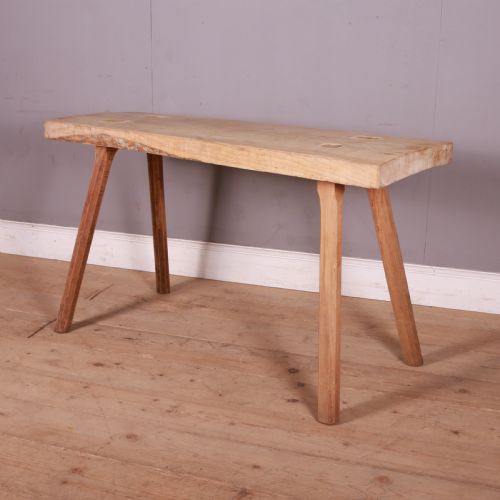
A blonde wood console table offers pale grain and striking figure, bringing warmth and clean geometry to an interior.
Blonde Wood Console Table
When you search for a blonde wood console table, you encounter pale timber furniture designed to stand against a wall in a hallway or principal room. The examples seen here span the nineteenth century and the art deco era, showing forms ranging from neoclassical revival to functional serving pieces.
The most common versions on this page are nineteenth century pieces rendered in burr birch, bleached mahogany, or birds eye maple. These tables often feature single drawers or half round configurations tailored for compact spaces.
Makers and designers from various traditions utilised lighter timbers to highlight natural grain patterns, producing side tables, tea tables, and sofa tables that function as console surfaces. Such pieces combine utility with decorative presence through figured veneers and contrasting ebonised details.
How they were made
Cabinet makers utilised select timbers such as burr birch, Hungarian ash, and birds eye maple, often laid as veneers over solid carcases to display complex grain figures. Ebonised wood and brass accents frequently appear as contrasting elements to frame the lighter field.
Construction methods across the nineteenth century and the art deco period rely on traditional joinery, sturdy trestle supports, and pedestals. Bleached mahogany and oak surfaces demonstrate how workshops lightened traditional cabinet timbers using chemical or physical treatments.
Blonde Wood Console Table Retail Price Guide 2026
Typical asking prices for blonde wood console table among the pieces listed under this phrase on Sellingantiques today, from the lower quarter to the upper quarter. They describe what is for sale here now, not the wider market.
Listings feature nineteen century and art deco pieces constructed from burr birch, bleached mahogany, oak, and birds eye maple.
What varies in quality
Quality in these tables rests upon the selection and matching of timber veneers, where superior examples exhibit symmetrical burr patterns or carefully aligned bird's-eye figures across the top. The crispness of ebonised detailing and the integration of brass mounts further distinguish finer workshops from simpler production.
Structural integrity and the retention of original surface treatments dictate the standing of a piece. Tables retaining their early bleached finish or original polish demonstrate superior preservation compared to those altered by later interventions.
Fortnum and Mason
The Blonde Wood Console Table Glossary
- Burr Birch
- A timber harvested from birch growths featuring swirling, knotty grain patterns. It provides a highly decorative surface favoured in nineteenth century cabinet making.
- Birds Eye Maple
- Maple wood marked by tiny circular figures resembling small eyes, created by depressions in the growth rings. It was widely utilised during the nineteenth century for decorative table surfaces.
- Console Table
- A table designed to be fixed against a wall, often supported by brackets or legs at the front. These pieces serve decorative and functional roles in reception rooms and hallways.
- Biedermeier
- A Central European style dating from the early to mid nineteenth century emphasising utilitarian comfort and clean lines. Pieces from this movement frequently highlight blonde veneers without excessive ornamentation.
- Ebonised Wood
- Timber treated to resemble ebony through staining or painting. It is commonly used to create dark borders and structural contrasts against pale field woods.
Blonde Wood Console Table: Frequently Asked Questions
Where should I place a console table?
These tables find a natural home in entrance halls, living rooms, or dining spaces where surface area is required without blocking circulation. Their narrow profiles allow them to sit flush against walls beneath mirrors or artwork.
They also function effectively as serving surfaces or occasional writing desks depending on the specific height and depth of the frame.
How do I care for blonde wood furniture?
Keep nineteenth century and art deco timber surfaces away from direct sunlight and extreme temperature fluctuations to prevent the veneer from drying or cracking. Regular dusting with a soft, dry cloth maintains the polish without building up residue.
Avoid placing damp items directly onto the antique timber surface to protect the historic finish underneath.
What is the difference between a console and a side table?
Console tables traditionally stood against a wall, sometimes secured with wall brackets or designed with half round shapes for stability. Side tables are generally freestanding four legged items intended to sit beside seating or in room corners.
In practice, many nineteenth century examples overlap in function and can serve either purpose within a modern interior.
How can I identify a nineteenth century piece?
Nineteenth century pieces typically show hand cut joinery, timber shrinkage appropriate to age, and traditional polishing methods such as shellac or wax. The use of native European hardwoods like birch, ash, and maple also points toward this period.
Stylistic cues such as neoclassical revival motifs or Biedermeier simplicity further help date the construction.