
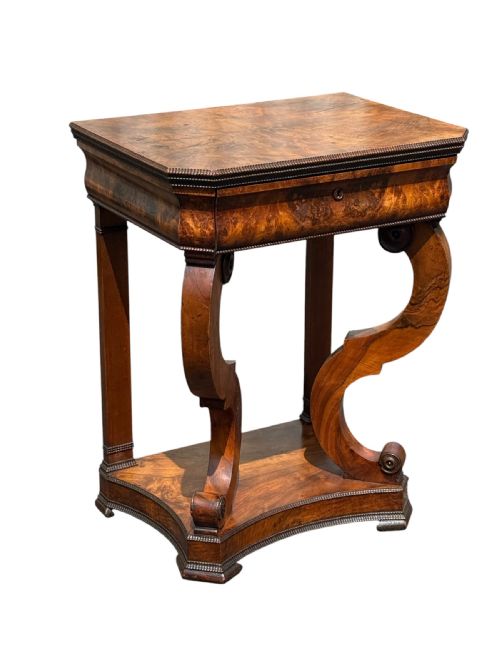
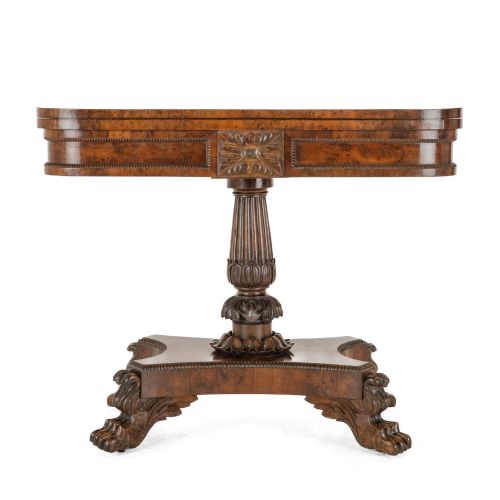


Burr Wood Console Table
A burr wood console table brings striking grain patterns and rich timber tones into a hallway or reception room.
Burr Wood Console Table
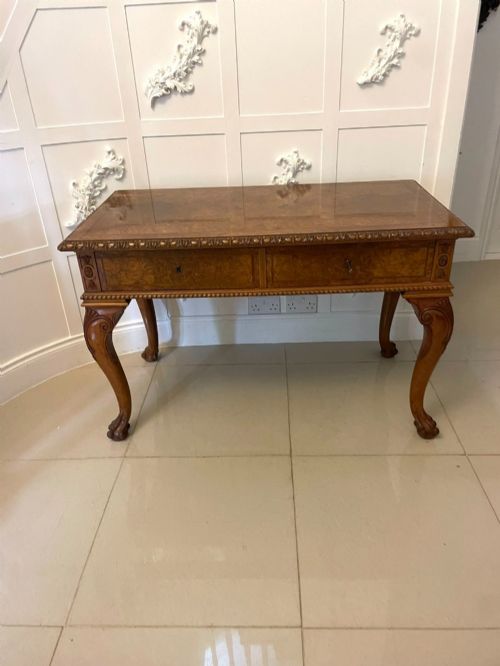
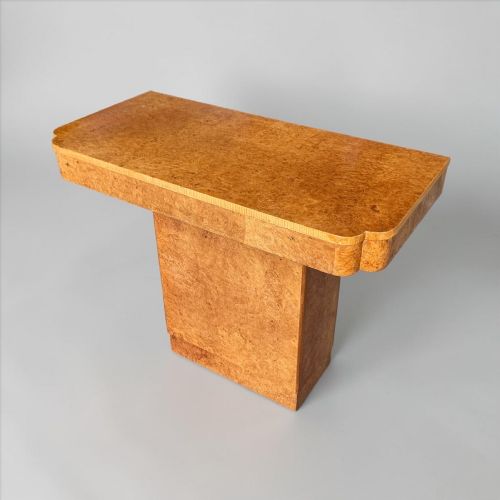
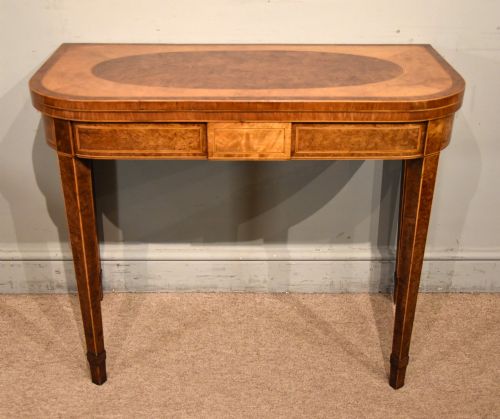
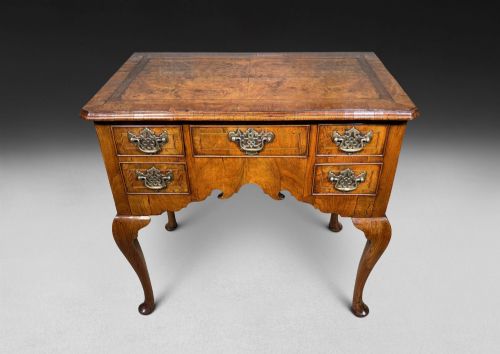
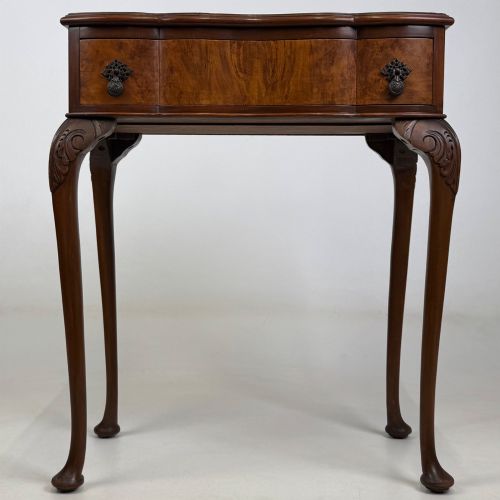
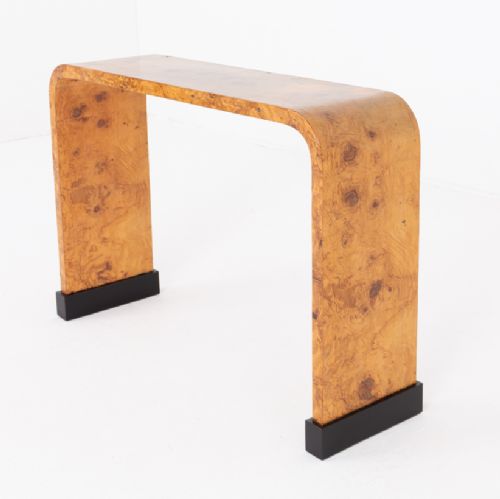
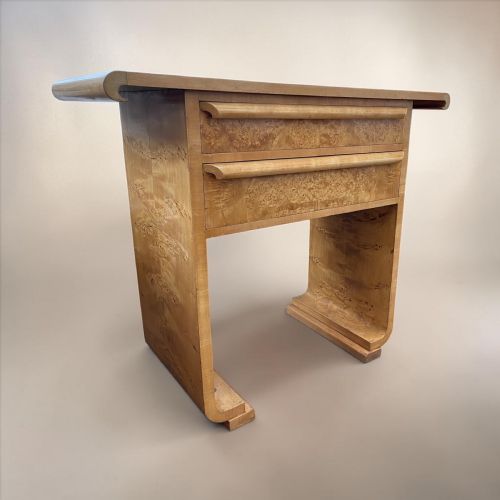
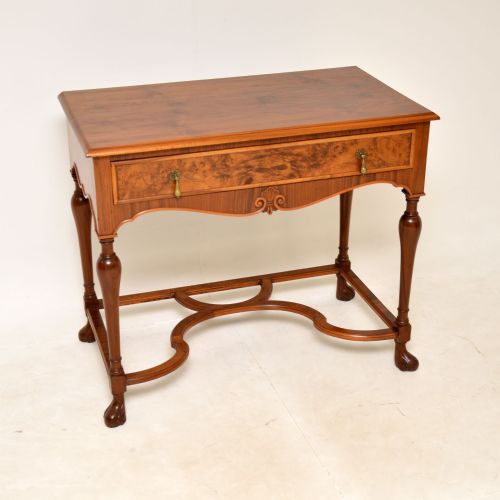
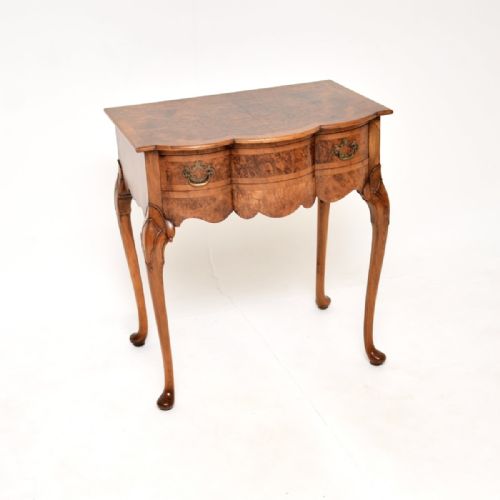
A burr wood console table is a narrow side piece designed to stand against a wall, frequently taking the form of a console, card table, or lowboy. These tables appear across periods ranging from the eighteenth century through the Victorian era to the Art Deco epoch of the nineteen-thirties, with walnut being the predominant timber alongside burr birch, burr yew, and burr oak.
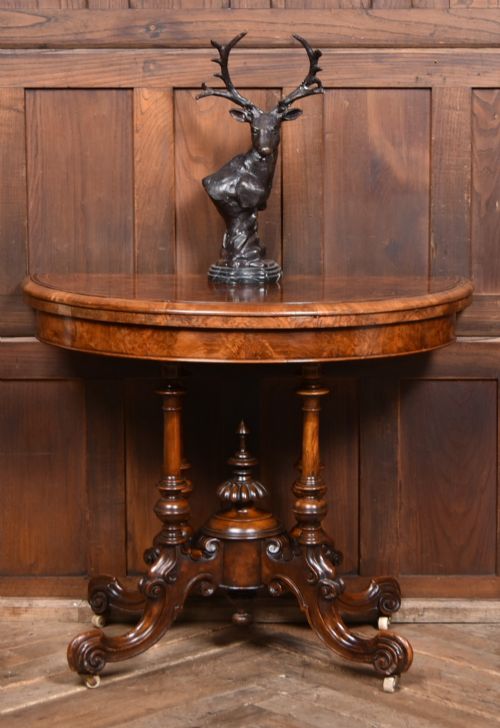
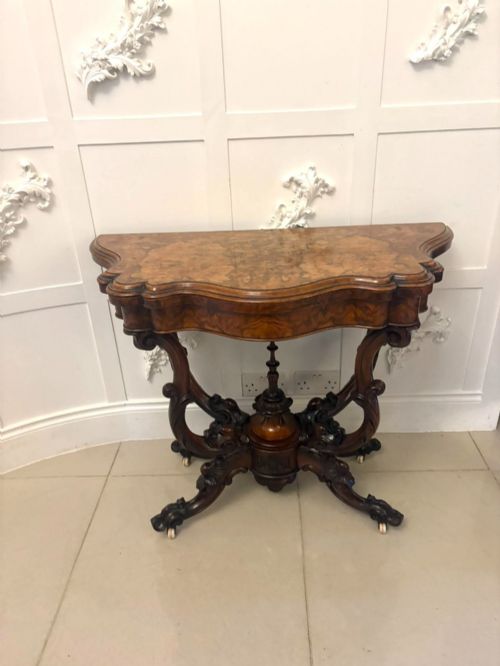
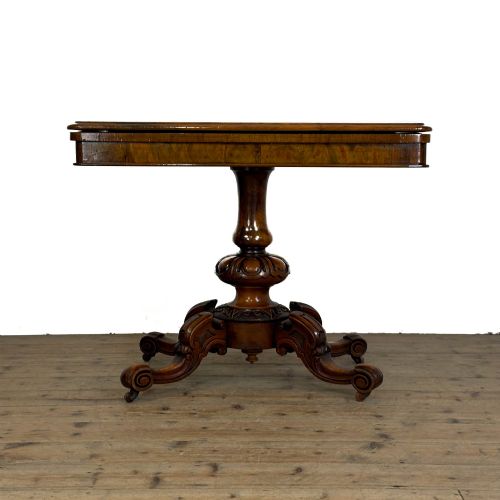
The selection on this page relies heavily on Victorian and early twentieth-century examples, including convertible fold-over card tables and serving tables. Makers and designers sometimes incorporated boxwood inlay, ebony, and tulip wood, or mounted pieces on carved basket bases and stretcher supports.
Originating in various European workshops, these tables combine practical surface space with decorative timber figuring. Buyers find both formal revival styles, such as Queen Anne and George III, and clean geometric lines from the Art Deco period.
Materials and construction methods
Cabinet makers utilised highly figured burr veneers sliced from tree growths, applying them over solid timber carcases of walnut, oak, or pine. This technique displayed swirling grain patterns across table tops and friezes while maintaining structural stability.
Inlaid decoration involving boxwood, tulip wood, and ebony was precision-cut and set flush into the primary surfaces. Turning, carving, and parcel gilding shaped the legs and bases, seen in pedestal supports, stretcher frames, and carved basket motifs.
The listings on this page span the eighteenth, nineteenth, and twentieth centuries, incorporating Victorian, Georgian, and Art Deco design periods.
Distinctions in quality and execution
The standard of a burr wood console table rests primarily on the choice and matching of the veneer. Superior examples display dense, symmetrical burr patterns that flow logically across the top and down the aprons, whereas lesser pieces show disjointed graining or poor patching.
The crispness of secondary details such as boxwood stringing, hand-carved bases, and the smooth operation of fold-over mechanisms or drawers separate standard production from exceptional cabinet work.
Fortnum and Mason·Edwards and Roberts·Epstein and Co·William Trotter
The Burr Wood Console Table Glossary
- Burr wood
- A timber growth resulting in distorted grain packed with numerous small knots and swirls. It is sliced into thin veneers for decorative furniture surfaces.
- Console table
- A table designed to stand flat against a wall, frequently secured with brackets or supported by front legs. It serves decorative and display functions in hallways and reception rooms.
- Fold-over table
- A dual-purpose table with a hinged top that opens to double its surface area. These often function as card tables or games tables.
- Lowboy
- A small seventeenth or eighteenth-century table with one or more rows of drawers beneath the top. They function as side tables or dressing tables.
- Stringing
- Thin inlay lines of contrasting wood used to outline panels and borders on tabletops and drawers. It adds linear definition to figured veneers.
Burr Wood Console Table: Frequently Asked Questions
How do I style a burr wood console table?
Place the table against a clear wall in a hallway or living room to let the swirling grain patterns draw the eye. Keep items on top minimal so the timber remains the focal point.
Pair the piece with a simple mirror or a single lamp to complement the rich tones of walnut, yew, or birch without cluttering the surface.
Are fold-over tables stable enough for daily use?
Fold-over tables were originally engineered for card playing and dining, meaning their hinges and swing legs are built to bear moderate weight. When opened, the rotating or pivoting top requires solid support from the frame.
Take care not to lean heavily on the cantilevered leaf of an open card table to preserve the historic joints and pivot mechanisms.
How do I tell Victorian tables from Art Deco ones?
Victorian tables typically feature richer carvings, turned pedestal bases, serpentine edges, and sometimes elaborate marquetry or inlay. They lean heavily into historic revival styles like Queen Anne or Rococo.
Art Deco tables from the nineteen-thirties abandon traditional ornamentation in favour of clean, streamlined silhouettes, geometric forms, and unadorned expanses of figured veneer.
What is the difference between a console and a side table?
Console tables traditionally stood against a wall and sometimes required wall fixings for total stability, whereas side tables are freestanding four-legged items. Over time, the terms have crossed over as makers adapted designs for domestic spaces.
Many pieces listed as console tables in older inventories function equally well as general side or serving tables in modern rooms.