


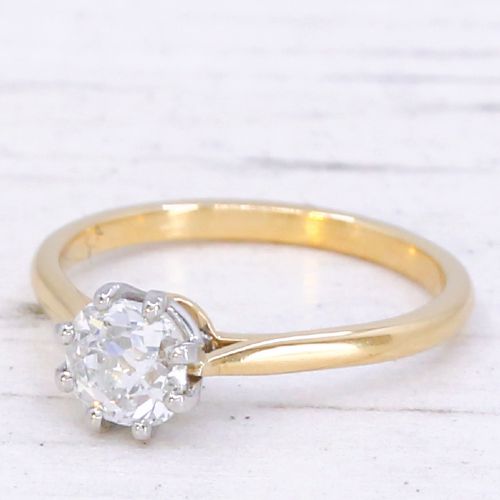

1920s Platinum Jewellery
These pieces of 1920s platinum jewellery bring forward the geometric precision and brilliant stones that define the Art Deco era.
1920s Platinum Jewellery
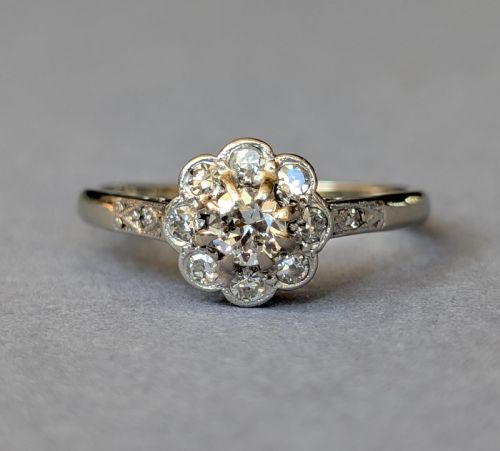
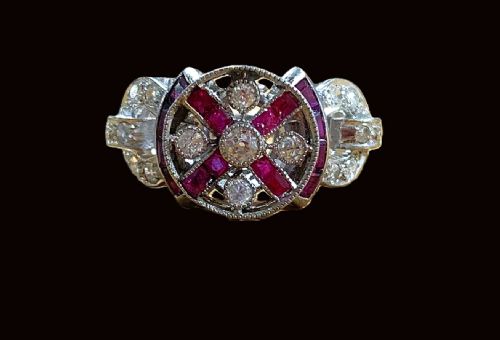
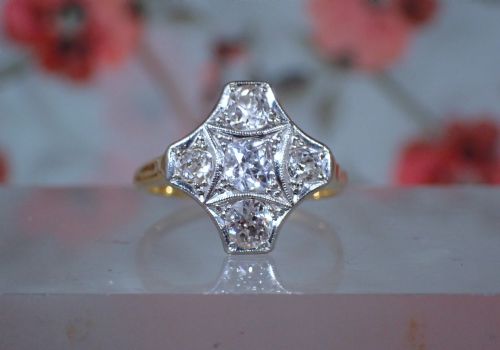
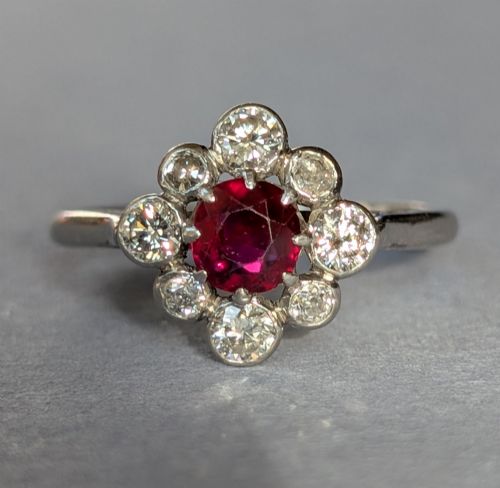
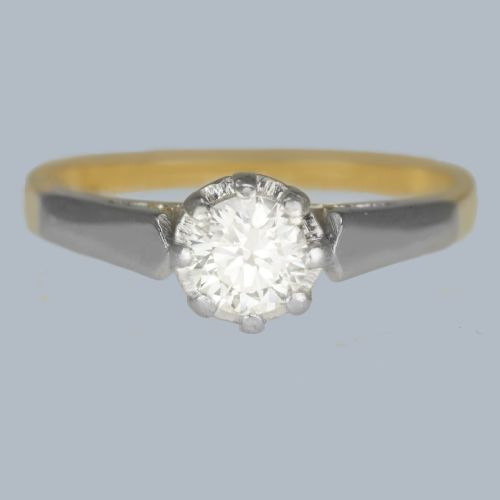
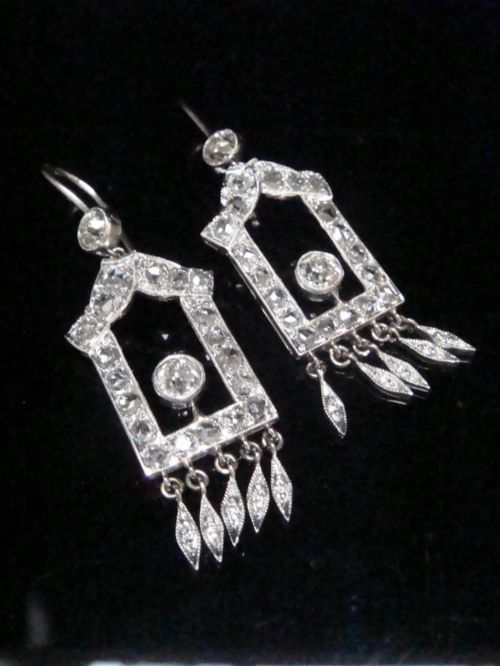
When you examine 1920s platinum jewellery, you encounter rings, earrings, necklaces, brooches, and bracelets shaped by the dominant Art Deco aesthetic of the period. The listings here largely comprise engagement rings, cluster rings, and drop earrings alongside pendants and tennis bracelets.
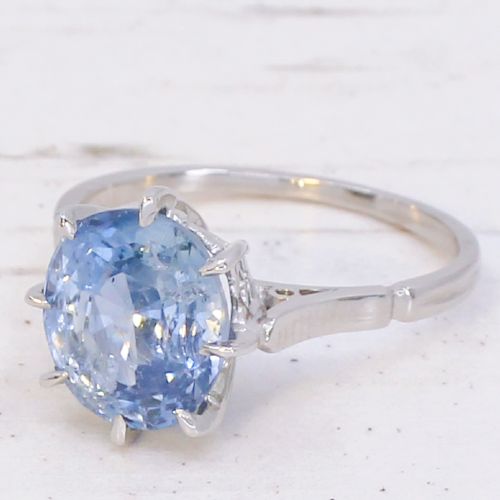
The objects stem predominantly from the 1920s and 1930s, with occasional Edwardian examples, showcasing the signature forms of the interwar years. Sapphire, ruby, aquamarine, jadeite, and diamond feature heavily as primary gems set into bright white metal.
Materials and construction
Platinum serves as the foundational metal for the finest work, frequently paired with 18ct yellow gold, white gold, or utilised on its own to support intricate openwork settings. This dense metal allowed jewellers to form ultra-thin wirework and secure tiny pavé stones without losing structural integrity.
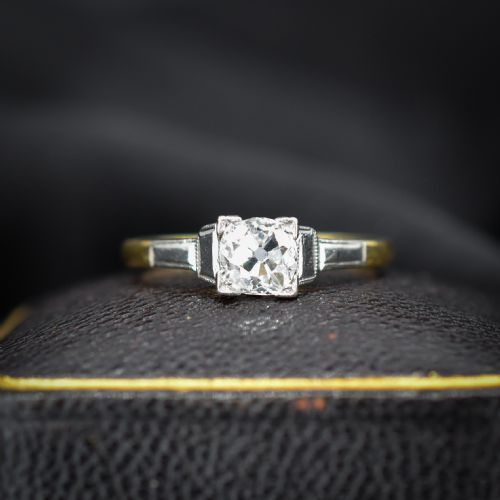
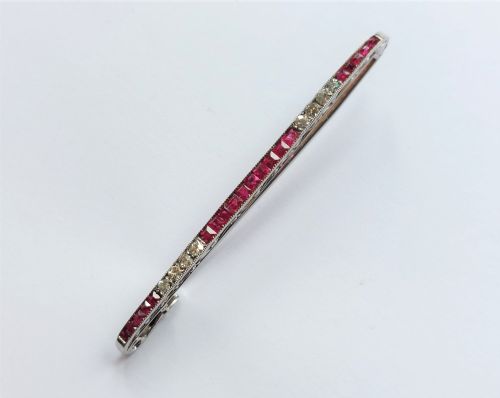
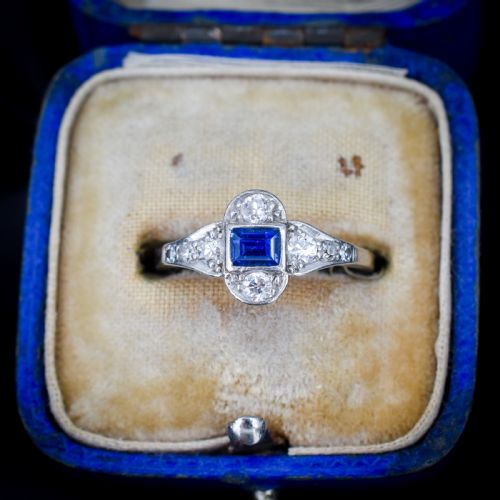
Diamonds cut in the old European or old mine style appear alongside calibre-cut sapphires and rubies, meticulously fitted into geometric channels. Master craftsmen balanced heavy stone weight against delicate metal architecture to achieve maximum light reflection.
1920s Platinum Jewellery Retail Price Guide 2026
Typical asking prices for 1920s platinum jewellery among the pieces listed under this phrase on Sellingantiques today, from the lower quarter to the upper quarter. They describe what is for sale here now, not the wider market.
Listings span the 1920s, 1930s, and 1940s alongside Edwardian survivals, utilising platinum, white gold, and yellow gold.
Factors that separate quality tiers
The distinction between ordinary and exceptional pieces lies in the precision of the metal fabrication and the selection of the central gemstones. Hand-pierced galleries and perfectly matched calibre-cut stones demonstrate superior workshop standards.
Unheated sapphires or large old-cut diamonds with clean facets elevate a piece above standard commercial output. The harmony between the geometric design and the purity of the materials determines the overall standard.
The 1920s Platinum Jewellery Glossary
- Art Deco
- A design style characterised by sleek geometric shapes, stylised motifs, and streamlined forms that dominated the 1920s and 1930s. It marked a sharp departure from the flowing curves of the preceding Edwardian period.
- Old Cut Diamond
- A diamond cut by hand before modern machinery standardised facet proportions. These stones typically feature smaller tables and larger culets, producing a softer candlelit sparkle.
- Navette
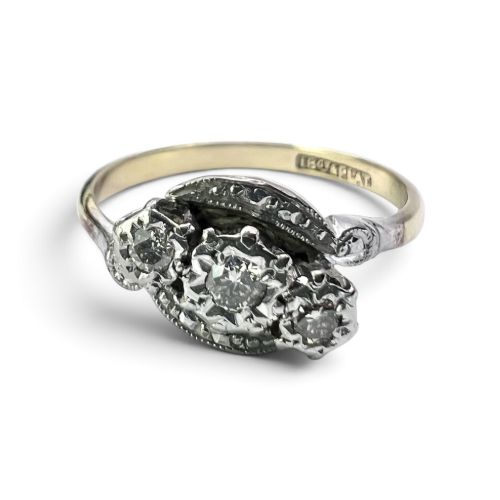
- A boat-shaped mounting configuration that tapers to sharp points at either end. This elongated silhouette sits flat along the finger in rings and brooches.
- Calibre Cut
- Gemstones specifically shaped and cut to fit tightly into a geometric channel or pattern. This technique requires expert lapidary skill to maintain uniform lines.
- Trilogy Ring
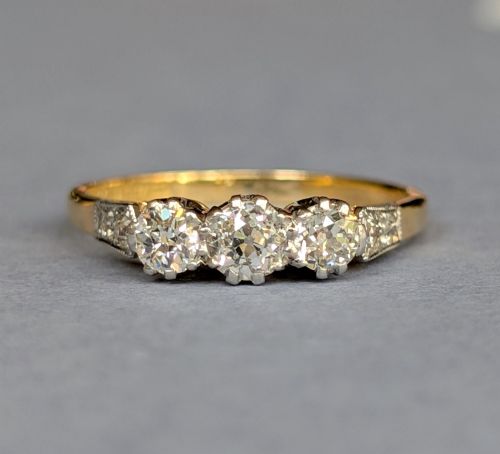
- A finger ornament featuring three principal stones set in a row. The arrangement traditionally represents the past, present, and future.
1920s Platinum Jewellery: Frequently Asked Questions
How do I care for platinum jewellery?
Platinum is a durable and dense metal that withstands daily wear far better than softer golds. Regular cleaning with warm soapy water and a soft brush restores the brightness of the metal and the fire of the diamonds.
Avoid wearing delicate gemstone rings during heavy physical tasks to protect the prongs and softer coloured stones like jadeite or opal from impact.
Were these pieces only made in platinum?
While platinum was the preferred white metal of the era due to its strength and bright finish, jewellers frequently combined it with 18ct yellow gold or white gold. Many rings feature a platinum head holding the diamonds fused to a gold shank.
This mixed-metal construction was standard practice during the transition periods of the 1920s and 1930s.
How can I tell an original piece from a reproduction?
Examine the construction under magnification to look for hand-cut facets on old diamonds and subtle irregularities in the hand-pierced platinum openwork. Modern reproductions often use machine-cast symmetry and modern brilliant-cut stones rather than old-cut gems.
Original items also show genuine microscopic surface wear consistent with decades of age.
What coloured gemstones appear most often?
Blue sapphires and rubies are the most common coloured stones found alongside diamonds in these settings. You will also encounter unheated pink sapphires, aquamarines, and carved jadeite plaques.
These bright stones provided strong chromatic contrast against the stark white of the platinum metalwork.