


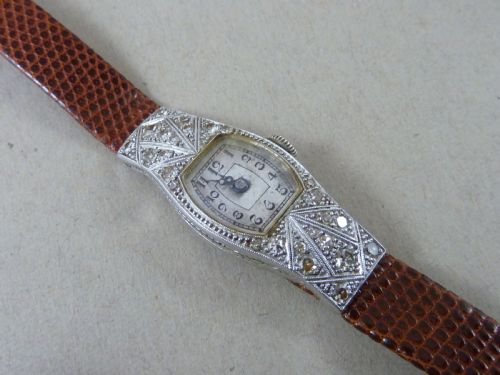
Diamond Dress Watch
A diamond dress watch brings together precise timekeeping and fine jewellery, taking the form of an elegant wristwatch for evening wear.
Diamond Dress Watch
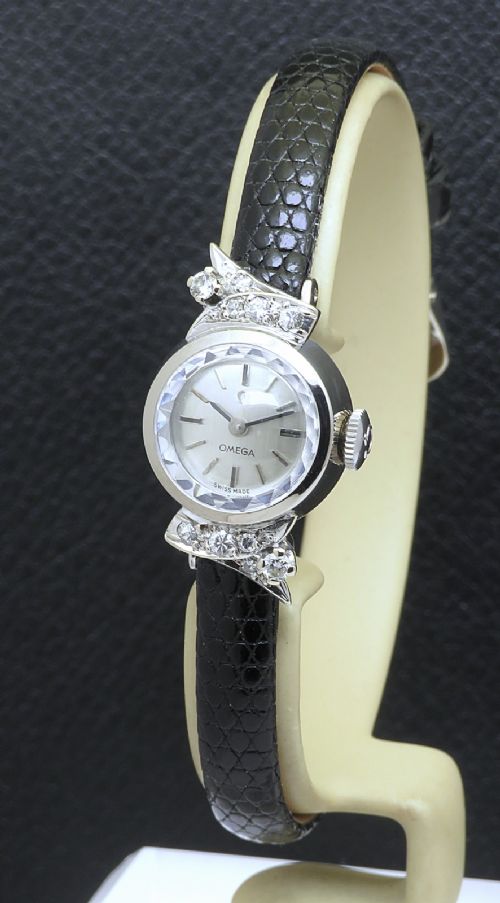
A diamond dress watch is primarily encountered as a ladies wristwatch or cocktail watch designed for formal wear. These pieces combine mechanical or quartz movements with precious metals and gemstones.
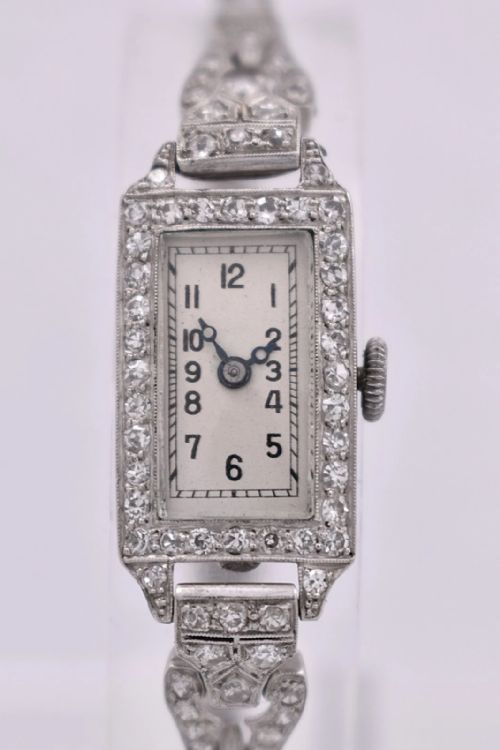
The selections span several decades, with significant representation from the Art Deco period of the 1920s and 1930s, alongside mid-century examples from the 1950s and 1960s.
Forms range from geometric platinum cocktail watches set with substantial diamond carat weights to minimalist gold wristwatches paired with leather straps or integrated bracelets.
Materials and construction
Construction relies heavily on precious metals, predominantly platinum and 18ct white gold, alongside occasional 14ct white gold, yellow gold, and solid 9ct gold. These metals provide the durable framework necessary to secure multiple small and large diamonds.
Watchmakers utilised Swiss jewelled lever movements and manual wind mechanisms, housed within cases embellished with diamonds, glass crystals, and occasionally black onyx accents. Dials are often paired with fabric straps, leather bands, or precious metal bracelets.
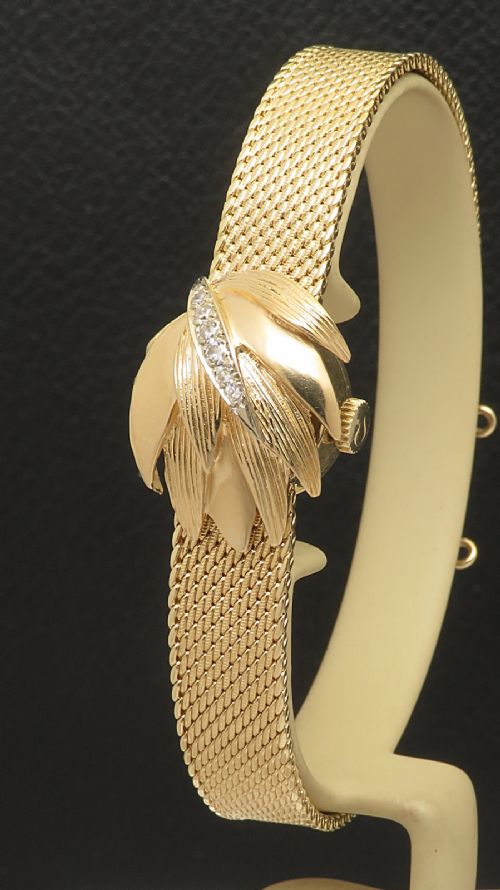
Several watches conceal their tiny dials beneath diamond-studded lids, requiring a discreet wrist flip to check if the party is running late.
Distinctions in quality
Quality rests upon the execution of the metalwork and the integration of the movement within the decorative case. Maker attribution, such as pieces originating from established houses like Omega, Tissot, Movado, Vertex, Longines, Bucherer, Asprey, and Audemars Piguet, elevates a piece.
The overall diamond carat weight, stone cut quality, and the retention of original components like boxes and signed dials differentiate standard wristwatches from high-tier luxury cocktail watches.
Omega·Tissot·Bucherer·Asprey·Vertex·Movado·Longines·Audemars Piguet
The Diamond Dress Watch Glossary
- Cocktail watch
- A small ladies wristwatch designed primarily for evening wear, functioning as a piece of jewellery that happens to tell the time. These often feature concealed dials and dense diamond settings.
- Jewelled lever
- An escapement mechanism utilising synthetic rubies or other gemstones to reduce friction on pivot points, improving timekeeping accuracy in mechanical watches.
- Manual wind
- A mechanical watch movement that requires the wearer to manually turn the crown to tension the mainspring, rather than depending on an automatic rotor or battery.
- Skeletonized
- A watch design where the dial and movement plates are cut away to expose the inner mechanical components and gear train.
- Art Deco
- A design style prevalent during the 1920s and 1930s characterised by geometric symmetry, clean lines, and stylised motifs.
Diamond Dress Watch: Frequently Asked Questions
How do I wear a diamond dress watch daily?
These delicate timepieces suit formal occasions and evening wear rather than heavy daily tasks. Pairing them with evening attire lets the gemstone settings catch the light properly.
Store them securely in a dedicated box when not on the wrist to protect the delicate metalwork and crystal glass.
Are these watches mechanical or quartz?
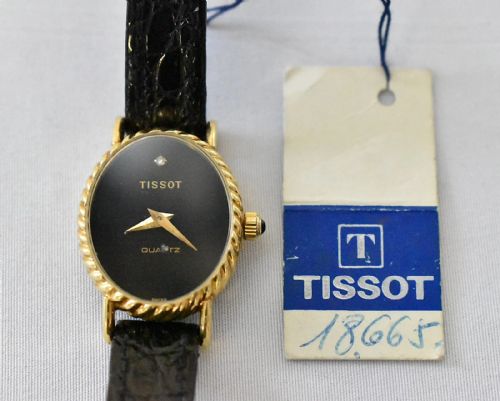
Most examples from the Art Deco and mid-century periods utilise manual wind mechanical movements or Swiss jewelled lever mechanisms. Later twentieth-century variants occasionally incorporate quartz movements.
Wind mechanical watches gently at a consistent time each day to maintain the tension in the mainspring without over-winding.
How do I identify an Art Deco diamond watch?
Art Deco pieces typically display geometric case shapes, platinum settings, and symmetrical diamond layouts typical of the 1920s and 1930s. The numerals and hands follow the stark, stylized aesthetics of the period.
Examining the case back and movement often reveals maker signatures that confirm the production era.
What is a cocktail watch?
A cocktail watch is a small ladies dress watch created for evening social gatherings. The dial is frequently tiny and sometimes obscured beneath a hinged decorative cover set with diamonds.
These pieces prioritise ornamental brilliance and precious metal craftsmanship over immediate legibility.