


1920s Glass Bowl
A 1920s glass bowl brings tactile modernist flair and brilliant opalescent depth to any surface.

1920s Glass Bowl
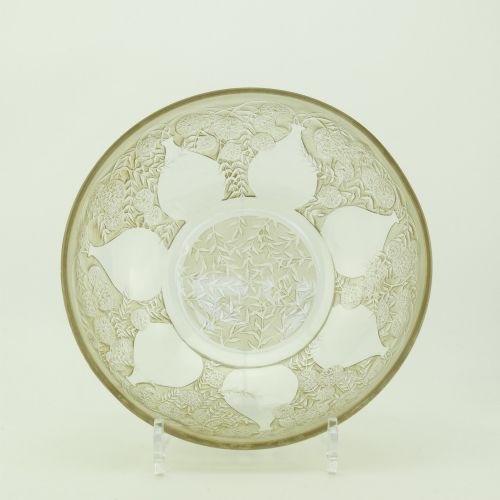
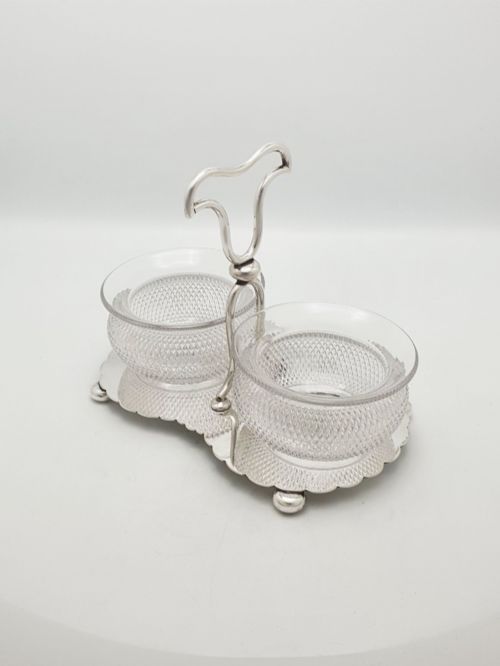
A 1920s glass bowl typically spans decorative table centrepieces, footed vessels, and shallow plates created during the height of the Art Deco movement. These pieces range from moulded opalescent creations to cut glass designs accompanied by silver plate or sterling silver mounts.
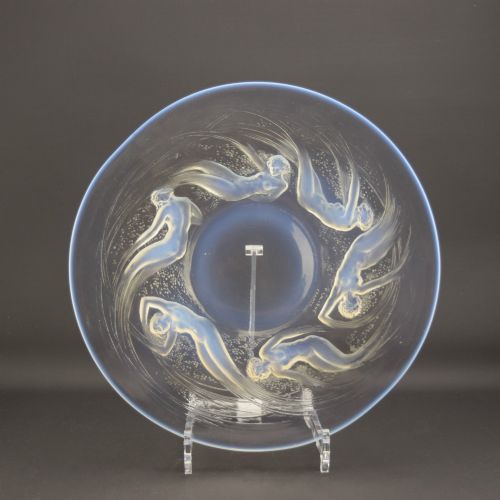
The version most commonly met on this page is the opalescent moulded glass bowl, frequently attributed to French studios and characterised by translucent milky bodies that catch changing light. Alongside these, buyers encounter cut glass vessels and lidded trinket boxes featuring enamel or tortoiseshell details.
The objects originate primarily from the 1920s and 1930s, reflecting early twentieth-century design sensibilities that prioritised geometric forms, stylised flora, and tactile surfaces. They serve both decorative display and functional roles within domestic spaces.
How they were made
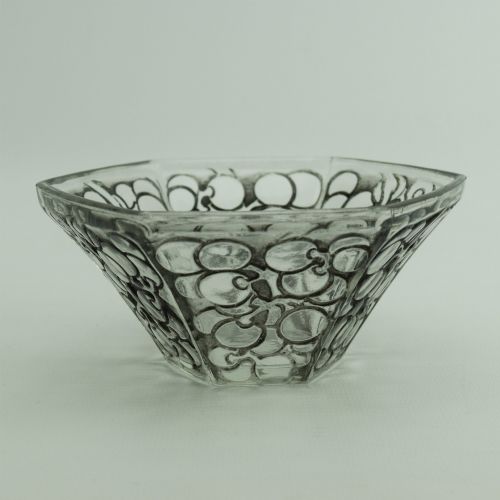
Moulded and pressed glass techniques defined much of the period's output, allowing makers to achieve high-relief motifs of flowers, fish, and abstract patterns. Molten material was pressed into heavy iron moulds, capturing intricate textures that were subsequently finished with frosted or opalescent treatments.
Cut glass production relied on abrasive wheels to carve geometric facets directly into clear or coloured blanks, creating deep optical refractions. Artisans then polished the incisions to a high shine, contrasting the sharp linear cuts against softer frosted surfaces.
Fish and flowers dominate the motifs, meaning your fruit bowl might come permanently inhabited by five glass swimming poissons.
What varies in quality
The clarity of the material and the sharpness of the moulded relief separate standard items from the finest examples. Superior opalescent vessels display a distinct blue-to-amber shift when lit from various angles, alongside crisp definition in high-relief floral or aquatic motifs.
The integration of metalwork mounts, such as silver plate, sterling silver, enamel, and tortoiseshell lids, dictates the overall refinement of the piece. High-quality items exhibit balanced proportions between the glass body and the applied metalwork, with secure mounts and careful detailing.
Rene Lalique·W M F
The 1920s Glass Bowl Glossary
- Opalescent Glass
- A type of glass that appears milky-white or bluish when viewed in transmitted light and amber or yellowish in reflected light. This optical effect is achieved through chemical additives during the melting process.
- Moulded Glass
- Glass formed by pressing molten metal into a rigid form or mould to create raised patterns and specific vessel shapes. It allows for the consistent replication of complex sculptural decorations.
- Art Deco
- A design style of the 1910s, 1920s and 1930s characterised by sleek geometric shapes, stylised natural motifs, and streamlined forms. It influenced everything from glassware to architecture.
- Cut Glass
- Glassware decorated by grinding and polishing facets or patterns into the surface using rotating wheels. The technique produces sharp edges and brilliant light reflections.
- Silver Plate
- A base metal, such as copper or brass, coated with a thin layer of silver through electroplating or mechanical bonding. It offered an accessible alternative to solid sterling silver during the period.
1920s Glass Bowl: Frequently Asked Questions
How are 1920s glass bowls cleaned?
Wash them gently by hand in lukewarm water using mild detergent and a soft cloth. Avoid abrasive sponges and harsh chemical cleaners to protect delicate frosted or opalescent surfaces.
Dry the vessel immediately with a lint-free cloth to prevent water spots. If the piece includes silver or enamel mounts, keep moisture away from the metal joins.
How do I spot an opalescent finish?
Hold the vessel up to direct light to observe the characteristic milky-blue glow along the raised edges and high-relief details. When light passes through from behind, the glass often shifts to an amber or warm tone.
True opalescent glass is achieved through specific chemical cooling agents rather than surface coatings. This property remains integral to the material structure throughout the body of the bowl.
What defines Art Deco glassware?
Art Deco glassware relies on symmetry, stylised natural forms like flowers and fish, and bold geometric structures. Makers embraced industrial techniques to create tactile surfaces with high-relief ornamentation.
The style rejects Victorian clutter in favour of clean lines and functional elegance. Pieces often combine moulded glass with contrasting materials like silver plate, enamel, or frosted finishes.