


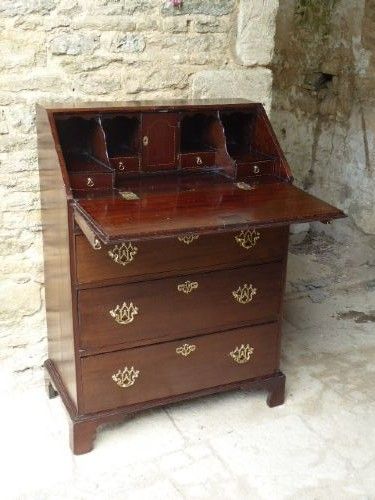
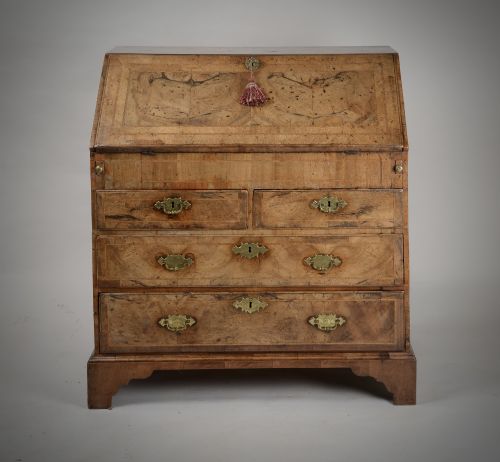
18th Century Writing Chest
An 18th century writing chest provides a functional work surface combined with secure storage, offering a tangible link to Georgian craftsmanship.
18th Century Writing Chest
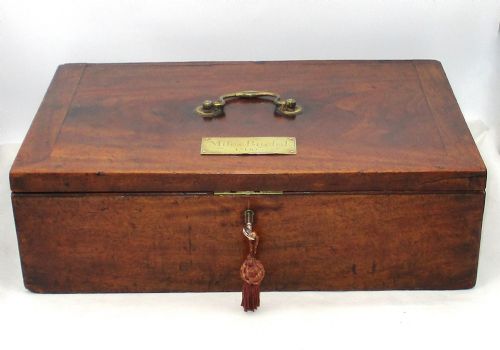
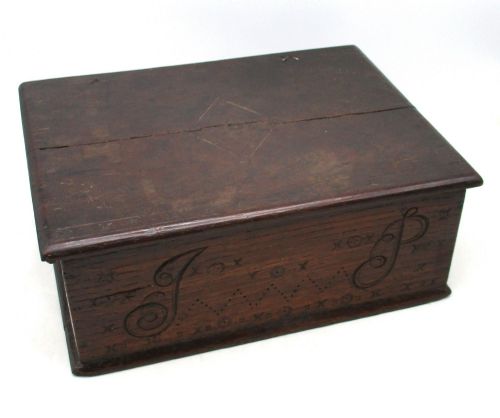
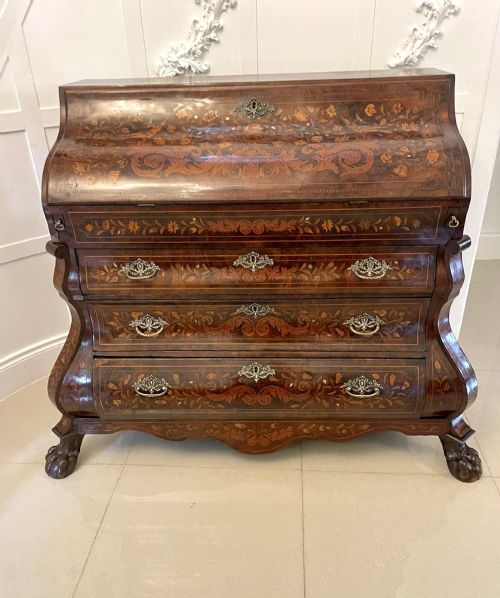
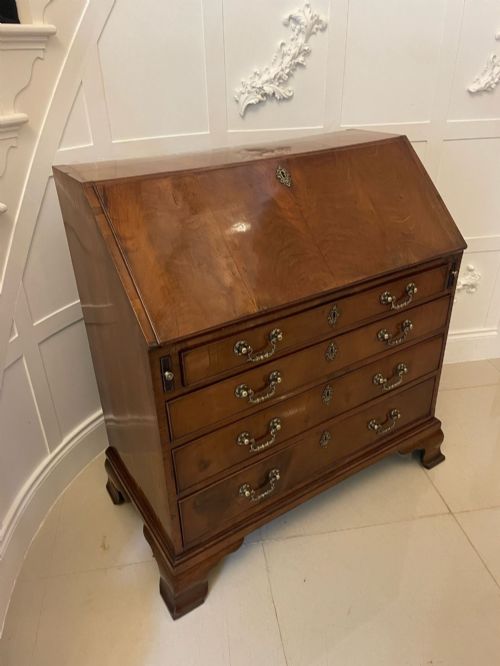
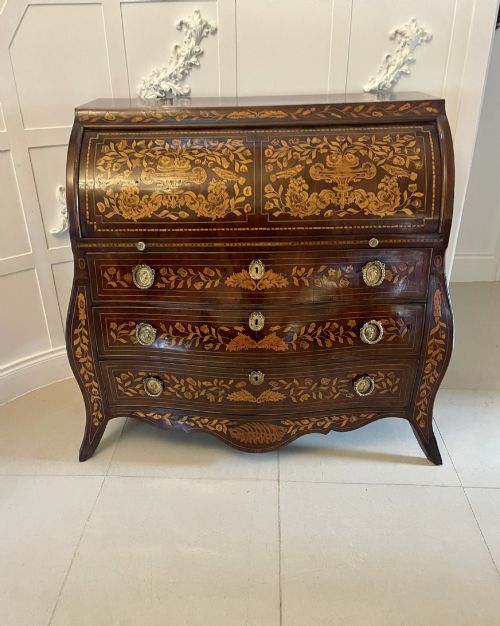
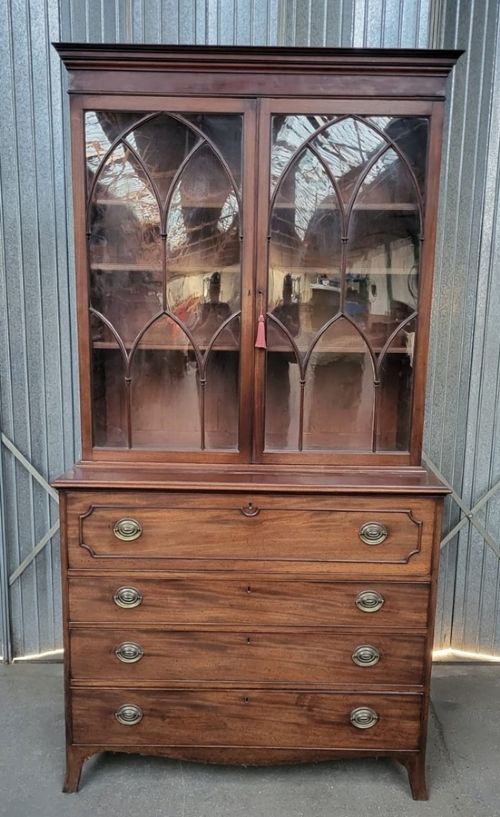
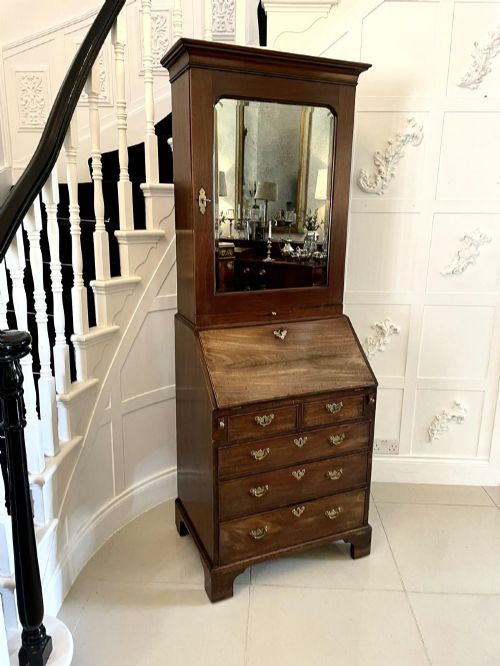
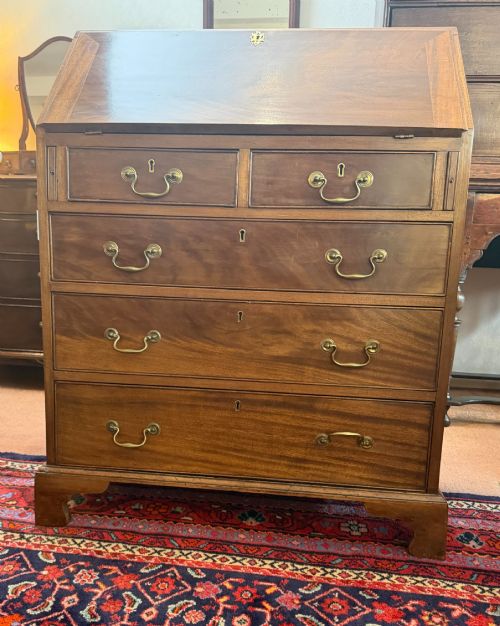
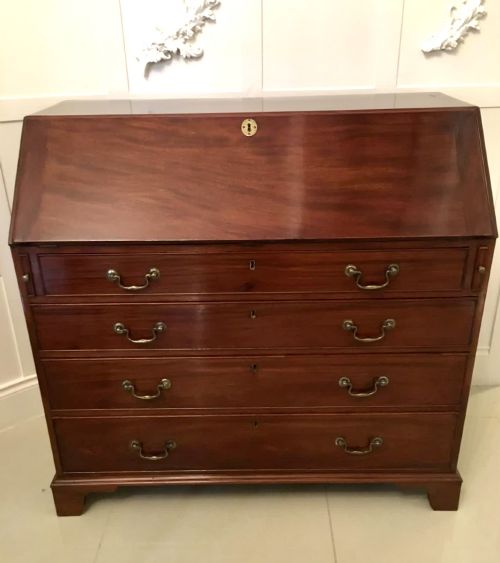
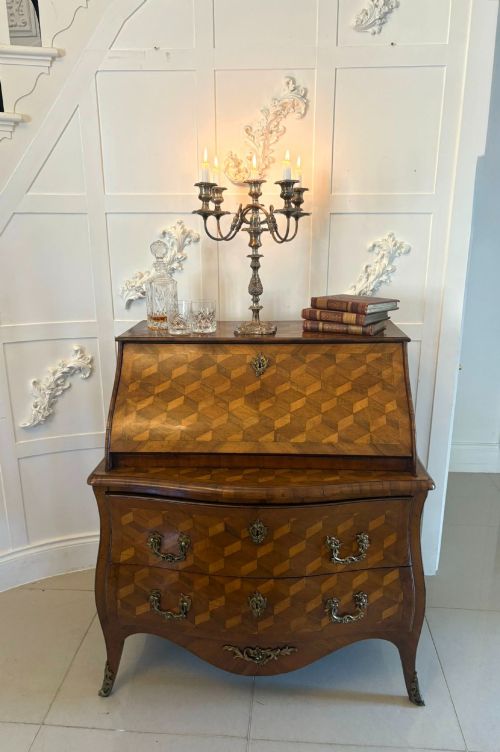
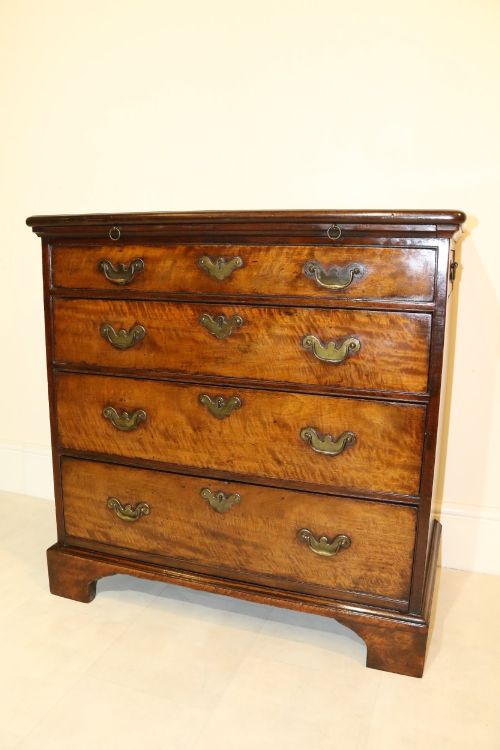
An 18th century writing chest spans several distinct forms including fall-front bureaux, bureau bookcases, secretaire chests, and portable document or Bible boxes. Buyers encounter numerous mahogany and walnut examples dating across the Georgian period, alongside oak boxes and Dutch marquetry pieces.
The primary function centres on domestic paperwork and correspondence, housing letters, ledgers, and writing implements behind fitted drawers and pigeonholes. Many incorporate drop-down writing slopes or slides that conceal the interior compartments when not in use.
Most specimens on this page emerge from English, Dutch, and French workshops operating during the 1700s, utilising regional timbers and decorative inlay techniques characteristic of Queen Anne, George II, and George III eras.
Materials and construction methods
Cabinetmakers constructed these pieces using solid timbers and veneers of mahogany, walnut, oak, and yew wood, often applying figured grains to the primary visual surfaces. Marquetry and parquetry inlay work utilised contrasting woods, bone, and mother of pearl details to create intricate floral patterns.
Structural integrity relied on dovetailed drawer construction and framed panels, while brass hardware such as drop handles, escutcheons, and hinges secured the moving parts. Fall-front writing surfaces required sturdy internal brackets or lopers to support the weight during use.
Secret compartments hidden behind sliding pigeonholes allowed eighteenth-century letter writers to guard their private correspondence from prying eyes.
Factors determining the grade of a piece
The selection of timber grain largely dictates the visual appeal, with highly figured walnut and densely grained mahogany commanding attention over plain boards. The precision of floral marquetry inlay and the complexity of the internal pigeonhole arrangement separate standard items from finer productions.
Original brasses and intact fitted interiors contribute significantly to the integrity of a piece, whereas replaced hardware or altered drawer configurations alter the historical standing.
The 18th Century Writing Chest Glossary
- Bureau
- A writing desk with a sloping hinged lid that covers compartments and drawers. This form became popular during the late seventeenth century and continued through the Georgian era.
- Escritoire
- A writing cabinet or desk, often tall in stature, featuring a fall-front writing flap. The term derives from the French word for writing.
- Secretaire
- A piece of furniture containing a drawer or compartment that pulls out or folds down to form a writing surface. These often integrate into bookcases or dressing chests.
- Marquetry
- Decorative veneer work consisting of inlaid pieces of wood, bone, or shell forming floral or geometric patterns. Artisans applied these designs to exterior surfaces of chests and bureaux.
- Lowboy
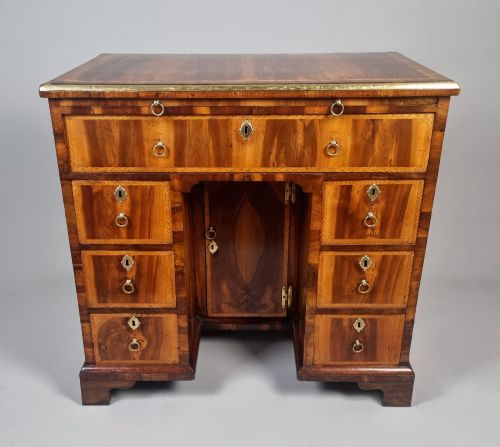
- A small kneehole table with drawers, frequently used as a dressing table or side table in eighteenth-century households. They typically stand on four slender legs.
18th Century Writing Chest: Frequently Asked Questions
How do I use an 18th century writing chest today?
These pieces function well as compact desks in modern studies or living rooms, providing enclosed surface space for laptops and correspondence. The internal drawers organise stationery while keeping work areas tidy.
Care involves maintaining stable indoor humidity to protect aged timber and applying appropriate wax finishes rather than modern silicone polishes.
How do I identify a George II writing chest?
George II pieces, dating roughly from the second quarter of the eighteenth century, often display rich walnut or early mahogany surfaces with substantial brass handles and bracket feet. Proportions tend to be robust, reflecting prevailing furniture designs of the 1730s and 1740s.
Construction details include hand-cut dovetails and oak secondary woods inside the drawer linings, which help verify the period of manufacture.
Were document boxes used for writing?
Early document boxes and Bible boxes served primarily to store precious papers, legal deeds, and religious texts securely under lock and key. Some smaller examples rested on tables where owners could lift the lid to write brief notes.
They represent precursors to the dedicated bureau, originating in the seventeenth and early eighteenth centuries before slope-front desks became widespread.