
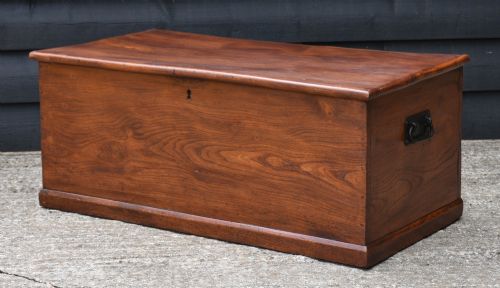
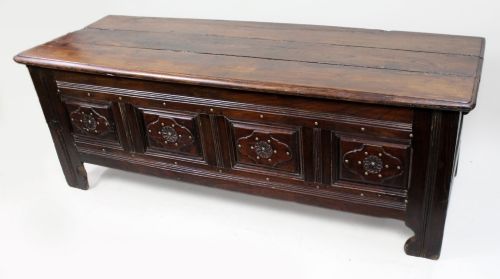
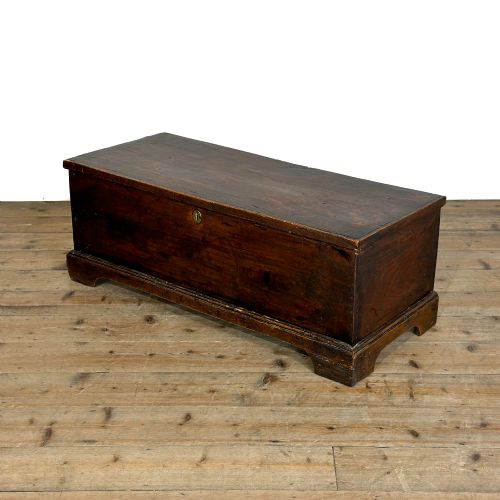
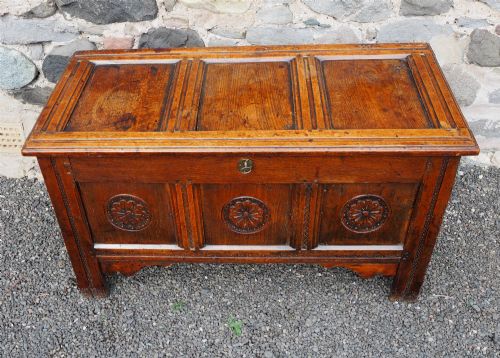


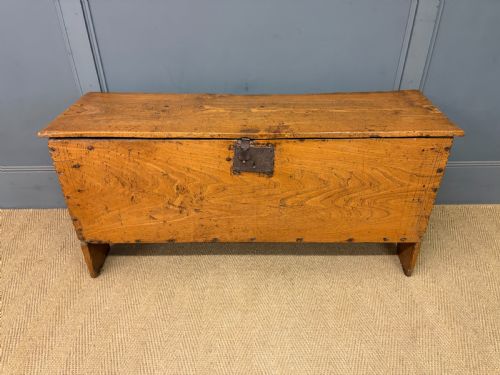
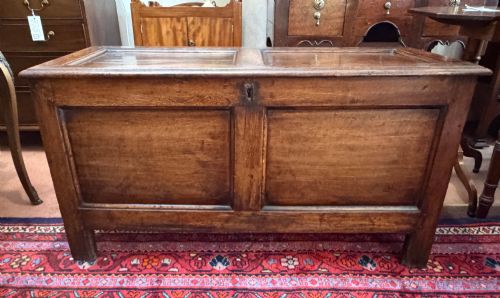
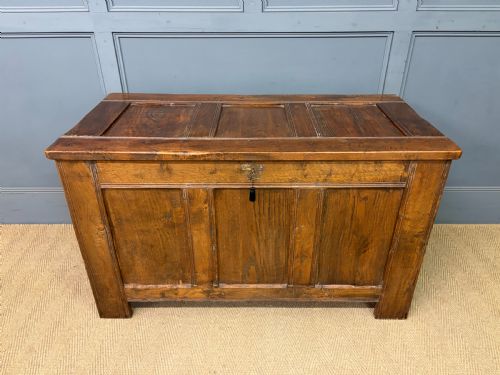
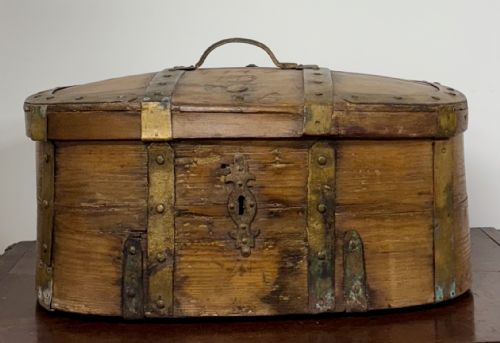
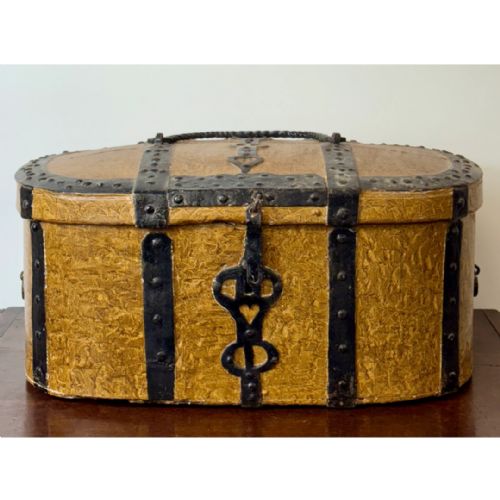
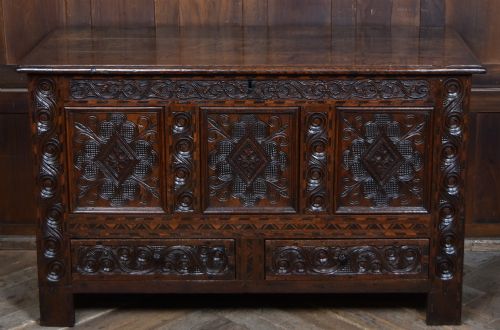
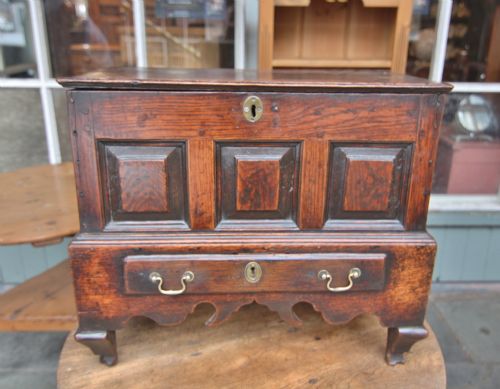
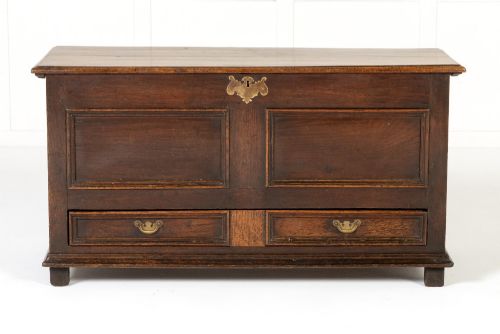
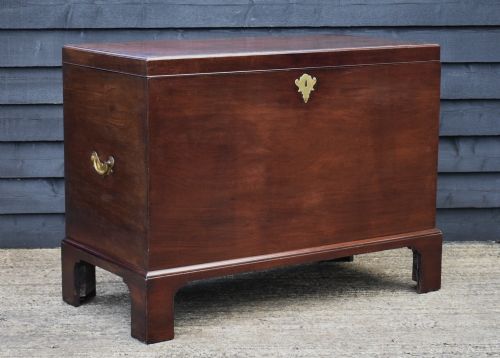
18th Century Wooden Trunk
An 18th century wooden trunk offers robust historic storage, bringing vernacular character and heavy timber construction into a modern room.
18th Century Wooden Trunk
When you search for an 18th century wooden trunk, you encounter a variety of heavy storage forms including coffers, mule chests, blanket boxes, and strongboxes. These pieces served practical domestic and travel needs across domestic and colonial settings.
The version you are most likely to meet on this page is the oak coffer or blanket chest dating from the Georgian era. These utilitarian items range from plain provincial formats to carved vernacular examples originating from English, Welsh, French, and Scandinavian workshops.
Materials and construction
Carpenters built these trunks primarily using native hardwoods and softwoods such as oak, elm, pine, and walnut, often selecting sturdy timber to withstand heavy daily use. Panels were fitted into heavy frames to accommodate natural wood movement over centuries.
Metal hardware played a crucial structural role, utilising iron and brass for hinges, corner brackets, carrying handles, and strongbox mounts. Blacksmith-made wrought iron straps and padlocks reinforced the lids and body joints against forced entry.
Geographic origins span English, Welsh, French, Scandinavian, Dutch Colonial, and Chinese Export workshops.
Variations in quality and execution
Quality in these storage pieces rests upon the selection of timber and the precision of the joinery rather than surface ornamentation alone. Dense figuring in woods like burr elm or walnut elevates certain pieces above plain utility items.
The integrity of original hinges, feet, locks, and metal mounts distinguishes untouched examples from those heavily restored or altered over time. Finer chests display crisp hand-carving and careful panel bevelling that mark skilled regional cabinet-making.
The 18th Century Wooden Trunk Glossary
- Coffer
- A heavy wooden chest traditionally used for storing valuables, documents, or textiles. These sturdy boxes frequently feature hinged lids and robust iron reinforcement.
- Mule chest
- A storage chest equipped with one or more drawers beneath the main compartment. This hybrid form bridges the evolution between the simple coffer and the chest of drawers.
- Coffer bach
- A small Welsh box or coffer mounted on feet or drawers, traditionally made in oak. The term translates from Welsh as a little coffer.
- Vernacular
- Regional furniture built by local craftsmen using traditional local materials and styles rather than following high court fashions. These pieces reflect specific geographic traditions like Welsh or Scandinavian country design.
- Strongbox
- A secure container reinforced with iron or brass straps designed for transporting or safeguarding valuables. They often include internal compartment dividers.
18th Century Wooden Trunk: Frequently Asked Questions
What is the difference between a coffer and a trunk?
A coffer generally denotes a heavy-framed wooden box constructed with stile and rail panels, primarily built for domestic storage. A trunk often implies a piece intended for travel or transport, sometimes covered in leather, lacquer, or fitted with carrying handles.
In older inventories, these terms overlap considerably. Many pieces listed as trunks function identically to coffers and blanket chests.
How were these chests used in the home?
Families utilised these large wooden boxes for storing heavy textiles, woollens, household linen, and valuable documents away from damp floors and pests. They frequently served double duty as seating benches or tables inside the main living rooms of a house.
In a modern interior, they function effectively as coffee tables, blanket storage at the foot of a bed, or hallway stowage.
How can I tell the period of an old wooden trunk?
Dating relies heavily on examining the timber species, construction joints, tool marks, and secondary woods used inside. Hand- split boards, rosehead nails, and pegged frame construction typically point towards eighteenth-century or earlier craftsmanship.
Hardware styles also provide strong chronological clues. Hand-forged wrought iron strap hinges differ visibly from later machine-made brass mechanisms.
What are mule chests and why do they have drawers?
Mule chests combine the deep top-loading storage space of a traditional coffer with one or more drawers built into the base. This design evolution allowed owners to access smaller items without lifting the heavy lid or disturbing items stacked on top.
Cabinet-makers introduced this form during the Georgian period to improve domestic convenience. They appear frequently in English and Welsh country workshops.