
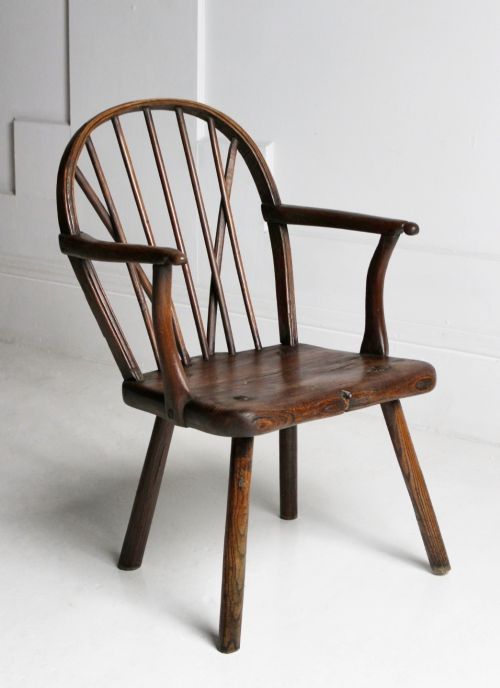
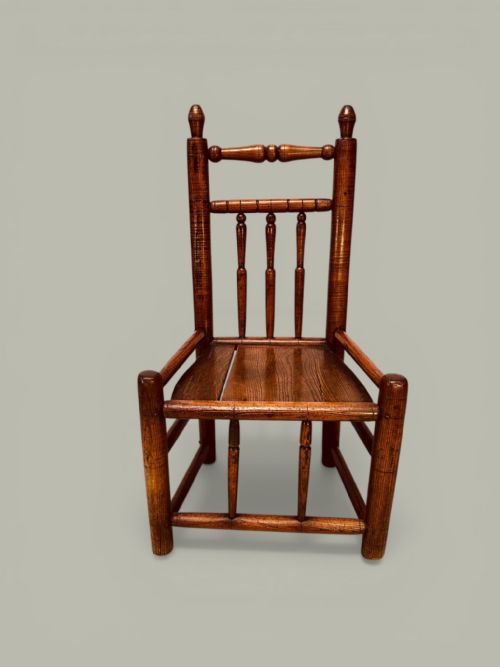


18th Century Welsh Armchair
An 18th century welsh armchair brings honest rural craft and sturdy native timber straight into a room.
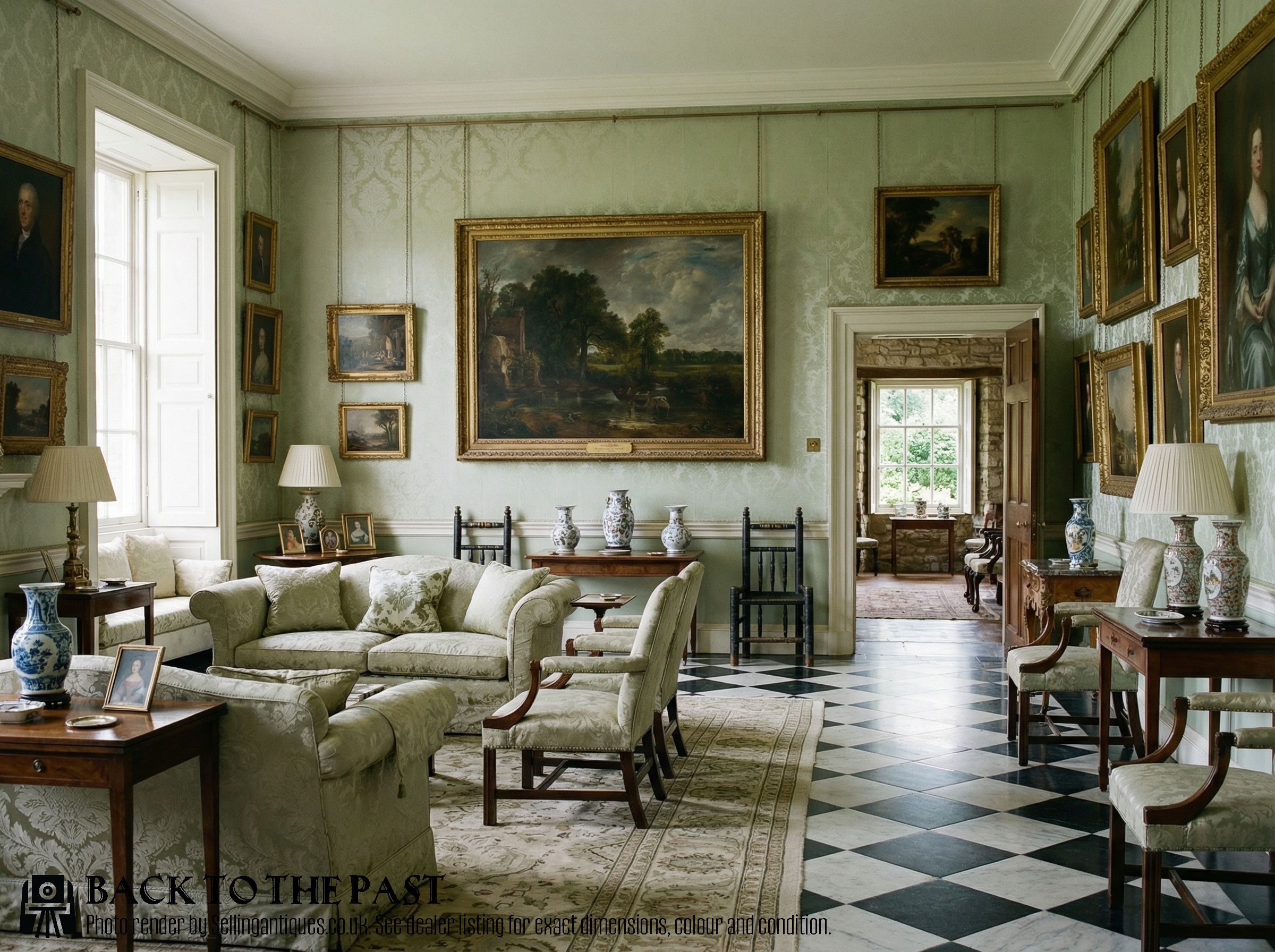
18th Century Welsh Armchair
An 18th century welsh armchair represents the robust vernacular seating tradition of the Welsh countryside, combining practical utility with strong regional character. When searching for an 18th century welsh armchair, buyers encounter robust panelled construction, stick backs, and comb back Windsors originating from distinct valleys and counties.
The selections span from heavy oak wainscot armchairs to lighter ash and elm stick chairs made for everyday use. Regional variations include distinctive comb back Windsors associated with Snowdonia and stick chairs rooted in Carmarthenshire and the Swansea Valley.
Most examples date across the eighteenth century, incorporating vernacular adaptations of Georgian styles alongside older primitive country forms. These seats include standard armchairs, low stick backs, turned chairs, and child variants.
How they were made
Local timber forms the foundation of these seats, utilising native oak for heavy frames alongside ash and elm for spindles, seats, and bending parts. Burr elm provides striking figuring on select chairs, while occasional pieces feature paint or tapestry upholstery.
Construction relies on traditional joinery methods including panelled framing, pegged joints, and turned components. Stick backs and Windsor forms integrate shaped seats bored to receive turned legs and upward extending spindles.
Listings feature oak, ash, elm, and burr elm across stick back, comb back Windsor, wainscot, and panelled forms.
What varies in quality
The distinction between standard examples and finer pieces lies in the choice of timber and the ambition of the regional design. Highly figured burr elm or substantial proportions elevate certain stick chairs and comb backs above plain utility seating.
Proportion and the integrity of the original construction dictate the character of each piece. Untouched surfaces and strong regional traits distinguish the most compelling chairs from heavily altered specimens.
The 18th Century Welsh Armchair Glossary
- Comb back
- A Windsor chair variation where the top rail resembles the teeth of a comb, often featuring extended spindles passing through the arm bow.
- Stick back
- A chair construction where turned spindles or sticks form the backrest, slotted directly into a solid wooden seat.
- Wainscot chair
- A heavy wooden armchair constructed with panelled backboards, originating in the sixteenth and seventeenth centuries and persisting in country workshops.
- Vernacular
- Objects designed by local craftsmen using traditional regional methods rather than high-style metropolitan patterns.
- Turner's chair
- A seating form constructed entirely from turned wooden posts and spindles assembled in geometric patterns.
18th Century Welsh Armchair: Frequently Asked Questions
How were these chairs used originally?
They served as principal seating around hearths and tables in Welsh farmhouses, cottages, and country dwellings.
Their robust construction was intended for heavy daily use by family members in domestic and agricultural settings.
How do I live with one?
Place an 18th century welsh armchair in a hallway, study, or living room where its sculptural timber and grain can be appreciated.
Keep the chair away from direct heat sources to prevent the native hardwoods from drying out or splitting.
How do I tell regional styles apart?
Regional identity appears in construction details, such as the comb back forms linked to Snowdonia or stick chairs attributed to Carmarthenshire.
Local timber choices also hint at provenance, with burr elm and specific ash configurations marking out Welsh country workshops.