
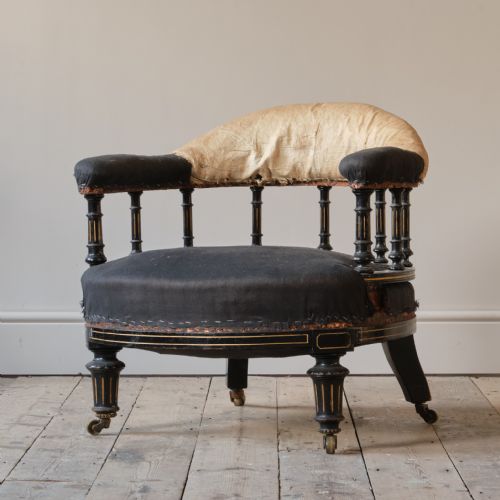


Ebonised Turned Armchair
An ebonised turned armchair brings sharp linear contrast and tactile wood-turning to a room, offering both sturdy support and striking Victorian or Regency character.
Ebonised Turned Armchair
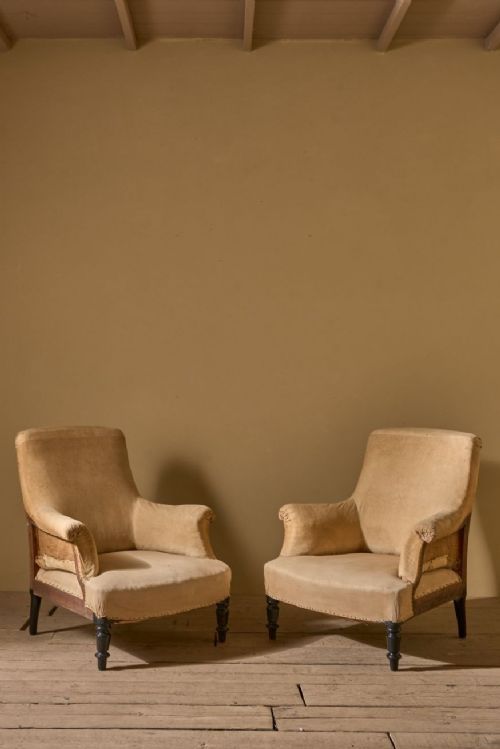
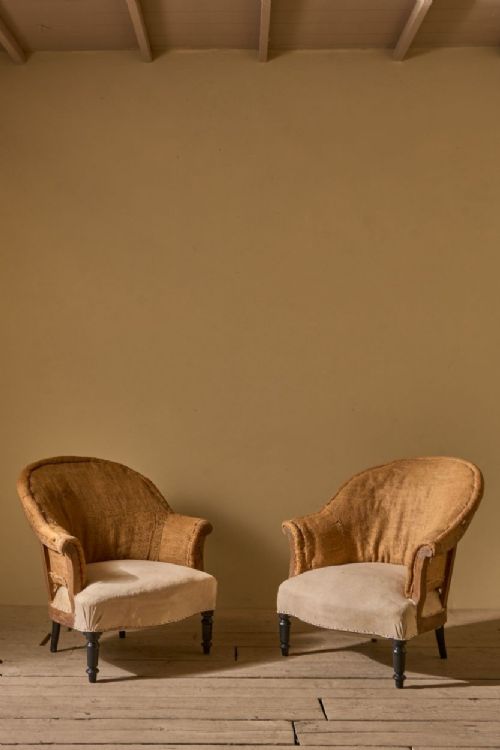
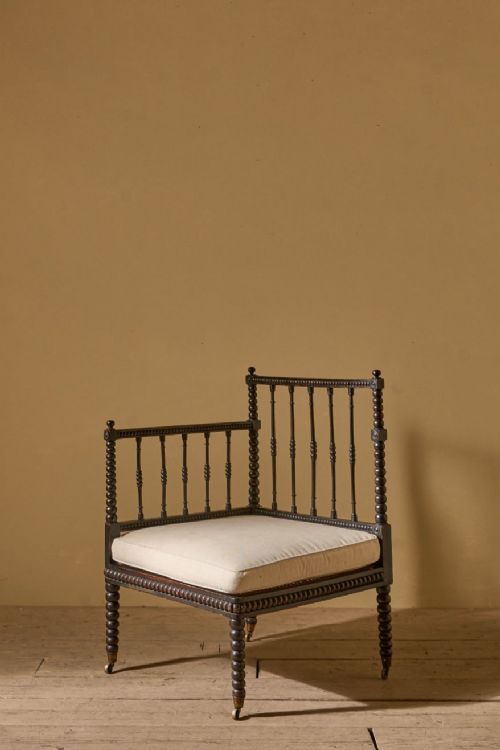
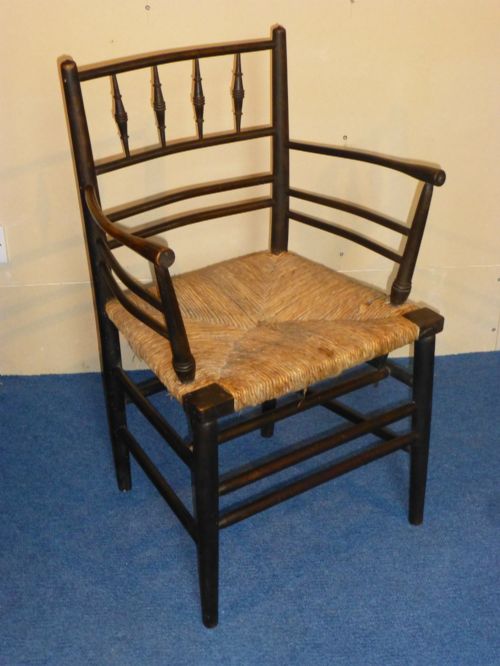
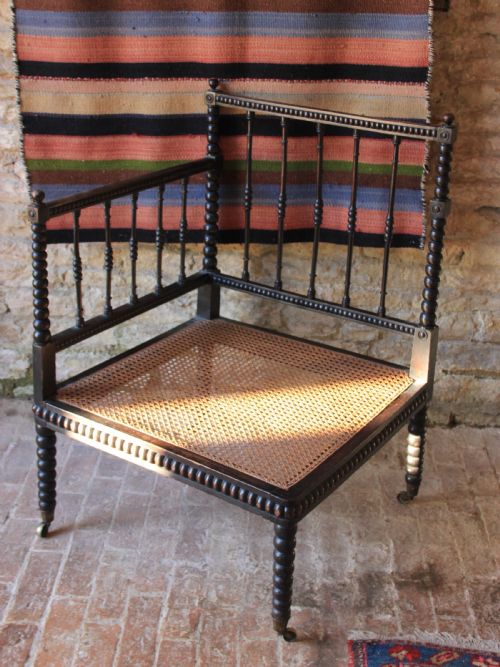
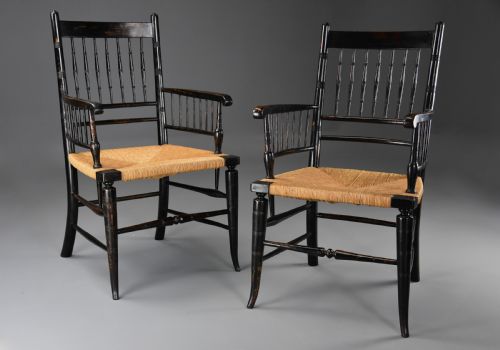
When you search for an ebonised turned armchair, you enter a distinct world of dark-stained timber framing and lathe-formed spindles. The versions you are most likely to meet on this page hail primarily from the 19th Century and Victorian eras, taking the form of corner chairs, nursing chairs, or open armchairs.
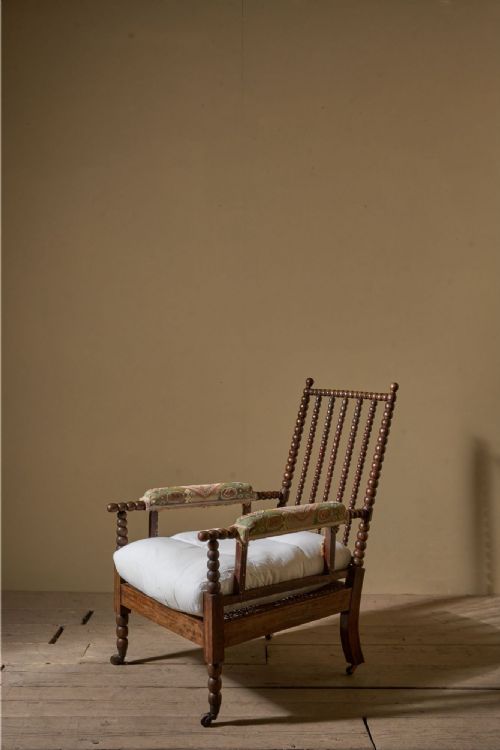
The aesthetic vocabulary spans French Napoleon III models, English Aesthetic Movement pieces, and sturdy country house designs. Makers often utilised bobbin or spool turnings to create rhythmic patterns along the arms, legs, and stretchers.
Beyond standard seating, the inventory accommodates child chairs and low bedroom variants. Each piece relies on the striking interplay between blacked wood and varied upholstery textiles.
The overarching style often leans towards the Arts and Crafts or late Victorian periods, where structural honesty and deliberate wood-working took centre stage.
Materials and construction methods
The foundational framework typically relies on hardwood such as beech, sometimes simulated to resemble rosewood or mahogany beneath a dark finish. Craftsmen applied ebonisation to stain the timber deep black, mimicking more costly ebony.
Lathes shaped the characteristic turned components, including bobbin details and slender spindles, which were then doweled and jointed together. Metal elements such as brass castors or decorative studs occasionally appear on specific Victorian iterations.
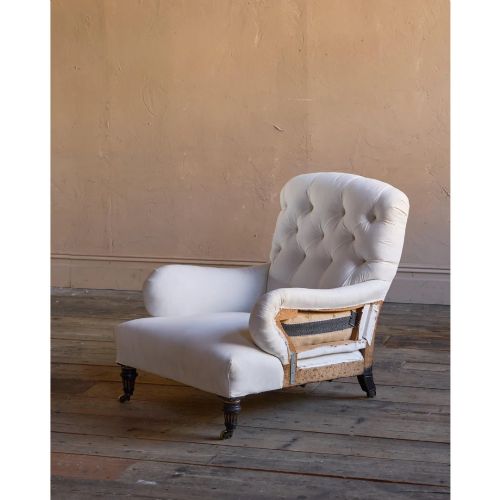
Upholstery traditionally involved webbing, hessian, and cotton stuffing, finished with top layers of velvet, fabric, or buttoned coverings. This combination ensured both rigid architectural framing and comfortable padded seating.
Even tiny child chairs receive full bobbin turnings, proving that Victorians believed toddlers deserved proper aesthetic rigour.
Distinguishing quality across the range
The integrity of the lathe work dictates much of the visual standard, where crisp, uniform turnings without splintering or poor filler reveal superior joinery. Finer examples exhibit meticulous ebonisation that has aged gracefully into the timber grain rather than sitting as a flat, opaque paint.
Structural rigour separates basic utility seating from high-end workshop output, particularly in how firmly the arms and back spindles meet the seat rails. Workshop attribution and documented design lineage further elevate certain pieces above anonymous regional versions.
The grade of upholstery materials, from simple hessian bases to intricate buttoned velvet, reflects the original commission level and subsequent care. Surviving original textiles or period-correct re-upholstery enhance the historical cohesion of the piece.
Morris & Co·Philip Webb·Gillows
The Ebonised Turned Armchair Glossary
- Ebonised
- Wood treated with stain or polish to simulate solid ebony. This dark finish became particularly fashionable during the Victorian and Aesthetic periods.
- Bobbin turning
- A type of wood-turning featuring a series of spherical or oval shapes resembling spools of thread along a shaft. It creates a highly decorative, tactile silhouette.
- Aesthetic Movement
- A late 19th Century design style emphasising visual beauty over narrative subject matter. Pieces from this movement often utilise ebonised surfaces and gilt highlights.
- Nursing chair
- A low-seated armchair designed in the 19th Century for comfort and ease of tending to infants or sitting near low hearths.
- Tub chair
- An armchair featuring a rounded, enclosed backrest that curves continuously into the arms. It offers a snug, enveloping seat.
Ebonised Turned Armchair: Frequently Asked Questions
How do I spot an ebonised finish?
An ebonised surface involves treating timber with a chemical stain or dark pigment to achieve a deep black appearance. Look closely at the grain to see if the dark tone penetrates the wood rather than simply sitting as a modern painted coat.
Over decades of handling, genuine period pieces develop subtle wear on high-touch areas like the arms, revealing hints of the underlying hardwood beneath the dark stain.
What is bobbin turning?
Bobbin turning refers to a lathe technique where the woodworker shapes the spindle into a continuous string of rounded, spool-like shapes. This decorative method provides strong visual rhythm and texture to chair legs and stretchers.
Chairs featuring this technique gained immense popularity during the 19th Century, drawing inspiration from earlier 17th Century seating traditions.
How do I care for ebonised wood?
Maintain ebonised timber by dusting gently with a dry, soft cloth to prevent particulate buildup on the dark surface. Avoid harsh chemical cleaners or excess moisture, which can degrade the historic finish.
Applying a light, appropriate wax occasionally helps nourish the wood and preserves the soft sheen characteristic of antique polished furniture.