
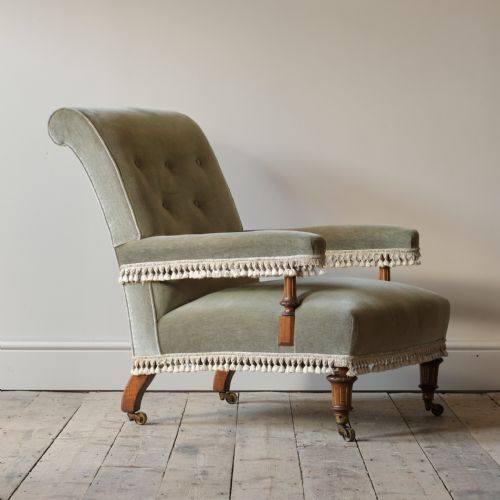

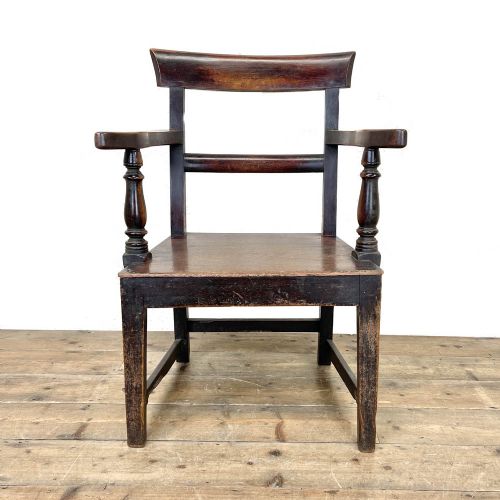
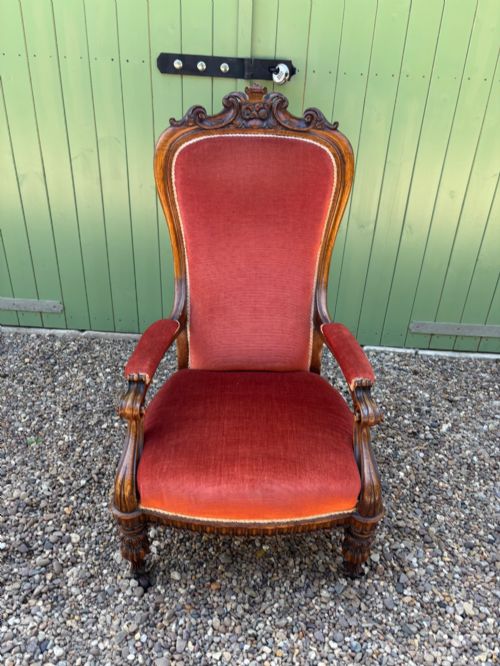
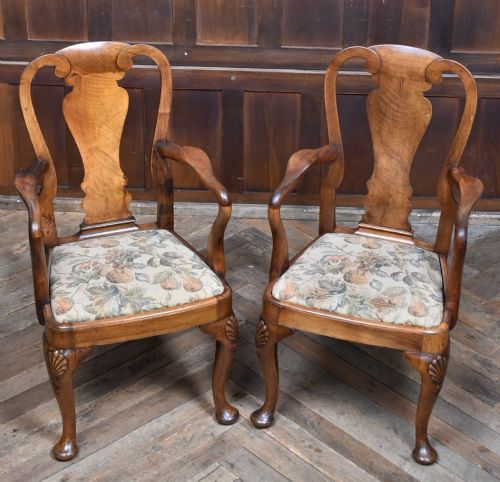



Victorian Open Arm Chair
A victorian open arm chair brings nineteenth-century comfort and craft to a modern room, offering sturdy timber frames and welcoming upholstered seats.
Victorian Open Arm Chair
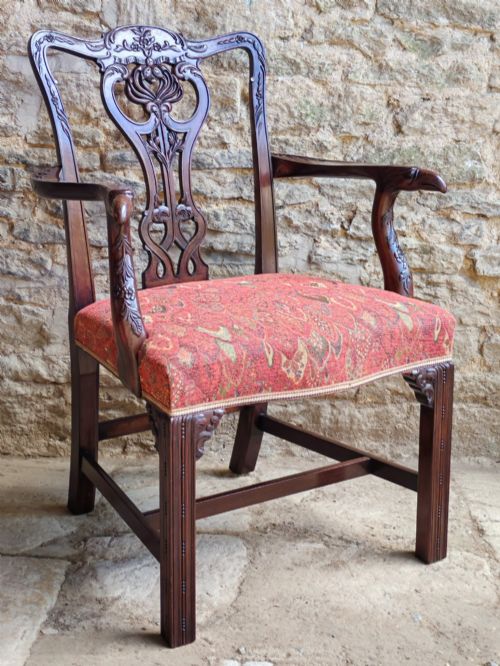
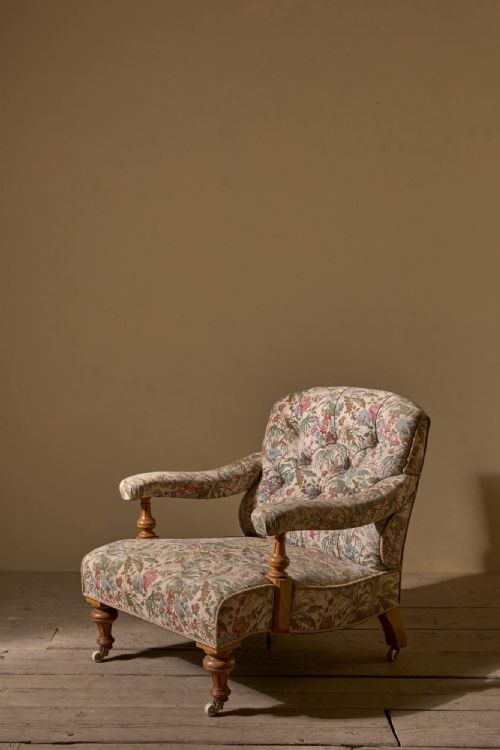
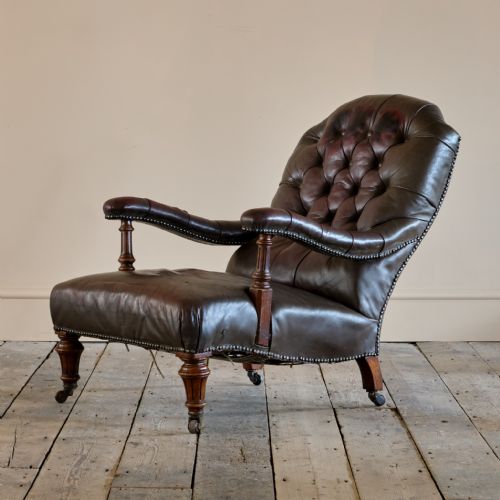
You meet a variety of regional and stylistic forms on this page, ranging from plain country house models to elaborately carved walnut library chairs and revival styles. Many pieces retain original or later fabric coverings, velvet, damask, leather or simple linen.
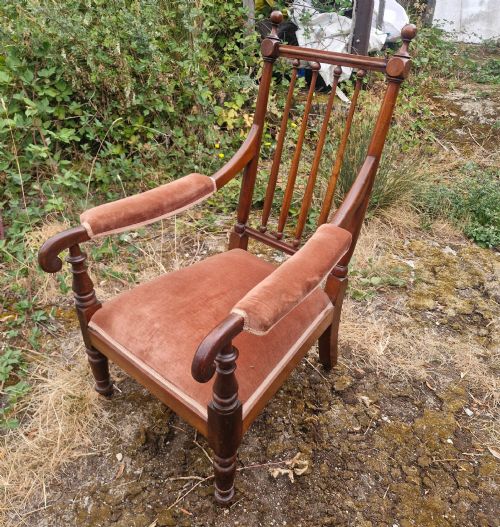
The selection includes low fireside seats, gentleman's and lady's armchairs, and spindle back designs intended for domestic use. Makers and workshops of the period produced both individual armchairs and matched pairs or suites for larger reception rooms.
How they were made
Cabinetmakers constructed the structural frames of a victorian open arm chair using dense hardwoods like mahogany and walnut, frequently employing turned, reeded or carved wooden components. Joinery relied on traditional mortise and tenon methods to ensure the frame withstood daily use.
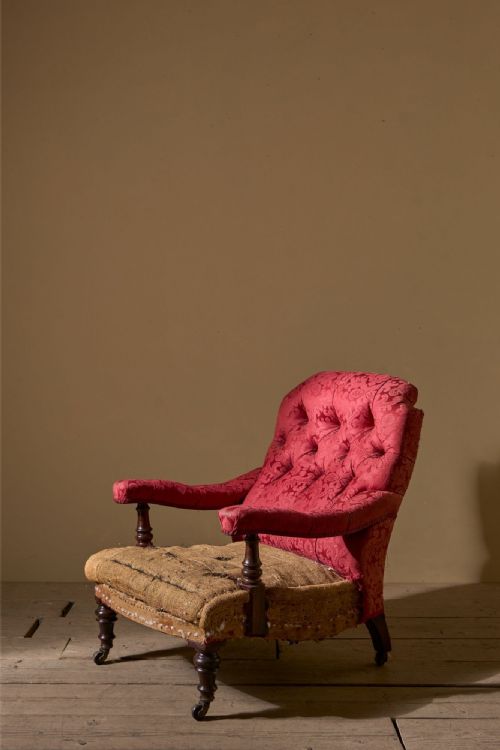
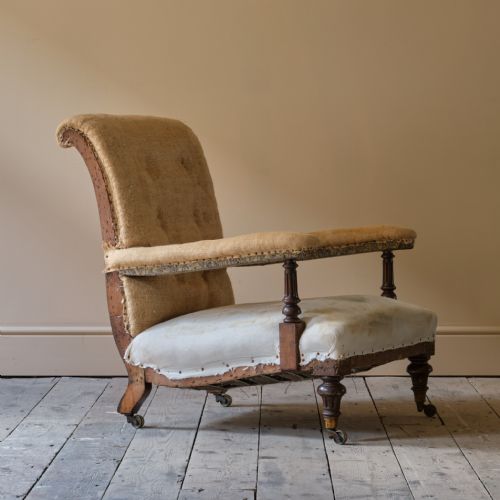
Upholsterers built the seating foundations with materials such as hessian, webbing and stuffing, securing the exterior fabric with brass tacks or piping. Show frames exposed polished timber around the arms and backrest, while padded elements prioritised comfort in the parlour or library.
The archive includes early Victorian, mid-Victorian and late Victorian periods alongside Chippendale and French revival styles.
What varies in quality
The standard of a victorian open arm chair depends heavily on the crispness of the timber carving and the architectural proportion of the frame. Superior examples display carefully selected wood grain, balanced arm supports and substantial internal construction rather than hurried assembly.
The integrity of the show frame and the quality of the secondary timbers dictate long-term durability. Pieces retaining original upholstery materials or bearing documented maker stamps command higher regard among collectors seeking unaltered provenance.
Howard and Sons·Gillows·Holland and Sons·Robertson and Colman
The Victorian Open Arm Chair Glossary
- Show frame
- The exposed wooden portion of an upholstered armchair that frames the padded back and arms. It allows the cabinetmaker to display fine timber grain and carving.
- Fauteuil
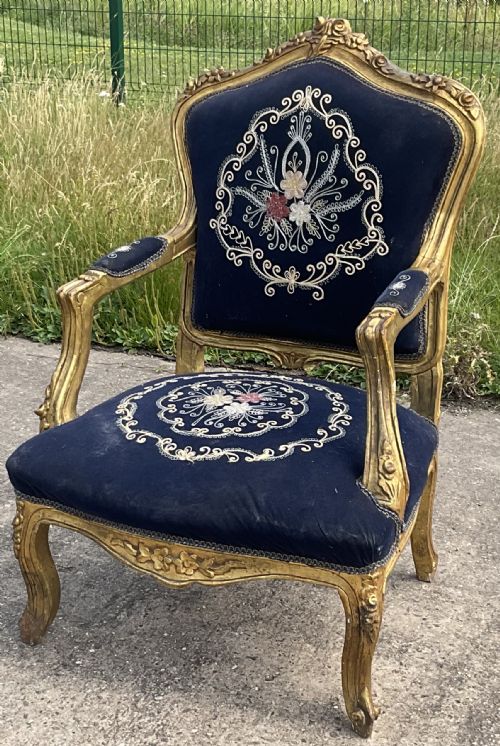
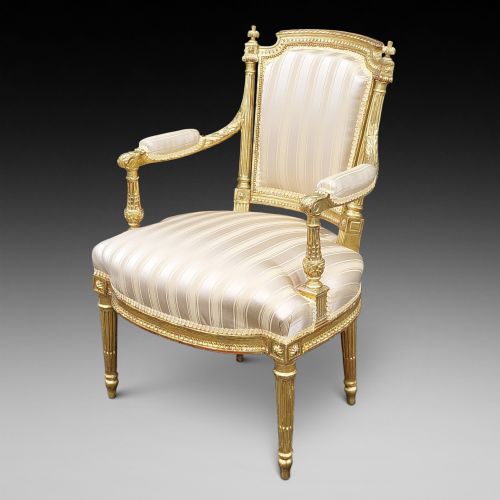
- An open-armed upholstered armchair originating in France, featuring an exposed wooden framework. Victorian makers adapted this form during periods of French revival.
- Carver
- A sturdy wooden armchair designed to sit at the head of a dining table or serve as an occasional seat. These pieces match larger sets of dining chairs.
- Spindle back
- A chair back constructed with numerous thin, turned vertical wooden rods. This vernacular design appears frequently in country house seating.
- Giltwood
- Timber coated with a thin layer of gold leaf or metallic paint to create a decorative surface. This finish is typical of formal reception room chairs.
Victorian Open Arm Chair: Frequently Asked Questions
What is a victorian open arm chair?
A victorian open arm chair is a nineteenth-century wooden seat featuring exposed structural frames and upholstered armrests. These pieces served various domestic spaces including libraries, parlours and bedrooms.
Cabinetmakers utilised hardwoods such as mahogany and walnut to build sturdy frames that accommodated both simple country designs and elaborate revival styles.
How do I identify early and late pieces?
Early examples often display simpler mahogany or rosewood framing with restrained decorative carving. Late Victorian versions frequently incorporate heavier walnut frames and buttoned upholstery.
Examining the turning styles, secondary woods and upholstery foundations helps determine the approximate decade of production.
Where were these armchairs used?
Households placed these armchairs in sitting rooms, studies and grand hallways for reading, relaxation and entertaining guests. Gentlemen and ladies often had specific chair designs tailored to their posture and attire.
Library models provided sturdy support for reading, while fireside versions offered lower seating near the hearth.
How should I care for the wood?
Maintain wooden frames by dusting regularly with a soft dry cloth and avoiding direct sunlight. Proper humidity levels prevent the timber and internal joinery from drying out.
Refrain from using harsh chemical polishes that can damage nineteenth-century French polish or wax finishes.