
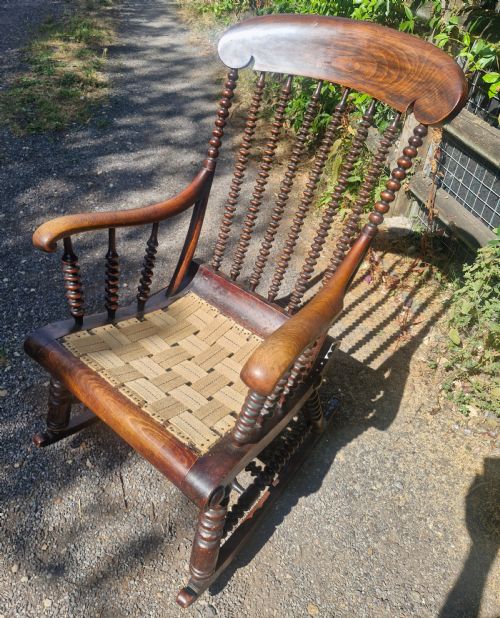
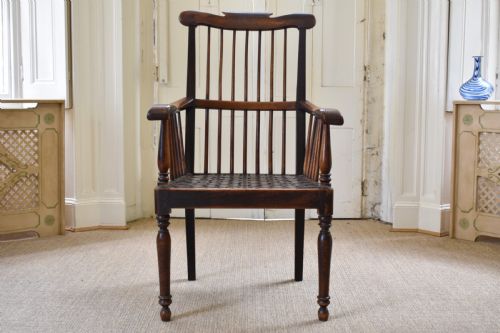
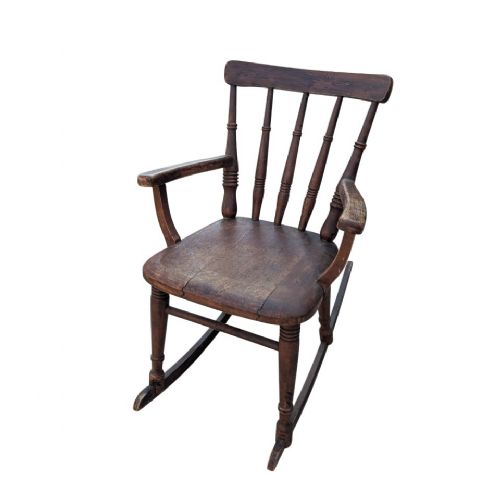
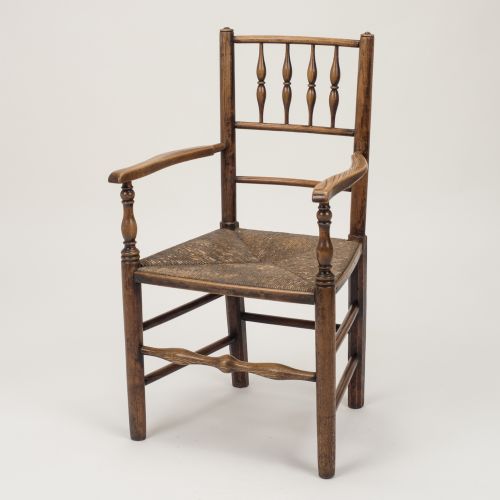




Turned Wood Arm Chair
When you handle a turned wood arm chair, you hold centuries of domestic carpentry built around honest timbers and lathe-turned spindles.
Turned Wood Arm Chair
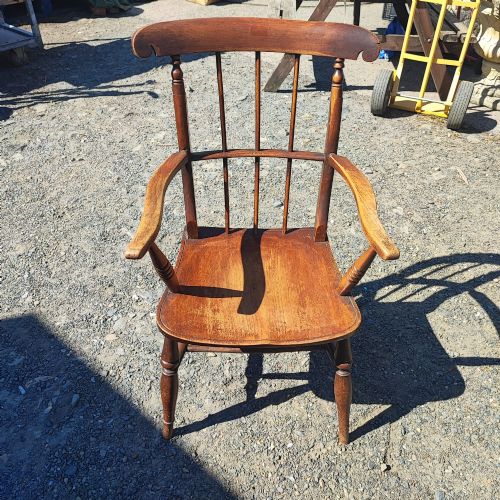
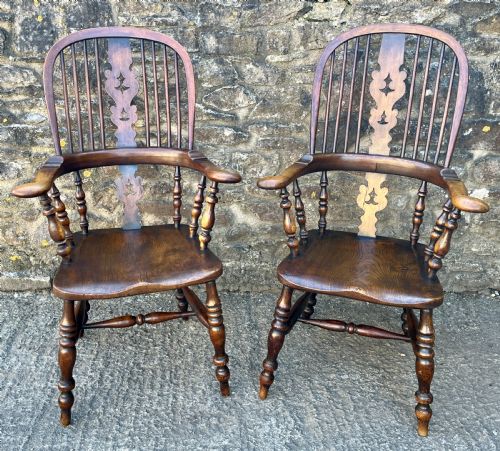
A turned wood arm chair brings together traditional country furniture and formal vernacular seating found across 19th century houses and workshops. These pieces range from substantial Windsor armchairs with broad wooden arms to spindle-backed rocking chairs and low children's seats.
You will most frequently meet elm and ash country armchairs featuring curved wooden backs, rush seating, and turned framing. The selection spans standard desk chairs, daybeds, and side seating originating from English, Scottish, Swedish, and French traditions.
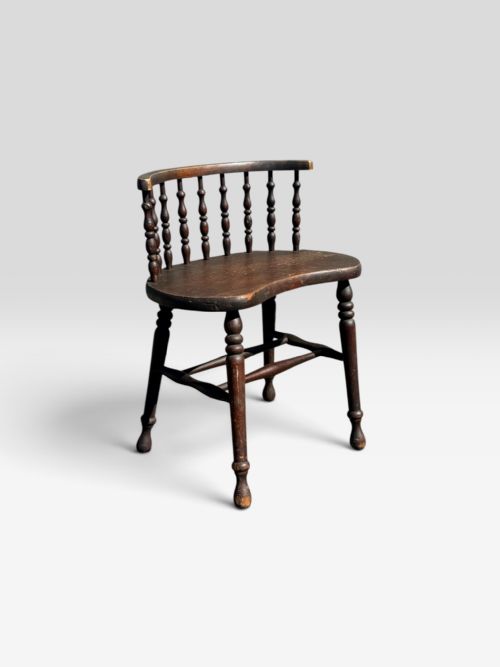
The aesthetic draws heavily on rustic vernacular, Arts and Crafts, and Victorian country house styles. Many examples display bobbin-turned framing or solid timber seats shaped for practical daily use.
How they were made
Local joiners and chair bodgers built these seats using native hardwoods like elm for solid saddle seats, combined with ash, beech, yew, and laburnum for turned spindles and steam-bent arm bows. Workshops relied on pole lathes to shape the characteristic cylindrical and bobbin-turned components before assembling them with pegged joints.
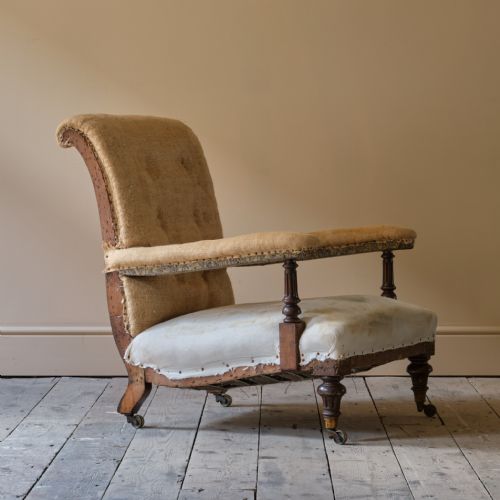
Makers occasionally incorporated secondary materials such as brass castors, rush for woven seating, and occasional fabric upholstery or rosewood finishes on more refined parlour forms. Construction prioritized mechanical strength through tightly fitted wedged tenons and interlocking turned stretchers.
Listings feature woods spanning elm, ash, yew, beech, laburnum, fruitwood, mahogany, and rosewood across multiple countries.
What varies in quality
The distinction between ordinary seating and top-tier examples lies in the selection of figured timber, such as richly grained yew or laburnum, and the crispness of the lathe work on the spindles. Superior execution shows in the balanced proportions of the arm bow and the ergonomic comfort carved into the solid wooden seat.
Integrity of construction and originality of surface finish elevate certain pieces above standard vernacular output. Chairs retaining their initial rush seating, authentic turned framing without excessive replacement parts, and deep patination command greater appreciation among collectors.
Morris and Co·Howard and Sons
The Turned Wood Arm Chair Glossary
- Windsor chair
- A wooden chair built with a heavy solid timber seat into which the legs and back spindles are separately bored and wedged. These chairs often feature curved steam-bent arm bows and broad resting surfaces.
- Bobbin framing
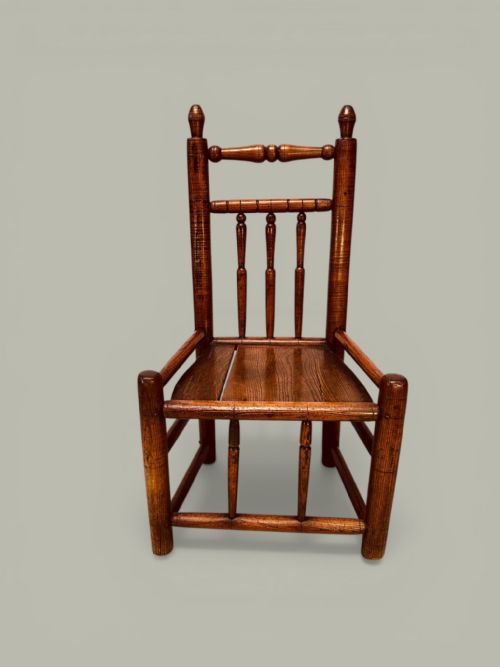
- Furniture turned on a lathe to resemble a series of wooden reels or bobbins threaded end to end. This decorative turning technique appears frequently on 19th century country frames and rocking chairs.
- Broad arm
- An extended, widened wooden armrest integrated into the chair design, commonly found on country Windsor seating to provide a writing or resting surface. They are typically fashioned from a single thick piece of elm or yew.
- Rush seat
- A seating surface woven from dried marsh rushes twisted into cords and hand-patterned across the chair frame. This traditional technique provides a resilient and flexible base for daily domestic use.
- Turner's chair
- An early form of framed seating constructed entirely from joined turned spindles and posts, following historical 17th century construction methods. They showcase intricate lathe work across every structural member.
Turned Wood Arm Chair: Frequently Asked Questions
How do I care for a rush seat?
Keep rush-seated chairs away from damp environments and direct heat sources to prevent the natural fibres from becoming brittle. Clean them gently with a dry brush and avoid saturating the woven cord with water.
Apply a light microcrystalline wax to the wooden frame while protecting the woven areas from heavy oils. Regular, gentle use helps maintain the natural tension in the rush work.
What is a broad arm Windsor?
A broad arm Windsor is a regional chair variant featuring an exceptionally wide wooden armrest designed for practical daily tasks. These generous surfaces often served as writing desks or resting boards in country houses.
They are typically constructed with an elm seat and yew or ash spindles, offering substantial heft and structural presence. The wider arm provides a distinct silhouette compared to standard narrow-armed country chairs.
Where were these chairs made?
These pieces originated in regional workshops, rural cottage industries, and specialised furniture hubs across Britain, Scandinavia, and France. Rural bodgers worked close to woodland sources to turn green timber components before final assembly.
Town workshops also produced refined versions for domestic and institutional interiors, utilising sophisticated timbers like mahogany and rosewood. This geographic diversity results in distinct regional bracing patterns and turning styles.
How do I date a turned chair?
Dating relies on observing tool marks, timber combinations, assembly methods, and stylistic transitions between Regency, Victorian, and Arts and Crafts periods. Early 19th century examples often display hand-rived parts and simpler lathe profiles.
Later Victorian interpretations tend to incorporate machine-turned precision and standardised joint construction. Comparing the wear patterns on the seat and footings further helps establish the period of manufacture.